A Personal Trainer Biography introduces a fitness professional’s background, qualifications, training philosophy, and experience helping clients achieve their fitness goals. Whether you are an independent personal trainer, gym instructor, or certified fitness coach, a well-written biography helps potential clients understand your expertise and approach to fitness.
A professional personal trainer bio can appear on a gym website, fitness portfolio, social media profile, or personal training business page. It should explain what makes your training approach valuable while helping readers feel confident about working with you.
If you need help writing a Personal Trainer Biography, this guide explains what to include, how to organize your information, and how to create an engaging professional profile. You will also find a sample personal trainer bio and practical tips for presenting your fitness experience clearly.
What Is a Personal Trainer Biography?
A Personal Trainer Biography is a professional introduction that describes a fitness trainer’s qualifications, experience, coaching style, and approach to helping clients improve their fitness. It gives prospective clients an overview of the trainer’s background and the services they may offer.
Unlike a traditional resume, which primarily lists employment history and qualifications, a personal trainer bio combines professional credentials with a clear explanation of the trainer’s philosophy and areas of expertise.
A strong fitness trainer biography typically answers these questions:
- Who is the personal trainer?
- What qualifications and experience do they have?
- Which fitness goals or training methods do they specialize in?
- How do they approach coaching and client progress?
- What can clients expect from their training sessions?
The purpose is to provide useful information without overwhelming readers with unnecessary details or exaggerated claims.
What to Include in a Personal Trainer Biography
The most effective personal trainer biographies focus on information that helps potential clients understand the trainer’s expertise and professional approach.
1. Professional Introduction
Begin with your name, professional role, and a brief description of your fitness background. Explain what kind of clients you work with or what type of training you provide.
For example, a trainer might specialize in strength development, beginner fitness programs, functional training, or mobility-focused exercise. Choose a description that accurately reflects your qualifications and experience.
2. Fitness Certifications and Qualifications
Relevant certifications can demonstrate that a trainer has completed professional education in personal training, exercise instruction, or another fitness-related specialty. List credentials that you actually hold and use their official names.
- Recognized personal training certification.
- Specialized strength and conditioning qualifications.
- Relevant exercise science or fitness education.
- Current CPR and first aid credentials, when applicable.
- Additional training related to your professional specialty.
Requirements vary by location, employer, and service offered. Keep certifications current when renewal is required, and avoid implying that a course or qualification provides a license or professional scope that it does not grant.
3. Areas of Specialization
Explain the types of training you offer and the fitness goals you are qualified to support. Clear specializations help prospective clients decide whether your services match their needs.
Common personal training specialties include:
- Strength training: Programs designed to develop strength and improve performance.
- Muscle building: Structured resistance training that supports muscle development.
- Weight management: Exercise guidance that can form part of a broader, sustainable lifestyle plan.
- Functional fitness: Exercises that develop movement skills used in everyday activities.
- Mobility and flexibility: Training that supports comfortable movement and range of motion.
- Beginner fitness: Programs that help new exercisers build confidence and establish consistent habits.
Only describe specialties you are qualified and prepared to provide. Medical rehabilitation, treatment of injuries, and clinical nutrition may require additional professional credentials.
4. Training Philosophy
Your training philosophy explains how you help clients work toward their goals. It might emphasize consistency, progressive training, individual programming, proper exercise technique, or sustainable habits.
Instead of relying on generic promises, describe what clients can expect from your coaching process. For example, you might explain how you adapt exercise selection to a client’s experience level, monitor progress, and adjust the program when necessary.
5. Professional Experience
Include relevant roles, workplaces, coaching experience, or independent training services. If you have worked with different client groups, mention those experiences when they are relevant and appropriate to share.
New trainers can highlight internships, supervised practical experience, professional training, and the types of programs they are qualified to deliver. You do not need an extensive employment history to write a credible personal trainer biography.
6. Personal Motivation and Approach
A brief personal detail can make your bio more approachable. You might explain what attracted you to fitness coaching or why you value helping people build consistent exercise habits.
Keep the focus on your professional role and the client experience. A biography should help readers understand your approach rather than become an unrelated personal story.
Personal Trainer Biography Example
The following sample illustrates how a trainer can combine qualifications, coaching philosophy, and professional experience into a concise biography. The trainer and career details are fictional and are provided for writing guidance only.
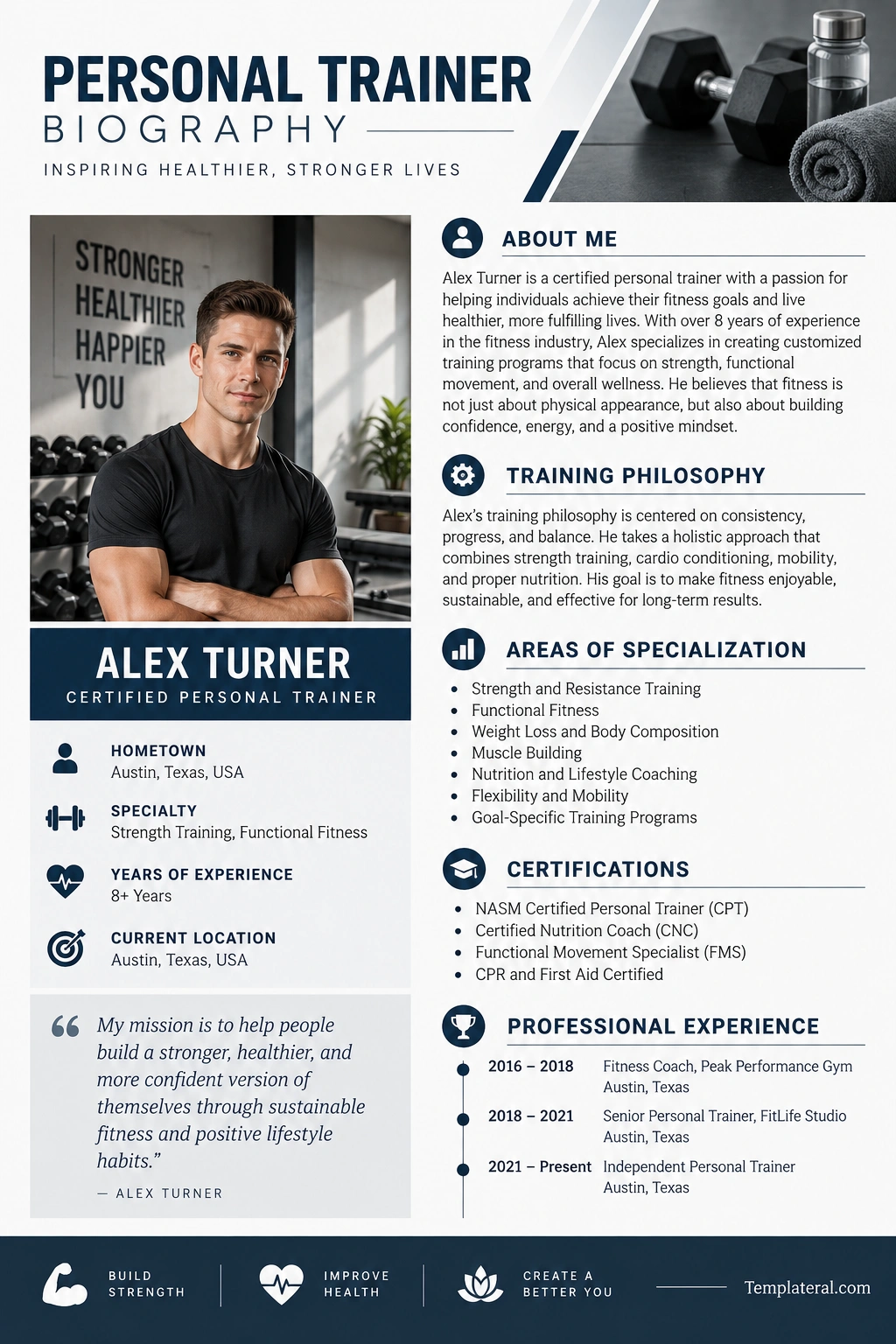
Sample Personal Trainer Bio
Alex Turner — Certified Personal Trainer
Alex Turner is a fictional personal trainer who focuses on strength development, functional fitness, and sustainable exercise habits. With an emphasis on individualized programming and proper movement technique, Alex helps clients build confidence and work toward realistic fitness goals.
In this illustrative profile, Alex has experience designing training programs for clients with different fitness levels and exercise backgrounds. His coaching approach emphasizes consistency, gradual progression, and practical routines that fit into everyday life.
Alex’s fictional professional background includes personal training experience in a gym setting and independent coaching. His approach combines resistance training, mobility work, and fitness education to help clients develop a better understanding of their exercise routines.
By prioritizing clear communication and measurable progress, Alex aims to create a supportive training environment where clients can develop skills and maintain healthier exercise habits over time.
This example demonstrates how to describe a personal trainer’s background without making unrealistic promises. When creating your own bio, replace the fictional details with accurate qualifications, experience, and services.
How to Write a Personal Trainer Biography Step by Step
Step 1: Identify Your Target Audience
Think about the people you want to reach. Your biography may be intended for beginners, experienced gym members, busy professionals, athletes, or clients seeking general fitness guidance.
Understanding your audience helps you select relevant qualifications, specialties, and examples of your coaching approach.
Step 2: Gather Your Professional Information
Make a list of your certifications, relevant education, work history, specializations, and training philosophy. Verify credential names and dates before publishing.
Choose the information that best represents your current professional services rather than listing every activity you have completed.
Step 3: Write a Clear Opening
Introduce yourself as a personal trainer and explain your main area of expertise. Your first paragraph should give readers a quick understanding of who you are and what you do.
Avoid vague openings such as “I am passionate about helping people.” Instead, connect your motivation to a specific coaching approach or fitness specialty.
Step 4: Explain Your Training Approach
Describe how you design programs, support client progress, and adapt exercises to different experience levels. Use clear language that makes sense to someone who may be unfamiliar with fitness terminology.
Keep your statements realistic. Avoid guaranteeing specific weight-loss results, muscle gains, or other outcomes that depend on individual circumstances.
Step 5: Highlight Relevant Experience
Add professional experience, achievements, or examples that demonstrate your expertise. If you are new to the industry, focus on your training, relevant qualifications, and the services you are prepared to provide.
Never invent client testimonials, transformation results, certifications, or employment history.
Step 6: Review and Update Your Bio
Read the biography carefully to remove repetition and improve clarity. Check spelling, grammar, certification names, and contact information before publishing.
Update the profile when your qualifications, services, or professional experience change. An accurate and current biography helps maintain trust with prospective clients.
How Long Should a Personal Trainer Bio Be?
The ideal length depends on the platform and the amount of information your audience needs. These general guidelines can help you choose an appropriate format.
- Short personal trainer bio: Approximately 50–100 words for social media and compact profile sections.
- Standard personal trainer biography: Approximately 100–250 words for gym websites and professional portfolios.
- Extended fitness trainer biography: Approximately 250–500 words for detailed professional profiles and personal training business websites.
These ranges are suggestions, not strict requirements. Use enough detail to explain your qualifications and coaching approach while keeping the information easy to scan.
Tips for Creating a Professional Fitness Trainer Bio
Use these practical recommendations to make your biography more informative and engaging.
- Lead with your specialty: Help readers quickly understand the training services you provide.
- List genuine credentials: Include only qualifications you have earned and represent them accurately.
- Focus on client needs: Explain how your coaching approach supports realistic fitness goals.
- Use simple language: Avoid excessive jargon and complicated explanations.
- Be approachable: Communicate your professional values in a friendly, confident tone.
- Avoid exaggerated claims: Do not promise guaranteed results or describe yourself as a medical professional without the appropriate qualifications.
- Keep information current: Review your profile as your professional services and experience develop.
Personal Trainer Biography Template
Use this outline to organize your information before writing a complete biography.
- Name and professional title: Introduce yourself and your role.
- Professional summary: Describe your fitness background and approach.
- Certifications and education: List relevant qualifications.
- Training specialties: Explain the services and fitness goals you support.
- Professional experience: Summarize relevant roles and coaching experience.
- Training philosophy: Describe your approach to programming and client progress.
- Closing statement: Summarize your professional mission or coaching values.
This general template can be adapted for a gym staff page, independent trainer website, fitness portfolio, or professional introduction. Adjust the sections to fit your experience and intended audience.
Frequently Asked Questions About Personal Trainer Biography
What should a Personal Trainer Biography include?
A Personal Trainer Biography should include your professional introduction, relevant certifications, training specialties, coaching philosophy, and experience. You can also mention your education and motivation for working in fitness.
How do I write a personal trainer bio with no experience?
Focus on your verified qualifications, relevant education, training approach, and professional goals. Explain what services you are qualified to provide and avoid implying that you have experience you have not yet gained.
Should a personal trainer bio be written in first person or third person?
Both approaches can work. First person often feels conversational on a personal website, while third person is common on gym websites and professional staff profiles. Choose the format that suits your audience and use it consistently.
Should I include my personal training certifications?
Yes. Relevant certifications help readers understand your professional preparation. Use the correct credential names and ensure that your qualifications are current when renewal is required.
What is the difference between a personal trainer bio and a resume?
A personal trainer bio introduces your background, expertise, and coaching philosophy in a readable narrative. A resume presents employment history, qualifications, skills, and other professional details in a structured format.
How often should I update my personal trainer biography?
Review your bio whenever you gain a relevant qualification, change your services, or develop meaningful professional experience. A periodic review also helps ensure that your information remains accurate.
Can I use a Personal Trainer Biography template for my website?
Yes. A template provides a convenient structure for presenting your qualifications, experience, specialties, and coaching approach. Customize the wording and details so that the final biography accurately represents you and your services.
Conclusion
A professional Personal Trainer Biography helps potential clients understand your qualifications, training specialties, experience, and coaching philosophy. By presenting these details clearly, you can build a more informative fitness profile and communicate what makes your approach distinctive.
Start with a concise introduction, highlight your relevant credentials, and explain how you approach training and client progress. Keep the language natural, the claims accurate, and the information focused on your professional services.
Whether you are creating a gym profile, launching a personal training website, or updating your fitness portfolio, a well-written biography can help you present your expertise confidently and make a positive first impression.
Download: Personal Trainer Biography Template
