A Two-Week Notice Letter is a formal written notice that an employee is resigning from their position and intends to leave the company, typically about two weeks after submitting the letter. It is a common way to communicate a resignation professionally while giving an employer time to prepare for the employee’s departure.
Writing a resignation letter does not have to be complicated. A clear letter should state your intention to resign, identify your expected last day of work, and maintain a professional and respectful tone. You can also briefly express appreciation for the experience and offer reasonable assistance during the transition.
Whether you are leaving for a new opportunity, changing careers, returning to school, relocating, or pursuing a personal goal, a well-written two-week notice letter can help make the resignation process more organized and professional.
What Is a Two-Week Notice Letter?
A two-week notice letter is a formal document an employee gives to their employer to announce their resignation. The phrase “two-week notice” generally refers to providing approximately two weeks of advance notice before the employee’s final working day.
The letter creates a written record of the resignation and helps ensure that both the employee and employer understand when the employment relationship is expected to end. Depending on the workplace, the letter may be submitted to a manager, supervisor, human resources department, or another appropriate person.
Although two weeks is a common notice period, employees should check their employment agreement, company policies, and applicable employment requirements before deciding on a notice period.
Why Is a Two-Week Notice Letter Important?
Giving written notice provides a clear and professional way to communicate your decision. A resignation letter can also help avoid misunderstandings about your final day and the timing of your departure.
A professional resignation letter can be useful because it:
- Clearly communicates your intention to resign.
- Documents your expected last working day.
- Provides your employer with advance notice.
- Creates a professional record of your resignation.
- Helps your manager plan for the transition.
- Allows you to leave on a respectful and organized note.
Your resignation letter does not need to explain every reason behind your decision. In most situations, a concise and courteous message is sufficient.
What to Include in a Two-Week Notice Letter
A strong two-week notice letter is usually brief and straightforward. You can include several essential elements without turning the letter into a lengthy explanation.
Your Contact Information
If appropriate for your workplace, begin with your name and contact information. You may include your address, email address, and phone number. The exact format can depend on whether you are submitting a printed letter or an electronic resignation.
The Date
Include the date when you are submitting your resignation. This establishes when your notice period begins and provides a clear reference for the employer.
Manager or Employer Information
Address the letter to your manager, supervisor, or another appropriate recipient. Include their name and title when using a formal printed letter.
A Clear Resignation Statement
The main purpose of the letter should be immediately clear. State that you are resigning from your position and identify your job title and company when appropriate.
Your Last Working Day
Clearly state your intended final working day. This is one of the most important details in a two-week resignation letter because it removes uncertainty about when your employment is expected to end.
A Professional Closing
Consider thanking your employer for the opportunities, experience, support, or professional development you received. You can also offer to assist with a reasonable transition, such as documenting responsibilities or helping transfer knowledge.
Two-Week Notice Letter Template
A Two-Week Notice Letter Template can make the resignation process easier by providing a simple structure that you can customize with your own information.
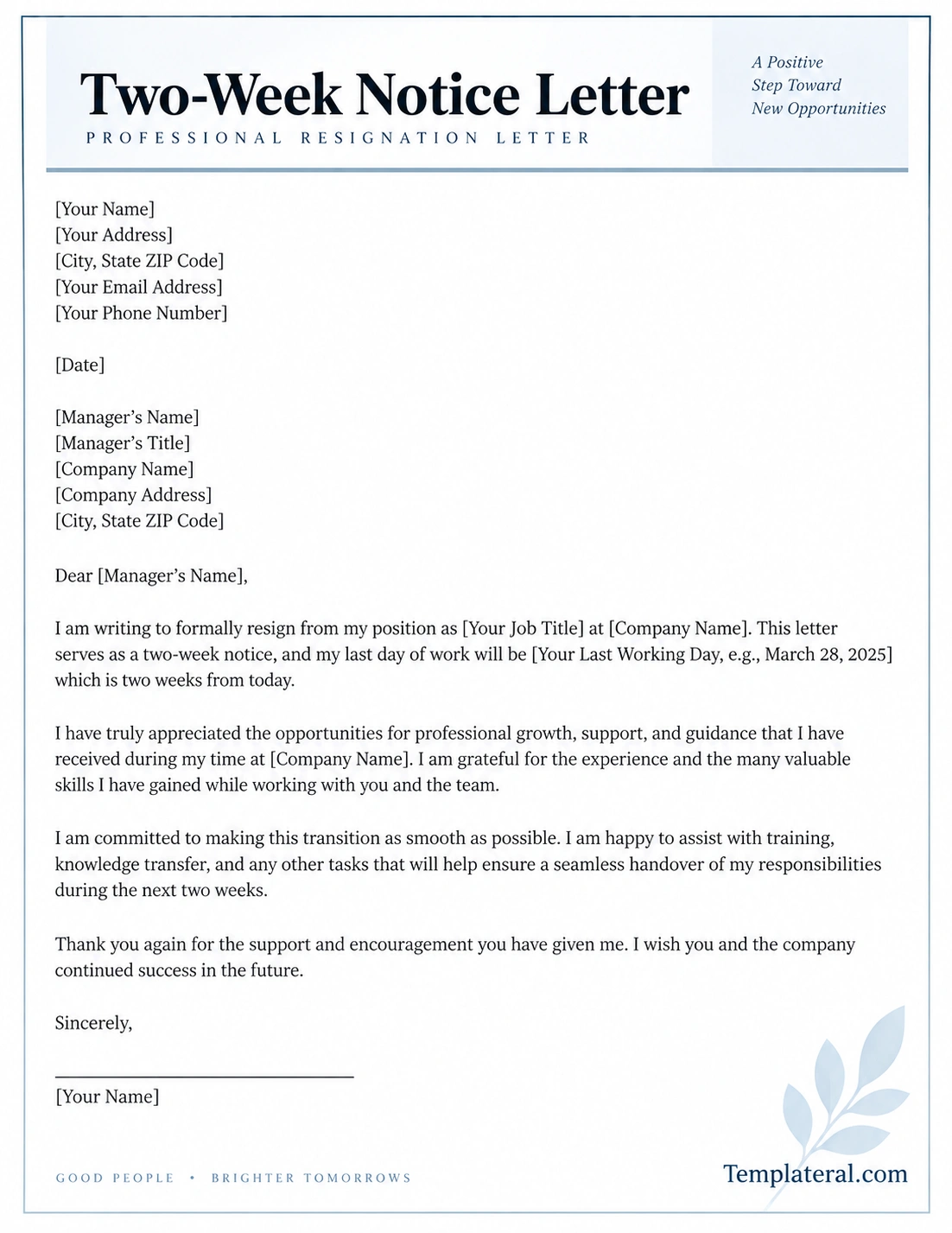
When using a template, replace the placeholder information with accurate details about your position, employer, resignation date, and final working day. Keep the wording professional and make sure the final document reflects your actual circumstances.
How to Write a Two-Week Notice Letter
Start With a Direct Statement
Begin by clearly communicating your resignation. There is no need to make the reader search through several paragraphs to understand why you are writing.
A simple opening can identify your position and state that you are formally resigning from the company.
State Your Final Working Day
After announcing your resignation, specify the date you expect to be your last day of work. Make sure the date is consistent with your intended notice period and any requirements that apply to your employment.
Express Appreciation
A brief expression of appreciation can help maintain a positive professional tone. You might mention the experience you gained, opportunities you received, or relationships you valued during your employment.
You do not need to provide exaggerated praise or write a long explanation. One short, sincere paragraph is often enough.
Offer Transition Assistance
If appropriate, offer to help with the transition during your remaining time. This could include organizing files, documenting recurring tasks, training a colleague, or communicating the status of ongoing projects.
Close Professionally
Finish with a courteous closing such as “Sincerely” followed by your name. If you are submitting a printed letter, leave enough space for a handwritten signature.
When Should You Give Two Weeks’ Notice?
The appropriate timing depends on your employment agreement, company policy, job responsibilities, and applicable requirements. Two weeks is a commonly recognized notice period, but it is not automatically the correct period for every employee or situation.
Before submitting your letter, review your employment documents and employee handbook. If your position has a specified notice requirement, consider that requirement when selecting your final working day.
It can also be helpful to consider the practical timing of your departure. For example, you may want to make sure important projects, scheduled meetings, or planned handoffs are addressed before your final day.
Tips for Giving a Professional Two-Week Notice
- Keep the letter concise: Focus on your resignation and final working date.
- Remain professional: Avoid emotional language, personal attacks, or unnecessary criticism.
- Check the date: Make sure your final working day is accurate.
- Review company policy: Confirm whether your employer has a specific resignation procedure.
- Tell the appropriate person: Follow your organization’s process for submitting resignations.
- Prepare for the transition: Organize important work and document useful information.
- Keep a copy: Save a copy of your resignation letter for your personal records.
What Not to Include in a Two-Week Notice Letter
A resignation letter is generally not the right place to list every workplace complaint or explain every reason for leaving. Even when you have experienced difficulties, keeping the resignation document focused can help maintain a professional record.
Avoid including:
- Personal attacks against managers or coworkers.
- Long complaints about workplace problems.
- Unverified accusations.
- Detailed arguments about salary or benefits.
- Negative comments about your replacement.
- Information about your future employer that is unnecessary for the resignation.
- Threatening or emotional statements.
If you need to communicate a serious workplace concern, consider using the appropriate HR or management process rather than adding unrelated information to your resignation letter.
Two-Week Notice Letter vs. Resignation Letter
The terms two-week notice letter and resignation letter are often used interchangeably. A resignation letter is the broader term for written notification that an employee is leaving a job.
A two-week notice letter is essentially a resignation letter that communicates an approximately two-week notice period. Other resignation letters may provide a different notice period depending on the employee’s circumstances and applicable requirements.
Should You Explain Why You Are Leaving?
You generally do not need to provide a detailed explanation of your reasons for resigning unless your employer’s process requires specific information. A short statement such as pursuing a new opportunity or making a career change may be included if you want to provide context.
Keeping the explanation brief can make the letter easier to read and keep attention on the practical details of your departure.
How to Submit Your Two-Week Notice
The method for submitting a resignation depends on the employer’s procedures. Some organizations expect a signed letter, while others accept an email or require employees to submit the resignation through an internal HR system.
Follow the established process whenever possible. If you are uncertain, check your employee handbook or ask your manager or human resources department about the appropriate procedure.
Regardless of the format, make sure your resignation clearly communicates your intended final working day and is delivered to the appropriate recipient.
What to Do During Your Notice Period
Your final two weeks can be an opportunity to make the transition easier for your team. Focus on completing important responsibilities and leaving your work organized.
- Complete priority tasks that can reasonably be finished.
- Document recurring processes and important responsibilities.
- Organize project files and relevant information.
- Communicate outstanding work clearly.
- Assist with knowledge transfer when requested.
- Return company property according to company procedures.
- Maintain professional relationships until your final day.
You do not need to complete every possible task before leaving. Prioritize the work that is most useful for a smooth handover and follow your manager’s guidance.
Common Mistakes to Avoid
Even a short resignation letter can create confusion if important information is missing. Before submitting your letter, review it carefully.
- Forgetting to state that you are resigning.
- Leaving out your final working day.
- Using an incorrect date.
- Writing an unnecessarily long explanation.
- Including offensive or emotional language.
- Ignoring the company’s resignation procedure.
- Failing to keep a copy for your records.
Final Thoughts on Writing a Two-Week Notice Letter
A Two-Week Notice Letter can be simple, professional, and respectful. The most important elements are a clear resignation statement, an accurate final working day, and a professional closing.
Using a resignation letter template can help you organize the basic information while saving time. Personalize the template with your own details, review your employer’s notice requirements, and make sure the final document accurately represents your decision to leave.
Most importantly, use your notice period thoughtfully. Completing important work, organizing information, and helping with a reasonable handoff can make the transition easier for everyone involved and help you maintain a professional record as you move toward your next opportunity.
