A statement of purpose is an important written document used to explain your academic interests, professional background, goals, and reasons for applying to a particular program. It gives an admissions committee a better understanding of who you are beyond grades, test scores, and other application materials.
Writing a strong statement of purpose can feel challenging because you need to present your experiences and goals in a focused and convincing way. The best approach is to organize your ideas before writing and make sure every section contributes to the overall purpose of your application.
What Is a Statement of Purpose?
A statement of purpose, often called an SOP, is a personal academic essay that explains why you are applying to a specific educational program and how the program relates to your goals.
It is commonly requested as part of applications for graduate programs, master’s degrees, doctoral programs, scholarships, fellowships, and other academic opportunities. However, the exact requirements can vary by institution and program.
A statement of purpose typically connects your past experiences with your current interests and future objectives. Rather than simply listing achievements, it should explain the reasoning behind your academic and professional direction.
Why Is a Statement of Purpose Important?
An application contains many objective details about an applicant. A statement of purpose provides an opportunity to add context to those details and explain the motivations behind the application.
- Explains your academic interests: Describe the subjects, fields, or research areas that interest you.
- Connects your experience to your goals: Show how previous education or work influenced your direction.
- Demonstrates program fit: Explain why the particular program is relevant to your objectives.
- Provides personal context: Discuss meaningful experiences that shaped your academic interests.
- Describes future plans: Explain what you hope to accomplish after completing the program.
What Should a Statement of Purpose Include?
There is no single structure that works for every application. Always follow the specific instructions provided by the institution. In general, however, an effective SOP can include several core elements.
Introduction
The introduction should establish the main purpose of your statement. Briefly introduce your academic or professional background and explain the central reason you are applying.
Avoid starting with vague statements that could apply to almost any applicant. Instead, use specific experiences or interests that naturally introduce your academic direction.
Academic Background
Describe the educational experiences that are relevant to your intended program. You might discuss important courses, projects, research, academic achievements, or areas of study that influenced your interests.
The goal is not to repeat your entire academic record. Focus on experiences that help explain your preparation and motivation for the next stage of your education.
Work and Relevant Experience
Professional experience, internships, research projects, volunteer activities, or other relevant experiences can strengthen your statement when they are connected to your goals.
Explain what you learned from these experiences and how they influenced your interests. Simply listing job titles or responsibilities is less useful than showing how the experience contributed to your development.
Reasons for Choosing the Program
Explain why the specific program is appropriate for your academic and professional objectives. Research the program carefully before writing this section.
You might discuss relevant courses, research opportunities, faculty interests, facilities, academic resources, or other program characteristics that genuinely connect with your goals.
Future Goals
Describe what you hope to accomplish after completing the program. Your goals do not need to be extremely specific, but they should provide a clear sense of direction.
Connect your future plans with the knowledge and experience you expect to gain from the program. This creates a logical connection between your past, present application, and future objectives.
Conclusion
The conclusion should bring the main ideas together without simply repeating the entire statement. Reinforce your academic direction, motivation, and interest in the opportunity.
How to Write a Statement of Purpose Step by Step
Writing an SOP becomes easier when you treat it as a structured planning process rather than trying to write the perfect essay in one sitting.
1. Read the Application Requirements
Start by carefully reading the institution’s instructions. Check the required topic, word or character limit, questions, formatting requirements, and submission instructions.
Some programs may ask specific questions rather than requesting a general statement. Your response should address those questions directly.
2. Research the Program
Learn about the program before drafting your statement. Review the curriculum, research areas, faculty, specializations, and other relevant features.
This research can help you explain why the program fits your goals instead of relying on generic statements about the institution.
3. Make a List of Relevant Experiences
Write down the academic, professional, research, volunteer, or personal experiences that are connected to your intended field of study.
- Important academic projects
- Relevant coursework
- Research experience
- Internships
- Professional experience
- Leadership or volunteer activities
- Challenges that influenced your academic direction
- Important accomplishments
4. Identify Your Main Theme
Look for a central idea connecting your experiences and goals. Your SOP should not feel like a collection of unrelated achievements.
For example, several academic and professional experiences may demonstrate a growing interest in a particular field. That progression can become the central narrative of your statement.
5. Create an Outline
Before writing full paragraphs, create a simple outline. Decide what information belongs in the introduction, academic background, experience, program fit, future goals, and conclusion.
An outline helps prevent repetition and makes it easier to stay within the required length.
6. Write the First Draft
Focus on communicating your ideas clearly during the first draft. Do not spend too much time trying to perfect individual sentences before the complete structure is finished.
7. Revise and Edit
After completing the first draft, review the statement for clarity, organization, relevance, grammar, and unnecessary repetition. Make sure every paragraph supports the overall purpose of the application.
How to Make Your Statement of Purpose More Effective
A strong SOP is generally specific, focused, and connected to the applicant’s actual experiences. Several writing techniques can help improve the quality of your statement.
Use Specific Examples
Instead of saying that you are passionate about a subject, describe an experience that demonstrates how that interest developed.
Specific examples give the reader a clearer understanding of your academic journey and motivation.
Explain the Significance of Your Experiences
Do not assume that listing an experience automatically explains its importance. After describing an important project or experience, explain what you learned and how it influenced your goals.
Show a Logical Progression
A well-organized statement often creates a clear progression from previous experiences to current interests and future plans.
This does not mean your academic journey needs to be perfectly linear. If your interests changed over time, you can explain what caused that change and what you learned from it.
Keep the Focus on Your Purpose
Every paragraph should contribute something meaningful to the application. Remove details that are interesting but unrelated to your academic direction or the program.
Common Statement of Purpose Mistakes
Even strong experiences can become difficult to communicate when an SOP lacks focus or organization. Watch for these common problems.
Writing a Generic Statement
A generic statement may mention that an institution is prestigious or that the applicant has always been passionate about a particular subject without providing meaningful evidence.
Instead, explain specific reasons for your academic interests and why the particular program connects with your goals.
Repeating the Resume
Your SOP should complement your resume or application rather than simply repeating it. Use the essay to explain the meaning and progression behind selected experiences.
Using Too Many Unnecessary Details
Limited space should be used carefully. Include details that help explain your preparation, motivation, program fit, or future plans.
Focusing Only on Past Achievements
Your previous accomplishments matter, but an SOP should also explain what you want to do next and why the program is an important step toward those goals.
Ignoring the Required Format
Always follow the application’s specific instructions. A well-written statement can still create problems if it exceeds the required length or fails to answer the requested questions.
Statement of Purpose Writing Checklist
Use this checklist when reviewing your draft:
- Does the introduction clearly establish your purpose?
- Have you explained your relevant academic background?
- Have you included meaningful experiences?
- Have you explained what you learned from those experiences?
- Have you clearly described your academic interests?
- Have you explained why the program fits your goals?
- Have you discussed realistic future plans?
- Does the statement have a logical flow?
- Have you removed unnecessary repetition?
- Have you followed the required word or character limit?
- Have you checked grammar, spelling, and sentence clarity?
- Does the final version sound authentic and specific to you?
Using a Statement of Purpose Template
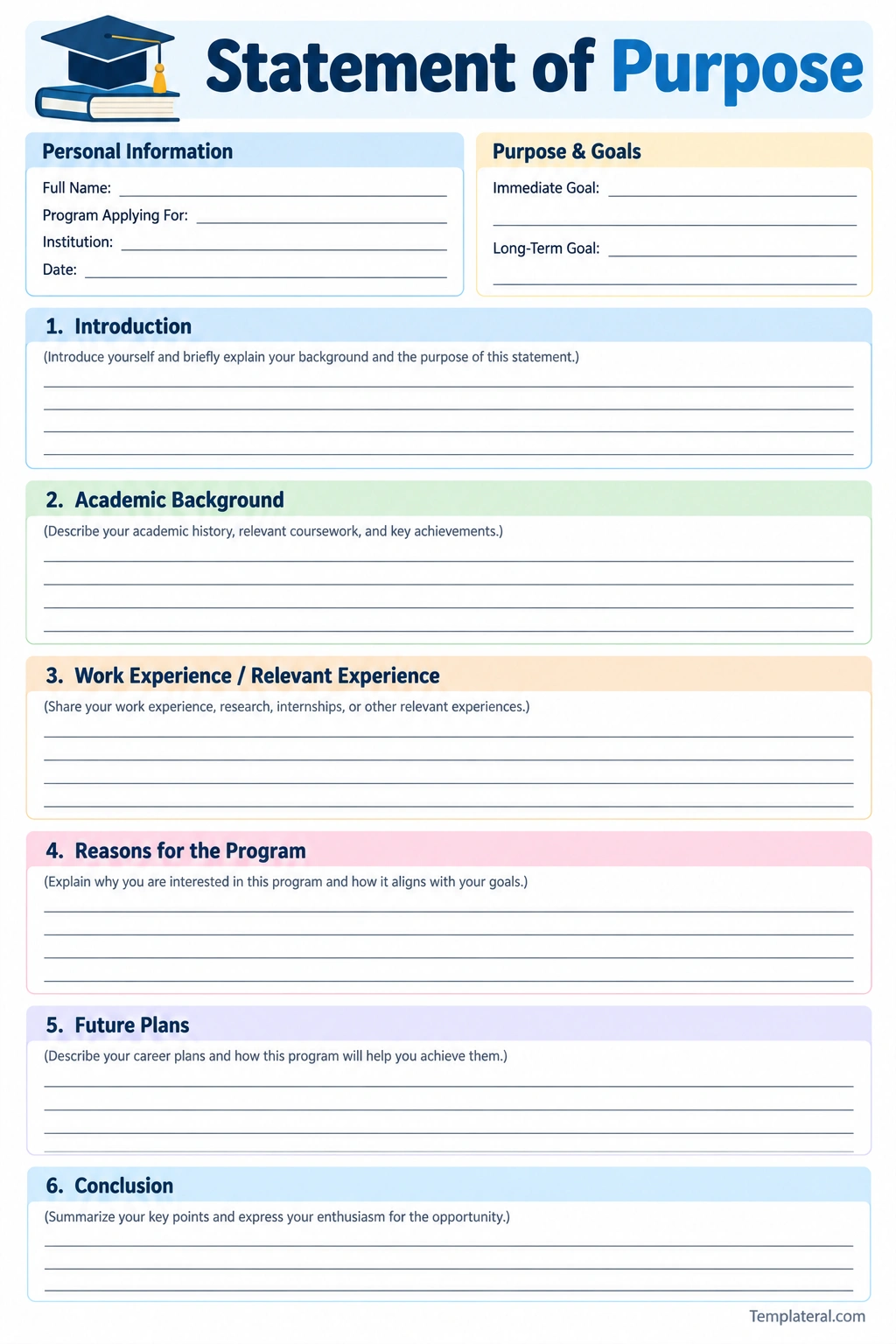
A statement of purpose template can make the planning stage easier by providing a structured place to organize your ideas before writing the final essay.
A useful template can include sections for personal information, academic background, relevant experience, reasons for choosing the program, future plans, and the conclusion. These sections can help you identify missing information and create a logical sequence for your draft.
However, a template should be used as a planning framework rather than copied word for word. Your final statement should reflect your own experiences, goals, writing style, and reasons for applying.
Frequently Asked Questions
What is the main purpose of a statement of purpose?
The main purpose of an SOP is to explain your academic interests, relevant background, reasons for applying to a program, and future goals in a focused written statement.
How long should a statement of purpose be?
The appropriate length depends on the institution and program. Always follow the application’s stated word or character limit rather than relying on a universal length.
Should a statement of purpose include personal experiences?
Relevant personal experiences can be included when they help explain your academic interests, motivation, development, or goals. The focus should remain connected to the purpose of the application.
Can I use a statement of purpose template?
Yes. A template can help organize your ideas and ensure that important areas are considered. However, the final statement should be original and tailored to the specific program.
Should I mention why I chose a specific university?
If the application allows or expects it, explaining why a particular program or institution fits your goals can make the statement more specific. Focus on genuine academic or professional reasons rather than generic praise.
Conclusion
A statement of purpose is an opportunity to explain the academic journey, experiences, interests, and goals behind your application. A strong statement does more than list achievements; it connects those experiences into a clear explanation of where you have been, what you want to study, and where you hope to go next.
Start by researching the program, organizing your relevant experiences, identifying your central theme, and creating a clear outline. Then write, revise, and edit the statement until each section contributes to your overall purpose.
A printable statement of purpose worksheet can also help you organize your ideas before turning them into a polished final essay. With thoughtful planning and careful revision, you can create a focused statement that accurately represents your academic interests and goals.
Download: Statement of Purpose Template
