A Military Biography provides an overview of a service member’s background, military career, education, leadership experience, and professional achievements. It helps readers understand an individual’s service history, responsibilities, and contributions to their branch of service.
Whether you are preparing an officer profile, creating a military career summary, or looking for a Military Biography example, a well-written biography presents important information in a clear and professional way. It can be used for military organization websites, leadership introductions, historical publications, veteran profiles, and professional portfolios.
Writing an effective military bio requires accurate information, a logical structure, and an appropriate tone. This guide explains what to include, how to organize military career details, and how to create a polished biography that communicates a service member’s experience and accomplishments.
What Is a Military Biography?
A Military Biography is a written account of a service member’s personal background, military experience, professional development, and significant accomplishments. Depending on its purpose, it may cover an individual’s entire career or focus on selected milestones.
Military biographies are used in a variety of settings, including official military websites, unit publications, retirement ceremonies, historical records, memorial tributes, and veteran recognition programs.
Unlike a military resume, which emphasizes qualifications and employment history, a military bio usually presents information as a narrative. It explains how a person’s education, assignments, leadership responsibilities, and achievements contribute to their professional story.
A strong military biography generally answers these questions:
- Who is the service member?
- Which branch of the military did they serve in?
- What education, training, and qualifications did they complete?
- Which assignments or leadership positions did they hold?
- What notable achievements or awards did they receive?
- How did their service contribute to their unit or organization?
What to Include in a Military Biography
The content of a military biography depends on the person’s career, the intended audience, and any applicable publication requirements. The following sections provide a useful starting point.
1. Name, Rank, and Branch of Service
Begin with the service member’s name, rank, and military branch when relevant. You may also include their current or former position, unit, and career specialty.
- Name and rank: Use the appropriate name and rank for the biography’s purpose.
- Branch of service: Identify the Army, Navy, Air Force, Marine Corps, Space Force, Coast Guard, or another country’s military branch as applicable.
- Military specialty: Describe the person’s occupational field or professional role.
- Current or final assignment: Include the relevant unit or position when authorized for publication.
For historical biographies, distinguish clearly between a person’s current rank, highest rank achieved, and rank held during a particular assignment.
2. Professional Summary
The professional summary introduces the service member’s military background and major areas of responsibility. It should give readers a quick understanding of the individual’s experience and contributions.
For example, a military officer’s summary might focus on leadership, logistics, aviation, communications, engineering, medical support, or operational planning. Select details that accurately reflect the person’s actual career.
3. Education and Military Training
Education and professional training explain how the service member developed the knowledge and skills required for their duties. Include relevant academic degrees, military schools, technical courses, and leadership programs.
- Academic qualifications and educational institutions.
- Initial military training and officer or enlisted education.
- Advanced career training and technical qualifications.
- Leadership courses and professional development programs.
- Other relevant certifications or specialized instruction.
Present qualifications accurately and use official program names when available. Do not describe a course as completed if the person has not finished it.
4. Military Assignments and Career History
Assignments provide a timeline of the service member’s professional development. List significant positions in a consistent chronological order and include dates, job titles, units, and locations when appropriate.
Explain the responsibilities associated with important assignments rather than simply listing unit names. This helps readers understand the scope of the person’s experience and how their career progressed.
5. Awards, Decorations, and Recognition
Military awards and decorations can document recognized service, achievement, and professional contributions. Include only awards that the individual actually received and use the correct official names.
Follow applicable rules for listing medals, ribbons, badges, and other distinctions. Avoid implying that a service member received an award simply because it is commonly associated with a particular position or assignment.
6. Leadership Experience and Achievements
Leadership experience can be an important part of a military career summary. Describe relevant responsibilities such as supervising personnel, coordinating training, managing resources, mentoring team members, or supporting organizational readiness.
Where appropriate, include specific and verifiable achievements. Focus on what the person contributed, the responsibilities they held, and the professional impact of their work.
Never invent operational results, deployment history, commendations, or leadership accomplishments to make a biography appear more impressive.
Military Biography Example
The following fictional example demonstrates how to organize military career information into a professional narrative. It is an illustrative writing sample, not a verified service record or official military biography.
Sample Military Officer Biography
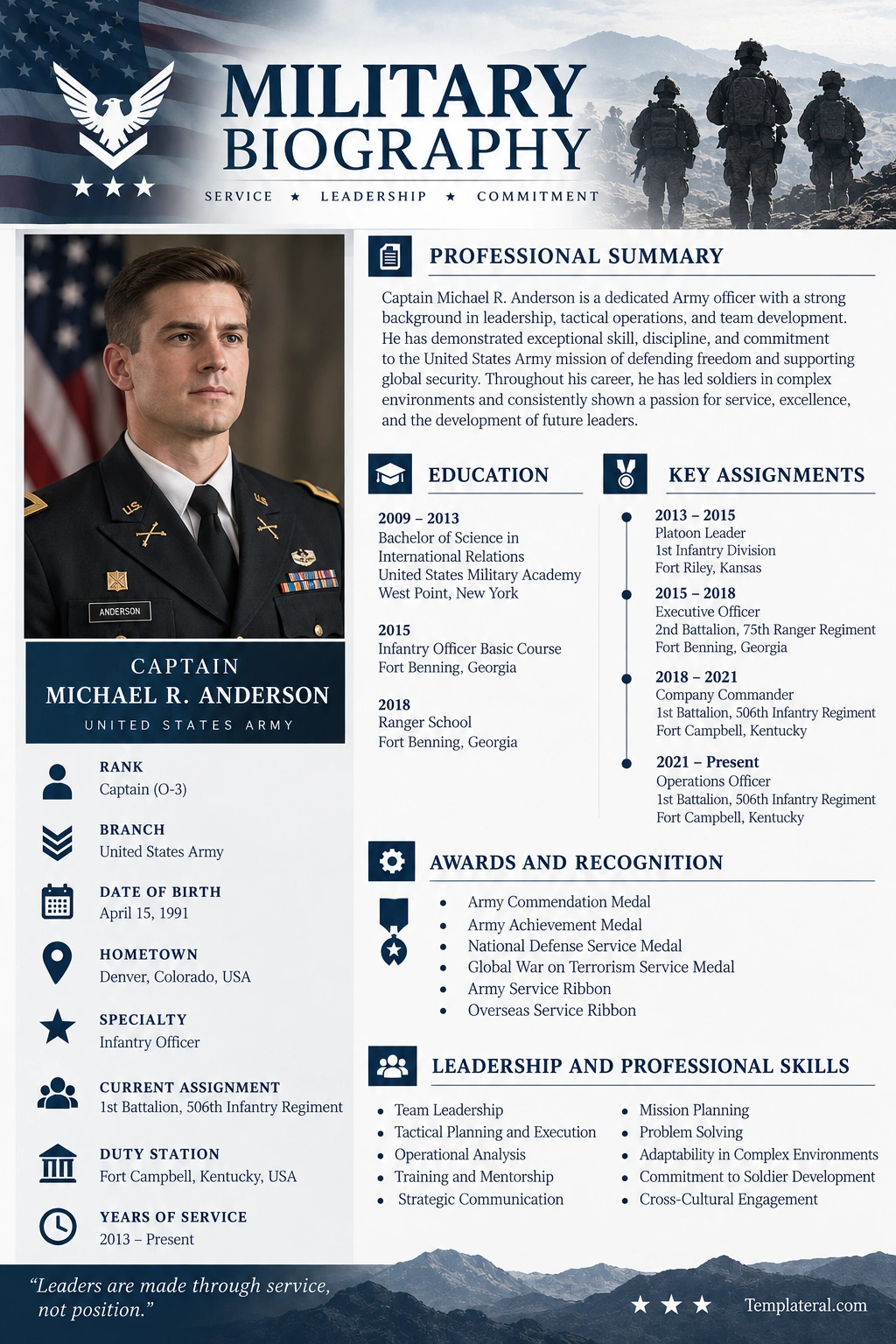
Captain Michael R. Anderson — Fictional Example
Captain Michael R. Anderson is a fictional Army officer whose professional background includes leadership, training coordination, and operational planning. His illustrative career profile emphasizes teamwork, professional development, and a commitment to supporting the mission of his organization.
In this sample, Anderson completed a bachelor’s degree in international relations and attended relevant military training programs. His fictional assignments include platoon-level leadership, staff responsibilities, and experience supporting unit training activities.
Throughout his illustrative career, Anderson has focused on personnel development, clear communication, and effective coordination. His professional interests include leadership development, mission preparation, and improving team performance.
This example demonstrates how education, assignments, and leadership responsibilities can be combined into a concise military biography. For a real service member, replace all fictional details with verified information and obtain any required approval before publication.
How to Write a Military Biography Step by Step
Step 1: Determine the Purpose of the Biography
First, identify where the biography will appear and who will read it. An official leadership profile may require a formal third-person narrative, while a veteran tribute may focus more on personal history, service milestones, and community contributions.
Check whether the relevant military organization, publisher, or event coordinator provides a specific template or word limit.
Step 2: Collect and Verify Career Information
Gather the service member’s relevant records, educational history, assignment details, awards, and professional achievements. Confirm dates, rank changes, job titles, and unit names before drafting the biography.
When writing about another person, use reliable sources and obtain the necessary permission to access or publish personal information.
Step 3: Organize the Information Chronologically
Arrange the career timeline so that readers can follow the service member’s progression. Depending on the intended format, you can begin with the current role and summarize earlier assignments, or present the entire career from the earliest milestone to the most recent.
Use consistent date formatting and make sure the sequence of events is accurate.
Step 4: Highlight Meaningful Contributions
Select achievements that help explain the person’s professional impact. Relevant examples might include leadership responsibilities, training initiatives, technical contributions, or documented improvements to an organizational process.
Use clear language and avoid unnecessary military jargon. Explain specialized duties in terms that readers outside the military can understand.
Step 5: Maintain a Professional Tone
Third-person writing is common for official military biographies. For example, a biography might begin, “Captain Anderson currently serves as…” or “During his career, Major Smith held several leadership assignments.”
Follow the publication’s style requirements, use appropriate terminology, and avoid exaggerated claims or overly promotional language.
Step 6: Review Accuracy and Publication Security
Before publication, review the biography for factual accuracy, spelling, grammar, and consistency. Confirm that names, dates, ranks, awards, and unit designations are correct.
Equally important, follow applicable privacy, operational security, and public-release requirements. Do not publish classified information, sensitive deployment details, restricted operational information, or personal data without proper authorization.
Tips for Creating a Professional Military Bio
Use these practical guidelines to make a military biography clear, credible, and informative.
- Keep the information relevant: Include details that support the purpose of the biography.
- Verify official terminology: Check ranks, unit names, military schools, awards, and job titles.
- Use a consistent timeline: Present career milestones in a logical sequence.
- Highlight meaningful achievements: Focus on verified contributions instead of listing every routine duty.
- Explain specialized roles: Make the biography accessible to readers who are unfamiliar with military terminology.
- Protect sensitive information: Include only information appropriate for the intended audience and approved for release.
- Proofread carefully: Review dates, names, abbreviations, punctuation, and grammar.
- Follow official guidelines: Use the required format when preparing a biography for a military organization.
Military Biography Template: A Simple Outline
A basic outline can help you organize the necessary details before writing the complete biography.
- Name and rank: Identify the service member using the appropriate professional designation.
- Branch and specialty: State the military branch and relevant career field.
- Professional summary: Introduce the person’s background and major responsibilities.
- Education and training: Include relevant academic and military qualifications.
- Assignments: Summarize significant positions and career milestones.
- Awards and achievements: List verified recognition and professional contributions.
- Closing summary: End with a concise statement about the person’s service or professional legacy.
This outline is a general writing guide rather than an official military document. Adjust it to match the person’s career and the requirements of the intended publication.
Frequently Asked Questions About Military Biography
What is a Military Biography?
A Military Biography is a professional or historical account of a service member’s background, military career, education, assignments, leadership responsibilities, and notable achievements.
What should a Military Biography include?
A military biography commonly includes the person’s name, rank, branch of service, career summary, education, military training, significant assignments, awards, and leadership experience. The exact content depends on the intended use.
How long should a Military Biography be?
The appropriate length depends on the publication. A short military bio may require one paragraph, while an official profile or historical account may need several paragraphs. Follow any word limit or formatting requirements provided by the organization.
How do I write a military biography for a veteran?
Start with the veteran’s verified service history, branch, rank, major assignments, and relevant achievements. You may also include information about post-service activities or community contributions when appropriate and approved for publication.
Should a Military Biography be written in first person or third person?
Third person is common for official military profiles because it provides a formal, consistent tone. First person may be appropriate for a personal memoir or autobiographical account. Follow the intended publication’s requirements.
Can I use a Military Biography template?
Yes. A template can help organize career history, education, assignments, awards, and professional achievements. However, a general template should not replace an official format when one is required.
Can I include military awards and decorations?
Yes, provided the awards and decorations are verified and relevant to the biography. Use their correct names and follow applicable rules for public presentation.
Can a Military Biography be published online?
A military biography can be published online when the information is appropriate for public release and complies with applicable privacy, security, and organizational requirements. Official profiles may require review or approval before publication.
Conclusion
A well-written Military Biography presents a service member’s career, education, assignments, leadership experience, and accomplishments in a clear and professional format. By organizing verified information into a logical narrative, you can create a profile that informs readers and accurately represents the person’s service.
Start by defining the purpose of the biography, confirming the relevant career details, and selecting the most meaningful achievements. Then review the writing for clarity, consistency, and compliance with applicable publication requirements.
Whether you are preparing a military officer biography, writing a veteran profile, or creating a military career summary, accuracy and a professional tone are essential to producing a credible and useful biography.
Download: Military Biography Template
