An Affidavit of Heirship is a legal document used to identify the heirs of a person who has died, particularly when there is no valid or enforceable will. It provides information about the deceased person, family relationships, marital status, and surviving heirs so that ownership of certain property can be properly established.
In some situations, an affidavit of heirship may help a family transfer or establish ownership of property without going through a lengthy probate process. The document can be especially useful when real estate or other assets need to be transferred after someone’s death. However, the rules and requirements vary significantly by state, county, and type of property.
Because an Affidavit of Heirship can have important legal and financial consequences, it is important to provide complete and accurate information. The document should clearly identify the deceased person and every known heir so that ownership interests can be determined correctly.
What Is an Affidavit of Heirship?
An Affidavit of Heirship is a sworn statement that provides information about the family and heirs of a deceased person. It is generally used when someone dies without a valid will or when additional documentation is needed to establish who inherited property under applicable law.
The person completing the affidavit, often called the affiant, provides information based on their knowledge of the deceased person’s family and circumstances. Depending on local requirements, the affidavit may need to be signed before a notary public.
The document may be used as part of the process of establishing ownership of real property and, in some jurisdictions, certain types of personal property. Whether an affidavit is sufficient for a particular transfer depends on the laws and procedures applicable to the estate.
Why Is an Affidavit of Heirship Important?
When a person dies without a valid will, family members and other interested parties may need to establish who the legal heirs are. Without clear documentation, transferring property can become complicated.
An Affidavit of Heirship organizes important family information into one formal statement. This can help create a record of the deceased person’s family relationships and identify people who may have inheritance rights.
Depending on the circumstances and state law, the document may help with matters such as:
- Establishing a record of the deceased person’s heirs.
- Documenting family relationships after a death.
- Supporting the transfer of certain real property.
- Providing information to a title company or other interested party.
- Reducing uncertainty about who may have an ownership interest.
- Supporting estate-related transactions when probate is not required or is otherwise avoided under applicable law.
An Affidavit of Heirship does not automatically determine inheritance rights in every situation. State law and the specific facts of the estate determine whether the document can be used and what legal effect it has.
When Is an Affidavit of Heirship Used?
An Affidavit of Heirship is commonly associated with situations in which a person dies without a will. It may also be considered when a family needs documentation showing the relationship between the deceased person and the people who may have inherited property.
When There Is No Valid Will
If someone dies intestate, meaning without a valid will, inheritance is generally determined under the intestacy laws of the applicable jurisdiction. An affidavit may help document the family relationships needed to identify potential heirs.
When Property Needs to Be Transferred
Real estate can create additional complications after an owner’s death. An affidavit of heirship may be used in some jurisdictions to provide evidence concerning the heirs of the deceased property owner.
When a Family Wants to Avoid Unnecessary Probate
Probate procedures can involve court filings, legal fees, waiting periods, and other administrative requirements. Some states provide alternative procedures for certain estates or types of property. An affidavit of heirship may be part of such a process when permitted by local law.
It is important not to assume that an affidavit automatically eliminates probate. Some estates still require formal probate or another court-supervised process.
What Information Should an Affidavit of Heirship Include?
The exact requirements vary by jurisdiction, but a well-organized Affidavit of Heirship generally includes information that allows the deceased person’s family relationships to be understood clearly.
Information About the Deceased Person
The affidavit should identify the person who died. Common information may include:
- Full legal name.
- Date of birth.
- Date of death.
- Last known address.
- Marital status.
- Information about a spouse or former spouse.
Information About the Affiant
The person making the statement should generally provide their own identifying information and explain their relationship to the deceased person. The affiant should have sufficient knowledge of the family circumstances to provide accurate information.
Information About the Heirs
The affidavit should identify the people who may be heirs under the applicable inheritance laws. Depending on the circumstances, this can include a surviving spouse, children, parents, siblings, or other relatives.
Useful information may include each heir’s full name, relationship to the deceased person, date of birth, and current address.
Family History and Additional Information
The document may also need information about previous marriages, deceased children, adopted children, or other family circumstances that could affect the determination of heirs.
Providing complete information is important because leaving out a person who may have inheritance rights can create disputes or complications later.
Who Can Sign an Affidavit of Heirship?
The person who signs an Affidavit of Heirship is generally someone with knowledge of the deceased person’s family history. The specific requirements depend on the jurisdiction and the intended use of the document.
In some situations, witnesses who are familiar with the deceased person’s family may also be required. The affidavit may need to be signed and sworn before a notary public.
Before signing, check the applicable state and local requirements. A document that is acceptable in one state may not satisfy the requirements in another.
How to Fill Out an Affidavit of Heirship
Completing an Affidavit of Heirship carefully can help prevent missing or inconsistent information. Use the following general process as a starting point.
1. Identify the Deceased Person
Begin by entering the deceased person’s complete name and other requested information. Verify dates and addresses against reliable records whenever possible.
2. Identify the Affiant
Provide the name, address, and relationship of the person making the statement. The affiant should only provide information that they know to be accurate.
3. Describe the Family Relationships
List the deceased person’s spouse, children, parents, and other relevant relatives as required by the applicable form or law. Include information about family members who died before the deceased when relevant to determining inheritance rights.
4. List the Known Heirs
Clearly identify each potential heir. Avoid using vague descriptions such as “my children” when the form requires individual names and identifying information.
5. Review the Information
Carefully review the completed document for missing names, incorrect dates, spelling errors, and inconsistent family information. Even a small error can cause questions during an estate or property transfer process.
6. Sign and Notarize the Document
If notarization is required, do not sign the document prematurely. Follow the instructions provided by the applicable authority or legal professional and sign it in the presence of the notary when required.
Affidavit of Heirship for Real Estate
One of the most common reasons families consider an Affidavit of Heirship is to establish a record of heirs in connection with real property owned by a deceased person.
For example, if a homeowner dies without a valid will, family members may need to establish who inherited the property before ownership can be transferred or sold. In jurisdictions that recognize affidavits of heirship for this purpose, the document may provide evidence of the family relationships and heirs.
However, real estate transactions often involve county records, title companies, deeds, liens, and other legal requirements. An affidavit of heirship alone may not be sufficient to complete a property transfer.
Affidavit of Heirship for Personal Property
Some jurisdictions may allow simplified procedures involving certain personal property. Depending on local law, an affidavit or similar document may be used in connection with assets such as vehicles or other property.
Bank accounts and financial assets can be subject to separate ownership, beneficiary designation, and financial institution requirements. Therefore, families should not assume that an Affidavit of Heirship can be used to transfer every type of personal property.
Always confirm the requirements of the institution holding the asset and the laws of the applicable jurisdiction.
Common Mistakes to Avoid
Because an Affidavit of Heirship contains important family information, accuracy is essential. Avoid these common mistakes when preparing the document:
- Leaving out an heir: Failing to identify a person who may have inheritance rights can create serious complications.
- Using incorrect names: Use complete and accurate names whenever possible.
- Guessing information: Do not invent dates, addresses, or family relationships simply to complete a form.
- Ignoring previous marriages: Prior marriages and divorces may be relevant to determining heirs.
- Failing to identify deceased relatives: The death of a spouse, child, or parent may affect the inheritance analysis.
- Signing incorrectly: Follow applicable requirements for signatures and notarization.
- Assuming the form works everywhere: State and local requirements can differ substantially.
Affidavit of Heirship vs. Will
An Affidavit of Heirship and a will serve different purposes. A will is a document through which a person can generally state how they want their property handled after death, subject to applicable law. An affidavit of heirship is generally used after death to document family relationships and identify heirs.
An affidavit does not replace a valid estate plan. If someone wants to control how their property will be distributed after death, preparing an appropriate estate planning document while they are alive can provide clearer instructions.
Tips for Preparing an Affidavit of Heirship
A careful preparation process can make the document easier for family members, property professionals, and other parties to review.
- Gather official records before completing the form.
- Confirm the deceased person’s full legal name and date of death.
- Make a complete list of immediate and potentially relevant relatives.
- Document previous marriages and family relationships when applicable.
- Use consistent names and dates throughout the document.
- Keep copies of supporting documents and the completed affidavit.
- Check whether witnesses or notarization are required.
- Verify the requirements of the state and county where the document will be used.
- Consult a qualified attorney when the estate involves disputes, substantial property, unclear heirs, or complicated family relationships.
Can You Use an Affidavit of Heirship Template?
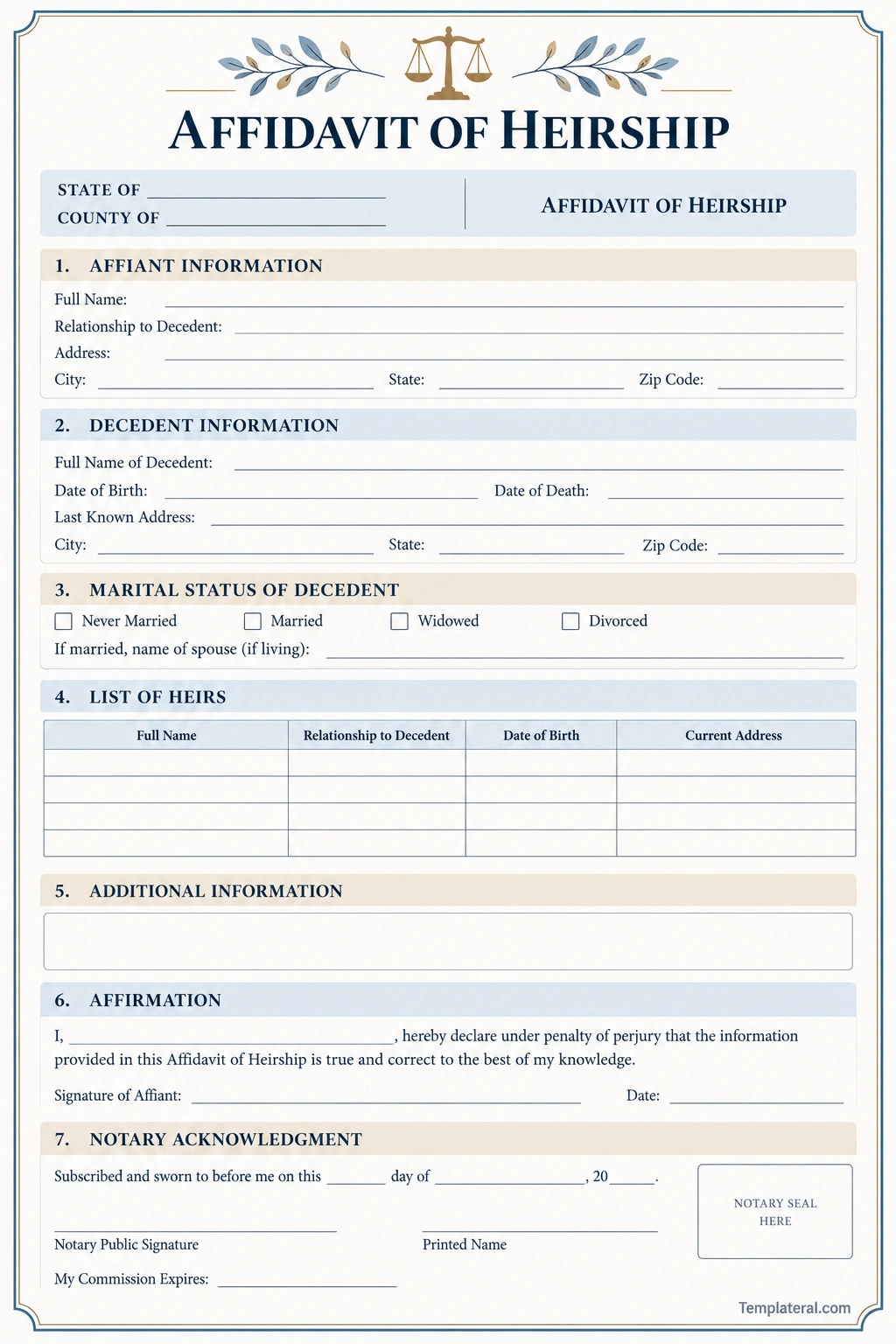
An Affidavit of Heirship Template can provide a convenient starting point for organizing the information needed for an heirship affidavit. A printable template can help structure details about the deceased person, affiant, marital status, heirs, family history, affirmation, and notarization.
However, a template should be treated as a general organizational tool rather than a substitute for a jurisdiction-specific legal form or legal advice. Requirements can vary depending on where the deceased person lived, where the property is located, and the type of asset involved.
Before relying on a completed template for an actual property transfer or estate matter, verify that its format and contents satisfy the applicable requirements.
Final Thoughts on Affidavit of Heirship
An Affidavit of Heirship can help document family relationships and identify the heirs of someone who died without a valid or enforceable will. In jurisdictions where the procedure is recognized, it may provide useful evidence when dealing with certain property and estate matters.
The key to preparing an effective affidavit is accuracy. Every relevant family relationship should be reviewed carefully, and information should be supported by reliable records whenever possible. A clear and complete document can reduce confusion and make it easier for the appropriate parties to understand the deceased person’s family structure.
Because inheritance and property laws differ by jurisdiction, always confirm the applicable requirements before using an Affidavit of Heirship for an actual legal or property transaction. When the estate is complicated or ownership is disputed, professional legal guidance can help protect the interests of everyone involved.
Download: Affidavit of Heirship Form PDF
