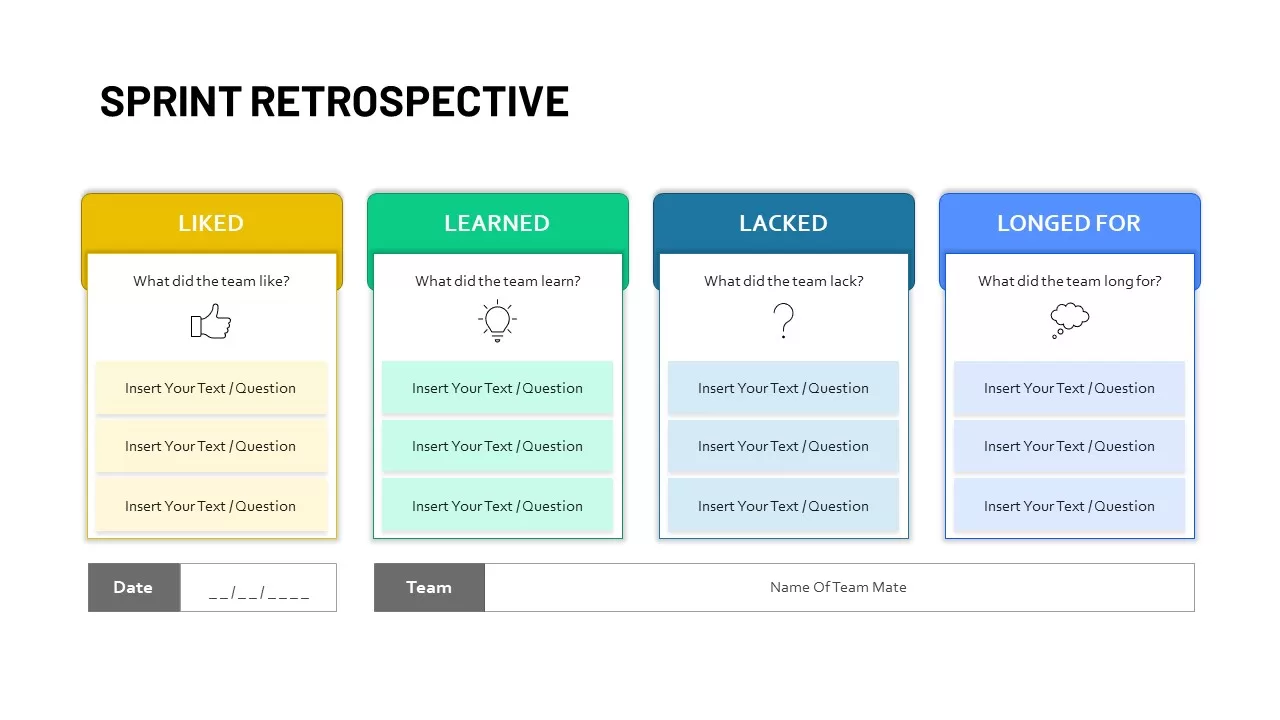
Agile development has become a popular approach in software development due to its ability to adapt to changing requirements and deliver high-quality products efficiently. One of the key ceremonies in Agile is the sprint retrospective, where the team reflects on the last sprint to identify what went well, what problems occurred, and what improvements can be made for the next one.
This retrospective meeting is an essential part of the Agile process as it provides an opportunity for the team to inspect and adapt their processes, tools, and dynamics to become more effective and increase quality in the following sprint.
What is Sprint Retrospective?
A sprint retrospective is a meeting held at the end of each sprint in Agile development where the team comes together to review the sprint that just ended. The purpose of this meeting is to reflect on what went well during the sprint, what didn’t go as planned, and what can be improved for the next sprint. The focus is on continuous improvement, and the goal is to identify ways to work more efficiently and effectively in future sprints.
Why is Sprint Retrospective Important?
The sprint retrospective is crucial in Agile development for several reasons. Firstly, it provides a dedicated time for the team to reflect on their work and identify areas for improvement. This reflection helps the team learn from their mistakes and successes, leading to better outcomes in future sprints. Secondly, the retrospective encourages open communication and collaboration within the team, fostering a culture of continuous improvement and learning. Finally, the sprint retrospective helps the team stay focused on their goals and ensures that they are delivering value to the customer in each sprint.
Key Elements of Sprint Retrospective
There are several key elements that make up a successful sprint retrospective:
- Time-bound: The retrospective should be time-bound to ensure that it does not drag on indefinitely. A typical retrospective lasts between 1-2 hours, depending on the length of the sprint.
- Participation: All team members should actively participate in the retrospective to ensure that everyone’s perspectives are heard and considered.
- Focus on Improvement: The main focus of the retrospective should be on identifying areas for improvement and creating actionable plans to address them in the next sprint.
- Positive Environment: The retrospective should be conducted in a positive and non-blaming environment to encourage open and honest feedback.
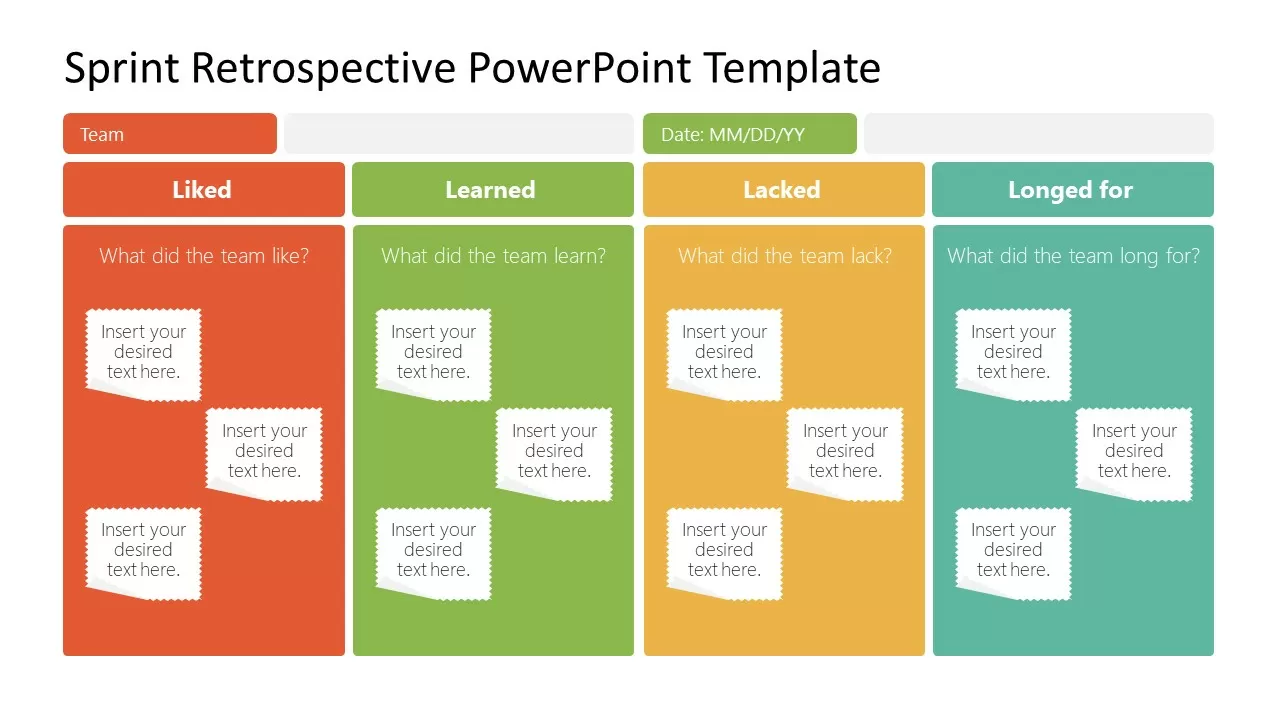
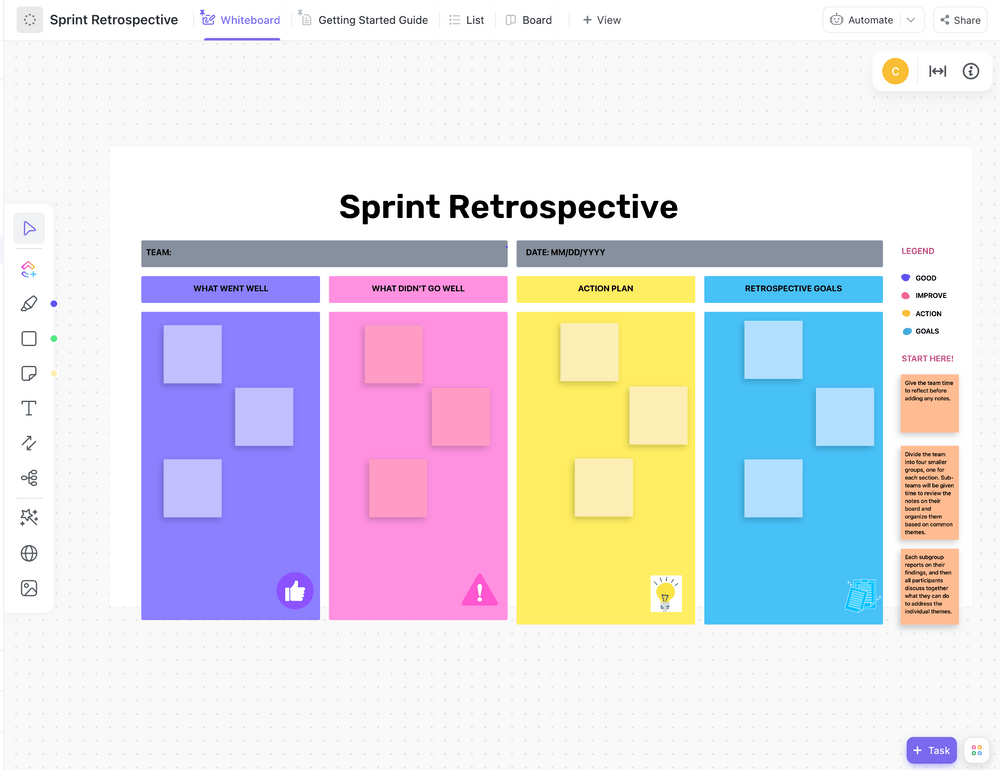
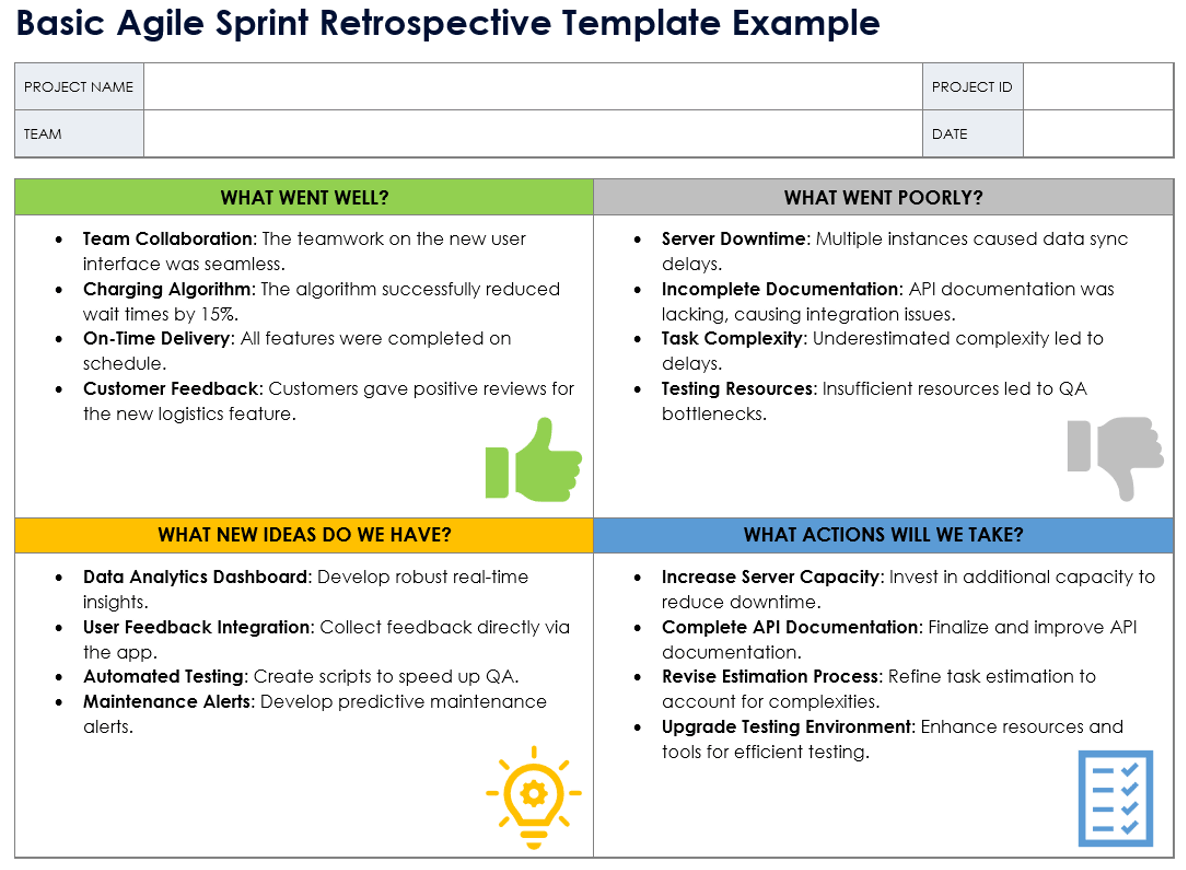
Examples
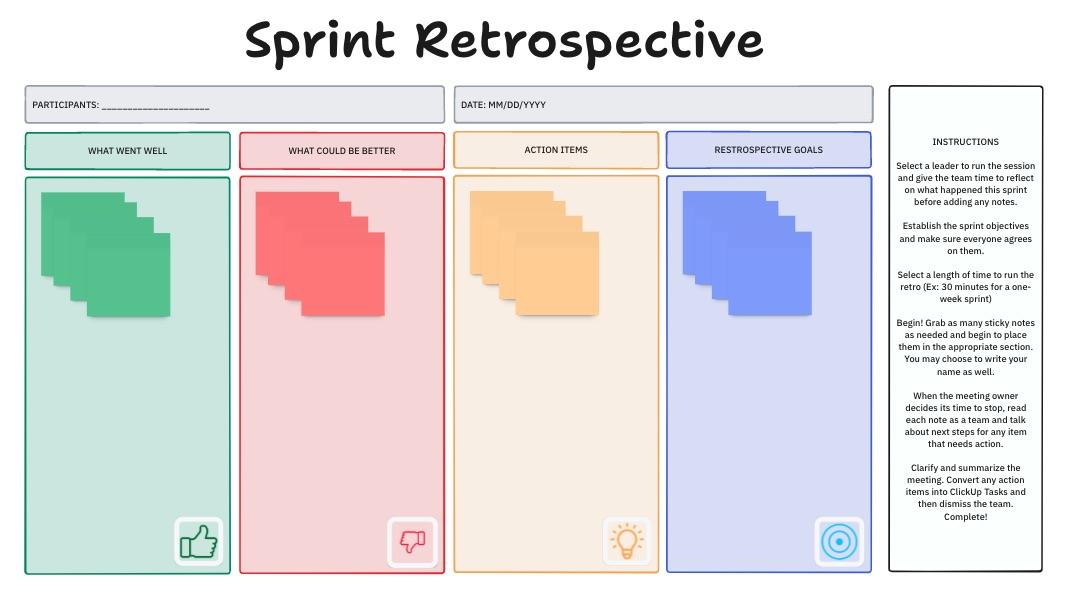
How to Conduct a Sprint Retrospective
Conducting a successful sprint retrospective involves several steps:
1. Set the Stage
Begin the retrospective by setting the stage and reminding the team of the purpose and goals of the meeting. Encourage open communication and emphasize the importance of learning and continuous improvement.
2. Gather Data
Review the data from the last sprint, including the sprint backlog, burndown chart, and any other relevant metrics. Use this data to guide the discussion and identify areas for improvement.
3. Generate Insights
Facilitate a discussion with the team to generate insights on what went well, what didn’t go as planned, and what can be improved. Encourage team members to share their perspectives and experiences.
4. Decide What to Do
Based on the insights generated, work with the team to decide on actionable items that can be implemented in the next sprint to address the identified issues and improve performance.
5. Close the Retrospective
Wrap up the retrospective by summarizing the key takeaways and action items. Ensure that everyone is clear on their responsibilities and commitments for the next sprint.
Tips for Successful Sprint Retrospective
Here are some tips to ensure a successful sprint retrospective:
- Be Consistent: Conduct the retrospective at the end of each sprint to maintain a regular cadence of reflection and improvement.
- Encourage Participation: Ensure that all team members actively participate and contribute to the discussion to gather diverse perspectives.
- Focus on Action: Prioritize actionable items and create a plan to implement them in the next sprint to drive real change.
- Celebrate Successes: Acknowledge and celebrate the team’s successes to boost morale and motivation for future sprints.
- Iterate and Improve: Continuously iterate on the retrospective process itself to make it more effective and valuable for the team.
Conclusion
The sprint retrospective is a crucial ceremony in Agile development that enables teams to reflect on their work, identify areas for improvement, and drive continuous improvement. By conducting regular retrospectives and implementing actionable changes, teams can enhance their processes, tools, and dynamics to deliver higher quality products more efficiently. By embracing the spirit of continuous improvement, teams can stay agile and responsive to changing requirements, ultimately leading to greater success in their projects.
