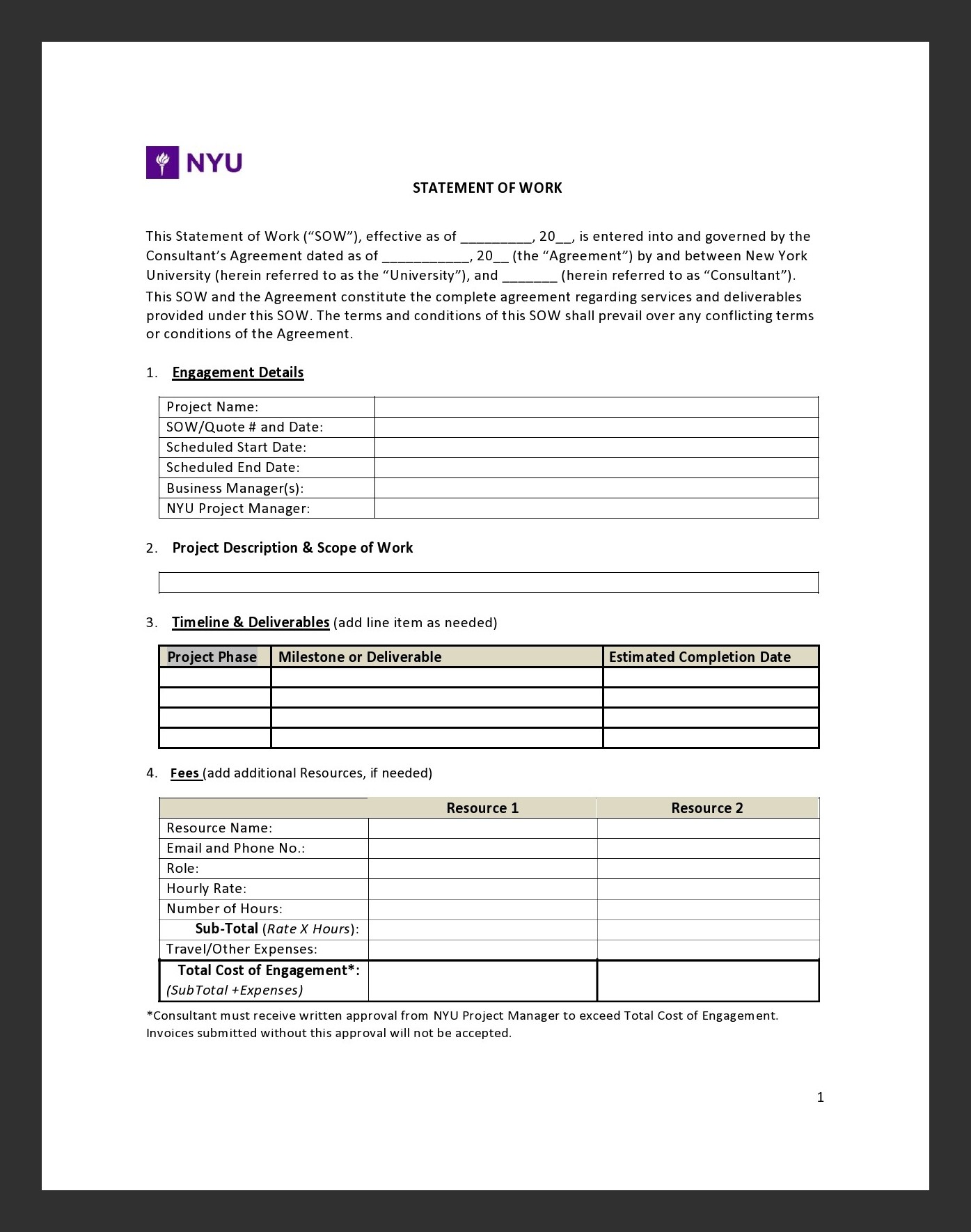
When embarking on a new project, whether big or small, it is crucial for all parties involved to have a clear understanding of the scope, timeline, deliverables, and cost. This is where a Statement of Work (SOW) comes into play. A Statement of Work serves as a formal, contractual document that outlines the specifics of a project between a client and a service provider. It acts as a roadmap, guiding the project from start to finish, ensuring that everyone is on the same page and minimizing misunderstandings along the way.
What is a Statement of Work?
A Statement of Work, also known as a SOW, is a document that clearly defines the project scope, objectives, timelines, deliverables, and costs. It serves as a formal agreement between the client and the service provider, outlining the responsibilities of each party and setting expectations for the project. The SOW acts as a reference point throughout the project, ensuring that all parties are aligned on the goals and requirements.
Why is a Statement of Work Important?
A Statement of Work is essential for several reasons:
- Clarity: The SOW provides clarity on project requirements, ensuring that all parties have a shared understanding of what needs to be done.
- Alignment: It aligns all parties on expectations, reducing the chances of misunderstandings or miscommunication.
- Accountability: The SOW acts as a legal agreement, holding both parties accountable for their roles and responsibilities.
- Risk Management: It helps in identifying potential risks and addressing them proactively, reducing the likelihood of project delays or failures.
What to Include in a Statement of Work
When creating a Statement of Work, there are several key elements that should be included:
- Project Objectives: Clearly define the goals and objectives of the project.
- Scope of Work: Outline the specific tasks and activities that will be carried out as part of the project.
- Timeline: Define the project timeline, including key milestones and deadlines.
- Deliverables: Specify the deliverables that will be provided upon completion of the project.
- Cost: Clearly outline the cost of the project, including any additional expenses or fees.
- Roles and Responsibilities: Define the roles and responsibilities of each party involved in the project.
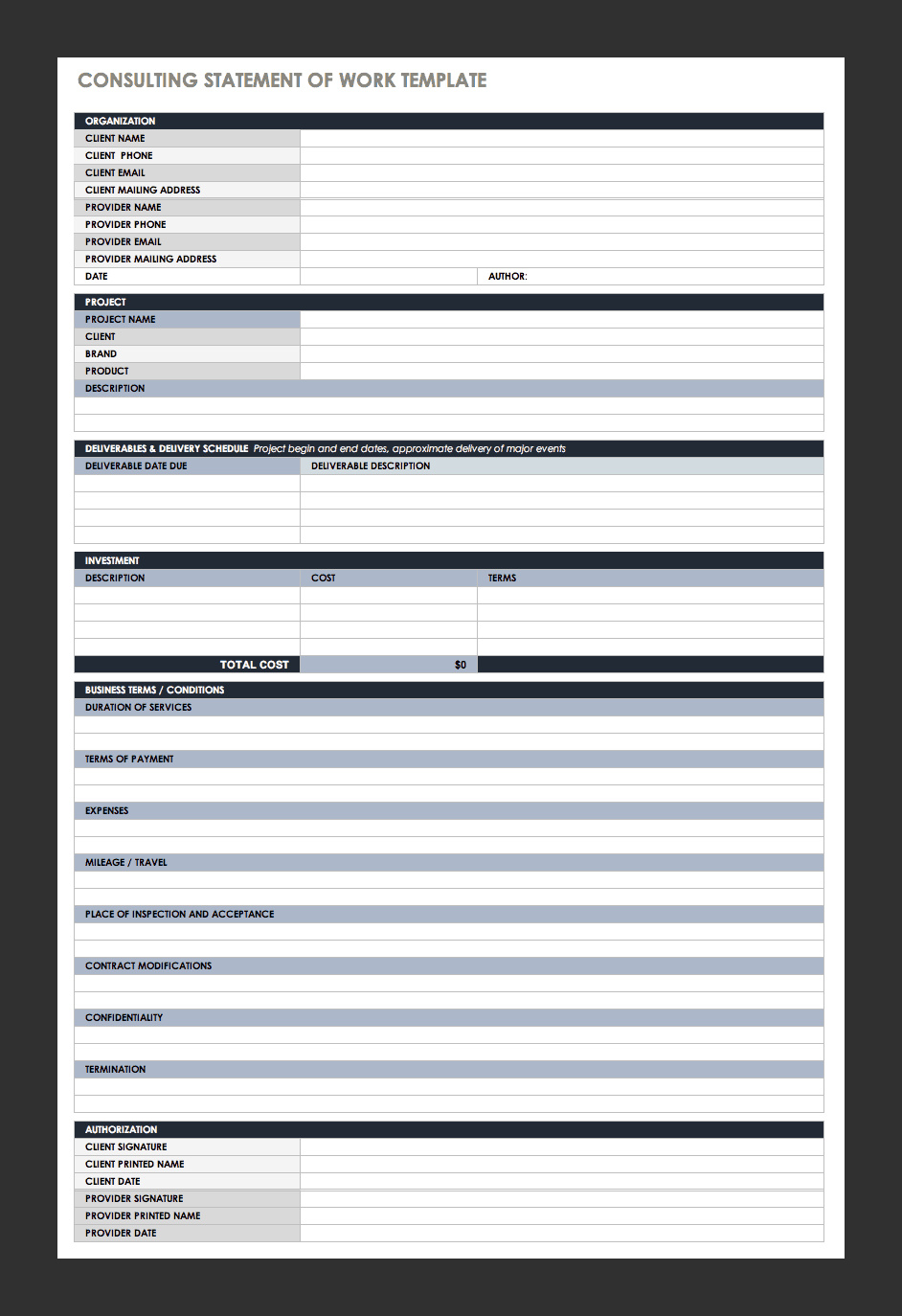
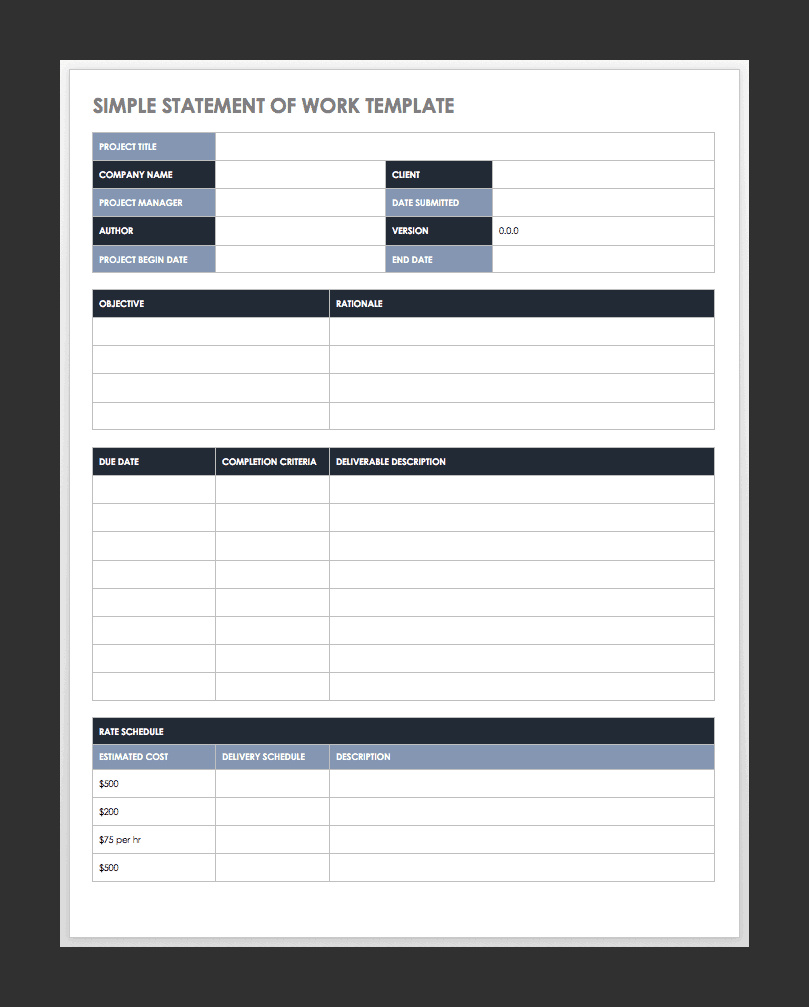
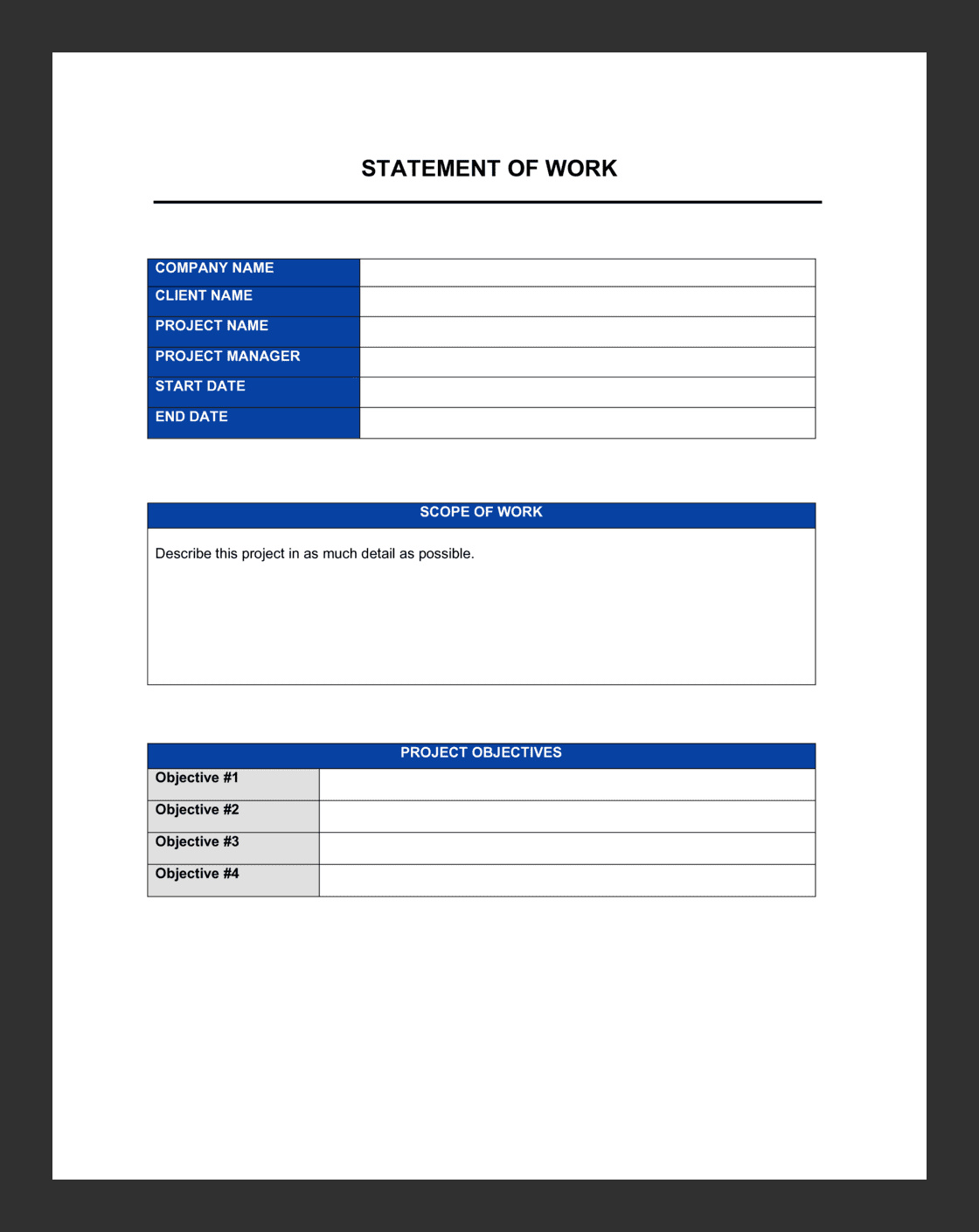
Examples
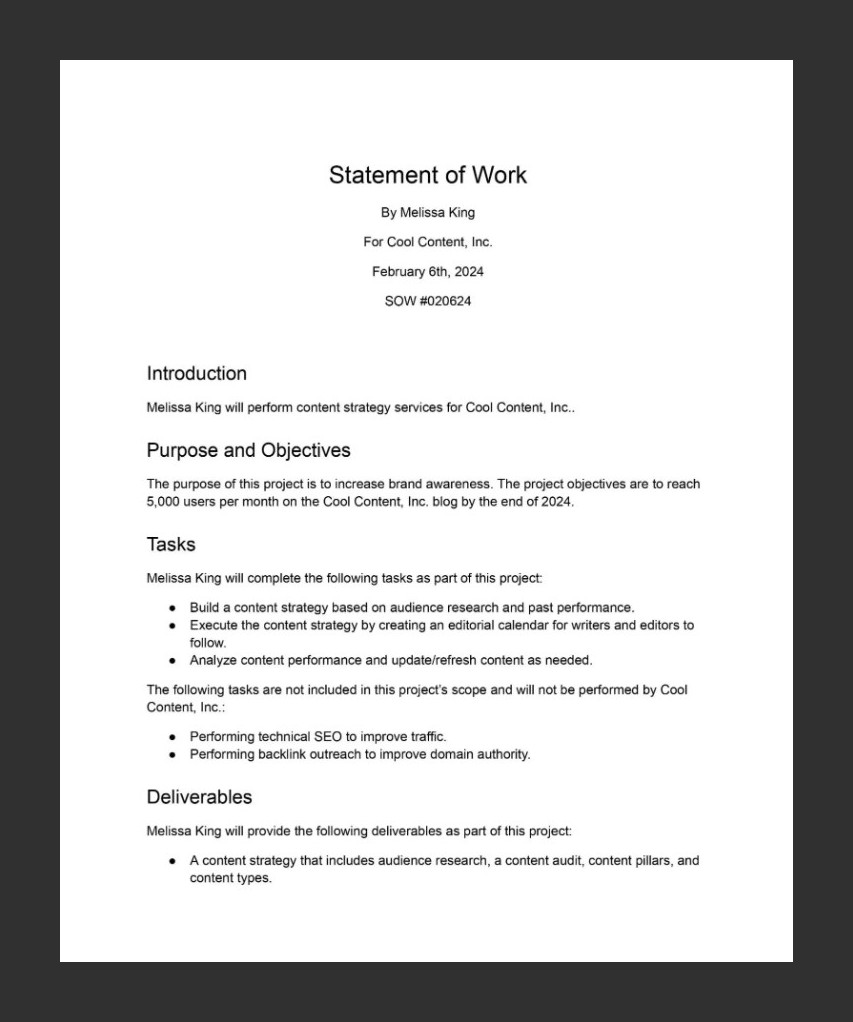
How to Create a Statement of Work
Creating a Statement of Work can be a detailed process, but it is essential for the success of the project. Here are some steps to follow when creating a SOW:
- Define the Project Scope: Clearly outline the objectives and scope of the project.
- Collaborate with Stakeholders: Involve key stakeholders in the process to ensure all perspectives are considered.
- Detail Deliverables and Timeline: Specify the deliverables and timeline for the project, including key milestones.
- Include Budget and Costs: Clearly outline the cost of the project, including any contingencies or additional expenses.
- Review and Finalize: Review the SOW with all parties involved and make any necessary revisions before finalizing.
Tips for Successful Project Management with a Statement of Work
Here are some tips to ensure successful project management with a Statement of Work:
- Communicate Clearly: Ensure open and transparent communication with all parties involved in the project.
- Set Realistic Expectations: Define realistic goals and expectations for the project to avoid disappointment.
- Monitor Progress: Regularly monitor and track the progress of the project against the SOW to ensure it stays on track.
- Address Issues Promptly: Address any issues or concerns that arise during the project promptly to prevent delays or setbacks.
- Document Changes: If any changes are made to the project scope or requirements, be sure to document them in writing and update the SOW accordingly.
By following these tips and guidelines, you can ensure that your project is set up for success with a clear and comprehensive Statement of Work in place.
