Keeping track of business phone calls is essential for staying organized, maintaining strong customer relationships, and making sure important conversations do not get forgotten. Whether you handle sales calls, contact potential clients, follow up on inquiries, or resolve customer complaints, every business conversation can contain information that matters later.
A call log provides a simple way to record these interactions. It helps you remember who you spoke with, when the conversation happened, what you discussed, and what needs to happen next. Instead of relying on memory or searching through old messages, you can refer to one organized record.
Using a call log template also makes daily recordkeeping easier. You can document incoming and outgoing calls, note important details, track follow-up deadlines, and review your communication history whenever necessary. This guide explains what a call log is, what information to include, and how to use a printable or digital call log effectively.
What Is a Call Log?
A call log is a written or digital record of phone conversations made or received during a specific period. It documents essential information about each call, allowing individuals and businesses to maintain an accurate communication history.
A typical phone call log includes the date, time, contact name, phone number, call purpose, conversation notes, and any follow-up actions. Some businesses also record call duration, call outcomes, customer concerns, and the name of the employee who handled the conversation.
Call logs are useful in many professional situations, including:
- Sales and prospecting: Record cold calls, potential customers, sales discussions, and future opportunities.
- Customer service: Document customer questions, complaints, resolutions, and service requests.
- Business development: Track conversations with partners, suppliers, vendors, and prospective clients.
- Administrative work: Keep records of important business calls and communication tasks.
- Personal organization: Remember appointments, service inquiries, and other important phone conversations.
By maintaining a consistent call history, you can reduce missed follow-ups and make business communication more manageable.
Why Is Keeping a Call Log Important?
Phone conversations often happen throughout a busy workday. Without a reliable recording system, it is easy to forget important details or overlook an action that was promised during a conversation. A call log helps prevent these problems.
1. Keeps Important Information Organized
A call log provides one convenient place to record business conversations. You can quickly find contact details, discussion points, and previous communication without relying on memory.
This is particularly helpful when you communicate with multiple customers, suppliers, or business partners every day.
2. Makes Follow-Ups Easier
Many business calls require additional action. You might need to send a quotation, provide requested documents, schedule another conversation, or contact a customer after checking an issue.
Recording these responsibilities in your call log makes it easier to remember what needs attention and when it should be completed.
3. Improves Customer Relationships
Customers appreciate businesses that remember previous conversations. When you can refer to an earlier discussion, you can provide more consistent service and avoid asking customers to repeat information unnecessarily.
A detailed call history also helps employees understand previous concerns and continue conversations more effectively.
4. Supports Sales Performance
Sales teams can use call records to monitor prospecting activities, evaluate conversations, and identify opportunities that require additional attention.
By reviewing call outcomes, sales representatives can identify which prospects are interested, which conversations need follow-up, and which opportunities are no longer active.
5. Creates a Useful Communication History
A consistent record of business calls can help clarify what was discussed and which actions were agreed upon. It provides a helpful reference when questions arise about previous conversations.
However, a call log should be treated as an internal business record rather than a legally complete record of every conversation. Follow your organization’s retention, privacy, and documentation policies.
What Information Should a Call Log Include?
A useful call log should capture enough information to understand each interaction without making the recording process unnecessarily complicated. The exact fields depend on your business needs, but several details are helpful for most situations.
Essential Call Log Fields
- Date: The day the phone call took place.
- Time: The time the call started or was received.
- Contact name: The name of the person you spoke with.
- Company: The organization associated with the contact, if applicable.
- Phone number: The telephone number used for the conversation.
- Call type: Whether the call was incoming or outgoing.
- Call purpose: The reason for making or receiving the call.
- Call notes: Important information discussed during the conversation.
- Call outcome: The result of the interaction.
- Next action: Any task that needs to be completed after the call.
- Follow-up date: The date when another contact or action is required.
You do not necessarily need every field for every situation. For example, a simple personal phone call tracker may only require the date, time, contact name, and notes. A sales call tracking sheet may need additional fields for lead status, priority, and follow-up deadlines.
Free Printable Call Log Templates
A printable call log template makes it easier to organize phone conversations without creating a new tracking sheet from scratch. You can print a blank form, keep it near your desk, and fill it in whenever an important call takes place.
Different templates serve different purposes. Here are three practical formats you can use depending on the type of communication you need to track.
1. Daily Call Log Template
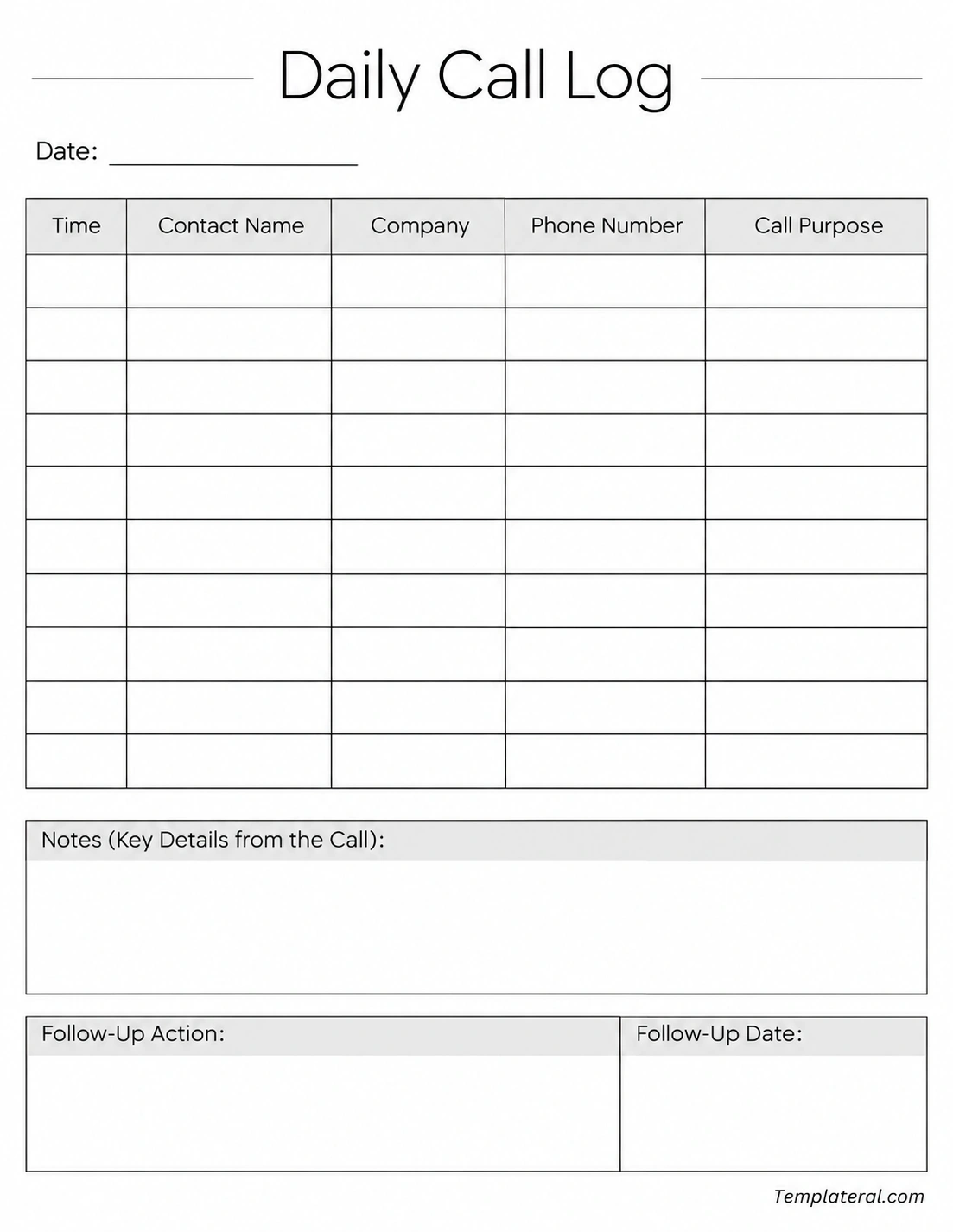
A daily call log is designed to record multiple phone calls throughout the workday. It is particularly useful for employees, business owners, receptionists, and sales representatives who handle frequent incoming and outgoing calls.
The template includes columns for the time, contact name, company, phone number, and call purpose. It also provides space for detailed notes and follow-up information.
Use this format when you want a straightforward overview of your daily business phone activity.
2. Call Follow-Up Tracker Template
Some business conversations require more than a simple record. You may need to contact a prospect again, send additional information, prepare a proposal, or check whether a customer received the assistance they requested.
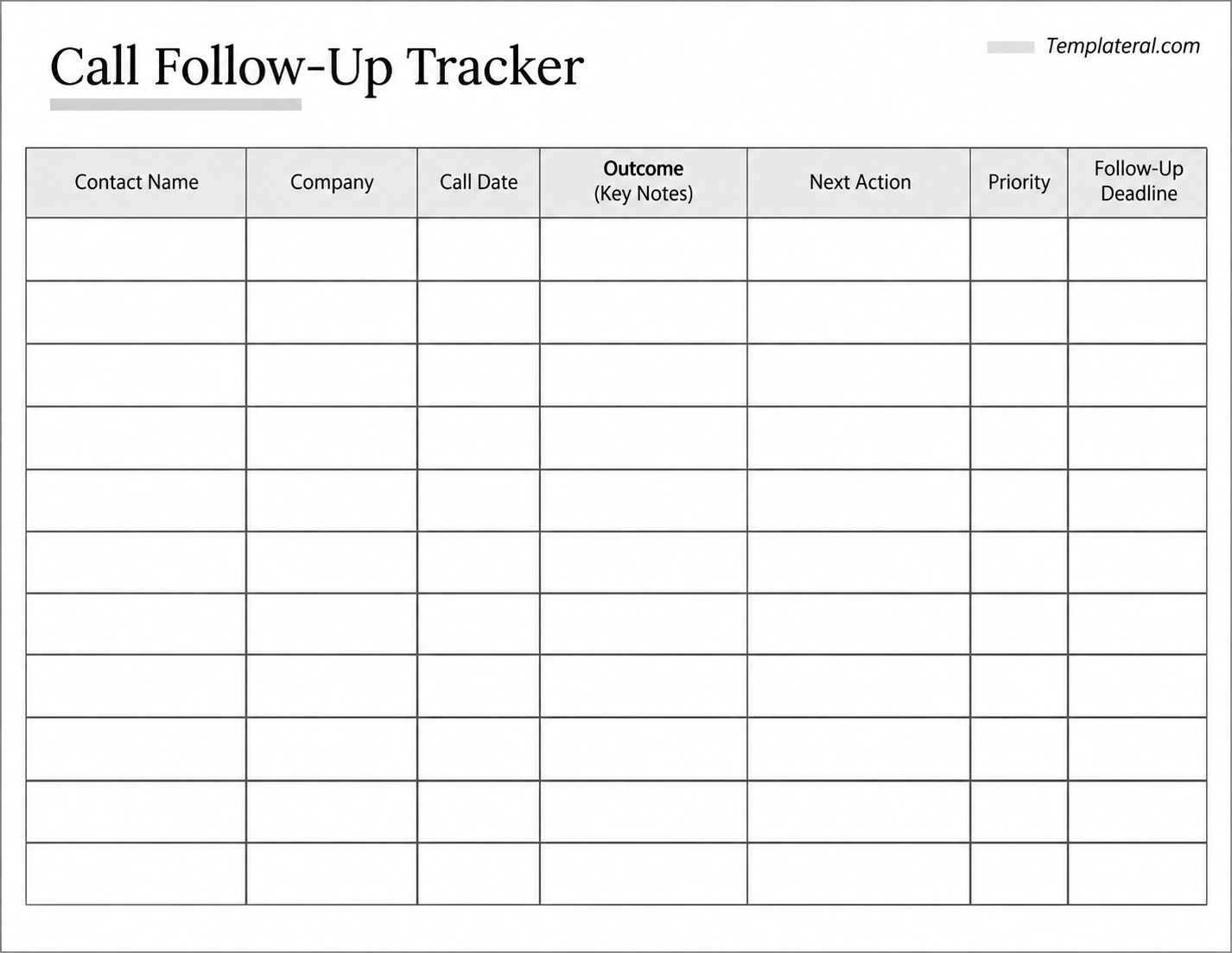
A call follow-up tracker helps you manage these responsibilities. It organizes contact information, call outcomes, next actions, priority levels, and follow-up deadlines in one place.
This format is especially useful for sales teams and business owners who manage several customer relationships at the same time.
3. Customer Call Notes Template
Customer service conversations often involve detailed questions, complaints, technical problems, or requests for assistance. A basic call record may not provide enough space to document everything accurately.
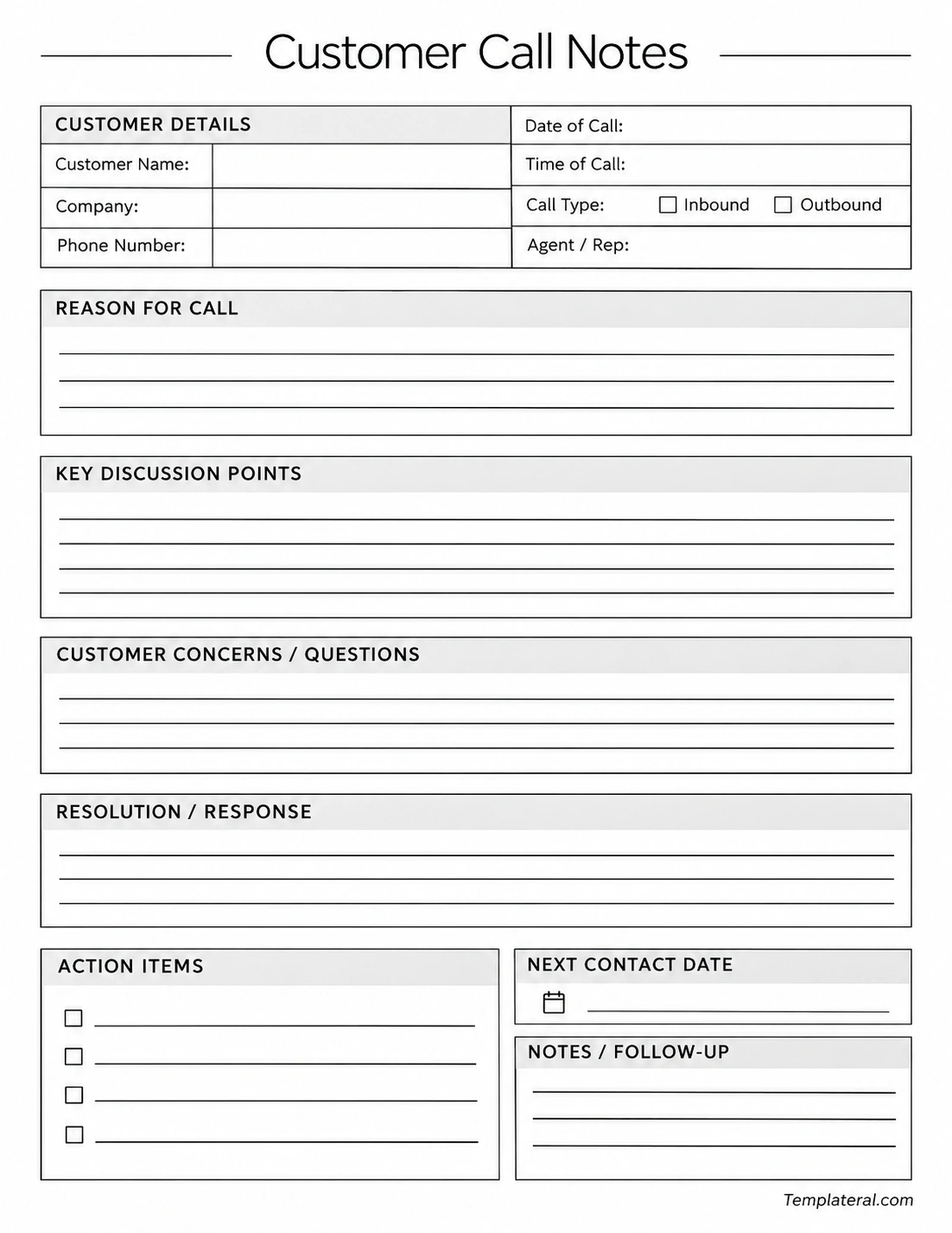
A customer call notes template provides dedicated sections for customer details, the reason for the call, key discussion points, customer concerns, resolutions, and action items.
It is a practical option for customer service representatives, support teams, and employees who need to document conversations in greater detail.
How to Use a Call Log Template Effectively
Having a call log template is only the first step. To get the most value from it, you should develop a consistent routine for recording and reviewing your phone conversations.
1. Record Calls as Soon as Possible
Complete your call log immediately after each important conversation. Waiting until the end of the day can make it difficult to remember specific details, names, and commitments.
If you cannot write everything down during the call, make a few quick notes and complete the record as soon as the conversation ends.
2. Keep Your Notes Clear and Specific
Write short, meaningful descriptions instead of vague comments. For example, rather than writing “customer called about an issue,” describe the actual problem and the information provided.
Clear notes make it easier for you or another employee to understand the conversation later.
3. Always Record the Next Action
One of the most useful parts of a business call log is the follow-up section. Whenever you promise to do something, write it down along with the person responsible and the expected completion date.
This helps prevent important requests from being overlooked.
4. Review Your Call Records Regularly
Set aside a few minutes at the end of each workday to review your records. Check for outstanding tasks, missed follow-ups, and conversations that require additional attention.
For sales teams, a weekly review can also help identify promising leads and communication patterns.
5. Protect Sensitive Information
Business phone records may contain personal contact details or confidential information. Store your call logs securely and limit access to authorized individuals.
Avoid recording unnecessary sensitive information, and follow applicable privacy laws and company policies when collecting, storing, and retaining customer information.
Paper Call Log vs. Digital Call Log
Both paper and digital call logs can help you organize business communication. The right choice depends on how frequently you make calls, how many people need access, and how you prefer to manage information.
Paper Call Log
A printable call log is a convenient option for people who prefer handwriting and want a physical record close to their workspace.
- Easy to print and use immediately.
- Does not require a computer or specialized software.
- Convenient for quick handwritten notes.
- Useful for individual employees and small businesses.
However, paper records can be difficult to search, share, and organize when the number of calls becomes large. They also require secure physical storage.
Digital Call Log
A digital phone call log can be maintained using a spreadsheet, document, customer relationship management system, or dedicated business software.
- Easy to search and filter by contact, date, or call status.
- Can be shared with authorized team members.
- Supports sorting and organizing large amounts of information.
- Can include reminders and automated follow-up workflows.
Digital records may require additional security measures, access controls, and regular backups. Some systems also involve subscription costs.
For occasional business calls, a printable form may be sufficient. For larger teams or high call volumes, a digital tracking system may be more practical.
Common Call Log Mistakes to Avoid
Even a well-designed call tracking sheet can become ineffective if information is recorded inconsistently. Avoid these common mistakes to keep your records useful.
- Leaving entries incomplete: Missing contact details or call dates can make records difficult to understand.
- Writing unclear notes: Vague descriptions provide little value when reviewing previous conversations.
- Forgetting follow-up dates: Important tasks may be delayed or missed without a clear deadline.
- Using inconsistent formats: Different date formats and abbreviations can make records harder to review.
- Failing to update outcomes: An unresolved task should be updated when the requested action has been completed.
- Keeping unnecessary information: Excessive personal or confidential details can create privacy and security risks.
Simple, consistent recordkeeping is usually more effective than a complicated system that employees rarely use.
Frequently Asked Questions About Call Logs
What is the purpose of a call log?
The purpose of a call log is to maintain an organized record of incoming and outgoing phone calls. It helps individuals and businesses remember important conversations, track customer interactions, monitor follow-up tasks, and maintain communication histories.
What should be included in a call log?
A typical call log should include the date, time, contact name, phone number, call purpose, conversation notes, call outcome, and any required follow-up actions. Businesses can add extra fields depending on their needs.
How do I create a simple call log?
Start by creating a table with columns for the date, time, contact name, phone number, and call notes. Add fields for call outcomes and follow-up dates if you need to manage ongoing business conversations. You can create the table in a spreadsheet or use a printable call log template.
What is the difference between a call log and call notes?
A call log provides an overview of phone activity, including who called, when the call happened, and its purpose. Call notes contain more detailed information about the conversation, such as questions, concerns, decisions, and agreed actions. Both can be used together.
Can I use a call log for sales calls?
Yes. Sales representatives can use a call log to record prospect details, cold calls, sales discussions, lead status, and follow-up activities. It helps organize potential opportunities and maintain consistent communication with prospects.
Should I use a paper or digital call log?
Choose a paper call log if you prefer a simple printable form for everyday use. A digital call log is more suitable when you need to search records, share information with a team, or manage a large number of business conversations.
How often should I update my call log?
You should update your call log immediately after each important conversation whenever possible. Reviewing the records at the end of each workday also helps ensure that follow-up tasks and outstanding requests receive attention.
Conclusion
A well-maintained call log can make business communication easier to organize and manage. By recording important phone conversations, you can keep track of customer interactions, remember previous discussions, and make sure follow-up responsibilities are not forgotten.
Whether you need a daily call log, a call follow-up tracker, or a detailed customer call notes form, choosing the right template can simplify your recordkeeping routine.
Start with a format that matches your daily needs, record information consistently, and review outstanding tasks regularly. With a simple system in place, you can manage business phone calls more efficiently and maintain better relationships with customers and business contacts.
