
Are you applying to nursing school or seeking a new job in the healthcare field? One crucial document you’ll need is a nursing letter of intent. This letter serves as a way to explain your personal motivation, qualifications, and professional goals to an admissions committee or a healthcare employer. In this comprehensive guide, we will walk you through what a nursing letter of intent is, why it’s important, what to include, how to write it effectively, and tips for success.
What is a Nursing Letter of Intent?
A nursing letter of intent is a formal document that outlines your reasons for pursuing a career in nursing, your qualifications and experience in the field, and your professional goals. It is often required as part of the application process for nursing programs or when applying for a job in healthcare. The letter provides an opportunity for you to showcase your passion for nursing and demonstrate why you are a strong candidate for the program or position.
Why is a Nursing Letter of Intent Important?
A nursing letter of intent is important because it allows you to communicate directly with the admissions committee or potential employer. It gives you the chance to go beyond your resume or application and provide more context about who you are as a person and why you are drawn to a career in nursing. A well-written letter of intent can set you apart from other candidates and help you stand out in a competitive field.
What to Include in a Nursing Letter of Intent
When writing a nursing letter of intent, there are several key components you should include to make your letter effective and compelling. Here are some elements to consider incorporating:
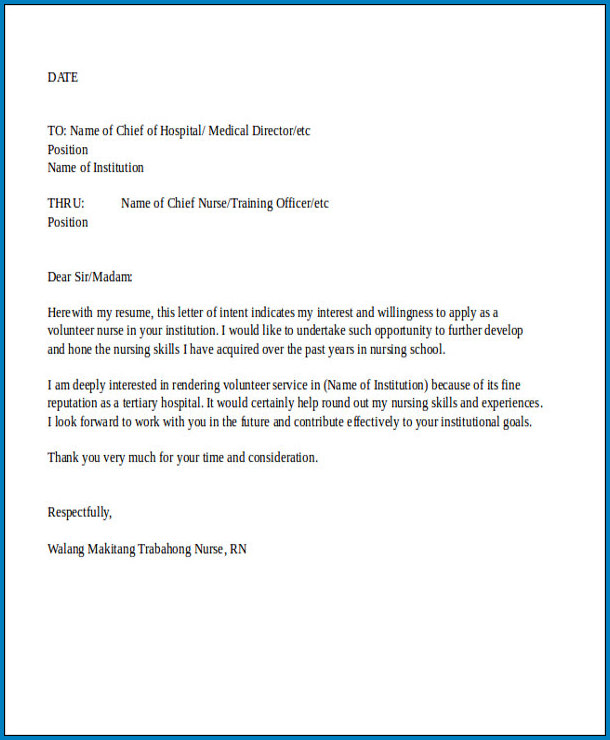
- Introduction: Begin by introducing yourself and stating the purpose of your letter.
- Personal Motivation: Explain why you are passionate about nursing and what inspired you to pursue this career.
- Qualifications: Highlight your relevant experience, education, and skills that make you a strong candidate for the program or position.
- Professional Goals: Clearly articulate your short-term and long-term career goals in the field of nursing.
- Fit: Explain why you are a good fit for the program or position and how you align with the values and mission of the institution or organization.
- Closing: End your letter with a strong conclusion, reiterating your interest in the program or position and expressing gratitude for the opportunity to apply.
Samples of Nursing Letter Of Intent:



How to Write a Nursing Letter of Intent
Writing a nursing letter of intent can seem like a daunting task, but with the right approach, you can craft a compelling and effective letter. Here are some tips to help you write a strong nursing letter of intent:
- Do Your Research: Take the time to learn about the program or organization you are applying to and tailor your letter accordingly.
- Be Authentic: Share your genuine passion for nursing and let your personality shine through in your writing.
- Be Specific: Provide concrete examples and details to support your claims and make your letter more persuasive.
- Proofread Carefully: Check for spelling and grammar errors, and have someone else review your letter before submitting it.
- Follow Instructions: Make sure you adhere to any specific guidelines or requirements provided for the letter of intent.
Tips for Successful Nursing Letter of Intent
When writing your nursing letter of intent, keep these tips in mind to increase your chances of success:
- Show Your Passion: Let your enthusiasm for nursing shine through in your writing.
- Highlight Your Strengths: Showcase your qualifications and experience that make you a strong candidate.
- Be Concise: Keep your letter focused and to the point, avoiding unnecessary details or rambling.
- Customize Your Letter: Tailor your letter to the specific program or position you are applying for to demonstrate your interest and fit.
- Seek Feedback: Ask for feedback from mentors, colleagues, or friends to get different perspectives on your letter.
In conclusion, a nursing letter of intent is a crucial document that can help you make a strong impression on admissions committees or potential employers. By following the guidelines outlined in this guide and putting in the effort to craft a thoughtful and compelling letter, you can increase your chances of success in your nursing career. Good luck!
