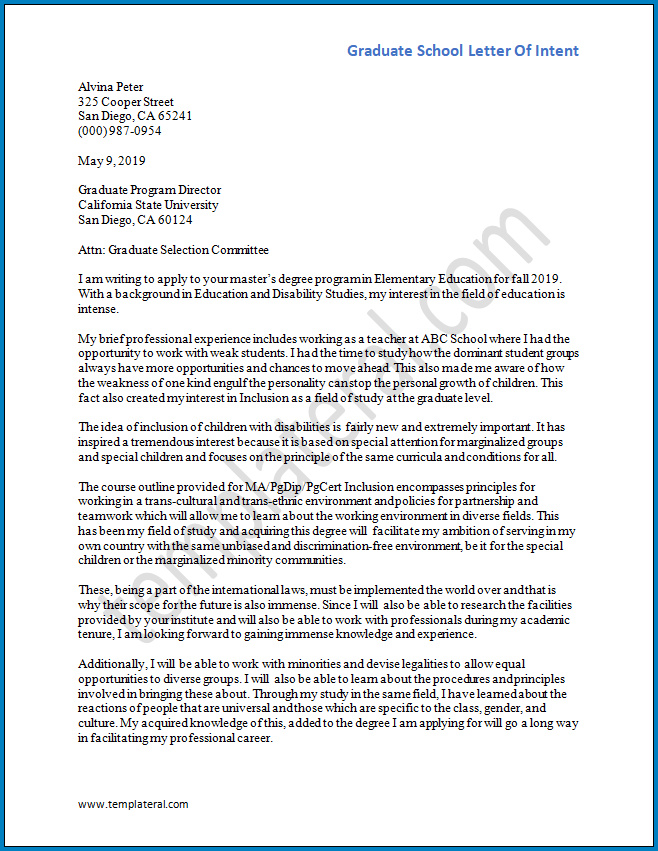
Are you considering applying to graduate school and need to write a compelling letter of intent? This crucial document introduces you to the admissions committee, explains your academic and career goals, and shows why you are the perfect fit for that specific program. Crafting a well-written letter of intent can greatly increase your chances of being accepted into your dream graduate program. Here, we will explore what a graduate school letter of intent is, why it is important, what to include, how to write it effectively, and tips for successful completion.
What is a Graduate School Letter of Intent?
A graduate school letter of intent is a formal document that serves as a personal statement to the admissions committee. It allows you to introduce yourself, showcase your academic and professional achievements, articulate your goals, and explain why you are interested in the specific graduate program. This letter provides insights into who you are as a candidate and why you are a good fit for the program.
Why is a Graduate School Letter of Intent Important?
A well-crafted letter of intent can set you apart from other applicants and make a strong impression on the admissions committee. It allows you to demonstrate your passion for the field of study, highlight your unique qualifications, and showcase your writing skills. Admissions committees often use these letters to gauge a candidate’s commitment, motivation, and potential contribution to the program.
What to Include in a Graduate School Letter of Intent
When writing your letter of intent, it is essential to include the following key components:
- Introduction: Start with a compelling introduction that grabs the reader’s attention and clearly states your purpose.
- Academic Background: Provide a brief overview of your academic background, including your degrees, majors, and any relevant coursework or research.
- Career Goals: Clearly articulate your short-term and long-term career goals and how the graduate program can help you achieve them.
- Fit for the Program: Explain why you are interested in the specific program, how it aligns with your goals, and why you believe you are a good fit for the program.
- Relevant Experience: Highlight any relevant work experience, internships, research projects, or extracurricular activities that demonstrate your qualifications and skills.
- Personal Motivation: Share your personal motivations for pursuing graduate studies in the field and what drives your passion for the subject.
- Closing Statement: End with a strong conclusion that reiterates your interest in the program, expresses gratitude for the opportunity to apply, and invites further consideration of your application.
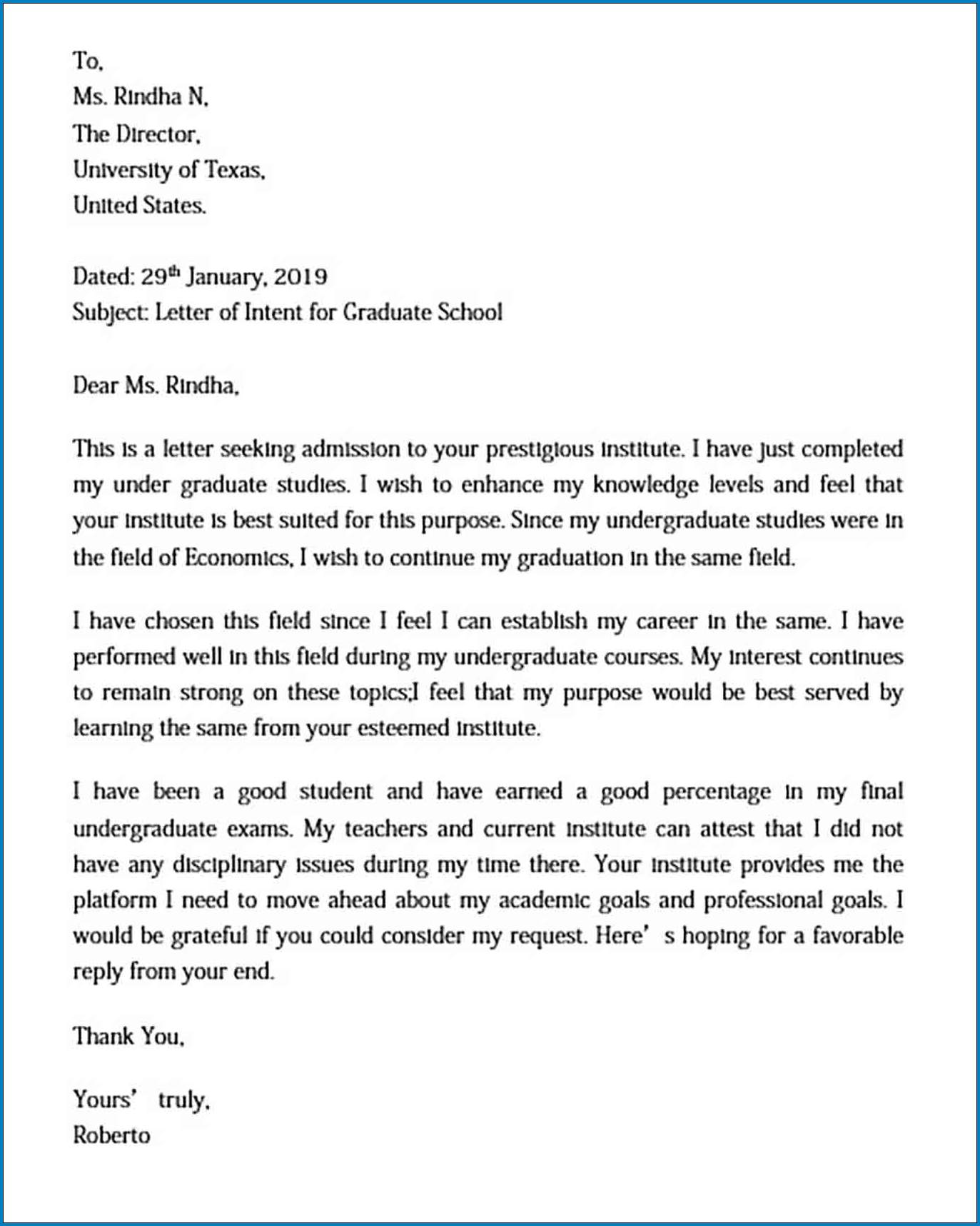
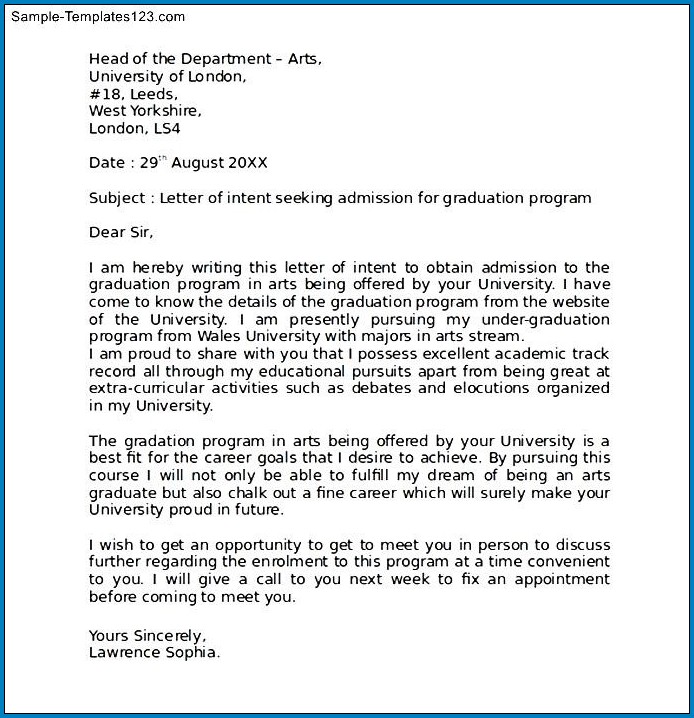
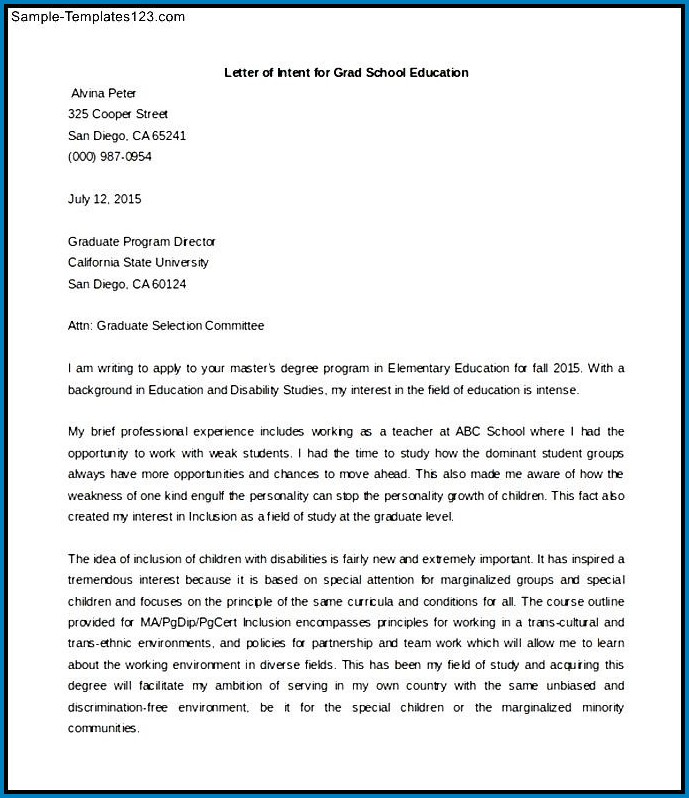
Samples of Graduate School Letter Of Intent:

How to Write a Graduate School Letter of Intent
Writing a compelling letter of intent requires careful planning and attention to detail. Here are some tips to help you craft a persuasive and well-written document:
- Research the Program: Familiarize yourself with the program’s curriculum, faculty, research opportunities, and any specific requirements or expectations.
- Personalize Your Letter: Tailor your letter to the specific program and highlight how your interests, skills, and goals align with the program’s strengths.
- Show, Don’t Tell: Use concrete examples and anecdotes to illustrate your qualifications, experiences, and achievements rather than simply listing them.
- Be Concise and Clear: Keep your letter focused and to the point, avoiding unnecessary jargon or overly complex language.
- Edit and Proofread: Review your letter carefully for spelling, grammar, and punctuation errors, and consider asking a mentor or advisor to provide feedback.
Tips for Successful Graduate School Letter of Intent
To increase the effectiveness of your letter of intent, consider the following tips:
- Start Early: Give yourself plenty of time to brainstorm, draft, revise, and edit your letter to ensure it reflects your best work.
- Show Your Passion: Demonstrate your enthusiasm for the field of study and the program by sharing personal anecdotes or experiences that inspired your interest.
- Be Authentic: Write in your own voice and be genuine in expressing your motivations, goals, and aspirations.
- Seek Feedback: Ask trusted friends, mentors, or advisors to review your letter and provide constructive criticism to help improve its quality.
- Follow Instructions: Pay close attention to the program’s guidelines and requirements for the letter of intent, including word count, formatting, and submission deadlines.
In conclusion, writing a strong graduate school letter of intent is an essential step in the application process. By following these guidelines, you can create a compelling and persuasive document that showcases your qualifications, goals, and fit for the program. Remember to personalize your letter, show your passion for the field, and seek feedback to ensure your letter stands out to the admissions committee. Good luck with your graduate school applications!
Graduate School Letter Of Intent Template | Word – download
