A recipe booklet is a simple and practical way to collect, organize, and preserve recipes in one convenient place. Instead of keeping recipes scattered across notebooks, screenshots, websites, and loose sheets of paper, you can bring your favorite meals together in a structured collection.
A recipe booklet can be completely personal or created for a specific purpose. You can use one to organize family recipes, prepare weekly meals, create a collection of favorite desserts, document traditional dishes, or share recipes with friends and family. With a well-planned recipe booklet template, it is easy to create a consistent layout for ingredients, directions, cooking times, notes, and other useful details.
What Is a Recipe Booklet?
A recipe booklet is a compact collection of recipes organized into multiple pages. Each page typically contains the name of a dish, ingredients, cooking instructions, and additional information such as serving size, preparation time, cooking time, and personal notes.
Unlike a large cookbook, a booklet can focus on a smaller selection of recipes. This makes it useful when you want a portable and focused collection rather than hundreds of dishes.
A recipe booklet can be created for:
- Family and heirloom recipes
- Favorite everyday meals
- Holiday and seasonal recipes
- Baking and dessert collections
- Meal preparation
- Special diets or eating plans
- Recipe gifts for friends and family
- Community or fundraising projects
- Cooking classes and educational programs
- Personal recipe organization
Why Create a Recipe Booklet?
Creating a recipe booklet provides more than a place to store recipes. It gives your collection a consistent structure and makes your favorite dishes easier to find and use.
Keep Favorite Recipes Organized
Recipes can quickly become difficult to manage when they are stored in different places. A dedicated booklet brings them together so you can find the recipe you need without searching through multiple sources.
Preserve Family Recipes
A booklet can also become a meaningful way to preserve recipes that have been passed down through generations. You can include the original recipe along with family notes, memories, or information about when the dish is traditionally prepared.
Create a Personalized Collection
Unlike a standard cookbook, a personal recipe booklet can contain exactly the recipes you enjoy. You can remove dishes you never make and add new recipes as you discover them.
Make Cooking More Convenient
A well-organized recipe page puts the ingredients and directions in one place. This can make it easier to prepare meals, check quantities, and follow each cooking step.
What to Include in a Recipe Booklet
The contents of a recipe booklet depend on your goals, but a few sections can make the collection much more useful.
Cover Page
The cover introduces the collection. Include a clear title such as “My Recipe Booklet,” “Family Recipes,” or “Favorite Dessert Recipes.” You can also add the owner’s name and date.
Table of Contents
A table of contents is particularly useful when the booklet contains many recipes. List each recipe and its corresponding page number so readers can quickly find a specific dish.
Recipe Information
Each recipe should have enough information for someone to prepare the dish successfully. Useful fields include the recipe title, serving size, preparation time, cooking time, ingredients, and directions.
Notes Section
A notes area allows you to record substitutions, cooking adjustments, serving suggestions, or personal observations. These notes can become especially valuable after making the recipe several times.
Recipe Booklet Template
A recipe booklet template provides a ready-made framework for organizing your recipes. Instead of designing every page manually, you can use a consistent layout and simply enter your own recipes.
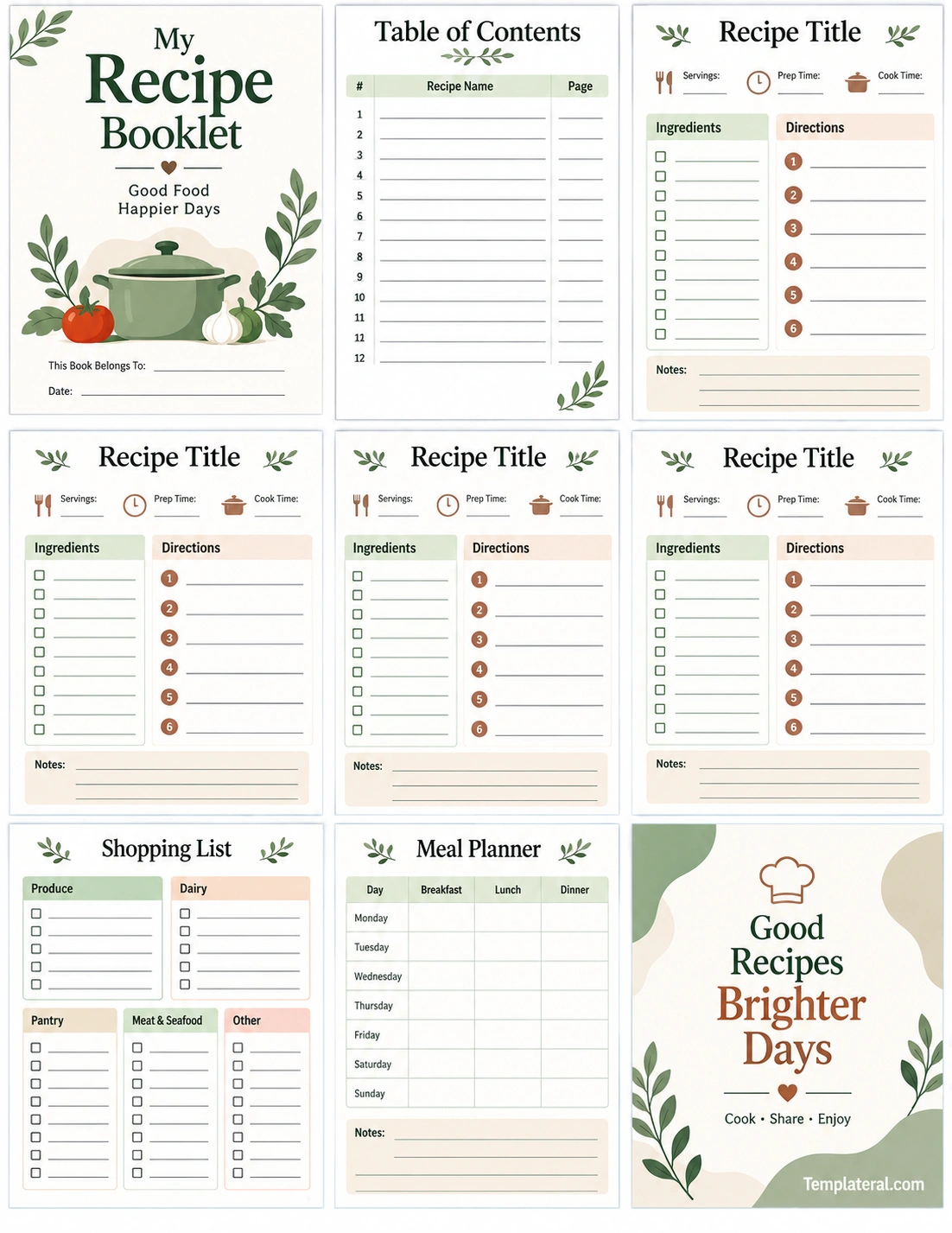
A useful template can include a cover, table of contents, recipe pages, shopping list, meal planner, and notes sections. This structure works well for both personal collections and more formal recipe publications.
For example, a basic recipe booklet can be organized like this:
- Cover page
- Table of contents
- Recipe information pages
- Ingredients and directions
- Recipe notes
- Shopping list
- Weekly meal planner
- Additional notes or conclusion
How to Make a Recipe Booklet
Creating a recipe booklet does not have to be complicated. A simple planning process can help you produce a collection that is attractive, practical, and easy to use.
1. Choose a Theme
Start by deciding what kind of recipes you want to include. A focused theme can make the booklet easier to organize.
Possible themes include family recipes, quick dinners, baking recipes, holiday meals, healthy recipes, vegetarian dishes, breakfast ideas, or regional cuisine.
2. Collect Your Recipes
Gather the recipes you want to include before arranging the pages. Review handwritten recipes, printed cards, personal notes, and digital recipes.
Check each recipe for missing ingredients, unclear measurements, or incomplete instructions. This is a good opportunity to update recipes before placing them into the booklet.
3. Organize the Recipes
Arrange recipes in a logical order. You could organize them by meal type, recipe category, cooking method, or personal preference.
For example, a family recipe booklet might use sections such as breakfast, appetizers, main dishes, side dishes, desserts, and holiday recipes.
4. Standardize the Recipe Format
Use the same basic structure for every recipe. Consistency makes the booklet easier to scan and gives the finished publication a more professional appearance.
For example, each recipe can include:
- Recipe name
- Servings
- Preparation time
- Cooking time
- Ingredients
- Directions
- Notes
5. Add Useful Details
Consider adding information that helps readers prepare each dish. Depending on the recipe, you might include storage instructions, substitutions, equipment requirements, difficulty level, or serving suggestions.
6. Review and Proofread
Carefully check spelling, ingredient quantities, measurements, cooking temperatures, and directions. A small error in a recipe can affect the final result, so accuracy is particularly important.
How to Organize Recipes in a Booklet
The organization of your recipe collection can make a major difference in how easy it is to use.
Organize by Meal
You can divide recipes into breakfast, lunch, dinner, snacks, and desserts. This approach works well for everyday meal planning.
Organize by Category
Another option is to create categories such as appetizers, soups, salads, main courses, side dishes, baked goods, and desserts.
Organize by Occasion
If the booklet is focused on special events, organize recipes by occasion. Examples include Christmas recipes, Thanksgiving recipes, birthday meals, summer gatherings, or family celebrations.
Organize by Cooking Time
For busy households, it can be useful to group recipes according to preparation time. You might have sections for quick meals, 30-minute dinners, weekend recipes, and longer cooking projects.
Tips for Designing a Printable Recipe Booklet
A recipe booklet should be attractive, but usability should remain the priority. The reader needs to find ingredients and instructions quickly while cooking.
Use Clear Headings
Make recipe titles and section headings easy to identify. Consistent heading styles help readers navigate the booklet without effort.
Keep Ingredients Separate from Directions
Place ingredients and cooking instructions in clearly defined sections. This makes it easier to check ingredients before starting and follow the cooking process step by step.
Leave Space for Notes
A notes section gives the user room to record changes or improvements. For example, you might write down a preferred cooking time or an ingredient substitution that worked well.
Choose a Practical Page Size
For a printable recipe booklet, consider a standard paper size such as US Letter. A practical page size provides enough room for ingredients and instructions while remaining easy to print and store.
Use Readable Fonts
Choose typography that remains easy to read when printed. Avoid overly decorative fonts for recipe instructions, especially when readers need to reference the booklet while cooking.
Maintain Consistent Spacing
Consistent margins, line spacing, and section placement make the booklet easier to scan. Avoid filling every available space with text or decorative elements.
Recipe Booklet Ideas
A recipe booklet can be customized for almost any cooking-related project. Here are some ideas to inspire your own collection:
- Family Recipe Booklet: Preserve favorite recipes from parents, grandparents, and other relatives.
- Holiday Recipe Booklet: Collect dishes traditionally served during holidays and celebrations.
- Baking Recipe Booklet: Organize cookies, cakes, breads, pies, and other baked goods.
- Quick Meal Booklet: Collect recipes that can be prepared in a short amount of time.
- Kids’ Recipe Booklet: Create simple recipes with easy-to-follow instructions.
- Meal Prep Booklet: Combine recipes with shopping lists and weekly meal planning pages.
- Community Cookbook: Collect recipes contributed by members of a school, club, organization, or community.
How to Make a Recipe Booklet More Personal
One of the advantages of creating your own recipe booklet is the ability to include personal details. These additions can transform a simple collection of recipes into a meaningful keepsake.
Consider adding short stories about where a recipe came from, who originally prepared it, or why it is important to your family. You can also include personal cooking tips, favorite substitutions, or memories connected to particular dishes.
For a family recipe collection, you might include the name of the person who contributed each recipe. You can also leave blank pages at the end for future recipes.
Recipe Booklet for Meal Planning
A recipe booklet can also support weekly meal planning. Combining recipes with a shopping list and meal planner allows you to organize meals before going to the grocery store.
For example, select several recipes for the upcoming week and write them into a meal planner. Then review the ingredient lists and create one consolidated shopping list.
This approach can help keep meal preparation organized and make it easier to identify ingredients that need to be purchased.
Common Mistakes to Avoid
Before finalizing your booklet, review it for common problems that can reduce its usefulness.
- Using inconsistent recipe layouts
- Leaving out important ingredients or instructions
- Using measurements inconsistently
- Making recipe text too small
- Overcrowding individual pages
- Failing to organize recipes into clear categories
- Using unclear or overly decorative headings
- Forgetting page numbers in a longer booklet
- Not proofreading quantities and cooking instructions
- Failing to leave room for personal notes
Frequently Asked Questions About Recipe Booklets
What should a recipe booklet include?
A recipe booklet can include a cover, table of contents, recipe pages, ingredients, directions, preparation and cooking times, serving information, notes, shopping lists, and meal planning pages.
Can I create a recipe booklet from a template?
Yes. A recipe booklet template provides a structured layout that you can customize with your own recipes. Templates can save time and help keep every recipe page consistent.
How many recipes should a recipe booklet have?
There is no required number of recipes. A small personal booklet might contain only a handful of favorite recipes, while a family or community collection may contain dozens or more.
What size should a printable recipe booklet be?
A printable recipe booklet can use several paper sizes. US Letter is a practical choice for many home and office printers because it provides enough space for recipe information while remaining easy to handle.
Can a recipe booklet include a shopping list?
Yes. A shopping list is a useful addition, particularly when the booklet is designed for meal planning. You can organize the list by categories such as produce, dairy, pantry items, meat and seafood, and other groceries.
Conclusion
A recipe booklet is a practical way to organize favorite dishes, preserve meaningful family recipes, and make everyday cooking easier. With a clear structure, consistent recipe format, and useful supporting pages, even a small collection can become a valuable cooking resource.
Using a recipe booklet template makes the process simpler by providing a ready-made framework for recipe pages, ingredients, directions, notes, shopping lists, and meal planning. Whether you are creating a personal recipe collection, a family keepsake, or a community cookbook, thoughtful organization and readable design will help make the finished booklet useful for years to come.
Download: Recipe Booklet Template
