A newspaper is a publication designed to share news, information, opinions, announcements, and stories with a specific audience. Traditionally printed on paper, newspapers are now also widely available in digital formats through websites, mobile applications, newsletters, and online editions.
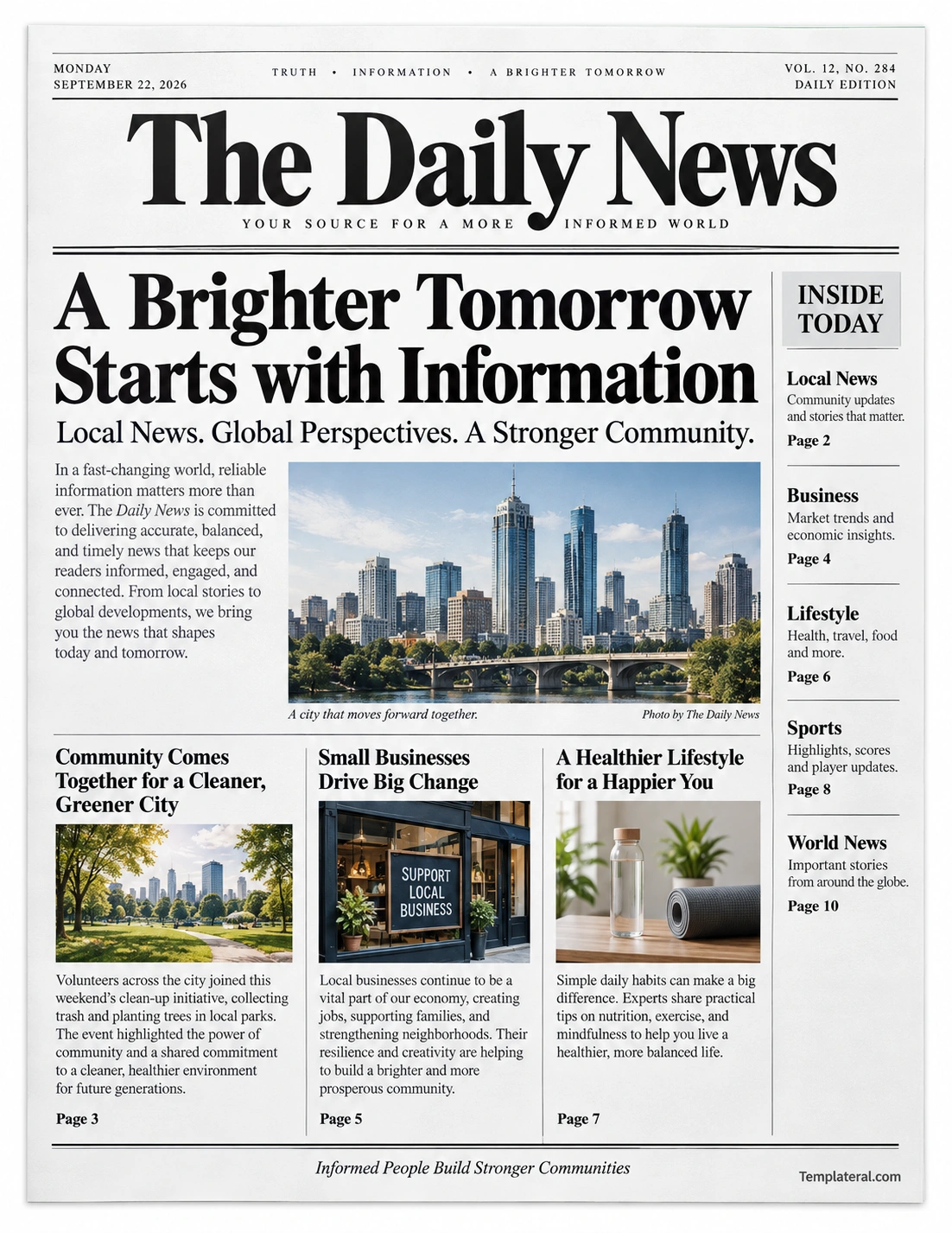
Although modern media has changed how people consume information, the basic principles of newspaper design remain useful. A well-organized newspaper makes information easy to scan by combining headlines, columns, photographs, captions, subheadings, and clearly defined sections.
Newspaper layouts are also useful beyond traditional journalism. Students can create classroom newspapers, organizations can produce newsletters in a newspaper style, and designers can use newspaper templates for school projects, events, historical presentations, or creative publications.
What Is a Newspaper?
A newspaper is a periodical publication that presents information about current events, local activities, business, sports, entertainment, lifestyle topics, and other subjects of interest to its readers.
A traditional newspaper is usually organized into multiple pages and sections. Each page uses a structured layout that allows readers to quickly identify headlines and select the stories they want to read.
Newspapers can be published daily, weekly, monthly, or according to another publishing schedule. Some focus on a particular geographic area, while others serve national or international audiences.
What Is the Purpose of a Newspaper?
The main purpose of a newspaper is to communicate information to readers in an organized and accessible format. Depending on the publication, a newspaper can serve several purposes.
Sharing News
News reporting is one of the primary functions of a newspaper. Articles may cover local events, politics, education, business, science, sports, culture, and international developments.
Providing Local Information
Local newspapers often focus on information that directly affects a particular community. This can include community events, school activities, local government, neighborhood developments, and local businesses.
Entertaining Readers
Newspapers may include entertainment articles, puzzles, comics, cultural coverage, interviews, and lifestyle content to provide readers with a broader range of material.
Publishing Announcements
Announcements, notices, advertisements, event information, and other public communications can also appear in newspapers.
Common Types of Newspapers
Newspapers can be categorized according to their audience, frequency, geographic focus, and purpose.
- Daily newspaper: Published every day and typically focused on current events and breaking news.
- Weekly newspaper: Published once a week, often with a strong focus on local communities.
- Local newspaper: Covers news, events, and issues affecting a particular city, town, or region.
- National newspaper: Provides news and analysis for readers across a country.
- School newspaper: Created by students to report school activities, achievements, announcements, and opinions.
- College newspaper: Covers campus news, student activities, academic topics, and community events.
- Community newspaper: Focuses on neighborhood news and local organizations.
- Special-interest newspaper: Concentrates on a particular industry, hobby, profession, or audience.
- Digital newspaper: Delivers newspaper-style content through websites, applications, or other digital platforms.
Parts of a Newspaper
A newspaper page contains several visual and editorial elements that work together to organize information.
Newspaper Nameplate
The nameplate is the prominent name or logo displayed near the top of the front page. It helps readers immediately identify the publication.
Headline
A headline summarizes the main subject of an article and is usually displayed in a larger typeface than the body text. An effective headline should communicate the central topic clearly and accurately.
Byline
A byline identifies the writer or contributor responsible for an article. It may appear below the headline or near the beginning of the story.
Body Text
The body contains the main content of the article. Newspaper body text is commonly arranged in narrow columns to make longer articles easier to read.
Photographs and Captions
Photographs can provide visual context and attract attention to important stories. Captions explain what an image shows and provide additional information when necessary.
Sections
Newspapers often divide content into recognizable sections such as local news, business, sports, entertainment, lifestyle, opinion, and world news.
How to Create a Newspaper
Creating a newspaper becomes much easier when the content and layout are planned before the final design is assembled.
1. Choose a Topic or Theme
Start by deciding what the newspaper will cover. A school newspaper may focus on student life, while a community newspaper might focus on local events and neighborhood stories.
2. Identify Your Audience
Consider who will read the publication. Your audience will influence the writing style, article topics, visual design, and amount of information included.
3. Plan the Sections
Determine which sections the newspaper needs. A simple publication might include news, features, community updates, and announcements, while a larger newspaper may contain many specialized sections.
4. Write the Articles
Prepare the content before finalizing the layout. Give each article a clear headline and organize the information logically.
5. Select Images
Choose images that directly support the stories. Each important image should be relevant, clear, and positioned so that it does not interfere with the surrounding text.
6. Build the Layout
Arrange the headlines, text columns, images, captions, and other elements into a consistent grid. A strong layout should make it obvious where readers should begin and how they can move through the page.
7. Proofread Before Publishing
Review headlines, names, dates, captions, contact information, and article text carefully. Even a visually attractive newspaper can lose credibility because of avoidable errors.
Newspaper Layout Ideas
A newspaper layout should balance information density with readability. Readers should be able to scan the page and quickly identify the most important stories.
- Place the main headline prominently near the top of the page.
- Use different headline sizes to establish editorial hierarchy.
- Divide long articles into narrow, readable columns.
- Use horizontal and vertical rules to separate major sections.
- Place important photographs near their related stories.
- Keep margins and spacing consistent throughout the page.
- Use a limited typography system instead of many unrelated fonts.
- Maintain enough white space to prevent the page from feeling overcrowded.
Newspaper Design Tips
Use a Consistent Grid
A grid provides structure and helps align headlines, images, and text. Consistent columns can make even a content-heavy page feel organized.
Create Clear Hierarchy
Not every article should look equally important. Larger headlines, larger photographs, and strategic placement can help communicate which stories deserve the most attention.
Keep Headlines Concise
Long headlines can consume valuable space and make a page difficult to scan. Use concise wording while making sure the headline accurately represents the article.
Balance Text and Images
A page containing only text may appear intimidating, while a page containing too many images can lack structure. Combining articles with relevant photographs, captions, and white space creates a more balanced design.
Newspaper Template Benefits
Designing a newspaper from scratch requires planning the page dimensions, columns, typography, image placement, headlines, and spacing. A newspaper template provides an established framework that can significantly simplify the process.
Templates can be customized with your own headlines, articles, photographs, logos, colors, and section names. They are especially useful for students, teachers, community organizations, businesses, and anyone who needs a professional newspaper-style layout without starting from a blank page.
A template can also help maintain consistency when multiple pages or editions need to follow the same visual style.
Newspaper Ideas for School Projects
A newspaper format can be an effective way for students to present information in a creative and structured project.
A school newspaper project might include student achievements, classroom activities, school events, interviews, sports updates, book reviews, creative writing, puzzles, and upcoming announcements.
Students can also use a newspaper format to present research about a historical period. Creating articles, headlines, advertisements, and editorial sections can make a research assignment more engaging while encouraging students to organize information carefully.
Digital vs. Printed Newspapers
Printed newspapers and digital newspapers share many editorial principles, but their formats are different. Printed publications must consider physical page size, margins, paper quality, folding, printing, and ink usage.
Digital publications have greater flexibility because content can adapt to different screen sizes. They can also include interactive features, videos, links, and frequently updated articles.
Despite these differences, both formats benefit from clear headlines, logical organization, readable typography, accurate information, and strong visual hierarchy.
Newspaper Design Checklist
Before completing a newspaper, use the following checklist to review both the content and design.
- Is the newspaper title easy to identify?
- Does the front page have a clear primary headline?
- Are articles organized into logical sections?
- Are headlines accurate and easy to understand?
- Are images relevant to the accompanying stories?
- Do image captions provide useful context?
- Is the body text comfortable to read?
- Are columns and other elements properly aligned?
- Is there enough white space between sections?
- Have names, dates, facts, and other details been checked?
- Is the final page suitable for its intended print or digital format?
Final Thoughts
A newspaper is more than a collection of articles. Its layout, typography, images, headlines, and organization work together to help readers understand information quickly and comfortably.
Whether you are creating a professional publication, school newspaper, community newsletter, classroom project, or newspaper-style presentation, careful planning can make the final result much more effective. Define your audience, organize your content, establish a clear visual hierarchy, and use a consistent layout throughout the publication.
A well-designed newspaper template can provide a practical starting point, allowing you to focus more of your time on creating useful, engaging content rather than building every page from scratch.
Download: Newspaper Template
