
Managing your finances can be a daunting task, especially when you’re living paycheck to paycheck. Overspending can quickly spiral out of control, leaving you stressed and struggling to make ends meet. One effective way to stay on top of your finances is by implementing a weekly budget. By breaking your spending down into short, manageable blocks, you can catch overspending early and stay in control between paychecks. In this article, we’ll explore the what, why, key elements, how to, and tips for creating and sticking to a weekly budget.
What is a Weekly Budget?
A weekly budget is a financial plan that breaks down your spending into weekly increments. Instead of trying to manage your entire month’s budget at once, a weekly budget allows you to focus on smaller time frames, making it easier to track your expenses and adjust your spending as needed. By setting weekly spending limits for different categories, such as groceries, transportation, and entertainment, you can avoid overspending and ensure that you have enough money to cover your essentials.
Why Use a Weekly Budget?
There are several benefits to using a weekly budget to manage your finances. One of the main advantages is that it helps you stay on top of your spending and avoid going over budget. By breaking your expenses down into weekly increments, you can easily identify any areas where you may be overspending and make adjustments before it becomes a problem. Additionally, a weekly budget can help you build better financial habits and improve your overall money management skills.
Key Elements of a Weekly Budget
When creating a weekly budget, there are several key elements to consider. These include:
- Income: Calculate your total income for the week, including any paychecks, side gigs, or other sources of income.
- Expenses: List out all of your expenses for the week, including fixed costs like rent and utilities, as well as variable expenses like groceries and entertainment.
- Savings: Allocate a portion of your income to savings or emergency fund to ensure you’re building a financial safety net.
- Goals: Set specific financial goals for the week, such as reducing spending in a particular category or increasing your savings contribution.
- Tracking: Keep track of your spending throughout the week to ensure you’re staying within your budget limits.
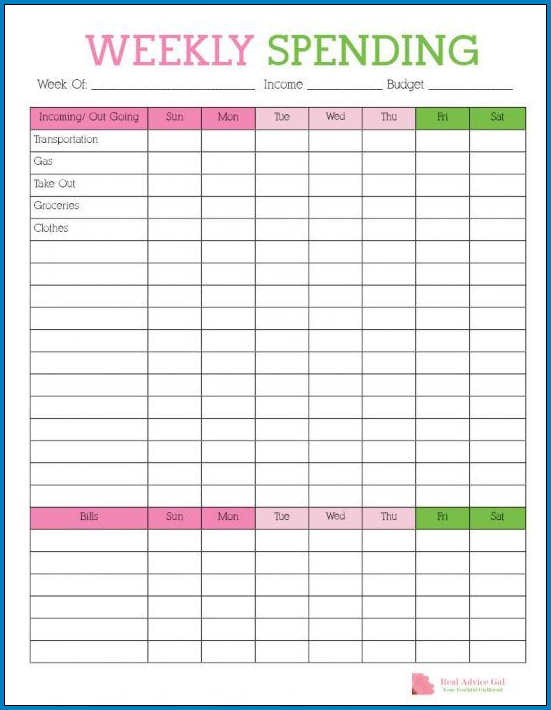
Samples of Weekly Budget:



How to Create a Weekly Budget
Creating a weekly budget is a straightforward process that can be broken down into a few simple steps:
- Calculate Your Income: Determine how much money you have coming in for the week.
- List Your Expenses: Write down all of your expenses, both fixed and variable, for the week.
- Allocate Funds: Divide your income into different spending categories, making sure to leave room for savings and any financial goals.
- Track Your Spending: Keep a record of your expenses throughout the week to see where your money is going.
- Adjust as Needed: If you notice you’re overspending in a certain category, make adjustments to stay within your budget.
Tips for Sticking to Your Weekly Budget
Sticking to a weekly budget can be challenging, but with the right strategies, you can set yourself up for success. Here are some tips to help you stay on track:
- Use Cash: Consider using cash for your weekly expenses to help you visualize your spending and avoid overspending.
- Avoid Impulse Purchases: Think twice before making any impulse purchases and stick to your budgeted amounts.
- Plan Ahead: Plan your meals and activities for the week to avoid last-minute spending.
- Review Regularly: Take time each week to review your budget and make any necessary adjustments.
- Reward Yourself: Set small rewards for yourself when you stick to your budget to stay motivated.
In Conclusion
Implementing a weekly budget is a powerful tool for taking control of your finances and avoiding overspending. By breaking down your expenses into manageable blocks, you can stay on track between paychecks and build better money management habits. With the right approach and commitment, you can master your finances and achieve your financial goals.
