
Managing your finances can be a daunting task, especially when it comes to aligning your budget with your pay cycle. For many individuals, getting paid bi-weekly is a common occurrence, and this 14-day pay cycle can greatly impact how you budget and manage your money. In order to effectively plan and control your finances, it’s essential to create a bi-weekly budget that matches how you actually receive and spend your money. By following a bi-weekly budgeting strategy, you can ensure that your financial plan is in sync with your pay cycle, helping you stay on track and achieve your financial goals.
What is a Bi-Weekly Budget?
A bi-weekly budget is a financial plan that is structured around a 14-day pay cycle. This type of budgeting takes into account the fact that you receive your income every two weeks and helps you allocate your funds accordingly. By creating a bi-weekly budget, you can better manage your expenses, track your spending, and ensure that you have enough money to cover your bills and savings goals throughout the month.
Why Bi-Weekly Budgeting is Important
Creating a bi-weekly budget is important for several reasons. Firstly, it allows you to align your financial plan with your pay cycle, making it easier to track your income and expenses. By budgeting on a bi-weekly basis, you can ensure that you have enough money to cover your regular bills, such as rent, utilities, and groceries, without overspending or running out of funds before your next paycheck.
Additionally, bi-weekly budgeting can help you avoid the common pitfall of living paycheck to paycheck. By planning your finances in advance and setting aside money for savings and emergencies, you can build a financial cushion and avoid the stress of struggling to make ends meet between paydays.
What to Include in a Bi-Weekly Budget
When creating a bi-weekly budget, it’s important to include all of your income sources, expenses, and financial goals. Here are some key elements to consider when setting up your bi-weekly budget:
- Income: Include all sources of income, such as wages, bonuses, and side hustle earnings.
- Fixed Expenses: List your recurring expenses, such as rent, utilities, insurance, and loan payments.
- Variable Expenses: Account for variable expenses, such as groceries, dining out, entertainment, and shopping.
- Savings Goals: Set aside money for savings, investments, and emergency funds.
- Debt Repayment: Allocate funds towards paying off any outstanding debts, such as credit card balances or student loans.
Samples of Bi Weekly Budget:

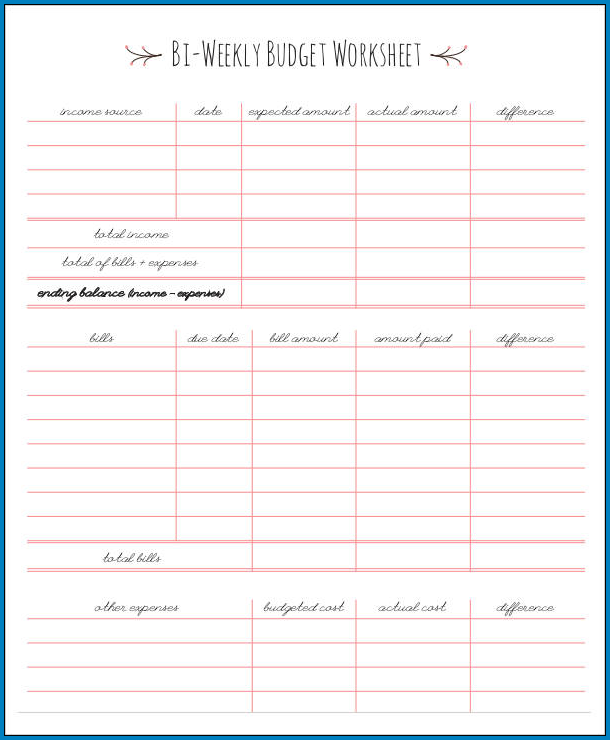


Weekly budget is created straightforward to try and do with every of these three spreadsheet templates that enable you to to keep weekly budgets in order because they really should be.
How to Create a Bi-Weekly Budget
Creating a bi-weekly budget is a straightforward process that involves following a few simple steps. Here’s how you can set up a bi-weekly budget that works for you:
- Calculate Your Income: Determine how much money you earn each pay period after taxes and deductions.
- List Your Expenses: Write down all of your fixed and variable expenses to get a clear picture of where your money is going.
- Allocate Your Funds: Divide your income into different categories, such as bills, groceries, savings, and debt repayment.
- Track Your Spending: Keep track of your expenses throughout the pay period and adjust your budget as needed to stay on track.
- Review and Adjust: At the end of each pay cycle, review your budget, assess your spending, and make any necessary adjustments for the next period.
Tips for Successful Bi-Weekly Budgeting
To make the most of your bi-weekly budgeting efforts, consider implementing the following tips:
- Automate Your Savings: Set up automatic transfers to your savings account to make saving money effortless.
- Use Cash Envelopes: Allocate cash for different spending categories to help you stick to your budget and avoid overspending.
- Track Your Expenses: Keep a detailed record of your spending to identify areas where you can cut back and save money.
- Plan for Irregular Expenses: Anticipate one-time or irregular expenses, such as car repairs or medical bills, and budget for them accordingly.
- Stay Flexible: Be prepared to adjust your budget as needed to accommodate unexpected expenses or changes in your financial situation.
By following these tips and creating a bi-weekly budget that aligns with your pay cycle, you can take control of your finances, reduce financial stress, and work towards achieving your money goals. Remember, budgeting is a journey, and it’s okay to make mistakes along the way. The key is to stay committed, stay organized, and stay focused on your financial well-being.
