A tenancy lease agreement is an essential document when renting a residential property. It establishes the legal relationship between a landlord and a tenant by outlining the terms and conditions of occupancy. From monthly rent and security deposits to maintenance responsibilities and lease duration, this agreement helps both parties understand their obligations.
Whether you are renting out a house, leasing an apartment, or preparing to move into a rental property, having a written tenancy lease agreement can help prevent misunderstandings. It provides a clear record of what both parties have agreed to and offers a reference if disagreements arise during the tenancy.
In this guide, you will learn what a tenancy lease agreement is, what information it should contain, how to create one, and what to review before signing. You will also find practical tips and a printable tenancy lease agreement template to help organize the rental process.
What Is a Tenancy Lease Agreement?
A tenancy lease agreement is a written contract between a landlord and a tenant that establishes the conditions under which a residential property may be occupied. It identifies the parties, describes the rental property, and explains the rights and responsibilities associated with the tenancy.
The agreement typically specifies the rental period, payment arrangements, security deposit, property maintenance, and rules governing the use of the property. Both parties can refer to this document whenever they need to clarify an agreed term or resolve a rental-related issue.
A properly prepared rental lease agreement should be clear, complete, and consistent with applicable landlord-tenant laws. Although verbal rental arrangements may be recognized in some jurisdictions, a written contract generally provides better documentation and reduces the risk of disputes.
Why Is a Tenancy Lease Agreement Important?
A tenancy lease agreement protects the interests of both landlords and tenants by documenting their mutual understanding. Instead of relying on verbal promises, both parties have a written reference explaining what is expected throughout the rental period.
Here are several important reasons to use a written lease agreement:
- Establishes clear responsibilities: Both parties understand who is responsible for rent, utilities, repairs, and property maintenance.
- Prevents misunderstandings: Written conditions help reduce disagreements about payment dates, property rules, and other rental arrangements.
- Documents financial obligations: The agreement records rent amounts, security deposits, late payment conditions, and other applicable charges.
- Defines the tenancy period: Both parties know when the rental arrangement begins and ends.
- Provides written evidence: The signed document can help establish what the parties agreed to if a dispute occurs.
For landlords, the agreement helps establish consistent rental procedures. For tenants, it provides greater clarity about their occupancy rights and financial responsibilities.
What Should Be Included in a Tenancy Lease Agreement?
Before preparing a tenancy lease agreement, it is important to identify the essential information that should appear in the document. Each section should explain a specific part of the rental arrangement.
1. Landlord and Tenant Information
Start by identifying everyone involved in the rental arrangement. Include the full legal names and contact information of the landlord and tenant.
This section should generally contain:
- Full legal name of the landlord or property owner.
- Full legal name of each tenant.
- Current mailing addresses.
- Telephone numbers and email addresses.
- Names of authorized property managers, if applicable.
Accurate identification helps establish who is responsible for the obligations described in the agreement.
2. Rental Property Description
The agreement should clearly identify the property being rented. Include its complete street address, apartment or unit number, and any additional details necessary to distinguish the rental premises.
If the tenant is also allowed to use specific areas, such as a parking space, storage unit, or shared facility, describe those arrangements in writing.
3. Lease Duration and Occupancy Dates
Specify the beginning and ending dates of the tenancy. A fixed-term lease should clearly state the agreed rental period, such as six months or twelve months.
If the arrangement continues on a month-to-month basis, explain the applicable renewal and termination conditions. Also clarify whether the tenancy automatically renews or requires written approval from both parties.
4. Monthly Rent and Payment Terms
One of the most important sections explains how much rent the tenant must pay and when payment is due.
Include the following details:
- Monthly or weekly rental amount.
- Rent payment due date.
- Accepted payment methods.
- Payment address or account instructions, where appropriate.
- Applicable late payment fees and conditions.
- Procedures for rent adjustments, where legally permitted.
Clearly documented payment terms help both parties track financial obligations and avoid unnecessary confusion.
5. Security Deposit
If a security deposit is required, state its amount and explain the conditions governing its collection, use, and return.
The agreement should describe circumstances in which deductions may be permitted, such as unpaid rent or property damage beyond ordinary wear and tear. It should also explain the process and applicable deadline for returning the remaining deposit.
Security deposit limits, permitted deductions, and return deadlines vary by jurisdiction. Make sure the provisions follow local landlord-tenant regulations.
6. Maintenance and Repair Responsibilities
Property maintenance is another important part of a residential lease. The agreement should explain which responsibilities belong to the landlord and which belong to the tenant.
For example, the landlord may be responsible for maintaining essential building systems and addressing certain structural or safety issues. The tenant may be expected to keep the property reasonably clean, report damage promptly, and avoid intentional or negligent damage.
Include a clear procedure for requesting repairs and reporting maintenance emergencies.
7. Utilities and Additional Expenses
Specify which party is responsible for electricity, water, gas, internet, garbage collection, and other applicable services.
If certain utilities are shared between occupants, explain how the costs will be calculated and divided. This helps prevent disagreements about expenses that may arise during the tenancy.
8. Property Rules and Restrictions
Include any reasonable property rules that tenants must follow. These conditions may address:
- Pet ownership and applicable restrictions.
- Smoking policies.
- Maximum occupancy limits.
- Noise and quiet hours.
- Parking arrangements.
- Subletting and unauthorized occupants.
- Property alterations and decorations.
Rules should be clearly written and consistent with applicable housing laws.
9. Signatures and Agreement Date
Conclude the tenancy lease agreement with signature sections for the landlord and all required tenants. Include the date of signing and provide each party with a complete copy of the executed document.
Signatures demonstrate that the parties have reviewed and accepted the stated conditions, subject to applicable legal requirements.
How to Create a Tenancy Lease Agreement
Creating a tenancy lease agreement does not have to be complicated. Following a structured process can help ensure that important details are not overlooked.
Step 1: Gather the Necessary Information
Collect the landlord’s and tenant’s details, property address, rental amount, lease duration, security deposit, and agreed payment arrangements before drafting the document.
Step 2: Choose a Suitable Lease Agreement Template
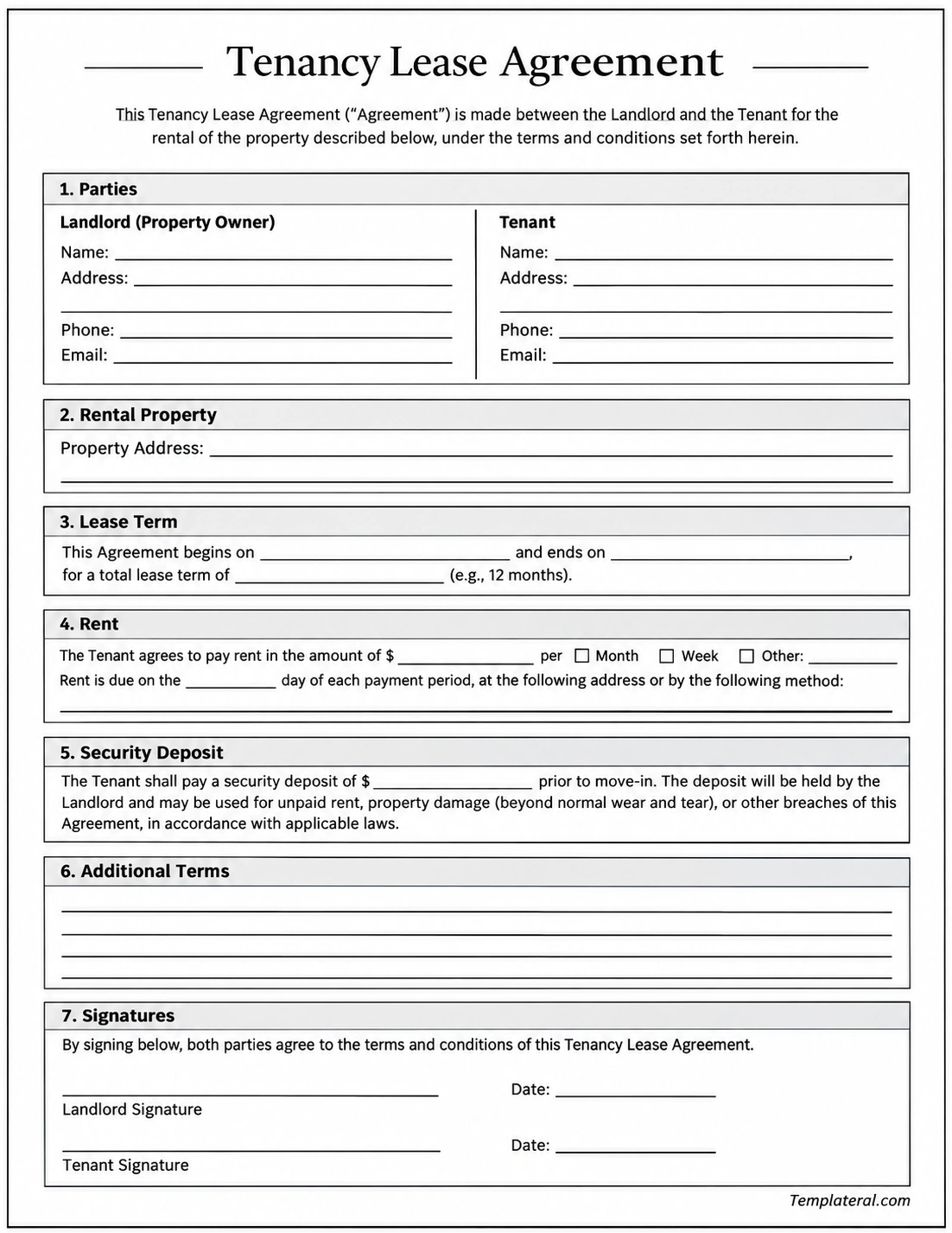
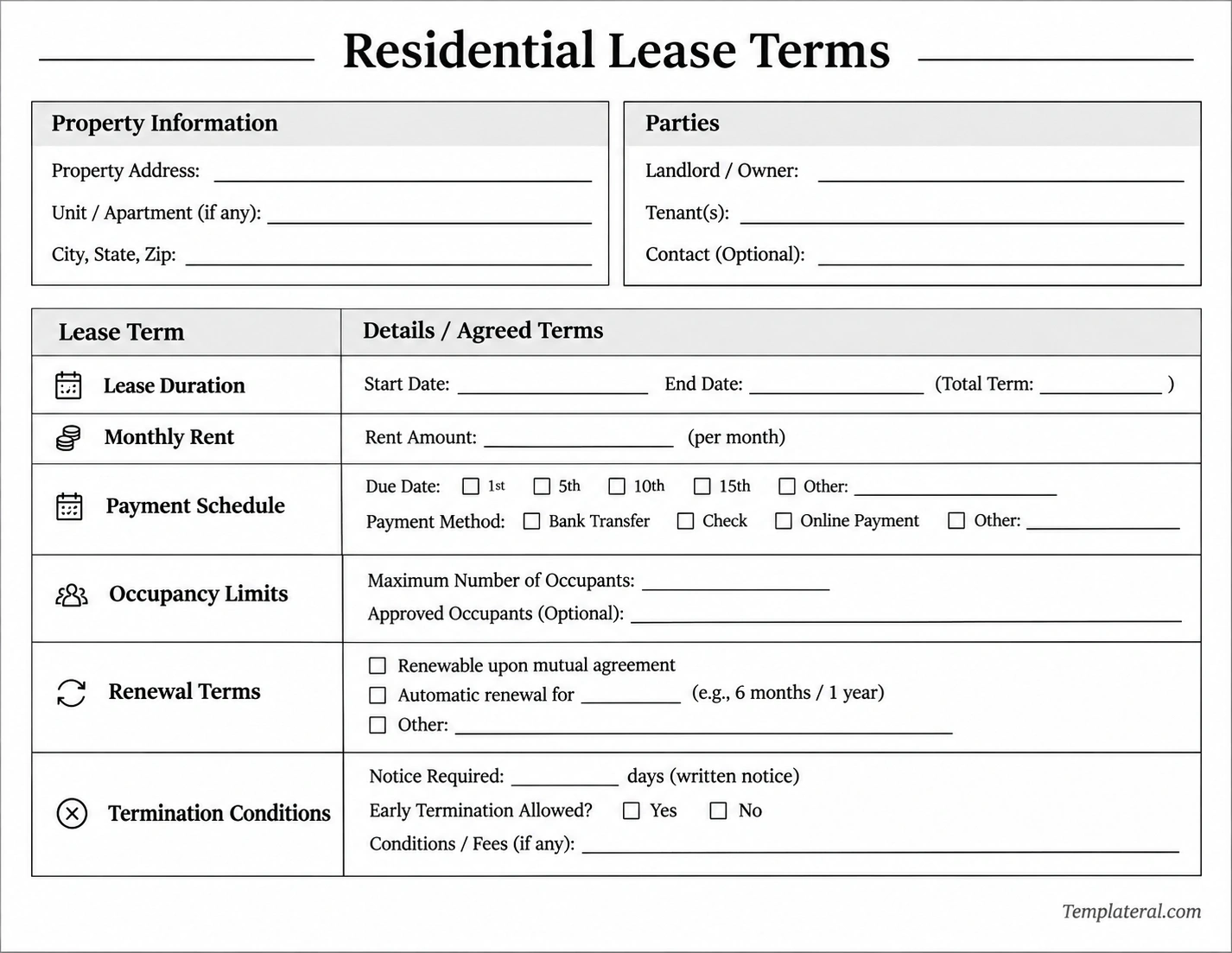
Use a structured residential lease agreement template as a starting point. A template can help organize essential sections and provide a consistent format for documenting rental conditions.
Choose a template appropriate for your property type and location. Review its provisions carefully rather than assuming every standard clause is suitable for your situation.
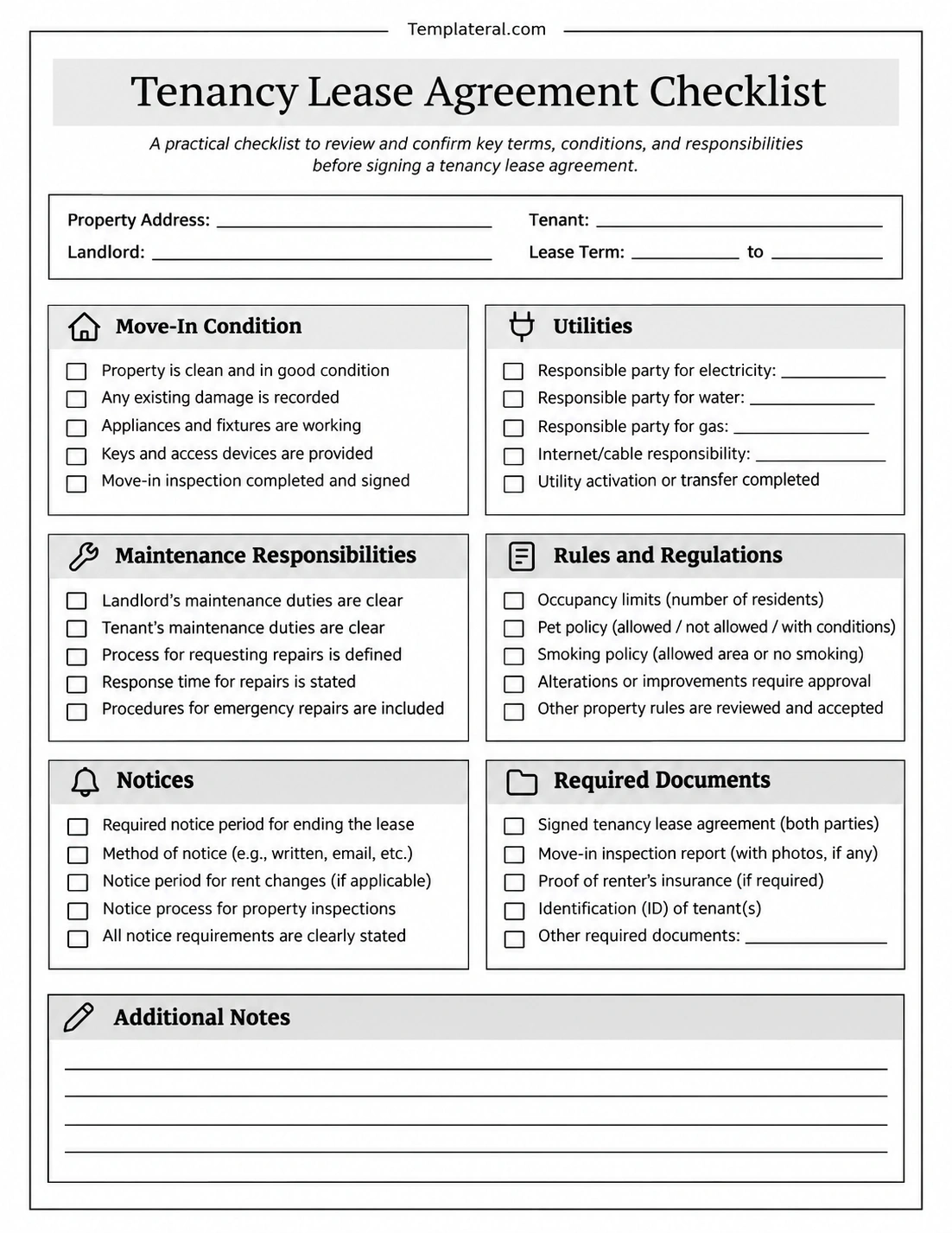
Step 3: Write Clear Rental Conditions
Complete each section using specific and understandable language. Avoid vague statements that could create different interpretations. If additional conditions are agreed upon, include them in a separate section or an attached addendum.
Step 4: Review Applicable Rental Laws
Before finalizing the document, check local regulations covering rental agreements, security deposits, required disclosures, property standards, rent increases, and termination notices.
Some jurisdictions require specific clauses or disclosures. A general template may need adjustments to comply with local requirements.
Step 5: Review and Sign the Agreement
Give both parties enough time to read the entire document. Confirm that all financial details, dates, responsibilities, and additional conditions are accurate before signing.
Once completed, distribute a signed copy to the landlord and each tenant for their records.
Important Tips Before Signing a Rental Lease
Signing a lease creates important responsibilities. Both landlords and tenants should carefully review the agreement before accepting its conditions.
- Read every section: Do not overlook small clauses or assume that standard conditions are automatically appropriate.
- Inspect the property: Check the condition of rooms, appliances, fixtures, doors, and windows before moving in.
- Document existing damage: Record visible defects and take photographs to establish the property’s initial condition.
- Confirm all payments: Verify the rent amount, deposit, due dates, and any additional charges.
- Clarify maintenance procedures: Understand how to report problems and who is responsible for specific repairs.
- Keep signed copies: Store the completed agreement and related documents in a safe place.
- Ask questions: Request clarification or professional advice if a provision is unclear or appears inconsistent with local laws.
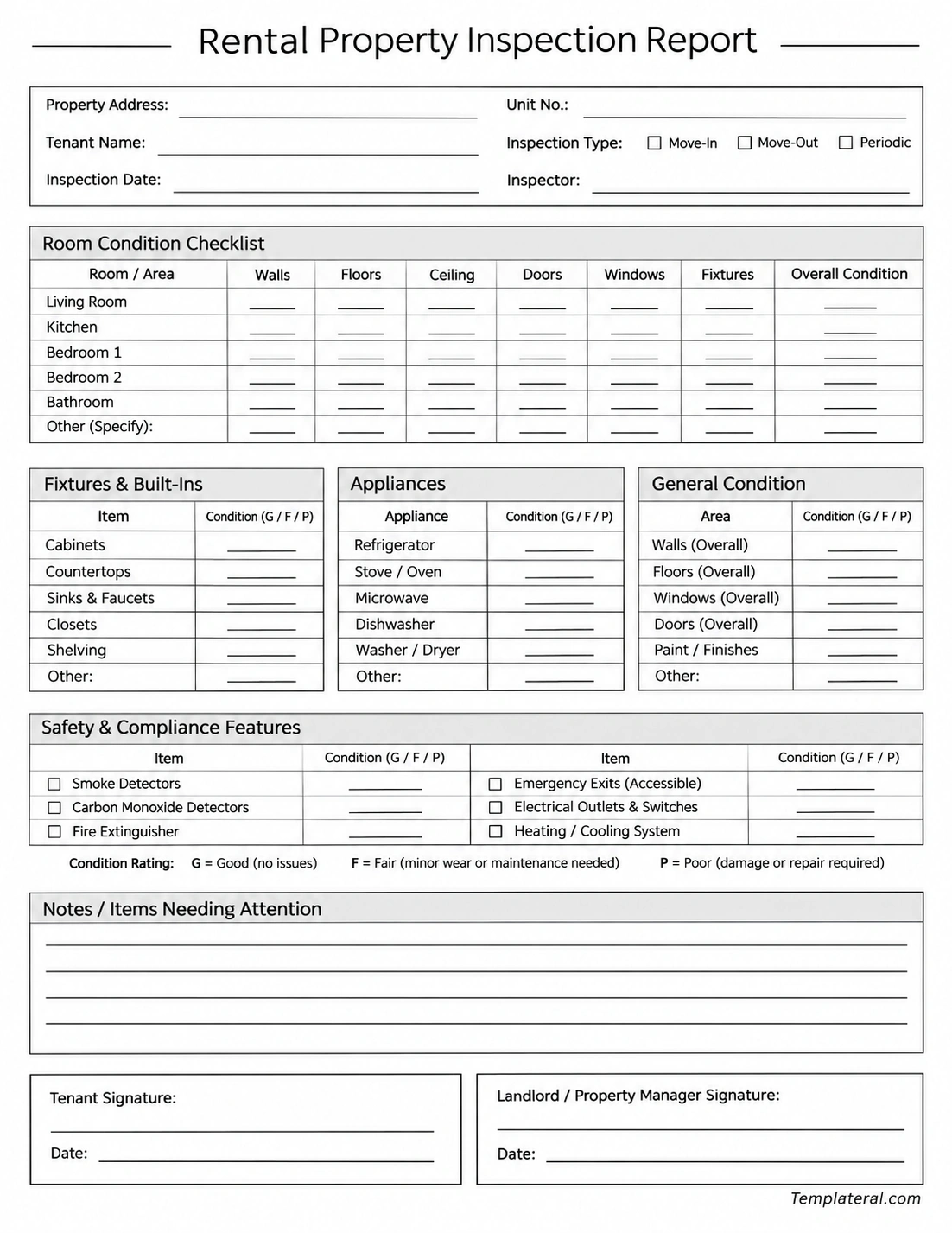
A separate inspection report can also help document the property’s condition at the beginning and end of the tenancy.
Additional Documents That Can Support a Lease Agreement
A tenancy lease agreement may be accompanied by additional documents that help clarify specific rental arrangements. Depending on the property and local requirements, useful supporting documents include:
- Move-in inspection checklist: Records the condition of the property before the tenant moves in.
- Pet addendum: Describes permitted pets, related responsibilities, and applicable conditions.
- Parking agreement: Identifies assigned parking spaces and related rules.
- Maintenance request form: Provides a consistent way for tenants to report repair issues.
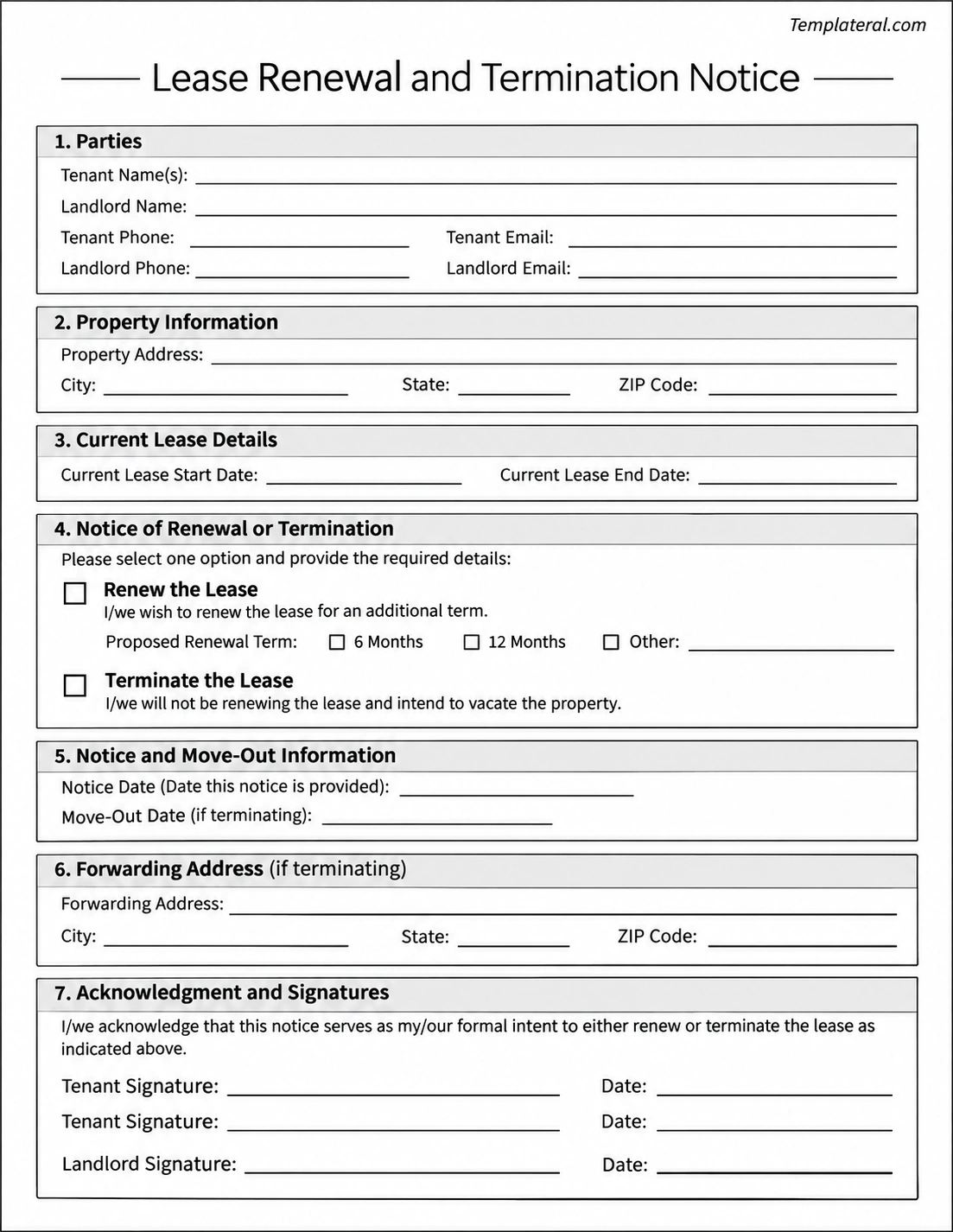
- Lease renewal notice: Documents the parties’ intention to extend the rental arrangement.
Tenancy Lease Agreement vs. Rental Agreement
The terms tenancy lease agreement and rental agreement are sometimes used interchangeably. However, their meanings may differ depending on local laws and common rental practices.
A lease agreement often refers to a fixed-term arrangement, such as a six-month or twelve-month tenancy. The agreed conditions generally remain in effect throughout that period unless the parties lawfully modify or terminate the agreement.
A rental agreement may refer to a shorter or recurring arrangement, such as a month-to-month tenancy. These arrangements may provide more flexibility regarding renewal and termination, subject to applicable notice requirements.
Because legal terminology varies between jurisdictions, it is important to review the actual terms and legal requirements rather than relying on the document’s title alone.
Frequently Asked Questions About Tenancy Lease Agreements
1. Is a tenancy lease agreement legally binding?
Generally, yes. A tenancy lease agreement can be legally binding when it meets the requirements of applicable law, including valid consent, sufficiently clear terms, and any required formalities. Local regulations may impose additional requirements.
2. Can a tenancy lease agreement be written without a lawyer?
In many situations, landlords and tenants can prepare their own written rental agreement using a suitable template. However, complicated arrangements or unusual legal conditions may require review by a qualified legal professional.
3. What happens if a tenant breaks a lease agreement?
If a tenant ends a lease early, the consequences depend on the agreement and applicable law. Possible consequences may include financial liability or other contractual obligations. Certain legal exceptions may also apply, depending on the circumstances and jurisdiction.
4. Can a landlord change the terms of a tenancy lease agreement?
Generally, a landlord cannot unilaterally change fixed lease terms unless the agreement or applicable law permits the change. Many modifications require the tenant’s agreement and should be documented in writing.
5. What is the difference between a fixed-term and month-to-month lease?
A fixed-term lease has a specified beginning and ending date. A month-to-month tenancy generally continues through recurring rental periods until properly terminated under the applicable agreement and local laws.
6. Should both landlord and tenant keep a copy of the signed agreement?
Yes. Both parties should receive a complete copy of the signed tenancy lease agreement, including any attachments or addendums. Keeping these records makes it easier to verify the agreed conditions if questions arise.
7. Does a tenancy lease agreement need to be notarized?
Not necessarily. Many residential lease agreements do not require notarization, but certain jurisdictions or specific transactions may impose additional formalities. Check the applicable local requirements before signing.
8. Can a tenancy lease agreement be renewed?
Yes. A lease may be renewed when the parties agree to extend the tenancy and follow applicable renewal procedures. The renewal terms should be documented in writing, including any changes to rent, duration, or other conditions.
Conclusion
A tenancy lease agreement is an important document for establishing a clear and organized rental relationship. It outlines the responsibilities of landlords and tenants, documents financial arrangements, and defines the conditions under which a property may be occupied.
By including essential details such as rental information, lease duration, security deposits, maintenance responsibilities, and signatures, both parties can reduce misunderstandings and establish clear expectations.
Whether you are preparing a new residential lease or reviewing an existing rental arrangement, use a well-organized template as a starting point and make sure its terms comply with applicable local laws. A complete and carefully reviewed agreement can help create a more transparent and dependable tenancy for everyone involved.
Tenancy Lease Agreement Template – Download
