A purchase agreement contract is an essential document when buying or selling property, vehicles, equipment, or other valuable assets. It establishes the terms of a transaction and helps both parties understand their responsibilities before ownership is transferred. Without a clear written agreement, misunderstandings about payment, delivery, or other conditions can create unnecessary disputes.
Whether you are a buyer or a seller, understanding how a purchase agreement works can help protect your interests. This document records important details, including the purchase price, payment terms, property description, and closing date. It also provides written evidence of what both parties have agreed to.
In this guide, you will learn what a purchase agreement contract is, what information it should include, how it works, and how to prepare one. You will also find a simple purchase agreement contract template that you can customize for your transaction.
What Is a Purchase Agreement Contract?
A purchase agreement contract is a legally binding document that records the terms and conditions of a sale between a buyer and a seller. It outlines what is being purchased, how much the buyer must pay, and when the transaction will be completed.
Both parties review and sign the agreement to confirm their acceptance of the stated terms. Once properly executed, the contract may create legal obligations that both parties must fulfill.
A purchase agreement can be used for different types of transactions, such as:
- Real estate: Buying or selling a house, apartment, commercial building, or land.
- Vehicles: Purchasing a new or used car, motorcycle, truck, or other vehicle.
- Business assets: Transferring equipment, machinery, inventory, or other business property.
- Personal property: Selling furniture, electronics, appliances, or other valuable items.
- Commercial transactions: Documenting the sale of goods or assets between businesses.
The specific requirements depend on the type of asset, transaction, and applicable laws. For example, a real estate purchase agreement generally requires more detailed provisions than a simple agreement for selling used furniture.
Why Is a Purchase Agreement Important?
A written purchase agreement helps establish clear expectations before a transaction takes place. It gives both parties a shared understanding of their obligations and reduces the possibility of disagreements.
1. Establishes Clear Transaction Terms
The agreement identifies the buyer, seller, asset, purchase price, and payment arrangements. Having these details in writing makes it easier for both parties to understand exactly what has been agreed upon.
2. Protects the Buyer and Seller
A properly prepared contract helps protect the interests of both parties. The buyer receives written confirmation of the agreed purchase terms, while the seller has documentation of the buyer’s payment obligations and other responsibilities.
3. Prevents Misunderstandings
Verbal discussions can sometimes lead to different interpretations. A purchase agreement reduces confusion by documenting important details, including payment deadlines, delivery arrangements, and any special conditions.
4. Provides Written Evidence
If a disagreement occurs, the signed agreement may serve as important evidence of the terms accepted by both parties. It can help clarify the original transaction and support the resolution of disputes.
5. Supports the Ownership Transfer Process
For transactions involving property or registered assets, the agreement can document the conditions that must be satisfied before ownership is transferred. However, additional documents, registrations, or legal procedures may also be required.
Key Elements of a Purchase Agreement Contract
A complete purchase agreement should contain enough information to clearly explain the transaction. Although the exact requirements vary, the following elements are commonly included.
1. Buyer and Seller Information
Start by identifying both parties. Include their full legal names, mailing addresses, and contact information. For business transactions, provide the registered company names and the names of authorized representatives.
2. Description of the Property or Asset
Clearly identify the item being sold. Include relevant details such as the property address, vehicle identification number, model, serial number, quantity, or other identifying information.
A detailed description helps prevent confusion about which asset is covered by the agreement.
3. Purchase Price
State the total agreed purchase price in clear numerical terms. For additional clarity, consider writing the amount in words as well. Both parties should confirm that the stated price matches their agreement.
4. Payment Terms
Explain how and when the buyer will pay. Depending on the transaction, payment arrangements may include:
- An initial deposit or earnest money payment.
- One full payment before delivery or closing.
- Installment payments according to an agreed schedule.
- A remaining balance due upon completion of the transaction.
Also specify the accepted payment method and any applicable payment deadlines.
5. Delivery or Closing Date
Include the expected date when the asset will be delivered or the transaction will be completed. For real estate purchases, this may be referred to as the closing date. For other purchases, it may be the delivery or handover date.
6. Representations and Warranties
This section explains the statements and assurances made by the buyer or seller. For example, the seller may confirm that they have the legal authority to sell the asset. Any applicable warranties, exclusions, or limitations should be clearly documented.
7. Conditions of the Agreement
Some transactions depend on specific conditions before completion. These may include property inspections, financing approval, title verification, or other agreed requirements.
Clearly explain what must happen if a condition is not satisfied.
8. Signatures and Dates
Both parties should sign and date the agreement to demonstrate their acceptance of its terms. If representatives sign on behalf of a business, their authority should be properly established.
How to Write a Purchase Agreement Contract
Preparing a purchase agreement does not have to be complicated. Following a few practical steps can help you create a document that is organized, understandable, and appropriate for your transaction.
Step 1: Identify the Parties
Write the complete legal names and contact details of the buyer and seller. Double-check the spelling and make sure the information is accurate.
Step 2: Describe the Asset
Provide a clear description of the property or item being purchased. Include identifying details to avoid confusion or disputes later.
Step 3: Agree on the Purchase Price
Confirm the total price before preparing the contract. Both parties should agree on the amount and any additional costs associated with the transaction.
Step 4: Document Payment Arrangements
Specify the deposit, payment method, due dates, and remaining balance. If the buyer will make installment payments, include the amount and deadline for each payment.
Step 5: Include Important Conditions
Document any inspections, approvals, warranties, delivery requirements, or other conditions that could affect the transaction. Avoid using vague statements that may be interpreted differently.
Step 6: Review and Sign the Agreement
Allow both parties to review the complete document before signing. Make any necessary corrections and ensure that all attachments or supporting documents are included.
Purchase Agreement Contract Template
Using a purchase agreement contract template can make preparing a sales agreement easier. A template provides a basic structure for recording the buyer’s and seller’s information, asset description, purchase price, payment terms, and signatures.
Here is a simple purchase agreement template that you can customize for your transaction.
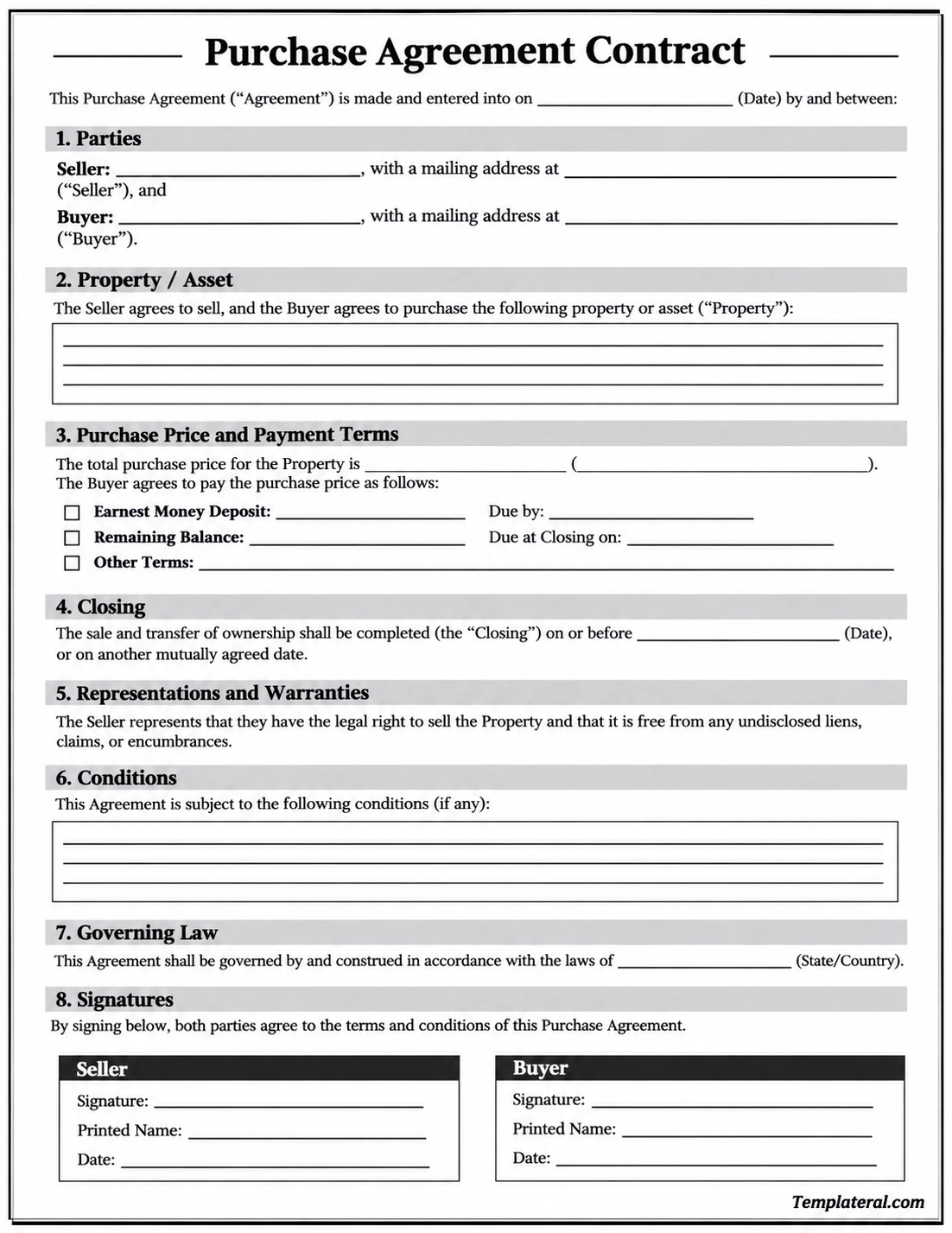
Before using the template, replace the blank fields with accurate information. Adjust the terms to match the specific transaction and include any additional provisions required by applicable laws.
Common Mistakes to Avoid When Preparing a Purchase Agreement
Even a simple sales agreement can create problems if important information is missing or unclear. Watch out for these common mistakes:
- Incomplete party information: Missing or incorrect names and addresses can make identifying the parties difficult.
- Vague asset descriptions: An unclear description may cause confusion about what is being sold.
- Unclear payment terms: Always specify the amount, payment method, and deadlines.
- Missing transaction dates: Include important dates for payment, delivery, and closing.
- Unstated conditions: Document any requirements that must be satisfied before completing the sale.
- Signing without reviewing: Both parties should understand all provisions before accepting the agreement.
Frequently Asked Questions
Is a purchase agreement contract legally binding?
A purchase agreement can be legally binding when it meets the applicable legal requirements, including valid consent, sufficiently clear terms, and any required formalities. The exact requirements depend on the jurisdiction and type of transaction.
What is the difference between a purchase agreement and a bill of sale?
A purchase agreement generally establishes the terms of a transaction before it is completed. A bill of sale typically documents the completed transfer or sale of personal property. Some transactions may require both documents.
Can I write my own purchase agreement?
Yes. You can prepare your own purchase agreement using a template as a starting point. However, complex transactions, especially real estate purchases, may require additional legal provisions and professional review.
Does a purchase agreement need to be notarized?
Not every purchase agreement requires notarization. The requirement depends on local laws and the type of asset being transferred. Certain real estate transactions may require notarized documents or other formal procedures.
Can a purchase agreement be canceled after signing?
A signed purchase agreement may be terminated under certain circumstances, such as when a contractual condition is not satisfied or both parties agree to cancel. Other situations may involve breach of contract or specific termination rights. Review the agreement and applicable laws before taking action.
What happens if the buyer or seller does not follow the agreement?
If either party fails to meet their contractual obligations, the other party may have legal remedies depending on the agreement and applicable law. Possible remedies may include damages, termination, or other relief permitted by law.
Can a purchase agreement be used for selling a car?
Yes. A purchase agreement can document a vehicle sale by identifying the buyer, seller, vehicle details, purchase price, payment arrangements, and delivery date. Additional title transfer and registration documents may also be required.
Conclusion
A purchase agreement contract is an important document for establishing the terms of a sale before ownership of an asset or property is transferred. It helps buyers and sellers understand their responsibilities, confirm payment arrangements, and document the conditions of their transaction.
By including accurate party information, a detailed asset description, the purchase price, payment terms, and signatures, both parties can establish a clearer understanding of the sale.
Whether you are purchasing real estate, a vehicle, business equipment, or personal property, a well-prepared purchase agreement can help make the transaction more organized and reduce potential misunderstandings. Use a suitable purchase agreement contract template as a starting point, customize it carefully, and seek legal advice when necessary.
Download: Purchase Agreement Contract Template
