A renting contract is an important document that establishes the terms and conditions between a landlord and a tenant. It explains what property is being rented, how much rent is due, when payments must be made, how long the tenancy lasts, and what responsibilities each party has.
Whether you are renting an apartment, house, room, office, or other property, putting the agreement in writing can help both parties understand their responsibilities. A clear rental agreement can also provide a useful reference if questions or disagreements arise during the tenancy.
Although rental laws vary by location, a well-organized renting contract generally covers the essential terms of the arrangement in clear language. Both landlords and tenants should read the agreement carefully before signing and make sure the terms comply with applicable local laws.
What Is a Renting Contract?
A renting contract is a written agreement between a property owner or landlord and a person or party renting the property. It is also commonly called a rental agreement, lease agreement, or tenancy agreement, depending on the type of arrangement and local terminology.
The contract describes the conditions under which the tenant may occupy and use the property. It can establish the rental period, payment obligations, property rules, maintenance responsibilities, and other terms agreed upon by the parties.
A typical renting contract may include:
- Landlord information
- Tenant information
- Property address
- Rental term
- Rent amount
- Rent payment due date
- Security deposit information
- Utilities and other expenses
- Maintenance responsibilities
- Property rules
- Termination provisions
- Signatures and dates
Why Is a Renting Contract Important?
A written rental agreement gives both parties a clear record of the terms they have agreed to. Verbal arrangements can be difficult to remember or prove later, particularly when the tenancy continues for several months or years.
Clarifies Responsibilities
A renting contract can explain which responsibilities belong to the landlord and which belong to the tenant. For example, the agreement may address maintenance, utilities, repairs, lawn care, or other property-related responsibilities.
Documents Rental Terms
The agreement provides a written record of the rent amount, payment schedule, rental period, deposit, and other important conditions.
Reduces Misunderstandings
Clear terms can help prevent confusion about issues such as pets, guests, parking, property use, smoking, repairs, and other rules.
Provides a Reference
If either party has a question about the arrangement, they can refer back to the signed agreement rather than relying on memory.
What Should Be Included in a Renting Contract?
The exact requirements for a rental agreement depend on the location and type of property. However, several sections are commonly included in residential renting contracts.
Landlord and Tenant Information
Begin with the names of the parties entering into the agreement. The contract may also include contact information or an address for formal notices, depending on applicable requirements.
Property Information
Clearly identify the property being rented. Include the complete property address and, where relevant, the apartment, unit, room, or other specific portion of the property covered by the agreement.
Rental Term
State when the tenancy begins and, if applicable, when it ends. A fixed-term agreement may have specific start and end dates, while other rental arrangements may operate on a recurring or periodic basis.
Rent Amount
Specify the agreed rent amount and the frequency of payment. The agreement should also identify the due date and any legally permitted procedures concerning late payments.
Security Deposit
If a security deposit is required, the contract should identify the amount and explain relevant conditions for its handling and return, subject to applicable law.
Utilities and Other Costs
Clearly identify which utilities and recurring expenses are included in the rent and which are the tenant’s responsibility. Depending on the property, these may include electricity, water, gas, internet, trash collection, or other services.
Rental Rules and Property Conditions
A renting contract can establish reasonable rules governing the use of the property. The specific terms should comply with applicable landlord-tenant laws and other relevant regulations.
Pets
If pets are permitted or restricted, the agreement may explain the applicable rules. Local laws may impose additional requirements or restrictions, so the contract should be prepared accordingly.
Smoking
The agreement may state whether smoking is permitted in the property or identify designated areas where it is allowed, subject to applicable law.
Guests
Rental agreements may address guest policies, particularly where the property has occupancy limitations or shared facilities. Any guest-related provisions should comply with applicable tenant protections.
Property Alterations
The contract can explain whether tenants need permission before painting, installing fixtures, making modifications, or otherwise changing the property.
How to Create a Renting Contract
Creating a rental agreement involves more than simply filling in names and a rent amount. The document should accurately describe the actual arrangement and comply with applicable laws.
1. Identify the Parties
Record the legal names of the landlord and tenant or tenants. Make sure the names are spelled correctly and correspond to the appropriate parties.
2. Describe the Property
Enter the complete address and identify the specific rental unit or space covered by the agreement.
3. Define the Rental Period
Specify the start date and the end date when applicable. Clearly state whether the arrangement is fixed-term or periodic.
4. Record Financial Terms
Document the rent amount, payment schedule, security deposit, and any other permitted charges or expenses that apply to the tenancy.
5. Establish Responsibilities
Explain responsibilities for utilities, maintenance, repairs, cleanliness, landscaping, parking, and other relevant matters.
6. Add Applicable Rules
Include property-specific rules concerning matters such as pets, smoking, guests, noise, shared spaces, or alterations when appropriate and legally permitted.
7. Review Before Signing
Both parties should read the entire agreement before signing. Make sure any agreed changes are documented in the contract rather than relying on informal conversations.
Renting Contract vs. Lease Agreement
The terms renting contract, rental agreement, and lease agreement are sometimes used interchangeably, but their legal meaning can vary by jurisdiction.
In many contexts, a lease refers to a fixed-term arrangement, while a rental agreement may describe a periodic tenancy that renews from one period to another. However, terminology and legal rules differ between jurisdictions.
For this reason, landlords and tenants should consider the laws applicable to the specific property rather than relying solely on the title of a template.
Common Mistakes When Preparing a Renting Contract
A rental agreement should be clear and specific. Avoiding common mistakes can make the document easier for both parties to understand.
- Leaving important terms undefined
- Using incorrect names or property information
- Failing to specify the rental period
- Not clearly stating the rent amount and payment schedule
- Ignoring responsibility for utilities
- Failing to document agreed property rules
- Making handwritten changes without documenting them properly
- Using provisions that conflict with applicable law
- Signing without reviewing the complete agreement
Using a Printable Renting Contract Template
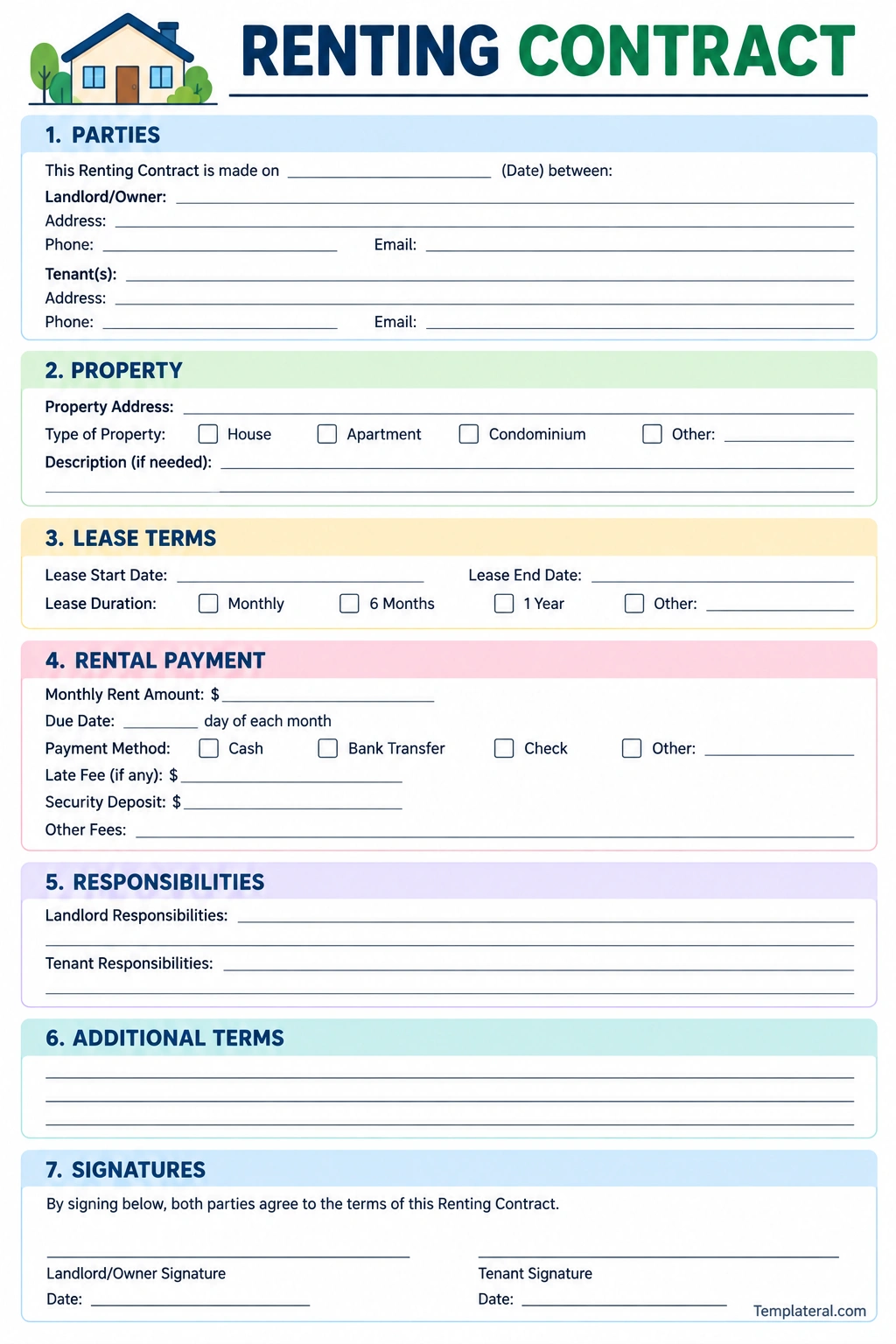
A printable renting contract template can provide a convenient starting point for organizing the information that belongs in a rental agreement. A blank template can help landlords and tenants identify important sections before completing and signing the document.
A template may include areas for:
- Landlord information
- Tenant information
- Property details
- Rental dates
- Rent and deposit information
- Utilities
- Property rules
- Maintenance responsibilities
- Signatures
However, a generic template should not automatically be treated as a legally sufficient agreement for every location. Rental laws can differ substantially by state, city, country, property type, and tenancy arrangement.
Before using a template as a binding contract, review the requirements that apply to the property and consider obtaining appropriate legal or professional advice when necessary.
Renting Contract Checklist
Before signing a rental agreement, review the following information:
- Names of all relevant parties are correct.
- The property address is accurate.
- The rental start date is clearly stated.
- The rental term is clearly defined.
- The rent amount is correct.
- The payment due date is specified.
- Security deposit terms are documented.
- Utility responsibilities are explained.
- Maintenance responsibilities are clear.
- Important property rules are included.
- Termination provisions are understood.
- Required notices and disclosures are addressed.
- Both parties understand the agreement before signing.
Tips for Landlords
Landlords should make sure the rental agreement accurately reflects the property and the actual arrangement with the tenant.
Use clear language and avoid adding provisions that conflict with applicable housing, rental, or consumer protection laws. Keep a signed copy of the agreement and any required supporting documents according to applicable recordkeeping practices.
Landlords should also avoid assuming that a generic internet template automatically satisfies local legal requirements. Required disclosures, deposit rules, notice periods, and other requirements may vary by jurisdiction.
Tips for Tenants
Tenants should read the entire renting contract before signing. Pay particular attention to rent, deposits, utilities, maintenance, property rules, renewal provisions, and procedures for ending the tenancy.
If something discussed with the landlord is not reflected in the written agreement, ask for clarification before signing. Keep a copy of the signed agreement and other important rental documents for future reference.
Frequently Asked Questions About Renting Contracts
What is a renting contract?
A renting contract is a written agreement that establishes the terms under which a tenant rents and occupies a property. It generally covers rent, rental dates, responsibilities, property rules, and other conditions.
What is the difference between a renting contract and a lease?
The terminology varies by jurisdiction. In some contexts, a lease refers to a fixed-term tenancy while a rental agreement may describe a periodic arrangement. The applicable local law determines the legal meaning and requirements.
Can I use a printable renting contract template?
A printable template can help organize rental terms, but it should be reviewed and adapted to comply with the laws and requirements applicable to the property and tenancy.
Should both landlord and tenant sign the renting contract?
Signing requirements vary by jurisdiction and agreement type. In general, all relevant parties should follow the applicable legal requirements and keep copies of the completed agreement.
What happens if a renting contract does not include an important term?
The consequences depend on the missing term, the agreement, and applicable law. Some matters may be governed by statutory rules even when they are not expressly stated, while other omissions can create uncertainty or disputes.
Conclusion
A renting contract provides a written framework for a landlord-tenant relationship. By clearly documenting the property, rental period, rent, deposits, responsibilities, rules, and other relevant conditions, the agreement can help both parties understand the arrangement.
A printable renting contract template can be useful for organizing these details, but rental laws vary by location. Before using any generic template as a final agreement, make sure the document complies with the requirements that apply to the specific property and tenancy.
The most useful rental agreement is one that accurately reflects the actual arrangement, uses clear language, and addresses the important terms required by applicable law.
Download: Renting Contract Template
