A purchase agreement for car sales is an important document that records the terms and conditions of a vehicle transaction. Whether you are buying a used car from a private seller or selling your vehicle to another individual, a written agreement helps both parties understand their responsibilities and avoid misunderstandings.
Also known as a car purchase agreement or vehicle sales contract, this document identifies the buyer and seller, describes the vehicle, states the purchase price, and explains how payment and ownership transfer will take place. Both parties can use it as a written record of what they agreed to before completing the sale.
Creating a clear agreement does not have to be complicated. With the right information and a suitable template, buyers and sellers can document the transaction in an organized way. This guide explains what a purchase agreement for car sales should include, how to prepare one, and what to check before signing.
What Is a Purchase Agreement for Car?
A purchase agreement for car sales is a written contract between a vehicle buyer and a seller. It records the agreed terms of a vehicle purchase, including the identities of both parties, vehicle details, purchase price, payment arrangements, and any additional conditions.
Once properly completed and signed, the agreement may serve as evidence of the terms accepted by both parties. Its legal effect and enforceability depend on applicable local laws, the contract wording, and the circumstances of the transaction.
A car purchase agreement is commonly used for private vehicle sales, used car transactions, and certain dealership purchases. It helps establish a shared understanding of the sale before the buyer takes possession of the vehicle.
Why Is a Car Purchase Agreement Important?
A written vehicle purchase agreement provides several practical benefits. It protects both parties by documenting important details instead of relying entirely on verbal promises.
1. Records the Terms of the Sale
The agreement provides a written record of the purchase price, payment method, vehicle condition, and other conditions. Both parties can refer to the same document if questions arise after the transaction.
2. Helps Prevent Misunderstandings
Vehicle sales can involve several details, including deposits, outstanding payments, included accessories, and delivery dates. Writing these terms down helps reduce confusion and disagreements.
3. Identifies the Buyer and Seller
The agreement records the names and contact information of the individuals involved. This makes it easier to identify the parties responsible for completing the transaction.
4. Documents Vehicle Information
Including the vehicle identification number (VIN), make, model, year, and mileage helps distinguish the vehicle being sold from other similar vehicles. Accurate information is particularly important when completing ownership transfer documents.
5. Supports the Ownership Transfer Process
A signed purchase agreement can help document the transaction when the buyer and seller complete the required title, registration, and ownership transfer procedures. However, it does not automatically replace official title transfer documents or government registration requirements.
What Should Be Included in a Purchase Agreement for Car?
A complete car purchase agreement should contain enough information to clearly describe the transaction. The following sections are commonly included in a vehicle sales contract.
1. Date of the Agreement
Start by stating the date when the agreement is prepared and signed. If the vehicle will be delivered or payment will be completed on a different date, record that information separately.
2. Buyer and Seller Information
Identify both parties using their full legal names and current contact information. Depending on local requirements, the agreement may also include mailing addresses, phone numbers, and email addresses.
Make sure the information matches the relevant identification and ownership records.
3. Vehicle Description
Describe the vehicle accurately so there is no confusion about which car is included in the transaction. Important details include:
- Vehicle make and model
- Manufacturing year
- Vehicle identification number (VIN)
- Exterior color
- Body style or vehicle type
- Current mileage or odometer reading
- License plate number, when applicable
Check the VIN against the vehicle and its ownership documents before signing. An incorrect VIN can create problems during registration or a later ownership dispute.
4. Purchase Price and Payment Method
Clearly state the total agreed purchase price. If the buyer is paying in installments or has already provided a deposit, explain the payment arrangement in detail.
Include information such as:
- Total purchase price
- Deposit or down payment amount
- Remaining balance
- Payment method, such as cash, check, or bank transfer
- Payment due date
- Installment schedule, if applicable
Both parties should keep proof of payment, such as a receipt or bank transaction confirmation.
5. Vehicle Condition and Disclosures
The agreement should describe the vehicle’s condition at the time of sale. Relevant details may include known mechanical problems, accident history, existing damage, missing equipment, or other issues disclosed by the seller.
If the vehicle is sold in its current condition, the agreement may include an appropriate as-is clause where permitted by applicable law. However, an as-is statement does not necessarily remove every legal obligation or override mandatory consumer protections.
6. Delivery and Ownership Transfer
Specify when and where the vehicle will be delivered to the buyer. The agreement can also explain who is responsible for completing title transfer, registration, taxes, and other required paperwork.
Do not assume that signing the purchase agreement alone completes the official transfer of ownership. Follow the procedures required by the relevant motor vehicle authority.
7. Additional Terms and Conditions
Include any other promises or conditions that are part of the transaction. For example, the seller may agree to include spare keys, maintenance records, accessories, or specific equipment with the vehicle.
Any special arrangement should be written clearly and accepted by both parties.
8. Signatures
Provide signature lines for the buyer and seller, along with the date of signing. Each party should review the complete agreement before signing and keep a copy for their records.
How to Write a Purchase Agreement for Car
Preparing a vehicle purchase agreement is easier when you follow a consistent process. These steps can help you create a document that is clear and useful for both parties.
Step 1: Collect the Necessary Information
Gather the buyer’s and seller’s details, vehicle ownership documents, VIN, mileage, and agreed purchase price. Confirm that the seller has the legal authority to sell the vehicle.
Step 2: Describe the Vehicle Accurately
Enter the vehicle’s make, model, year, color, mileage, and VIN. Compare the information with the vehicle itself and the relevant documents to avoid errors.
Step 3: Explain the Payment Arrangement
Write down the total price, deposit, remaining balance, payment method, and due dates. If the buyer will make multiple payments, include the amount and date of each payment.
Step 4: Record the Vehicle Condition
Describe known defects, damage, or other important conditions. If the parties agree to additional repairs or repairs before delivery, include those promises in writing.
Step 5: Add the Transfer and Delivery Terms
State when the buyer will receive the vehicle and identify which party will handle the required transfer paperwork. Check the local rules for title, registration, taxes, and any required inspections.
Step 6: Review and Sign the Agreement
Read the entire document before signing. Confirm that all details are accurate, that no important terms are missing, and that both parties understand their responsibilities. Each party should receive a signed copy.
Important Tips Before Signing a Car Sales Contract
A written agreement is most useful when the information is accurate and both parties understand the transaction. Before signing a purchase agreement for car sales, consider these practical tips.
- Verify vehicle ownership: Check that the seller’s name matches the ownership documents or that the seller has proper authority to complete the sale.
- Check the VIN: Make sure the VIN on the vehicle matches the agreement and ownership records.
- Inspect the vehicle: Review its condition and consider an independent mechanical inspection before completing the purchase.
- Check for outstanding liens: Confirm whether the vehicle has an unpaid loan or other ownership restriction that could affect the sale.
- Document every payment: Keep receipts and transaction records for deposits and final payments.
- Avoid blank spaces: Complete all relevant sections before signing. Mark unused sections as not applicable where appropriate.
- Keep copies: Both parties should retain a complete signed copy of the agreement.
- Check local requirements: Confirm whether additional forms, disclosures, inspections, or official title documents are required.
Printable Purchase Agreement for Car Template
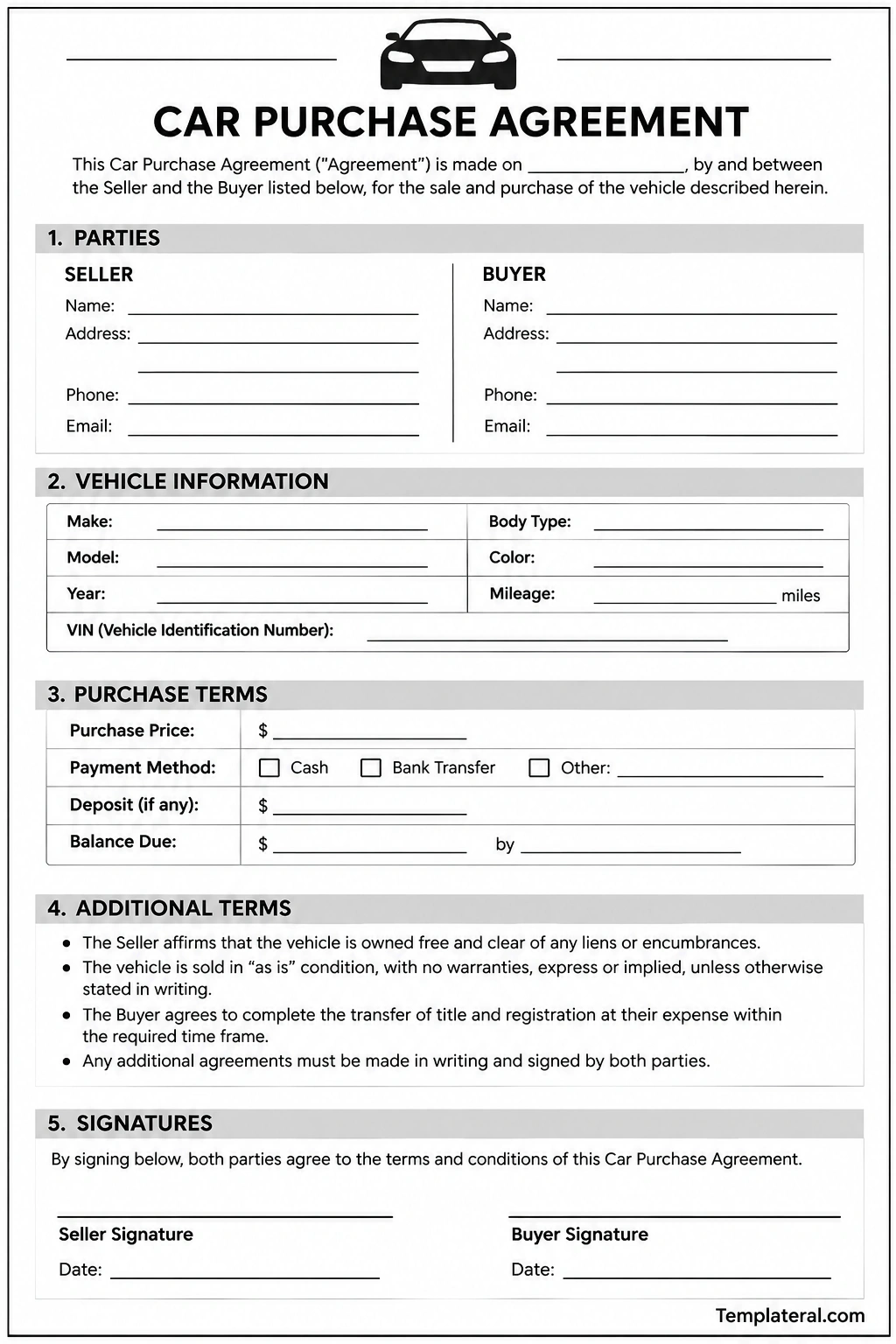
A printable purchase agreement for car template provides a convenient starting point for documenting a vehicle sale. Instead of creating the document from scratch, buyers and sellers can use an organized layout with dedicated sections for the parties, vehicle details, purchase terms, and signatures.
A useful car purchase agreement form should provide space for the buyer’s and seller’s contact information, vehicle identification number, make and model, mileage, purchase price, payment method, and additional conditions. It should also include signature lines so both parties can confirm their acceptance of the written terms.
The sample below uses a clean black-and-white layout with clearly separated sections. Its simple design makes the information easy to review and provides a practical reference when preparing a private vehicle sale agreement.
Purchase Agreement vs. Bill of Sale
A purchase agreement and a bill of sale are related documents, but they may serve different purposes depending on the transaction and local law.
Car Purchase Agreement
A car purchase agreement generally records the terms that the buyer and seller agree to follow. It may cover payment arrangements, delivery dates, vehicle condition, warranties, disclosures, and other obligations before the transaction is completed.
Vehicle Bill of Sale
A vehicle bill of sale is commonly used as a record that a vehicle was sold from one party to another. It typically identifies the buyer and seller, describes the vehicle, records the sale price, and states the sale date.
Some transactions use both documents, while others use a single document that serves multiple purposes. The appropriate paperwork depends on the vehicle sale and the requirements of the relevant jurisdiction.
Frequently Asked Questions About Purchase Agreement for Car
Is a purchase agreement for car legally binding?
A purchase agreement for car sales can be legally binding when it meets the applicable requirements for contract formation and enforceability. This generally involves clear terms, agreement between the parties, and any other elements required by local law. The exact legal effect depends on the jurisdiction and circumstances.
Can I write my own car purchase agreement?
Yes. Buyers and sellers can prepare their own written agreement using a suitable template. However, the document should contain accurate vehicle details, payment terms, condition disclosures, delivery arrangements, and signatures. For complicated transactions, legal advice may be appropriate.
Does a car purchase agreement transfer ownership?
Not necessarily. A purchase agreement documents the terms of the sale, but official ownership transfer may require additional documents and procedures. Buyers and sellers should follow the rules of their local motor vehicle authority.
Does a car purchase agreement need to be notarized?
Notarization requirements vary by location and transaction type. Some jurisdictions may accept a signed agreement without notarization, while others may require notarized documents for certain vehicle-related procedures. Check the applicable local requirements before signing.
What happens if the buyer does not complete payment?
The consequences depend on the payment terms, the agreement, and applicable law. A written contract can help establish the buyer’s payment obligations and the seller’s available remedies. If a dispute occurs, both parties should review the agreement and consider appropriate legal guidance.
Should the purchase agreement include the vehicle’s mileage?
Yes. Recording the odometer reading at the time of sale helps document the vehicle’s condition and provides useful information for the transaction. Some locations also require a separate odometer disclosure form.
Can I use a purchase agreement for a used car?
Yes. A purchase agreement is commonly used for private used car sales. It should describe the vehicle’s current condition, disclose known issues, state the agreed price, and explain the payment and ownership transfer arrangements.
How many copies of the car purchase agreement should be signed?
At least two complete signed copies are practical: one for the buyer and one for the seller. Both copies should contain the same information and signatures.
Conclusion
A purchase agreement for car sales helps buyers and sellers document the important terms of a vehicle transaction. By recording the parties’ information, vehicle details, purchase price, payment arrangements, condition disclosures, and signatures, the document creates a clear written record of the agreement.
Before signing, verify the vehicle information, review every condition, and confirm the local requirements for ownership transfer. A well-prepared car purchase agreement can make the transaction more organized and help both parties understand their responsibilities.
Download: Purchase Agreement For Car
