A well-organized event starts with a comfortable seating arrangement. Whether you are planning a wedding, corporate gathering, birthday party, banquet, or family celebration, a table seating chart helps guests find their assigned seats without confusion. It also allows event organizers to manage the room layout, group guests thoughtfully, and make sure everyone has a comfortable place.
Creating a seating arrangement does not have to be complicated. With a printable table seating chart, you can organize guest names, assign table numbers, plan special seating arrangements, and keep important details in one place. Instead of making last-minute decisions at the venue, you can prepare everything in advance and share the final plan with your event team.
In this guide, you will learn how to create an effective table seating plan, explore different seating chart formats, and discover practical tips for organizing guests. You can also use the printable templates to make your event planning easier.
What Is a Table Seating Chart?
A table seating chart is a planning document that shows where guests should sit during an event. It typically includes table numbers, guest names, and assigned seats. Depending on the event, it may also include a floor plan showing the location of each table within the venue.
Hosts use seating charts to organize guests, prevent confusion, and create a more comfortable event experience. For example, a wedding seating chart can group family members together, while a corporate event seating plan can place employees, clients, and business partners at appropriate tables.
A typical table seating chart may include:
- Event name, date, and venue details.
- Table numbers and seating capacity.
- Guest names and assigned seat numbers.
- Special seating arrangements for VIP guests.
- Dietary requirements and accessibility notes.
- Additional instructions for event staff.
Having these details organized in one document makes it easier to coordinate the event and communicate seating assignments to everyone involved.
Free Printable Table Seating Chart Templates
Using a printable seating chart template is a simple way to organize your event without creating a layout from scratch. Different formats serve different purposes, so choose one that matches your guest count, venue, and planning needs.
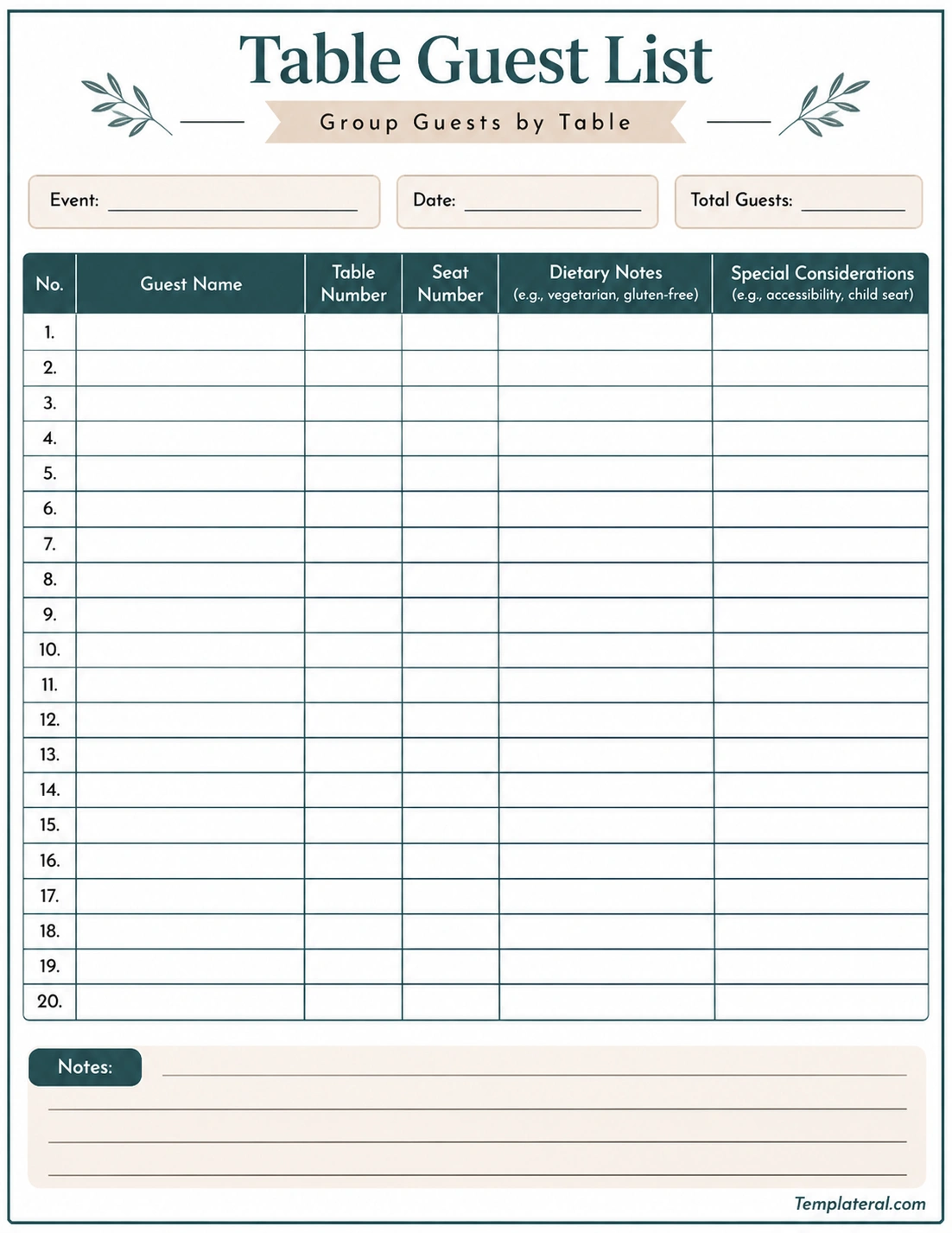
1. Table Guest List Template
This template helps you organize guest information in a structured list. It includes spaces for guest names, table numbers, seat numbers, dietary notes, and special considerations.
It is especially useful when managing a large guest list or coordinating with caterers and event staff. You can use it as your main guest assignment record throughout the planning process.
2. Table Seating Chart Template
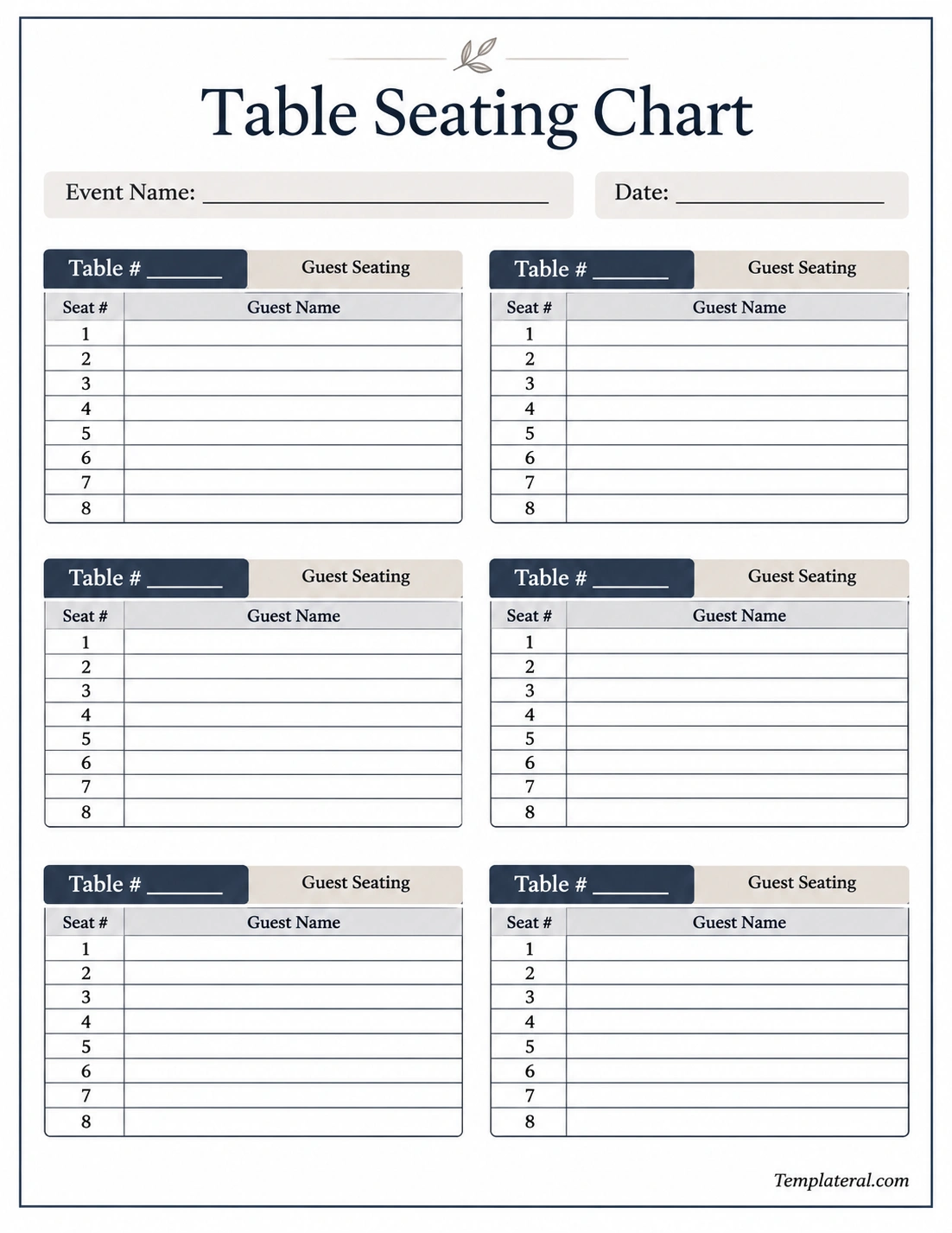
A traditional table seating chart focuses on assigning guests to specific tables and seats. This format provides separate sections for multiple tables, making it easy to record guest names and identify available seats.
Use this template when you need a clear seating assignment record for weddings, dinners, banquets, or other formal gatherings.
3. Wedding Seating Chart Template
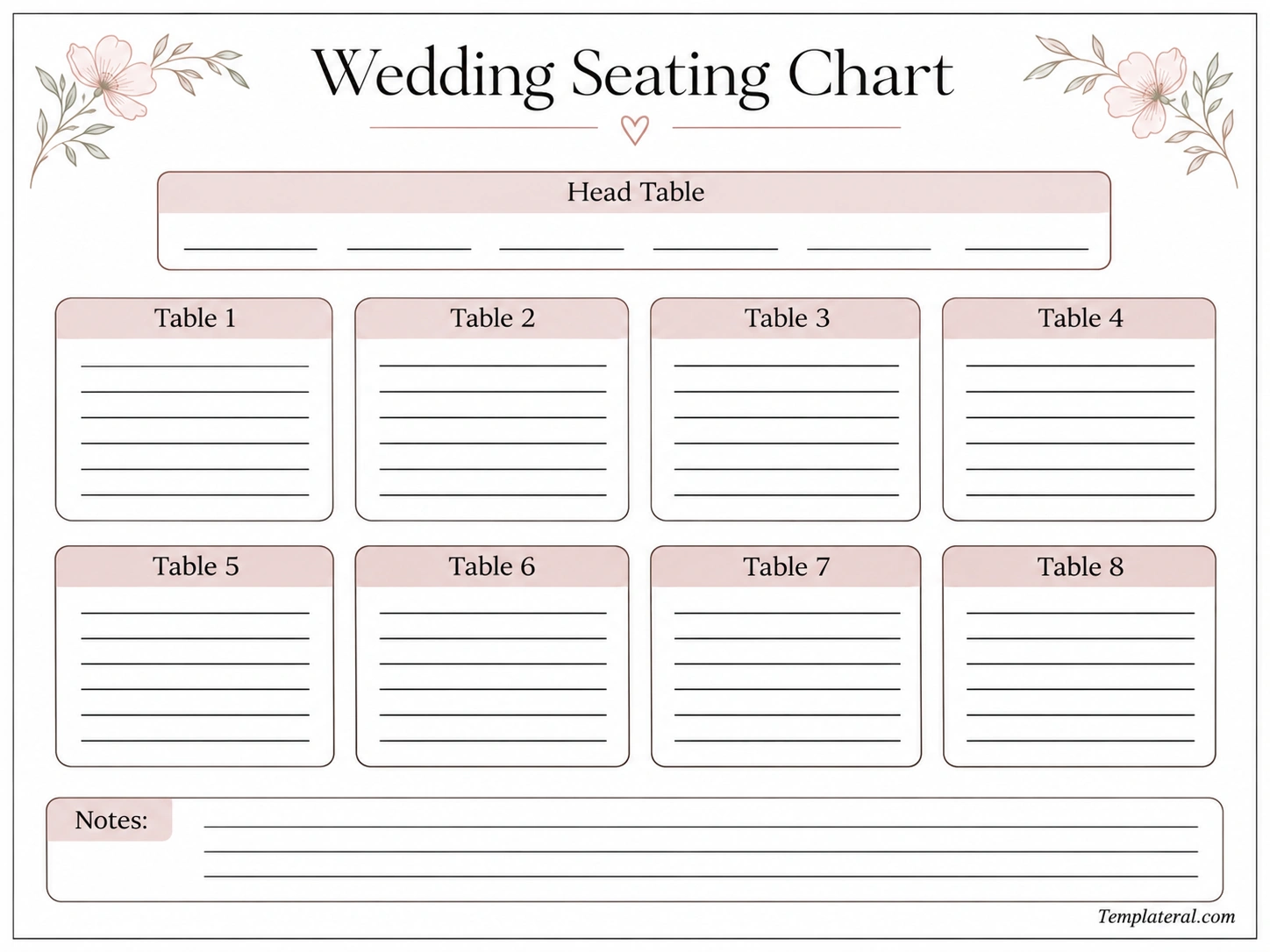
Wedding receptions often require careful seating arrangements because guests may include relatives, friends, colleagues, and members of different social groups. This wedding seating chart provides a dedicated head table section and individual spaces for guest tables.
It is useful for grouping family members, seating the wedding party, and making sure guests can enjoy the celebration comfortably.
4. Event Seating Plan Template
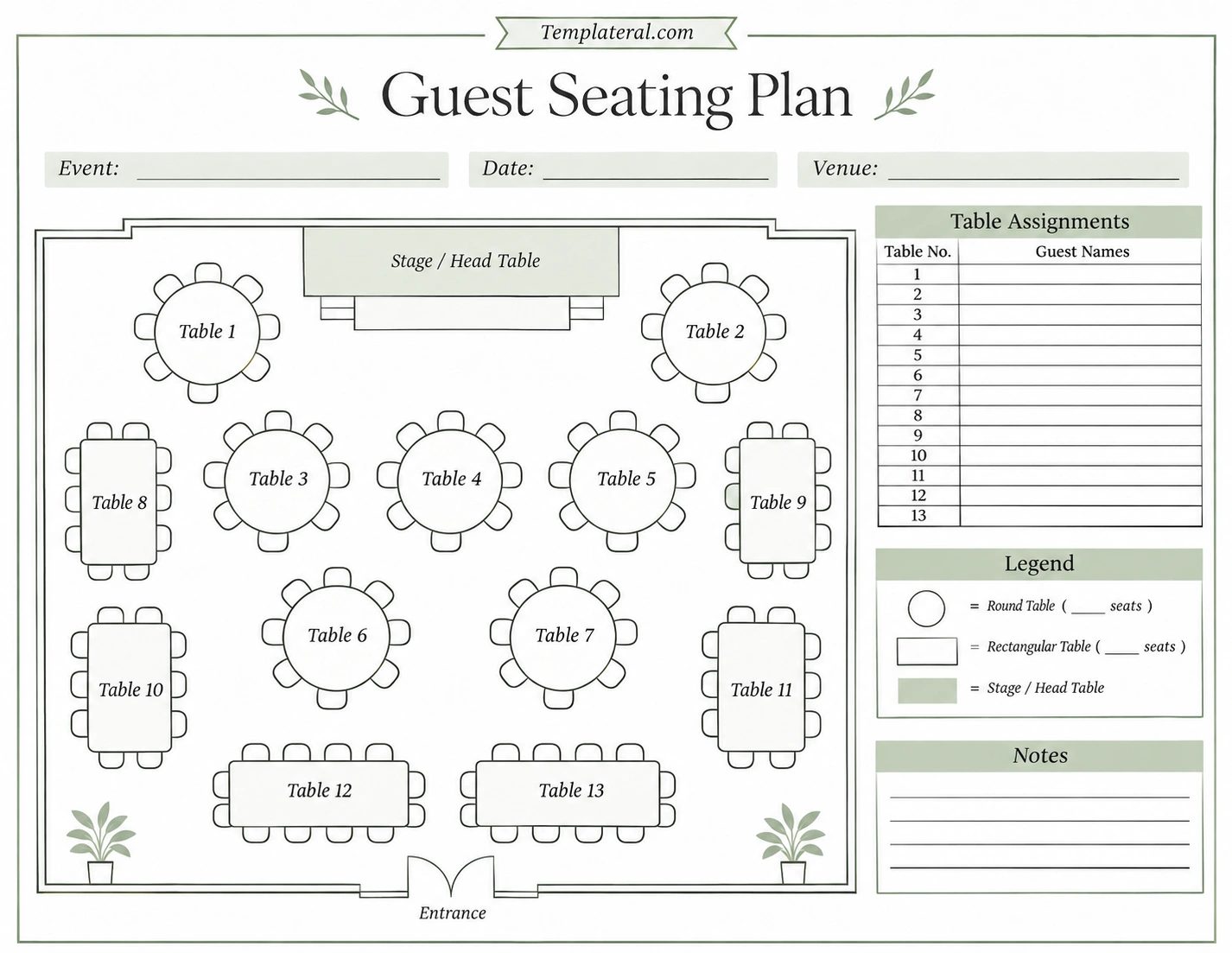
When the physical arrangement of a venue matters, a floor plan is often more useful than a simple guest list. This template provides a visual layout of the room, including round tables, rectangular tables, the stage, the head table, and the entrance.
It helps organizers understand how guests will move around the venue and whether tables are positioned appropriately. It can also help catering teams, decorators, and event coordinators prepare the room.
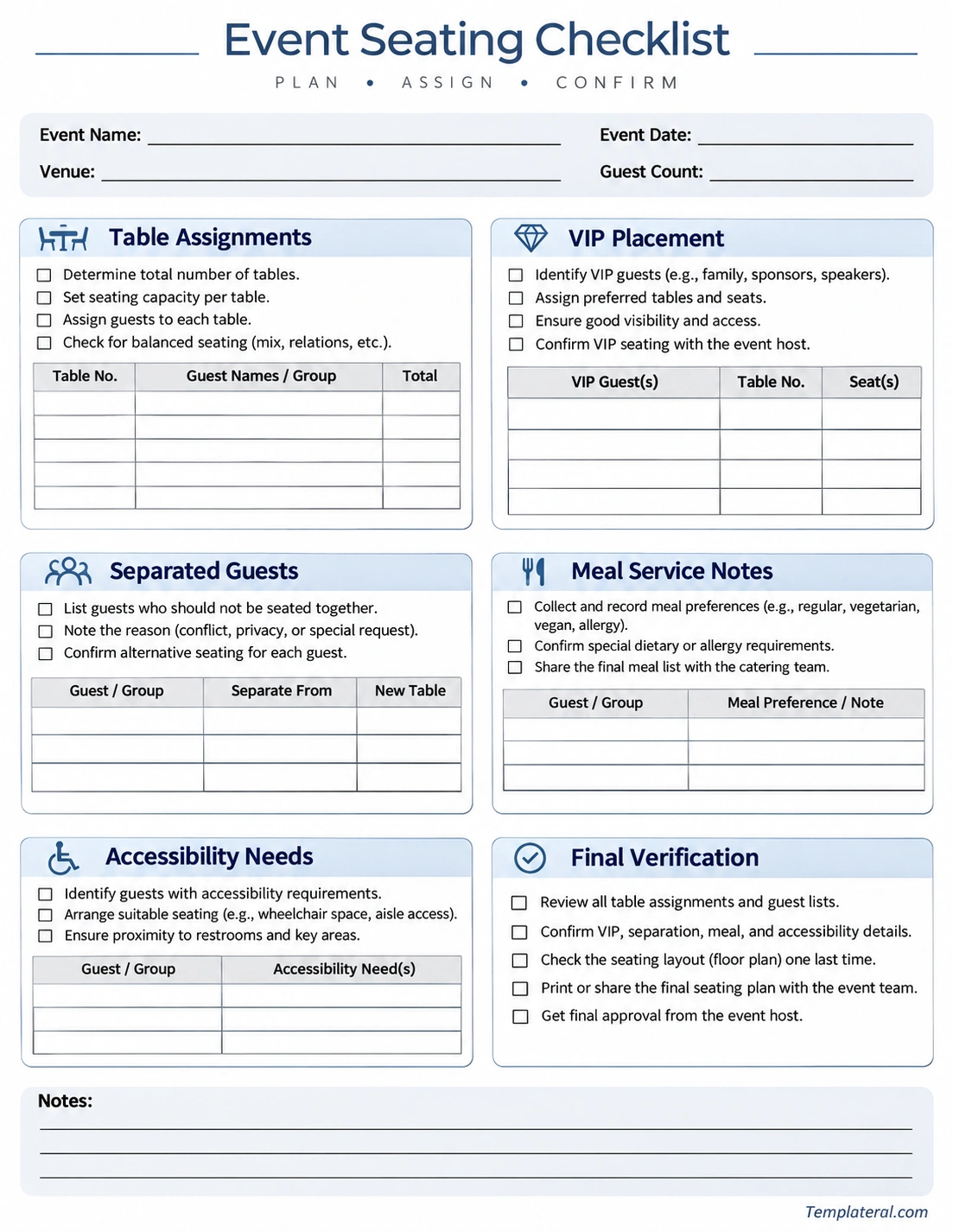
5. Event Seating Checklist Template
A seating arrangement involves more than assigning names to tables. Organizers may also need to consider VIP placement, guests who should not sit together, dietary requirements, and accessibility needs.
This checklist helps you review those important details before finalizing the seating plan. It is particularly helpful for larger events that involve multiple organizers or service teams.
Why Is a Seating Chart Important?
A seating chart does more than tell guests where to sit. It helps create an organized environment and makes event management easier for both hosts and staff.
1. Prevents Confusion and Delays
When guests know their assigned tables, they do not need to search for available seats or ask multiple staff members for directions. This reduces confusion, especially during busy arrival periods.
2. Improves the Guest Experience
Thoughtful seating arrangements can make guests feel more comfortable. Placing friends, family members, or people with similar interests together can encourage natural conversations and create a welcoming atmosphere.
3. Helps Manage Special Guests
Hosts can reserve appropriate seating for VIP guests, speakers, sponsors, senior executives, or members of the wedding party. Their positions can be planned according to visibility, accessibility, and event priorities.
4. Supports Catering and Event Logistics
Organized table assignments help catering teams identify where meals should be served. They can also make it easier to accommodate guests with allergies, dietary restrictions, or special service requirements.
5. Makes Venue Planning Easier
A visual seating plan helps organizers evaluate table spacing, walking paths, stage visibility, and access to important areas. This can prevent overcrowding and improve the overall flow of the event.
How to Create a Table Seating Chart
Creating an effective seating arrangement becomes easier when you follow a few simple steps. Start with accurate guest information, then organize the tables according to the venue and event requirements.
Step 1: Finalize Your Guest List
Before assigning seats, prepare a complete guest list. Confirm attendance whenever possible and record important details such as family relationships, guest preferences, dietary requirements, and accessibility needs.
Step 2: Determine the Number of Tables
Calculate how many tables you need based on the number of confirmed guests and the seating capacity of each table. For example, 80 guests seated at tables for eight people will require approximately 10 tables.
Step 3: Group Guests Thoughtfully
Consider relationships, shared interests, and social connections when assigning guests. Friends and family members may enjoy sitting together, while colleagues or business partners may benefit from dedicated tables.
Also consider any special requests. If certain guests should not sit together, plan alternative arrangements discreetly.
Step 4: Assign Table and Seat Numbers
Give each table a clear number or name. If individual seats are assigned, use consistent seat numbers to avoid misunderstandings. Make sure every guest appears only once in the seating plan.
Step 5: Check the Venue Layout
Review the room dimensions and confirm that tables do not block entrances, exits, walkways, or emergency access. Consider the location of the stage, buffet, restrooms, and other important areas.
Step 6: Review Special Requirements
Check dietary needs, accessibility arrangements, children’s seating, and VIP placement. Share relevant information with the appropriate event staff while keeping personal guest information private.
Step 7: Finalize and Share the Chart
Review all names, table numbers, and assignments before printing or distributing the final version. Provide copies to the event coordinator and relevant staff so everyone works from the same seating plan.
Tips for Organizing Guests at Each Table
A good seating arrangement should balance practical requirements with guest comfort. Consider these tips when planning your tables:
- Mix familiar faces: Place guests with people they know while allowing opportunities to meet others.
- Consider conversation: Group guests with compatible interests or shared experiences.
- Plan VIP seating carefully: Give important guests suitable visibility and convenient access.
- Keep accessibility in mind: Provide appropriate space for wheelchairs and guests who need easier access.
- Separate guests when necessary: Respect personal requests and avoid uncomfortable seating combinations.
- Leave enough space: Make sure tables and chairs do not restrict movement around the venue.
- Allow for last-minute changes: Keep a few flexible seating options available if attendance changes.
Remember that the best seating arrangement is not necessarily the most complicated one. A clear, practical layout that considers guest comfort is usually the most effective.
Common Table Seating Chart Mistakes to Avoid
Even a carefully planned event can experience seating problems if important details are overlooked. Avoid these common mistakes:
- Creating assignments too early: Finalize the main seating plan after receiving reliable attendance information.
- Ignoring table capacity: Never assign more guests than a table can comfortably accommodate.
- Overlooking special requirements: Check dietary, mobility, and other relevant guest needs.
- Using unclear table numbers: Make sure table labels are easy to read and consistent across all documents.
- Forgetting staff communication: Share the final seating plan with coordinators and catering teams.
- Not checking the floor plan: Verify that the arrangement works within the actual venue space.
Frequently Asked Questions About Table Seating Charts
What should be included in a table seating chart?
A table seating chart should include the event name, table numbers, guest names, and seat assignments when individual seating is required. You can also include dietary notes, accessibility requirements, VIP placement, and other relevant instructions.
How many guests should sit at one table?
The number depends on the table size, venue layout, and event style. Common arrangements include four, six, eight, or ten guests per table. Always follow the venue’s recommended seating capacity to ensure guests have enough space.
What is the difference between a seating chart and a seating plan?
A seating chart generally focuses on guest assignments and table numbers. A seating plan often includes a visual floor layout showing where tables, stages, entrances, and other venue features are located. Both can be used together for better event organization.
Should guests have assigned seats or assigned tables?
Assigned tables are often sufficient for casual gatherings and large celebrations. Assigned seats are more suitable for formal dinners, weddings with specific meal requirements, or events where hosts want precise control over guest placement.
When should I create a seating chart?
Start planning once you have a reliable guest list and venue information. Finalize the chart after receiving most RSVPs and confirming important seating requirements. Review it again shortly before the event to account for any changes.
Can I use a table seating chart for events other than weddings?
Yes. A table seating chart is useful for corporate dinners, conferences, birthday parties, graduation celebrations, banquets, charity events, family reunions, and other gatherings that require organized seating.
Can I print and customize a table seating chart template?
Yes. Printable templates can be filled in by hand or customized using a compatible document or image-editing application. Choose a layout that provides enough writing space for your guest list and table arrangements.
Conclusion
A well-planned table seating chart makes event organization easier by giving every guest a clear place to sit. It helps prevent confusion, supports catering and venue logistics, and allows hosts to create comfortable seating arrangements based on guest relationships and individual requirements.
Whether you are organizing a wedding reception, corporate dinner, birthday celebration, or formal banquet, choosing the right seating chart format can save time and reduce unnecessary stress. Start with an accurate guest list, assign tables thoughtfully, and review every detail before the event.
Use the printable table seating chart templates in this guide to organize your guests, plan your venue layout, and prepare for a smooth and enjoyable event.
Download: Table Seating Chart Template
