Keeping track of multiple bills can become difficult when every payment has a different due date. A bill payment calendar provides a simple visual way to organize those dates, record upcoming payments, and see which bills need attention throughout the month.
Instead of keeping payment dates in different places, you can use a monthly bill calendar to bring your recurring expenses together on one page. This makes it easier to review upcoming bills and create a consistent payment routine.
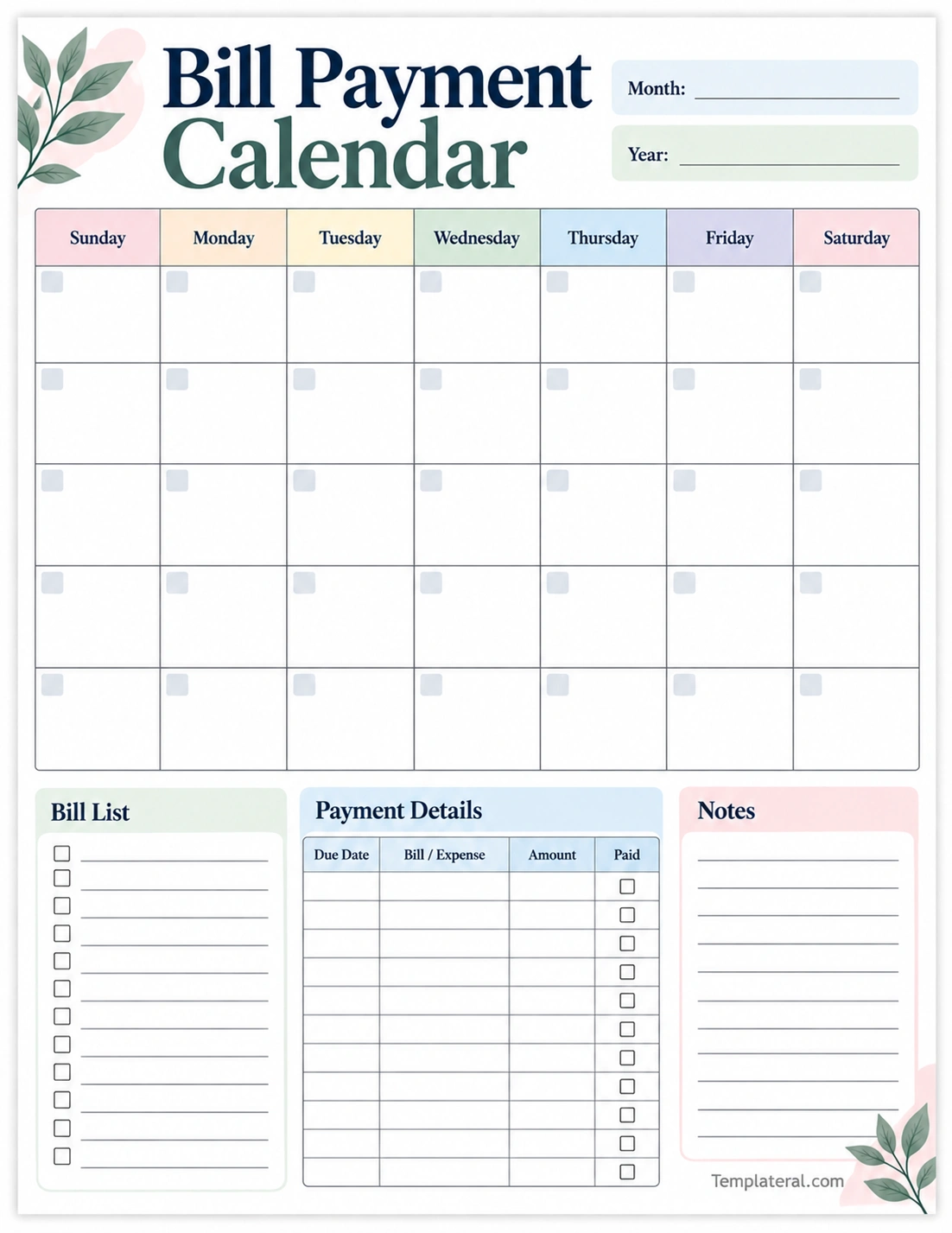
A printable bill payment calendar can be especially helpful if you prefer a physical worksheet. You can write bill names directly on the calendar, mark important payment dates, and use additional sections to track amounts and payment status.
What Is a Bill Payment Calendar?
A bill payment calendar is a monthly calendar designed to help you organize recurring bills and payment dates. Instead of simply showing appointments or events, it focuses on financial obligations that need to be paid during the month.
A typical bill calendar may include spaces for:
- Bill names
- Payment due dates
- Expected amounts
- Payment status
- Payment notes
- Monthly reminders
The calendar format gives you a visual overview of when payments are due. You can use it alongside a budget planner, bill tracker, or digital payment reminders.
Why Use a Bill Payment Calendar?
Knowing what bills you have is useful, but knowing when they need to be paid is equally important. A bill payment calendar puts the timing of your payments at the center of your monthly planning.
See Upcoming Bills at a Glance
A calendar gives you a visual representation of the entire month. Instead of reading through a long list, you can quickly identify which dates have bills scheduled.
This can make it easier to anticipate busy payment periods when several bills are due within a few days of one another.
Keep Due Dates Organized
Different companies may use different billing cycles. Rent might be due at the beginning of the month, while utilities, subscriptions, and insurance payments may fall on other dates.
Writing these dates on one monthly payment calendar creates a centralized reference for your regular expenses.
Track Payment Progress
A bill calendar can also be used as a payment checklist. After completing a payment, you can mark the corresponding date or bill as paid.
This provides a simple visual indication of which payments are complete and which ones still need attention.
What to Include in a Bill Payment Calendar
You can keep your calendar as simple or detailed as you need. The most useful information is the information that helps you remember and manage upcoming payments.
Month and Year
Always identify the month and year at the top of your worksheet. This makes it easier to organize printed calendars and keep previous months for reference.
Bill Name
Write the name of each recurring bill on its corresponding date. Common examples include rent, electricity, water, internet, insurance, subscriptions, and memberships.
Due Date
The due date is the most important part of a payment calendar. Record the date when each payment is expected so you can review upcoming obligations before they become due.
Amount Due
If you know the expected payment amount, record it alongside the bill. For variable bills, you can enter an estimated amount and update it when the actual statement becomes available.
Paid Status
A checkbox or simple mark can indicate whether a payment has been completed. This turns the calendar into both a scheduling tool and a bill payment tracker.
Notes
Use the notes section for reminders such as changed billing amounts, subscription renewals, payment confirmations, or other information that may be useful later.
How to Use a Bill Payment Calendar
Using a monthly bill payment calendar does not have to be complicated. A few consistent steps can turn it into a useful part of your monthly routine.
1. List Your Recurring Bills
Start by making a complete list of your regular payments. Review previous bills, statements, subscriptions, and household expenses so you do not overlook a recurring payment.
Some common categories include:
- Housing payments
- Electricity and utilities
- Internet and phone services
- Insurance
- Subscriptions
- Memberships
- Other recurring household expenses
2. Add Each Due Date
Place each bill on the appropriate date of the calendar. If several bills are due on the same day, you can list them together or use the additional payment details section.
3. Add Expected Payment Amounts
Record the amount you expect to pay for each bill. This gives you more information than the date alone and can help you understand how much money is scheduled to leave your budget during the month.
4. Mark Payments as Complete
Once a bill has been paid, mark it as complete. A simple checkmark is enough. Updating the calendar immediately after making a payment helps keep the information accurate.
5. Review the Calendar Regularly
Check the calendar at the beginning of the month and review it again throughout the month. Pay particular attention to bills approaching their due dates.
How to Organize Bills on a Monthly Calendar
There are several ways to arrange bills on a calendar. The simplest approach is to place each bill directly on its due date.
If you have many payments, you can use short labels such as:
- Rent
- Electric
- Internet
- Insurance
- Phone
- Subscription
For bills that require more information, use the payment details section below the calendar. This allows the main calendar to remain clean while still giving you space to record amounts and payment status.
Bill Payment Calendar vs. Bill Checklist
A bill payment calendar and a bill checklist have similar purposes, but they organize information differently.
A bill payment calendar emphasizes dates. It is useful when you want to see when payments are scheduled throughout the month.
A bill checklist emphasizes tasks. It is useful when you want to work through a list of bills and mark each one as paid.
You can use either format on its own or combine them. The calendar provides the schedule, while a bill list or payment tracker provides additional details.
Printable Bill Payment Calendar Benefits
A printable bill payment calendar can be useful for people who prefer a physical planning system. You can keep the worksheet somewhere visible and update it by hand as bills are scheduled and paid.
Some benefits include:
- Simple visual layout: See the entire month on one page.
- Easy to update: Write or mark information directly on the worksheet.
- Reusable system: Print a new calendar for each month.
- Clear payment schedule: Keep bill due dates together.
- Additional tracking space: Record payment amounts and notes below the calendar.
Tips for Managing Bills With a Payment Calendar
A calendar is most effective when you use it consistently. These simple habits can make monthly bill tracking easier.
- Prepare the calendar before the month begins. Add known recurring bills and due dates in advance.
- Review upcoming payments weekly. A short weekly review can help you stay aware of approaching due dates.
- Mark completed payments immediately. Do not rely on memory to remember which bills have been paid.
- Update changed amounts. Variable bills should be updated when the current statement becomes available.
- Keep important reminders nearby. Use the notes section for information that needs attention.
- Use digital reminders when appropriate. Calendar alerts can provide an additional reminder for important payment dates.
How a Bill Payment Calendar Fits Into a Budget
A bill payment calendar can complement a monthly budget. A budget provides a broader view of income, spending, savings, and financial goals, while a payment calendar focuses on the timing of recurring bills.
For example, you can review your calendar at the beginning of the month and identify periods when several payments are scheduled close together. Knowing those dates can help you plan your available funds and other spending.
The calendar can also help you identify recurring expenses that may have changed. If a bill consistently costs more than expected, you can record the change and consider it when preparing future monthly plans.
Who Can Use a Bill Payment Calendar?
A bill payment calendar can be useful for anyone who has recurring payments to manage.
- Families: Track household bills and shared expenses.
- Couples: Create a shared view of upcoming payments.
- Students: Organize rent, utilities, subscriptions, and other recurring expenses.
- Renters: Keep rent and household payment dates visible.
- Homeowners: Track utilities, insurance, services, and other regular expenses.
- Busy households: Keep multiple payment dates organized on one worksheet.
Frequently Asked Questions About Bill Payment Calendars
What is a bill payment calendar?
A bill payment calendar is a monthly planning tool used to record bill due dates, payment amounts, and payment status. It provides a visual overview of when recurring payments are scheduled.
How do I make a bill payment calendar?
Create a monthly calendar with space for each day, then add your recurring bills to their respective due dates. You can also include sections for payment amounts, paid status, and notes.
What bills should I put on a payment calendar?
You can include any recurring or important payment, including rent, utilities, insurance, internet, phone services, subscriptions, memberships, and other regular household expenses.
Should I put the bill amount on the calendar?
Adding the expected amount can make the calendar more useful because it provides information about both the timing and size of upcoming payments. Variable amounts can be updated when the current bill is available.
Can I use a printable bill payment calendar every month?
Yes. A printable calendar can be used as a monthly worksheet. Create a new copy for each month and carry forward recurring bills while updating dates and amounts as needed.
What is the difference between a bill calendar and a bill tracker?
A bill calendar focuses primarily on dates and timing, while a bill tracker usually focuses on payment details and status. A calendar can include tracking features, and the two tools can also be used together.
Can a bill payment calendar help me avoid missed payments?
A payment calendar can make due dates easier to see and review. For the best results, check it regularly and consider pairing it with digital reminders or account notifications for important payments.
Final Thoughts
A bill payment calendar offers a simple visual way to organize monthly payments. By placing recurring bills on their due dates and tracking amounts and payment status, you can create a clearer view of your monthly payment schedule.
The most important part is consistency. Prepare the calendar each month, review upcoming payments regularly, and mark bills as soon as they are paid. Whether you use a printable worksheet, a digital calendar, or both, a simple payment schedule can make recurring bill management easier to organize.
Download: Bill Payment Calendar Template
