Itinerary planning is the process of organizing the important details of a trip into a clear schedule. It can include transportation, accommodations, activities, destinations, meals, reservations, and notes for each day of the journey.
A well-organized itinerary helps travelers understand what they need to do, where they need to be, and when important activities are scheduled. It can also leave enough flexibility for unexpected changes, rest, and spontaneous experiences.
You do not need complicated software to create an effective travel itinerary. A simple printable itinerary planning worksheet can provide enough space to organize the major details of a vacation, business trip, road trip, or weekend getaway.
What Is Itinerary Planning?
Itinerary planning is the process of arranging travel activities and logistics before or during a trip. An itinerary usually provides a day-by-day overview of where you will go and what you plan to do.
A basic travel itinerary may include:
- Travel dates: The start and end dates of the trip.
- Destination: The cities, regions, or countries you plan to visit.
- Transportation: Flights, trains, buses, rental cars, or other transportation.
- Accommodation: Hotels, vacation rentals, hostels, or other places to stay.
- Activities: Attractions, tours, appointments, and planned experiences.
- Meals: Restaurants or meal plans when reservations or timing matter.
- Notes: Important reminders, confirmation details, addresses, or other information.
The level of detail depends on the type of trip. A short weekend getaway may only need a simple daily schedule, while a multi-city international trip may require a more detailed travel plan.
Why Is Itinerary Planning Important?
Travel involves many separate details. Without a basic plan, it can be easy to forget transportation times, reservation information, opening hours, or the amount of time needed to travel between locations.
Itinerary planning brings these details together in one place. This makes it easier to see how the different parts of the trip fit together.
Stay Organized
A travel itinerary gives you a central reference for your trip. Instead of searching through multiple messages, emails, documents, and notes, you can record important information in one organized format.
Manage Your Time
A daily schedule helps you understand how much time is available for sightseeing, transportation, meals, and rest. This can prevent an itinerary from becoming unnecessarily crowded.
Reduce Forgotten Details
Writing down important information during the planning stage can reduce the chance of overlooking essential details such as check-in times, departure times, addresses, or reservations.
Create a Flexible Framework
A good itinerary does not have to dictate every minute of a trip. Instead, it can provide a framework while leaving room for unexpected discoveries and changes.
What Should Be Included in a Travel Itinerary?
The most useful itinerary includes information that you are likely to need while traveling. Avoid adding unnecessary details simply to make the document longer.
Trip Information
Start with the destination, travel dates, and type of trip. This provides context for everything else on the itinerary.
Daily Schedule
A day-by-day table is one of the most useful parts of an itinerary. Include the date, approximate time, activity, location, and any relevant notes.
Transportation Details
Record important transportation information such as departure and arrival times, airline or carrier, flight or reservation number, and departure location.
Accommodation Details
For hotels or other lodging, record the property name, address, check-in and check-out information, confirmation number, and any useful notes.
Activities and Attractions
List important places you want to visit and activities that require reservations or have specific operating hours. Less time-sensitive attractions can remain flexible.
Important Notes
Leave space for addresses, reservation information, reminders, emergency contacts, transportation instructions, or other details that do not fit neatly into the daily schedule.
How to Create an Itinerary
Creating a travel itinerary becomes easier when you build it in a logical order rather than trying to fill every detail at once.
1. Define the Trip
Start by deciding where you are going, when you are traveling, and how long you will stay. If you are visiting multiple destinations, determine the overall route before planning individual activities.
2. Confirm Major Transportation
Identify the transportation that determines the structure of the trip. For example, flight arrival and departure times can establish when you can realistically begin and end activities.
3. Arrange Accommodation
Once your route is clear, organize your accommodations. Record the property name, address, check-in information, and confirmation details in your itinerary.
4. List Your Priorities
Make a list of the places and experiences that matter most to you. Prioritize these before filling the schedule with additional activities.
5. Build the Daily Schedule
Arrange activities according to location, opening hours, transportation time, and your available time. Avoid scheduling attractions on opposite sides of a city without allowing enough travel time between them.
6. Add Flexible Time
Leave some open periods in your schedule. Travel rarely goes exactly according to plan, and free time gives you room to rest or make spontaneous decisions.
7. Review the Complete Plan
Read through the itinerary from the first day to the last. Check whether transportation, accommodation, activities, and timing fit together realistically.
Itinerary Planning Tips
A good itinerary should be useful rather than overwhelming. These practical tips can help you create a plan that is easier to follow.
- Group nearby activities: Plan activities in the same area on the same day when practical.
- Allow travel time: Include realistic time for transportation between locations.
- Prioritize reservations: Put fixed-time activities into the schedule first.
- Keep some flexibility: Avoid filling every available hour.
- Consider rest: Include breaks, especially during longer trips.
- Record confirmation details: Keep important reservation numbers and addresses accessible.
- Review transportation: Check departure and arrival details before each travel day.
- Keep a backup: Save important itinerary information digitally or in another accessible location.
Different Types of Itineraries
There is no single format that works for every trip. The best itinerary depends on the purpose, length, and complexity of the journey.
Vacation Itinerary
A vacation itinerary usually combines sightseeing, dining, transportation, accommodation, and free time. It can be detailed enough to keep the trip organized without making the vacation feel overly scheduled.
Road Trip Itinerary
A road trip itinerary should emphasize driving distances, stops, overnight locations, fuel opportunities, attractions, and estimated travel times.
Business Trip Itinerary
A business travel itinerary may focus more heavily on flights, hotel information, meetings, appointments, transportation, and work-related locations.
Family Trip Itinerary
A family itinerary can include activities suitable for different ages, meal breaks, rest periods, transportation information, and backup activities in case plans change.
Multi-City Itinerary
For trips involving several destinations, organize the itinerary by city or location. Clearly indicate when you move between destinations so that transportation and accommodation changes are easy to follow.
Using a Printable Itinerary Planning Template
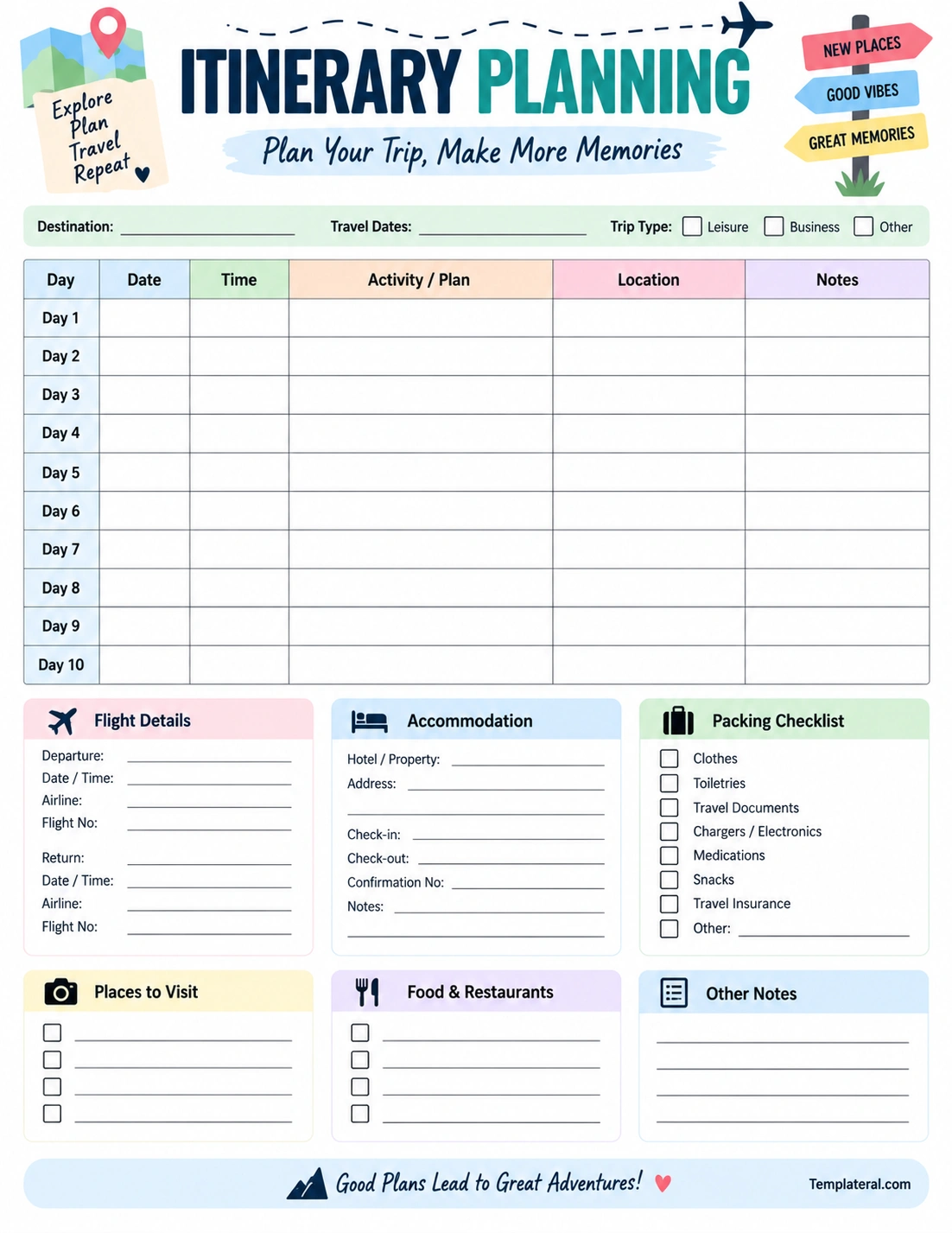
A printable itinerary planning template provides a structured way to organize a trip without starting with a blank page. The template shown above combines a daily schedule with separate sections for transportation, accommodation, packing, places to visit, food, and additional notes.
The daily schedule includes space for the day, date, time, activity, location, and notes. This format makes it possible to see the basic structure of the trip at a glance.
The additional sections can be used to record information that does not belong to a specific day. For example, accommodation details can remain in one dedicated area rather than being repeated throughout the daily schedule.
How Detailed Should an Itinerary Be?
The ideal level of detail depends on your travel style and the complexity of your trip.
For a simple weekend trip, you may only need transportation, accommodation, a few activities, and important reservation information. A long international journey with multiple destinations may require more detailed timing, transportation connections, addresses, and contingency planning.
A useful rule is to document the information you would not want to forget while traveling. You do not necessarily need to record every possible activity or create an exact schedule for every minute.
Common Itinerary Planning Mistakes
Even a well-intentioned travel plan can become difficult to use if it is too ambitious or lacks flexibility.
- Overplanning: Scheduling too many activities can make the trip stressful.
- Ignoring travel time: Activities may look close on a map but require significant transportation time.
- Forgetting rest: A full schedule every day can leave little time to recover.
- Not checking operating hours: Attractions may have limited hours or specific closing days.
- Keeping information in too many places: Important details are easier to manage when centralized.
- No backup options: Weather, delays, closures, or other changes can require an alternative plan.
Itinerary Planning Checklist
Before your trip begins, use this simple checklist to review your travel plan:
- Confirm travel dates.
- Review transportation details.
- Record accommodation information.
- Check important reservations.
- List priority attractions and activities.
- Estimate travel time between major locations.
- Prepare a packing checklist.
- Record important addresses and confirmation numbers.
- Leave some unscheduled time.
- Keep a digital or printed backup of important information.
Final Thoughts
Itinerary planning is about creating a practical framework for your trip. By organizing transportation, accommodations, activities, meals, and important notes in one place, you can make travel logistics easier to understand and manage.
The best itinerary is not necessarily the most detailed one. It is the one that gives you the information you need while leaving enough flexibility to enjoy the journey. A printable itinerary planning template can provide a simple starting point for organizing everything from a short weekend getaway to a longer multi-destination adventure.
Start with the fixed details, add your most important activities, allow realistic travel and rest time, and keep the final plan easy to reference. With a clear itinerary, you can spend less time worrying about logistics and more time enjoying the trip.
Download: Itinerary Planning Template
