A seating plan chart wedding is a practical tool for organizing where guests will sit during a wedding reception. It helps guests quickly find their assigned table while giving the couple and wedding coordinator a clear overview of the reception layout.
Creating a wedding seating plan can seem challenging, especially when you need to consider family relationships, friendships, table sizes, venue arrangements, and special seating requirements. A well-organized seating chart makes the process easier and helps create a comfortable experience for everyone.
Whether you are planning an intimate wedding or a large reception, a printable seating plan chart can provide a simple way to organize guest names, table numbers, and the overall reception layout.
What Is a Seating Plan Chart for a Wedding?
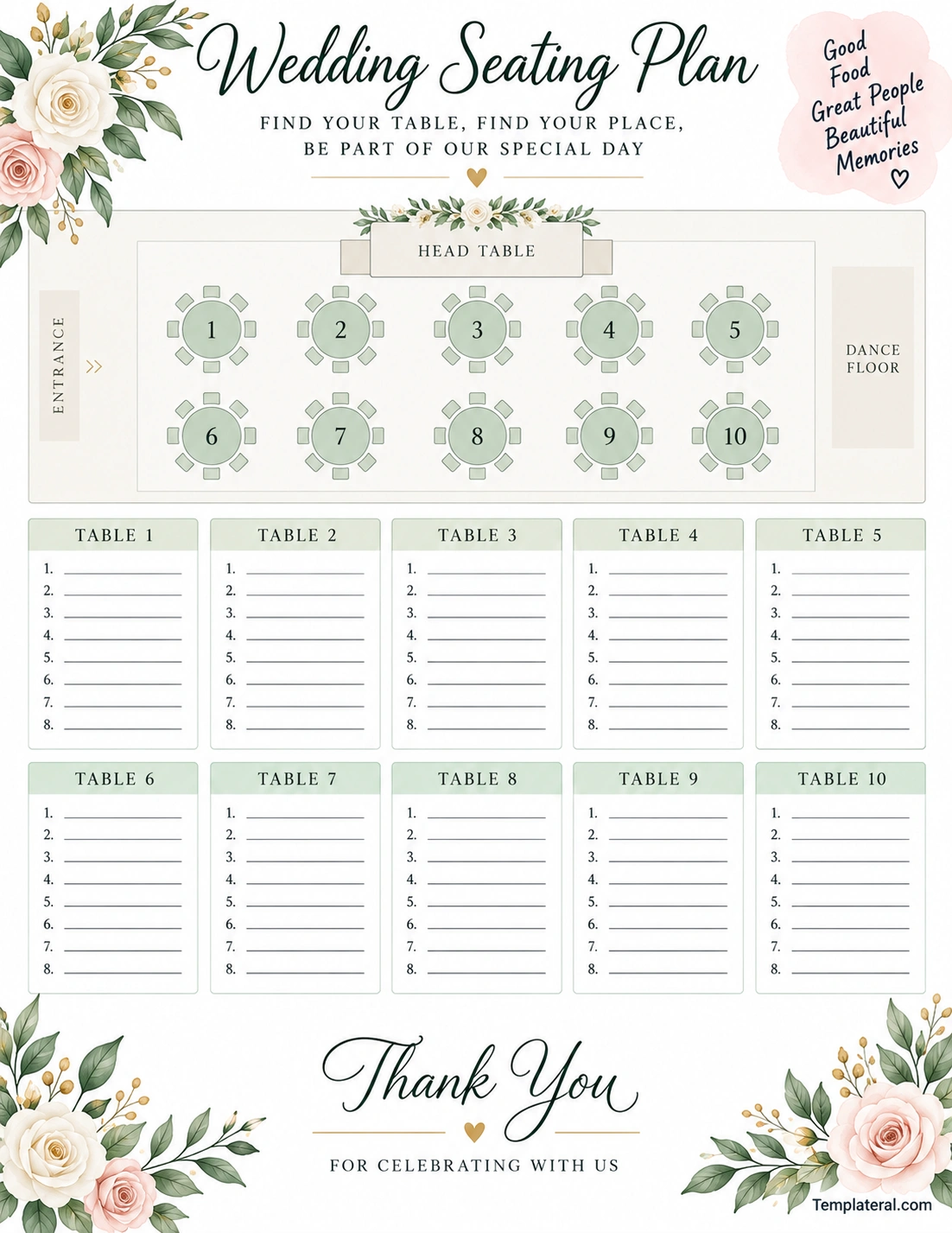
A wedding seating plan chart is a visual or written arrangement showing where guests are assigned to sit during the wedding reception. It typically displays table numbers or names and the guests assigned to each table.
Depending on the wedding style, the chart may show only table assignments or include a complete reception floor plan. A detailed version can identify the head table, guest tables, entrance, dance floor, food stations, bar, stage, and other important areas.
A wedding seating chart is usually displayed near the reception entrance so guests can find their assigned table before entering the dining area.
Why Is a Wedding Seating Plan Important?
Assigned seating can make a wedding reception more organized. Instead of allowing guests to choose any available seat, the couple can determine table assignments in advance.
Helps Guests Find Their Tables
A clear seating chart allows guests to quickly locate their table. This is particularly helpful when a reception has many tables or a large number of attendees.
Makes Better Use of Venue Space
Planning the seating arrangement ahead of time allows you to work around the actual dimensions and features of the venue. You can position tables while considering entrances, exits, dance floors, stages, food stations, and other areas.
Organizes Different Guest Groups
A seating plan can help keep families, friends, coworkers, and other groups together when appropriate. It can also prevent awkward situations by thoughtfully considering existing relationships.
Supports Special Seating Needs
Some guests may need easier access to entrances, restrooms, exits, or other areas. Planning assignments in advance makes it easier to accommodate these practical needs.
What Should a Wedding Seating Plan Include?
A useful seating plan chart does not need to be complicated. The information you include should make it easy for guests and event staff to understand the arrangement.
- Wedding couple’s names
- Wedding date
- Table numbers or table names
- Guest names
- Head table or sweetheart table
- Reception entrance
- Dance floor
- Stage or DJ area
- Food or buffet area
- Bar or beverage station
- Special seating information
Not every seating chart needs all of these elements. Include only the information that is relevant to your venue and reception layout.
How to Create a Wedding Seating Plan Chart
Creating the chart is easier when you divide the process into several manageable steps.
1. Create Your Guest List
Start with the most complete guest list possible. Include the names of everyone who has confirmed attendance and identify guests who may need special seating arrangements.
It is helpful to keep the guest list separate from the visual seating chart while making changes. This makes it easier to move people between tables without redesigning the entire chart.
2. Determine the Number of Tables
Check how many tables your venue can accommodate and how many guests each table can comfortably seat. Table capacity depends on the shape and size of the tables as well as the venue layout.
For example, round tables may commonly accommodate groups of several guests, while long banquet tables can create a different seating arrangement.
3. Decide on Table Numbers or Names
Numbered tables are simple and easy to understand. However, some couples choose names based on places, flowers, books, destinations, songs, or other themes connected to the wedding.
If you use table names instead of numbers, make sure the names are clearly visible on both the seating chart and individual table signs.
4. Group Guests Thoughtfully
Consider which guests are likely to enjoy sitting together. Family members, close friends, coworkers, and guests who already know one another may naturally form comfortable groups.
At the same time, avoid assuming that everyone in the same family or social group needs to sit together. Consider individual relationships and preferences where relevant.
5. Account for Table Capacity
Do not overcrowd tables simply to reduce the number of tables. Guests should have enough space to sit comfortably, eat, talk, and move around.
6. Place Special Seating First
Determine where the head table, sweetheart table, or wedding party table will be located before assigning the remaining guests. This creates a foundation for the rest of the seating arrangement.
7. Review the Entire Layout
Once all guests have been assigned, review the seating plan as a complete layout. Look for overcrowded areas, inconvenient locations, accessibility concerns, or groups that may be better positioned elsewhere.
Wedding Seating Chart vs. Seating Plan
The terms wedding seating chart and wedding seating plan are often used to describe similar things, but they can refer to slightly different formats.
A seating chart commonly refers to the guest-facing display that tells each person which table they should use. A seating plan can refer more broadly to the complete arrangement of tables and guests within the reception venue.
For example, a seating chart might simply say:
- Table 1: Sarah, Michael, Emily, Daniel
- Table 2: James, Olivia, William, Sophia
- Table 3: David, Emma, Robert, Grace
A seating plan may additionally show where those tables are physically located in the reception room.
Wedding Seating Plan Ideas
There are several ways to organize and display a wedding seating arrangement.
Traditional Numbered Tables
Numbered tables are one of the simplest options. Guests find their names on the main seating chart and then locate the corresponding table number in the reception area.
Table Names
Instead of numbers, tables can be assigned meaningful names. This approach works particularly well when the wedding has a strong theme.
Alphabetical Guest List
An alphabetical seating chart lists guests by last name and shows their assigned table. This can be convenient for larger weddings because guests can quickly find their names without searching through every table.
Grouped Table Display
A grouped design can display each table as its own section with a list of assigned guests underneath. This format works well for printable charts and smaller receptions.
Tips for Arranging Wedding Guests
Guest relationships should be considered carefully when creating a seating plan. The goal is not necessarily to create perfect social groups but to provide a comfortable and practical arrangement.
- Seat close family together when appropriate: Immediate family members may appreciate being near one another.
- Consider existing friendships: Guests who already know each other may feel more comfortable together.
- Think about conversation: Mix guests thoughtfully when introducing people who may enjoy meeting one another.
- Consider children: Families with young children may benefit from practical table locations.
- Consider accessibility: Make reasonable arrangements for guests who need easier access or additional space.
- Avoid forcing complicated groupings: Seating should feel natural rather than overly engineered.
- Keep the final chart easy to read: Guests should be able to find their names quickly.
Common Wedding Seating Plan Mistakes
A few common mistakes can make a seating chart harder to use or create unnecessary problems during the reception.
Waiting Until the Last Minute
Seating arrangements often require several revisions. Start early enough to make changes after receiving final RSVPs and confirming the venue layout.
Ignoring the Actual Venue Layout
A seating chart should reflect the real reception space. A table arrangement that looks good on paper may not work once entrances, columns, stages, buffet stations, and dance floors are considered.
Overcrowding Tables
Fitting too many guests at one table can reduce comfort. Always verify the table capacity provided by the venue or rental company.
Making the Chart Difficult to Read
Decorative fonts and complicated layouts may look attractive but can make guest names difficult to find. Prioritize readability over excessive decoration.
Forgetting to Update the Chart
Guest lists can change before the wedding. Make sure the final seating chart matches the latest RSVP information and table assignments.
Using a Printable Seating Plan Chart Wedding Template
A printable seating plan chart wedding template can save time by providing a structured layout for tables and guest names. Instead of creating the entire design from a blank page, you can fill in the table assignments and customize the details.
A printable template can also serve as a planning worksheet before creating the final decorative seating chart for the reception. You can use it to experiment with different table arrangements and move guests between tables until the layout works well.
For the final version, make sure guest names and table numbers are large enough to read from a comfortable distance. If the chart will be displayed near the entrance, consider the viewing distance and lighting conditions when choosing the font size.
How to Display a Wedding Seating Chart
Once the seating plan is complete, decide where guests will find it at the reception.
Common display locations include:
- Near the reception entrance
- Outside the main dining area
- Beside the guest book or welcome table
- Near the cocktail area before dinner
- At a dedicated seating chart display
The chart should be positioned where guests naturally pass by before reaching their tables. Avoid placing it in a narrow area where a crowd could block the entrance or create congestion.
Final Checklist for Your Wedding Seating Plan
Before printing the final seating plan chart, review the following details:
- All confirmed guests are included.
- Guest names are spelled correctly.
- Every guest has an assigned table when assigned seating is being used.
- Table numbers or names match the reception layout.
- Table capacities are appropriate.
- Special seating requirements have been considered.
- The head table or sweetheart table is correctly positioned.
- Important venue features are represented accurately.
- The chart is easy to read.
- The final version matches the latest guest list.
Final Thoughts
A seating plan chart wedding can make reception planning more organized and give guests an easy way to find their assigned tables. By starting with an accurate guest list, considering table capacity, reviewing relationships, and matching the arrangement to the venue, you can create a practical seating plan that works for your celebration.
A printable wedding seating chart template can make the process even easier. It provides a visual starting point for organizing table numbers, guest names, and reception areas while leaving room for adjustments before the final version is displayed.
Take time to review the seating arrangement before printing, keep the final design simple and readable, and make sure the chart reflects the actual reception layout. With careful preparation, your wedding seating plan can help the reception begin smoothly and allow guests to find their places with confidence.
Download: Wedding Seating Plan Chart Template
