A rent lease agreement is a written contract between a landlord and a tenant that explains the terms and conditions of renting a property. It helps both parties understand their responsibilities, financial obligations, rental period, and rules for using the property.
Whether you are renting a house, apartment, condominium, townhouse, or another residential property, having the agreement in writing can make the rental arrangement clearer and easier to manage. A well-organized lease should identify the parties, describe the property, state the rent amount, establish the lease term, and explain important rules such as security deposits, maintenance, pets, and termination.
A printable rent lease agreement template can provide a convenient starting point for organizing these details. However, rental laws vary by location, so the completed agreement should be reviewed against applicable state and local requirements before it is signed.
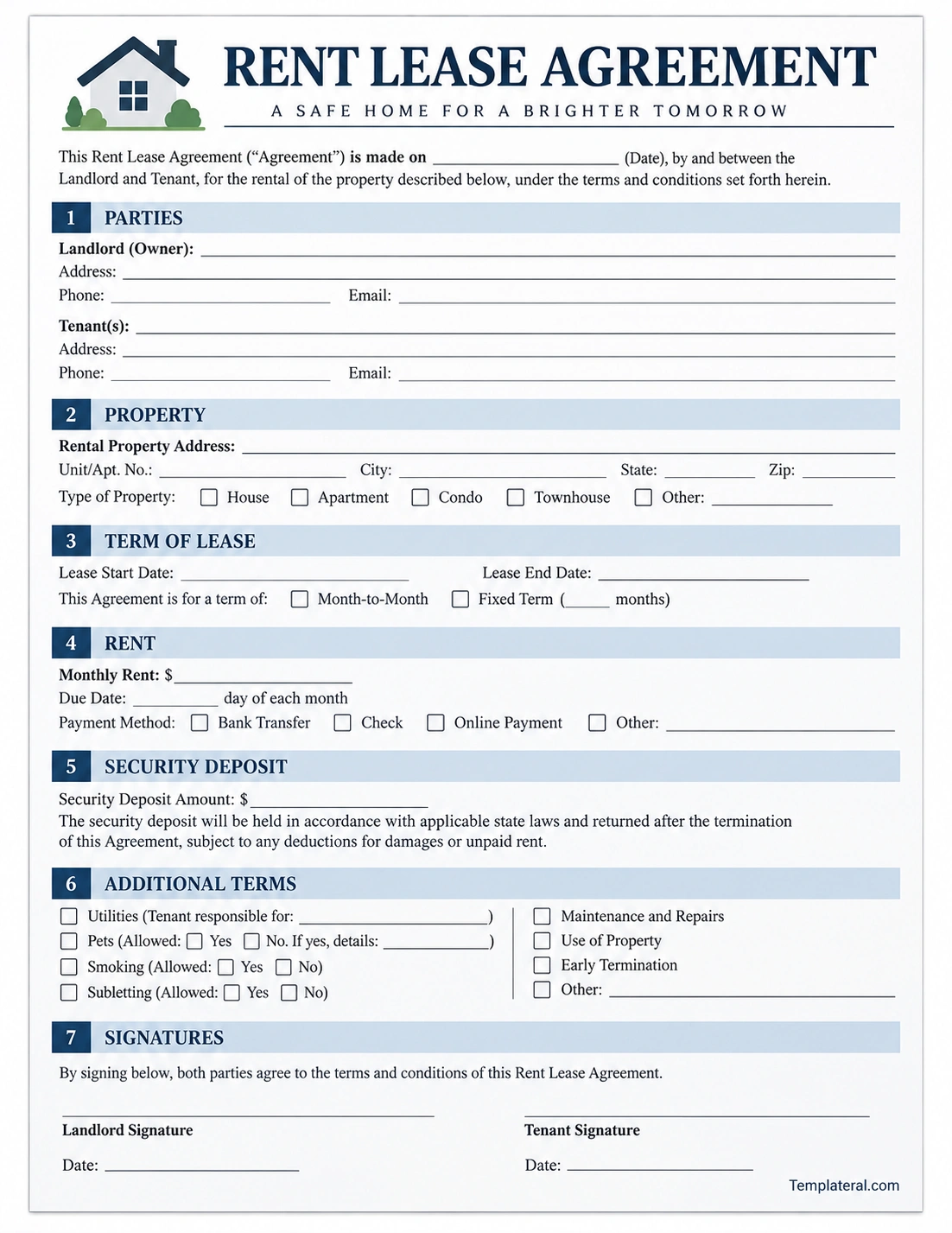
What Is a Rent Lease Agreement?
A rent lease agreement is a formal document that establishes the relationship between a landlord and tenant. It sets out the agreed conditions for occupying and using a rental property for a specified period.
The agreement can protect both parties by creating a written record of what was agreed upon. Instead of relying on verbal conversations, the landlord and tenant can refer to the document when they need to confirm details about rent, the lease period, property rules, or other responsibilities.
Depending on the arrangement, a lease may be for a fixed period, such as 12 months, or may operate on a month-to-month basis.
Why Is a Rent Lease Agreement Important?
A written rental agreement provides clarity before the tenant moves into the property. It gives both parties an opportunity to discuss important conditions and document them in one place.
A rent lease agreement can help clarify:
- The names and contact information of the landlord and tenant.
- The address and description of the rental property.
- The beginning and ending dates of the lease.
- The monthly rent and payment due date.
- The security deposit amount and applicable conditions.
- Responsibilities for utilities, maintenance, and repairs.
- Rules regarding pets, smoking, subletting, and property use.
- Procedures for ending or renewing the rental arrangement.
Clear documentation can reduce misunderstandings because each party has a written reference for the terms they agreed to.
What Should a Rent Lease Agreement Include?
A useful lease agreement should contain enough information to clearly describe the rental relationship. The exact requirements can differ depending on the location and type of property.
1. Landlord and Tenant Information
Start by identifying the landlord and every tenant who will be bound by the agreement. Include names, mailing addresses, phone numbers, and email addresses when appropriate.
If more than one tenant will occupy the property, each tenant may need to be identified in the agreement. This helps establish who is responsible under the lease.
2. Rental Property Information
The agreement should clearly identify the property being rented. Include the complete street address and, when applicable, the apartment or unit number.
You may also identify whether the property is a house, apartment, condominium, townhouse, or another type of residential property.
3. Lease Term
The lease term explains when the rental arrangement begins and ends. A fixed-term lease may specify an exact start and end date, while a month-to-month rental arrangement may continue until properly terminated according to the agreement and applicable law.
Writing the dates clearly helps prevent confusion about when the tenant has the right to occupy the property.
4. Rent and Payment Terms
The agreement should state the amount of rent, the date rent is due, and the accepted payment method. If applicable, it may also describe late-payment procedures and other legally permitted charges.
Payment details should be written clearly so both parties understand the expected rental payment schedule.
5. Security Deposit
A lease may include a security deposit that is intended to address certain obligations permitted by applicable law. The agreement should state the deposit amount and explain how it will be handled when the tenancy ends.
Security deposit rules can vary significantly by jurisdiction. For this reason, landlords should check applicable laws regarding deposit limits, permitted deductions, notices, and return deadlines.
Common Rental Terms to Consider
In addition to basic information, a rent lease agreement may include additional conditions that are relevant to the property and rental arrangement.
Utilities
Specify which utilities are paid by the landlord and which are the tenant’s responsibility. Common utilities may include electricity, water, gas, internet, trash collection, or other services.
Maintenance and Repairs
The agreement can explain how routine maintenance, repairs, and property issues will be reported and handled. The responsibilities should be consistent with applicable landlord-tenant laws.
Pets
If pets are allowed, the agreement can identify permitted animals and any applicable rules or charges. If pets are not allowed, the restriction should be clearly stated.
Smoking
A rental agreement may establish whether smoking is permitted inside the property or in designated areas. Clear wording can help prevent disagreements later.
Subletting
If the tenant is not permitted to sublease the property without the landlord’s approval, the lease should clearly explain the requirement. Any subletting provisions should comply with applicable law.
Fixed-Term Lease vs. Month-to-Month Agreement
One important decision is whether the rental arrangement will have a fixed term or operate on a recurring month-to-month basis.
Fixed-Term Lease
A fixed-term lease establishes a specific rental period, such as six months or one year. The agreement normally identifies the beginning and ending dates.
This type of arrangement can provide a clearly defined rental period for both parties, although the rules for renewal, early termination, and notice depend on the agreement and applicable law.
Month-to-Month Agreement
A month-to-month rental arrangement generally continues from one rental period to the next until properly terminated. The required notice period and other conditions depend on local law and the terms of the agreement.
How to Complete a Rent Lease Agreement
Completing a lease carefully can help prevent missing information or unclear terms. Follow a consistent process when preparing the document.
- Identify the parties: Enter the legal names and relevant contact information of the landlord and tenants.
- Describe the property: Enter the complete rental address and unit information.
- Set the lease term: Record the start date and end date or identify the appropriate recurring arrangement.
- Enter the rent: Specify the rental amount and due date.
- Document the deposit: Record the security deposit and applicable conditions.
- Define responsibilities: Clarify utilities, maintenance, repairs, and other obligations.
- Add property rules: Include relevant provisions concerning pets, smoking, subletting, and property use.
- Review the agreement: Check all names, dates, amounts, and terms for accuracy.
- Sign the document: Have the required parties sign and date the completed agreement.
Tips for Creating a Clear Rental Agreement
A good rental agreement should be easy to understand and specific enough to reduce ambiguity. Avoid relying on vague statements when a particular responsibility or condition can be described more clearly.
Before signing, review the entire agreement carefully. Pay particular attention to rent, deposits, lease dates, termination provisions, maintenance responsibilities, and restrictions on property use.
It is also useful for both parties to retain a complete copy of the signed agreement and any related documents that form part of the rental arrangement.
Rent Lease Agreement Checklist
Use this checklist to make sure the major sections have been addressed:
- Landlord information
- Tenant information
- Rental property address
- Lease start and end dates
- Monthly rent
- Rent due date
- Payment method
- Security deposit
- Utility responsibilities
- Maintenance and repair responsibilities
- Pet policy
- Smoking policy
- Subletting policy
- Early termination provisions
- Additional property rules
- Landlord signature and date
- Tenant signature and date
Using a Printable Rent Lease Agreement Template
A printable rent lease agreement template can make it easier to organize the essential information before creating or finalizing a rental contract. A template can provide a structured layout with sections for the parties, property, lease term, rent, security deposit, additional terms, and signatures.
Templates are especially useful when you want a simple starting point rather than creating the document from a blank page. However, a template should not be treated as a substitute for legal advice or a complete statement of local rental requirements.
Before using a template, make sure its provisions are appropriate for the property and rental situation. Additional disclosures, notices, or legally required provisions may be necessary depending on the jurisdiction.
Final Thoughts
A rent lease agreement provides a written framework for a landlord and tenant relationship. By clearly documenting the rental property, lease period, rent, security deposit, responsibilities, property rules, and signatures, both parties can begin the tenancy with a shared understanding of the arrangement.
A printable rent lease agreement template can simplify the preparation process by organizing the most important information into a structured document. Always review the completed agreement carefully and make sure it complies with applicable state and local laws before signing.
Download: Lease Agreement Template
