Funeral Program: A Simple Guide to Creating a Meaningful Memorial Program
A funeral program is a printed keepsake that helps family members and guests follow the order of a funeral or memorial service while remembering the life of someone who has passed away. It can include the service schedule, a photograph, a short biography, family information, readings, poems, and a message of appreciation.
Creating a funeral program can feel difficult during a time of grief, but a simple and organized format can make the process easier. A thoughtful program does more than provide information. It can also preserve meaningful memories and give family and friends something to keep after the service.
Whether you are preparing a traditional funeral service, memorial service, celebration of life, or another type of remembrance gathering, a printable funeral program can be customized to reflect the personality, values, and life of the person being honored.
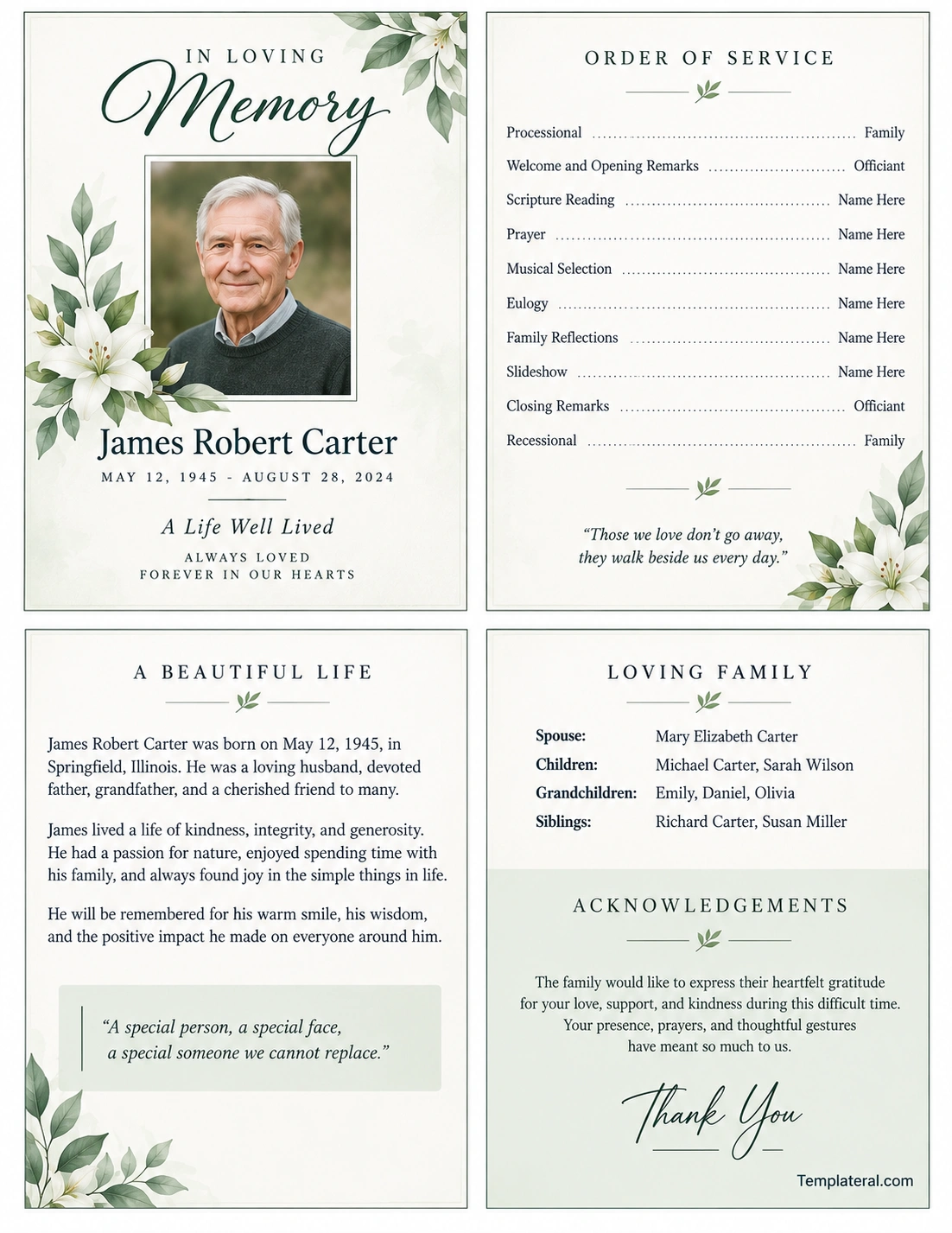
What Is a Funeral Program?
A funeral program is a printed document distributed to guests at a funeral or memorial service. It provides important details about the ceremony and often includes information that honors and remembers the deceased.
The format can be as simple as a single-page program or as detailed as a multi-page booklet. The right format depends on the type of service, the amount of information the family wants to share, and the desired keepsake value.
A typical funeral program may include:
- The name of the deceased
- Birth and death dates
- A photograph
- Funeral or memorial service details
- Order of service
- Obituary or life story
- Favorite poem, prayer, or scripture
- Names of family members
- Special memories or quotations
- Thank-you message from the family
- Burial or reception information
Why Use a Funeral Program?
A funeral program serves both a practical and sentimental purpose. During a service, guests can use it to follow the ceremony and understand what will happen next. Afterward, it can become a meaningful memorial keepsake.
Provides a Guide for Guests
The program can list each part of the ceremony in order, including readings, prayers, musical selections, tributes, eulogies, and closing remarks. This helps guests follow the service without needing separate instructions.
Honors the Deceased
Including a photograph, biography, favorite quote, or personal message gives the program a more personal connection. These details can help communicate the unique life and personality of the person being remembered.
Preserves Memories
A well-designed memorial program can be saved by family members and friends. Years later, it may serve as a reminder of the person, the service, and the people who gathered to honor their life.
Shares Important Information
A funeral program can also provide practical details such as the location of the burial, reception, celebration of life gathering, or other related events.
What Should Be Included in a Funeral Program?
There is no required structure for every funeral program. Families can choose the sections that are appropriate for the service and leave out anything that does not fit their needs.
1. Cover Page
The cover is usually the first page guests see. It often includes the name of the deceased, a photograph, dates of birth and death, and a short memorial phrase.
For example, the cover might include a simple phrase such as “Forever in Our Hearts” or “A Life Well Lived.” Choose wording that feels appropriate to the person and family.
2. Order of Service
The order of service provides a chronological outline of the ceremony. It can include the names of people participating in each part of the service.
- Processional
- Welcome and opening remarks
- Prayer or scripture reading
- Musical selection
- Obituary or life tribute
- Eulogy
- Family reflections
- Closing remarks
- Recessional
3. Obituary or Life Story
A short biography can describe important moments in the person’s life. It may include information about their childhood, education, career, family, hobbies, achievements, friendships, and personal qualities.
The biography does not need to be extremely long. A sincere and well-written summary can be more meaningful than a lengthy list of accomplishments.
4. Family Information
Some families choose to list surviving relatives, including a spouse, children, grandchildren, siblings, or other close family members.
The amount of information included is entirely up to the family. If the list is extensive, consider using a simple layout that keeps the names easy to read.
5. Readings, Poems, or Quotes
A meaningful poem, prayer, scripture passage, or quotation can add a personal element to the memorial program. Choose material that reflects the person’s beliefs, personality, or relationship with family and friends.
6. Acknowledgements
The family may include a brief thank-you message for people who attended the service, offered support, sent flowers, provided meals, or helped the family during a difficult period.
How to Create a Funeral Program
Creating a funeral program becomes easier when you gather the information first and organize it before working on the design.
Gather the Necessary Information
Start by collecting the deceased person’s full name, important dates, service information, photograph, family names, biography, and order of service.
It can help to create a checklist so important details are not overlooked.
Choose the Format
Decide whether you want a single-page funeral program, folded memorial program, or multi-page booklet. A folded or multi-page format provides more room for photographs, biography information, readings, and acknowledgements.
Write the Content
Prepare the written content before arranging the design. Keep sentences clear and make sure names, dates, locations, and other important details are accurate.
Select Photographs
Choose one or more photographs that represent the person and fit the intended layout. A formal portrait can work well for the cover, while additional photographs can be used inside a larger memorial booklet.
Review Everything Carefully
Funeral programs contain important names, dates, and service information, so proofreading is especially important. Ask another trusted family member to review the completed content before printing.
Funeral Program Design Ideas
The design of a funeral program should feel respectful and appropriate for the person being remembered. There is no single style that every family needs to use.
Traditional Design
A traditional funeral program often uses neutral colors, classic typography, subtle borders, and a formal photograph. This style works well for families who prefer a timeless appearance.
Floral Design
Soft floral elements such as lilies, roses, eucalyptus, or other botanical illustrations can create a gentle and elegant appearance without overwhelming the written content.
Minimalist Design
A minimalist memorial program can use plenty of white space, simple typography, and limited decorative elements. This approach keeps the focus on the photograph, words, and service information.
Personalized Design
The program can also reflect the personality and interests of the deceased. Favorite colors, meaningful symbols, nature themes, hobbies, or photographs can be incorporated in a tasteful way.
Funeral Program vs. Memorial Program
The terms funeral program and memorial program are often used interchangeably, although the events themselves can have different circumstances.
A funeral typically takes place relatively soon after a person’s death and may include a burial or other immediate arrangements. A memorial service may take place later and can have a more flexible structure.
Despite these differences, both types of programs can include similar information, such as a cover, service order, biography, photographs, family information, readings, and acknowledgements.
Tips for Creating a Meaningful Funeral Program
A thoughtful program does not need complicated graphics or a large amount of text. Focus on accuracy, readability, and personal meaning.
- Keep the text readable: Choose fonts and sizes that guests can easily read.
- Use meaningful photographs: Select clear images that represent the person’s life.
- Keep the design balanced: Avoid filling every available space with text or decorations.
- Check names and dates: Carefully verify all personal and service information.
- Use consistent typography: Limit the number of fonts used throughout the program.
- Choose appropriate colors: Soft neutrals, muted botanical tones, or colors meaningful to the family can work well.
- Ask someone else to proofread: A second review can catch mistakes that are easy to overlook.
Using a Printable Funeral Program Template
A printable funeral program template provides a ready-made structure for organizing memorial information. Instead of designing every section from the beginning, you can fill in the appropriate details and customize the appearance.
A template can be especially useful when time is limited. It provides dedicated areas for the cover, order of service, life story, family information, and acknowledgements while keeping the overall document organized.
Before printing, review the completed template carefully. Check the spelling of names, dates, service times, locations, quotations, and any other information that will be distributed to guests.
Printing a Funeral Program
When preparing a funeral program for printing, consider both the paper size and the final format. US Letter paper is a common option for printable memorial programs because it is widely available and can be folded into a booklet-style layout.
Choose paper that is sturdy enough to feel substantial but still works well with your printer. A matte or lightly textured paper can provide an elegant appearance while remaining easy to read.
Before printing a large quantity, print one test copy. Check margins, photographs, page order, text alignment, and folding before producing the final copies.
Digital and Printable Funeral Programs
Although funeral programs are traditionally printed, a digital version can also be useful. A PDF can be shared with relatives and friends who cannot attend the service in person.
A printable version remains valuable for guests attending the ceremony because it provides a physical guide and keepsake. Some families choose to prepare both versions so the information can be shared in different ways.
Final Thoughts
A funeral program is more than a schedule for a memorial service. It can bring together important information, meaningful memories, photographs, family details, and words of appreciation in one lasting keepsake.
The most effective funeral programs are clear, personal, and easy to read. Whether you create a simple one-page document or a detailed memorial booklet, focus on accurately representing the person and providing useful information for everyone attending the service.
Using a printable funeral program template can make the process easier by providing an organized starting point. With thoughtful content, a suitable design, and careful proofreading, the finished program can become a respectful keepsake that family and friends will treasure.
Download: Funeral Program Template
