A funeral program is a printed document that provides guests with important information about a funeral, memorial service, or celebration of life. It can include the order of service, the name and photograph of the deceased, service details, a short biography, meaningful quotes, poems, acknowledgments, and other information the family would like to share.
Beyond providing practical information, a funeral program can become a meaningful keepsake for family members and friends. A thoughtfully designed program helps guests follow the service while preserving memories of a loved one for years to come.
Creating a funeral program does not have to be complicated. With a clear structure and a printable funeral program template, families can organize the most important details while choosing a design that reflects the personality, values, and memory of the person being honored.
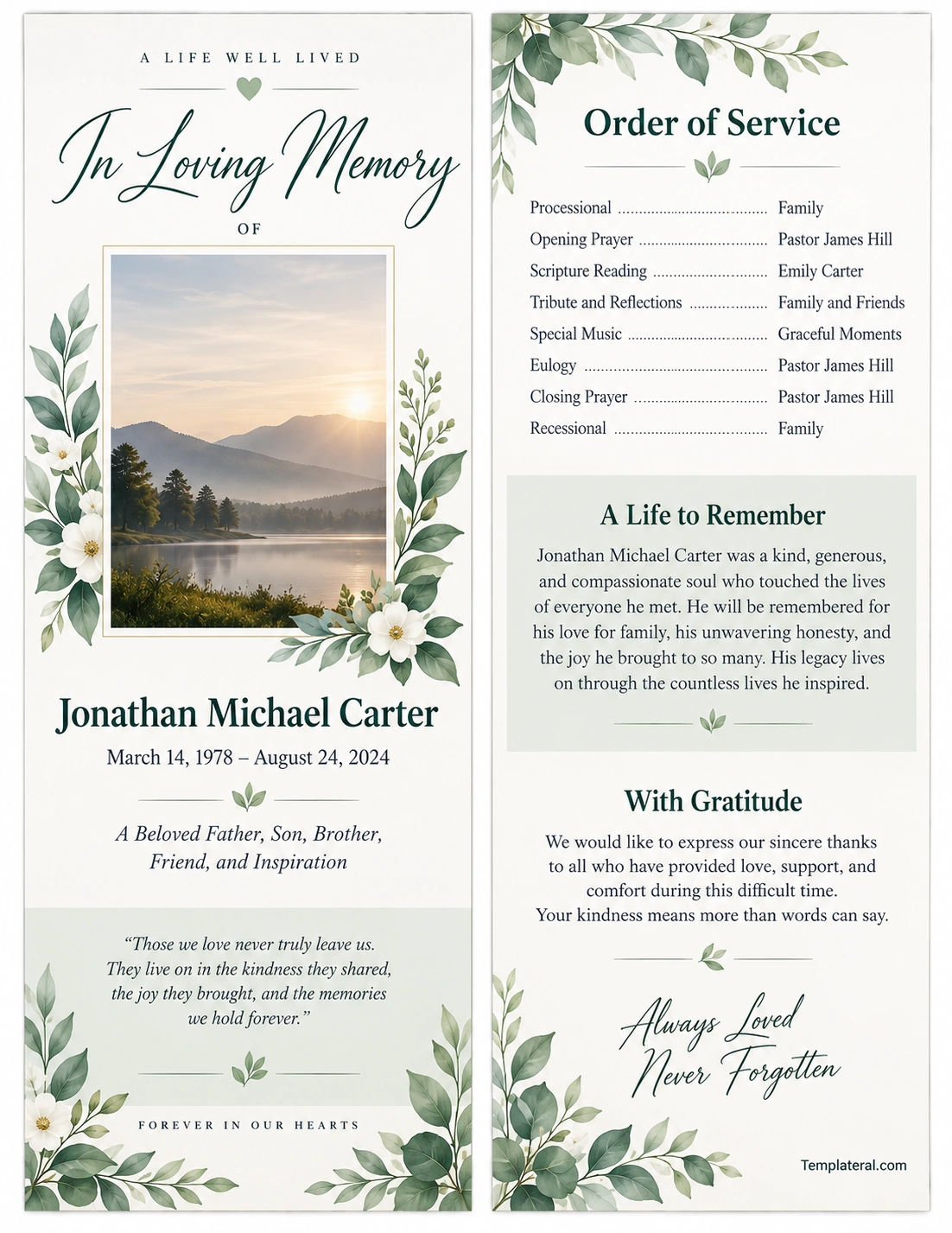
What Is a Funeral Program?
A funeral program is a printed guide distributed to guests attending a funeral or memorial service. It helps attendees understand the sequence of events and provides information about the person being remembered.
The format can vary depending on the type of service, cultural traditions, religious practices, and personal preferences of the family. Some programs are simple one-page documents, while others are folded booklets containing several pages.
A typical funeral program may include:
- The name of the deceased.
- Birth and death dates.
- Photographs.
- Funeral or memorial service information.
- Order of service.
- Short biography or obituary.
- Favorite poem, scripture, or quotation.
- Names of family members.
- Special acknowledgments.
- Burial or graveside service information.
- Thank-you message from the family.
Why Is a Funeral Program Important?
A funeral program serves both a practical and memorial purpose. During the service, it gives guests a simple reference for what will happen and when. Afterward, it can serve as a keepsake that preserves important details and memories.
A well-prepared program can also help create a sense of continuity throughout the service. The design, photographs, wording, and selected readings can work together to reflect the life and personality of the deceased.
For families, creating the program can also provide an opportunity to collect meaningful information and decide which memories they would like to share with those attending.
What Should a Funeral Program Include?
There is no single required format for every funeral program. However, several sections are commonly used to create a complete and useful document.
Cover Page
The cover is usually the first part guests see. It can include the person’s name, a photograph, dates of birth and death, and a short phrase such as “In Loving Memory” or “A Life Well Lived.”
A simple photograph and restrained design can create a respectful appearance without making the page feel crowded.
Order of Service
The order of service lists the events that will take place during the funeral or memorial service. Depending on the ceremony, it may include music, prayers, readings, tributes, eulogies, and closing remarks.
A typical order of service might include:
- Processional
- Opening remarks or prayer
- Scripture or reading
- Musical selection
- Tribute or reflection
- Eulogy
- Closing prayer or remarks
- Recessional
The exact order should reflect the actual ceremony and should be confirmed with the person or organization coordinating the service.
Biography or Life Story
A short biography gives guests an opportunity to learn about the person’s life. It can mention family, education, career, interests, accomplishments, friendships, community involvement, and other meaningful experiences.
The biography does not need to be extremely long. A sincere and focused summary can be more effective than trying to include every detail.
Photographs
Photographs can make a funeral program more personal. Families may choose one primary portrait for the cover and additional photographs throughout the interior pages.
When selecting photographs, consider images that represent different stages or meaningful aspects of the person’s life.
Poems, Scriptures, and Quotes
A meaningful poem, scripture passage, prayer, or quotation can provide an emotional element to the program. Choose material that is appropriate for the family’s beliefs, traditions, and the tone of the service.
Acknowledgment or Thank-You Message
Many funeral programs include a short message thanking relatives, friends, caregivers, religious leaders, medical professionals, or others who provided support during a difficult time.
How to Create a Funeral Program
Creating a funeral program becomes easier when the information is gathered and organized before designing the document.
1. Gather the Essential Information
Start by collecting the full name of the deceased, birth and death dates, service date, location, officiant information, and other confirmed details.
Double-check names, dates, times, addresses, and titles carefully. Funeral programs are often printed shortly before the service, so correcting errors later can be difficult and expensive.
2. Decide on the Program Format
Determine whether you want a single-page program, folded program, or multi-page booklet. The amount of content and number of photographs will help determine the appropriate format.
3. Choose a Meaningful Design
Select colors, typography, photographs, and decorative elements that create an appropriate visual tone. Soft neutral colors, botanical elements, subtle borders, and simple typography are common choices.
The design should support the content rather than compete with it.
4. Write the Content
Prepare the order of service, biography, acknowledgments, quotes, and other sections. Keep the wording clear and proofread everything before placing it into the final layout.
5. Review and Proofread
Ask another family member or trusted person to review the program. A second review can help identify spelling errors, incorrect dates, missing information, or formatting problems.
6. Print the Programs
Once the final version has been approved, print enough copies for expected guests and consider preparing a few additional copies as keepsakes.
Funeral Program Layout Ideas
The layout can be simple or highly detailed depending on the family’s preferences and the type of service.
Simple One-Page Program
A one-page layout can include the person’s name and photograph at the top, followed by service information and a short order of service. This option works well when only essential information needs to be provided.
Folded Funeral Program
A folded program provides additional space while remaining relatively easy to print. The front can feature the person’s photograph and name, while the interior can contain the order of service, biography, and acknowledgments.
Memorial Booklet
A multi-page booklet provides space for several photographs, a detailed life story, family information, poems, tributes, and additional memories. This format can become a substantial keepsake for relatives and friends.
Funeral Program Design Tips
A respectful design does not need to be complicated. The most important goal is to make the information easy to read while creating a meaningful presentation.
- Use readable fonts: Choose typography that remains clear when printed.
- Maintain consistent spacing: Give text and photographs enough room to breathe.
- Use a restrained color palette: Soft, coordinated colors can create an elegant appearance.
- Choose meaningful photographs: Select images that represent the person’s life.
- Avoid excessive decoration: Decorative elements should complement the memorial content.
- Check print quality: Make sure photographs and text look clear at the intended print size.
- Proofread carefully: Verify every name, date, location, and service detail.
Funeral Program vs. Memorial Program
The terms funeral program and memorial program are sometimes used interchangeably, but they can refer to slightly different types of services.
A funeral program is commonly associated with a funeral service held relatively soon after a person’s death and may include burial or graveside information. A memorial program may be used for a memorial service held at a later date or for a celebration of life.
The structure of both documents can be very similar. The appropriate terminology depends on the type of service and the family’s preferences.
Using a Funeral Program Template
A funeral program template provides a prearranged structure that can simplify the design process. Instead of creating the entire document from scratch, you can replace placeholder information with the deceased person’s details and adjust the sections to fit the service.
A printable template may include areas for the cover, photograph, order of service, biography, acknowledgment, and closing message. This can be especially useful when the program needs to be prepared within a limited amount of time.
Before printing, review every part of the template and remove sections that are not relevant to the service. Add any information that guests need and make sure the final document accurately reflects the planned ceremony.
Funeral Program Checklist
Use this checklist when preparing a funeral or memorial program:
- Full name of the deceased
- Photograph
- Date of birth
- Date of death
- Funeral or memorial service date
- Service location
- Officiant or speaker information
- Order of service
- Readings, prayers, or music
- Eulogy or tribute information
- Short biography or life story
- Family information
- Favorite quote, poem, or scripture
- Thank-you or acknowledgment message
- Burial or graveside information, if applicable
- Final proofreading
- Print quantity
Final Thoughts
A funeral program is more than a schedule for a service. It can provide practical guidance to guests while creating a lasting reminder of a person’s life, relationships, and memories.
By gathering accurate information, choosing meaningful photographs, organizing the order of service, and using a clean and readable layout, families can create a thoughtful program without making the process unnecessarily complicated. A printable funeral program template can provide a helpful starting point and make it easier to organize everything in one place.
Most importantly, the finished program should reflect the person being remembered and provide something meaningful for family and friends to keep.
