An itinerary planner is a practical tool for organizing the details of a trip in one convenient place. Instead of keeping flight information, activities, reservations, destinations, and notes in different apps or pieces of paper, a well-organized travel itinerary brings important information together so you can easily see what is planned for each day.
Whether you are planning a weekend getaway, family vacation, business trip, road trip, or international adventure, an itinerary planner can help you organize your schedule while leaving enough flexibility for unexpected changes. A good travel plan should provide structure without making the trip feel overly complicated.
A printable itinerary planner is especially useful for travelers who prefer to write down their plans, keep a physical copy with their travel documents, or create a quick reference that does not depend on an internet connection.
What Is an Itinerary Planner?
An itinerary planner is a worksheet, document, or digital tool used to organize the details of a trip. It typically includes information such as travel dates, destinations, transportation, accommodation, activities, times, and notes.
A basic itinerary can be as simple as a list of activities for each day. A more detailed travel itinerary may include specific times, addresses, reservation information, transportation details, estimated costs, and reminders.
The goal is not necessarily to schedule every minute of a vacation. Instead, an itinerary planner gives travelers a clear overview of their plans and helps them remember important details.
Why Use an Itinerary Planner?
Travel planning often involves many small details. Flights may have specific departure times, hotels may have check-in requirements, attractions may require reservations, and transportation between locations may take longer than expected.
Writing these details into a structured itinerary can make them easier to manage.
- Organize activities by date and time.
- Keep transportation information in one place.
- Record accommodation details.
- Plan attractions and sightseeing activities.
- Track important reservations.
- Make room for meals and free time.
- Keep packing reminders nearby.
- Record estimated travel expenses.
- Provide a quick reference during the trip.
An itinerary can also make it easier to communicate travel plans with family members, friends, or colleagues who are traveling with you.
What to Include in a Travel Itinerary
The information included in an itinerary depends on the type and length of the trip. A short weekend trip may only require a few essential details, while a multi-city vacation may need a much more detailed schedule.
Destination and Travel Dates
Start with the destination and the dates of your trip. If your trip includes multiple cities or locations, list each destination separately so the order of your journey is easy to understand.
Transportation
Record important transportation details such as flights, trains, rental cars, buses, or other forms of transportation. Include departure and arrival times when they are known.
Accommodation
Add hotel or accommodation information to your itinerary. Depending on your needs, you may want to record the property name, address, check-in time, check-out time, and reservation details.
Activities and Attractions
List the attractions, tours, restaurants, events, or other activities you want to experience. If an activity requires a reservation, make a note of the booking time and any relevant confirmation information.
Notes
Leave space for additional notes. This area can be used for reminders, opening hours, addresses, meeting points, transportation instructions, or other information that does not fit neatly into the main schedule.
Itinerary Planner Template
An Itinerary Planner Template provides a ready-made structure for organizing a trip without having to create a travel schedule from scratch. A printable template can be filled out by hand before departure and kept with other travel documents.
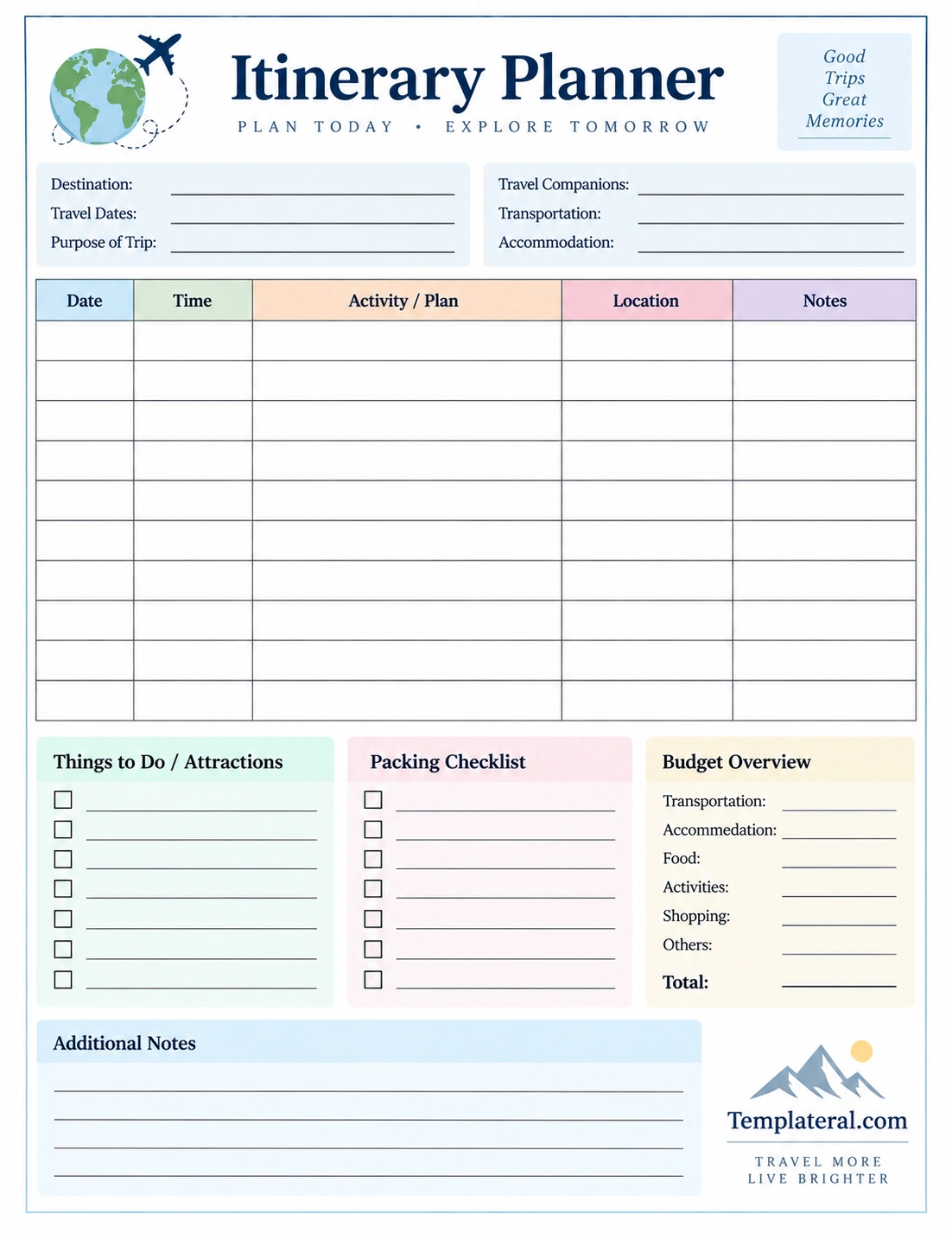
The template includes space for the destination, travel dates, purpose of the trip, travel companions, transportation, and accommodation. A larger itinerary table provides columns for the date, time, activity or plan, location, and notes.
Additional sections can be used for attractions, a packing checklist, budget planning, and miscellaneous travel notes.
How to Create an Itinerary
Creating a useful itinerary does not have to take a lot of time. Start with the fixed elements of your trip and then build the flexible activities around them.
Start With Fixed Reservations
Begin by recording information that cannot easily be changed. This might include flights, train journeys, hotel check-in times, tour reservations, or event tickets.
These fixed commitments provide the framework for the rest of your travel schedule.
Add Major Activities
Once the fixed reservations are recorded, add the attractions and activities that are most important to you. Consider grouping activities that are located near one another to reduce unnecessary travel time.
Allow Time Between Activities
A common planning mistake is scheduling activities too close together. Travel time, queues, meals, traffic, delays, and unexpected changes can all affect your schedule.
Leave reasonable gaps between major activities so your itinerary remains practical rather than becoming a strict timetable.
Add Free Time
Not every part of a vacation needs to be scheduled. Leaving some open time allows you to explore spontaneously, rest, enjoy a meal, or spend longer at an attraction you particularly enjoy.
Daily Itinerary Planning
Organizing an itinerary by day can make a longer trip easier to understand. Each day can have its own group of activities, locations, transportation details, and notes.
For each day, consider recording:
- Date
- Morning activity
- Afternoon activity
- Evening plans
- Meal plans
- Transportation
- Reservation times
- Locations and addresses
- Important reminders
This approach provides enough structure to keep the trip organized while still allowing adjustments when plans change.
How Detailed Should an Itinerary Be?
The ideal level of detail depends on the traveler and the type of trip. An itinerary for a business trip may need precise times because meetings and transportation are fixed. A vacation itinerary may benefit from a more flexible approach.
A useful rule is to include information that will actually help you make decisions during the trip. Avoid filling the schedule with unnecessary details simply because there is space available.
For a simple vacation, knowing where you plan to go each day may be enough. For a complicated international trip, you may want to include transportation connections, reservation numbers, addresses, and estimated travel times.
Itinerary Planner for Different Types of Trips
An itinerary planner can be adapted to many different travel situations.
Vacation Itinerary
For a vacation, focus on destinations, attractions, restaurants, activities, and free time. Include enough information to keep the days organized without making the trip feel rigid.
Road Trip Itinerary
A road trip itinerary can include driving routes, stops, fuel reminders, overnight accommodations, attractions, and estimated arrival times.
Business Trip Itinerary
A business travel itinerary may focus more heavily on flights, hotel information, meetings, conference sessions, transportation, and work-related appointments.
Family Trip Itinerary
Family travel often involves coordinating activities for several people. A shared itinerary can help everyone understand the day’s plans and remember important times and locations.
Weekend Trip
A weekend itinerary can be relatively simple. Focus on transportation, accommodation, two or three major activities, meals, and enough free time to enjoy the destination.
Tips for Making a Practical Travel Itinerary
A good itinerary should make your trip easier rather than create additional stress. Keep the planning process realistic and focus on the information you are most likely to need.
- Prioritize important activities: Identify the experiences you do not want to miss.
- Group nearby locations: Plan activities in the same area on the same day when practical.
- Check opening times: Make sure attractions are open when you plan to visit.
- Allow travel time: Include enough time to move between locations.
- Avoid overplanning: Leave space for rest and spontaneous activities.
- Keep essential information accessible: Record important addresses and reservation details.
- Review the itinerary before leaving: Check dates and times for obvious conflicts.
Itinerary Planner and Budget Planning
Travel planning and budgeting often work well together. Adding a simple budget section to your itinerary can help you estimate the major costs associated with the trip.
Common categories include:
- Transportation
- Accommodation
- Food
- Activities
- Shopping
- Other expenses
You do not need to create a detailed financial spreadsheet for every trip. Even a basic overview can help you remember major expenses and compare your estimated costs with your available travel budget.
Using a Printable Itinerary Planner
A printable itinerary planner is useful for travelers who enjoy working with paper or want a physical backup of their travel plans. You can complete the worksheet before leaving home and keep it in a folder, travel organizer, or other convenient location.
A printed copy can also be useful when traveling somewhere with limited internet access or when you simply want to avoid repeatedly switching between different apps.
For longer trips, you can print additional pages and create a complete travel planning binder containing itineraries, checklists, reservations, and notes.
Common Itinerary Planning Mistakes
Even a carefully planned trip can become difficult when the schedule is unrealistic. Avoiding a few common mistakes can make an itinerary much more useful.
Scheduling Too Many Activities
Trying to visit too many places in one day can make a trip exhausting. Choose a manageable number of priorities and leave room between activities.
Ignoring Travel Time
Two attractions may appear close on a map but still require significant travel time because of traffic, public transportation, parking, or walking.
Forgetting Rest Time
Rest is part of a successful trip. Include breaks, meals, and unplanned time rather than filling every available hour.
Not Checking Reservations
Before the trip, review reservation dates and times carefully. A simple mistake in a date or time can create unnecessary problems.
Making the Plan Too Rigid
Travel rarely goes exactly according to plan. Weather, delays, crowds, and personal preferences can all require changes. Treat your itinerary as a flexible guide rather than a strict set of rules.
How to Organize Your Itinerary Before a Trip
It can be helpful to complete your itinerary in stages. Start by collecting your transportation and accommodation information. Then add major activities and reservations.
After the basic schedule is complete, review the order of your activities and consider whether the travel time between locations is reasonable. Finally, add notes, packing reminders, and any other information you expect to need.
Keeping the final version simple makes it easier to scan quickly while you are traveling.
Conclusion
An itinerary planner is a simple but useful way to organize travel dates, transportation, accommodation, activities, attractions, and important notes. It gives travelers a clear overview of their plans without requiring them to remember every detail.
A printable Itinerary Planner Template can make the process even easier by providing dedicated spaces for daily plans, locations, notes, packing reminders, and budget information. You can customize the template to match the length and style of your trip.
The most effective itinerary is not necessarily the most detailed one. A practical travel plan should organize the important parts of your journey while leaving enough flexibility to enjoy unexpected experiences along the way.
Download: Itinerary Planner Template
