A family tree is a simple and meaningful way to organize information about your family and show how different generations are connected. Whether you are creating one for a school project, genealogy research, a family activity, or personal records, a family tree can make relationships easier to understand and remember.
You do not need to be an experienced genealogist to create one. With basic information such as names, relationships, birth dates, and family connections, you can gradually build a clear family history chart. A printable family tree template can make the process even easier by giving you a structured place to record information.
What Is a Family Tree?
A family tree is a visual chart that represents relationships between members of a family across multiple generations. It commonly begins with one person or a couple and branches outward to parents, grandparents, children, grandchildren, siblings, and other relatives.
The structure resembles the branches of a tree. Older generations are usually placed toward the top or center, while younger generations extend downward. Lines connect related individuals so that the family relationships can be understood at a glance.
A family tree can be very simple, containing only names and relationships, or it can become a detailed genealogy chart containing dates, locations, photographs, occupations, and historical information.
Why Create a Family Tree?
There are many reasons to create a family tree. For some people, it is a fun family activity. For others, it is a useful way to preserve information that might otherwise be forgotten.
- Preserve family history: Record names and relationships for future generations.
- Understand family relationships: See how different relatives are connected.
- Support genealogy research: Organize information collected from family records and historical sources.
- Complete school projects: Create a visual representation of family relationships.
- Encourage family conversations: Use the chart as a starting point for sharing memories and stories.
- Organize research: Keep important family information together in an easy-to-read format.
What Information Should a Family Tree Include?
The amount of information you include depends on the purpose of your family tree. A basic chart may require only names, while a genealogy project may include much more detail.
Names
Names are usually the most important information on a family tree. Write each person’s full name when known. If your family uses nicknames, you can add them separately without replacing the person’s formal name.
Family Relationships
Clearly identify relationships such as mother, father, daughter, son, grandmother, grandfather, aunt, uncle, and sibling. The connecting lines should make these relationships easy to follow.
Birth and Death Dates
For genealogy research, birth and death dates can provide valuable historical context. If exact dates are unavailable, you can leave the field blank or record an approximate year rather than guessing.
Locations
Adding birthplaces, hometowns, or other important locations can make a family history more informative. Locations may also help you distinguish between relatives who have similar names.
Additional Notes
A notes section can be useful for recording family stories, important events, occupations, immigration details, or information that does not fit neatly into an individual name box.
Family Tree Template
A printable family tree template provides a ready-made structure for recording family members without having to draw the entire chart from scratch. It can be printed and completed by hand or used as a reference while organizing genealogy information.
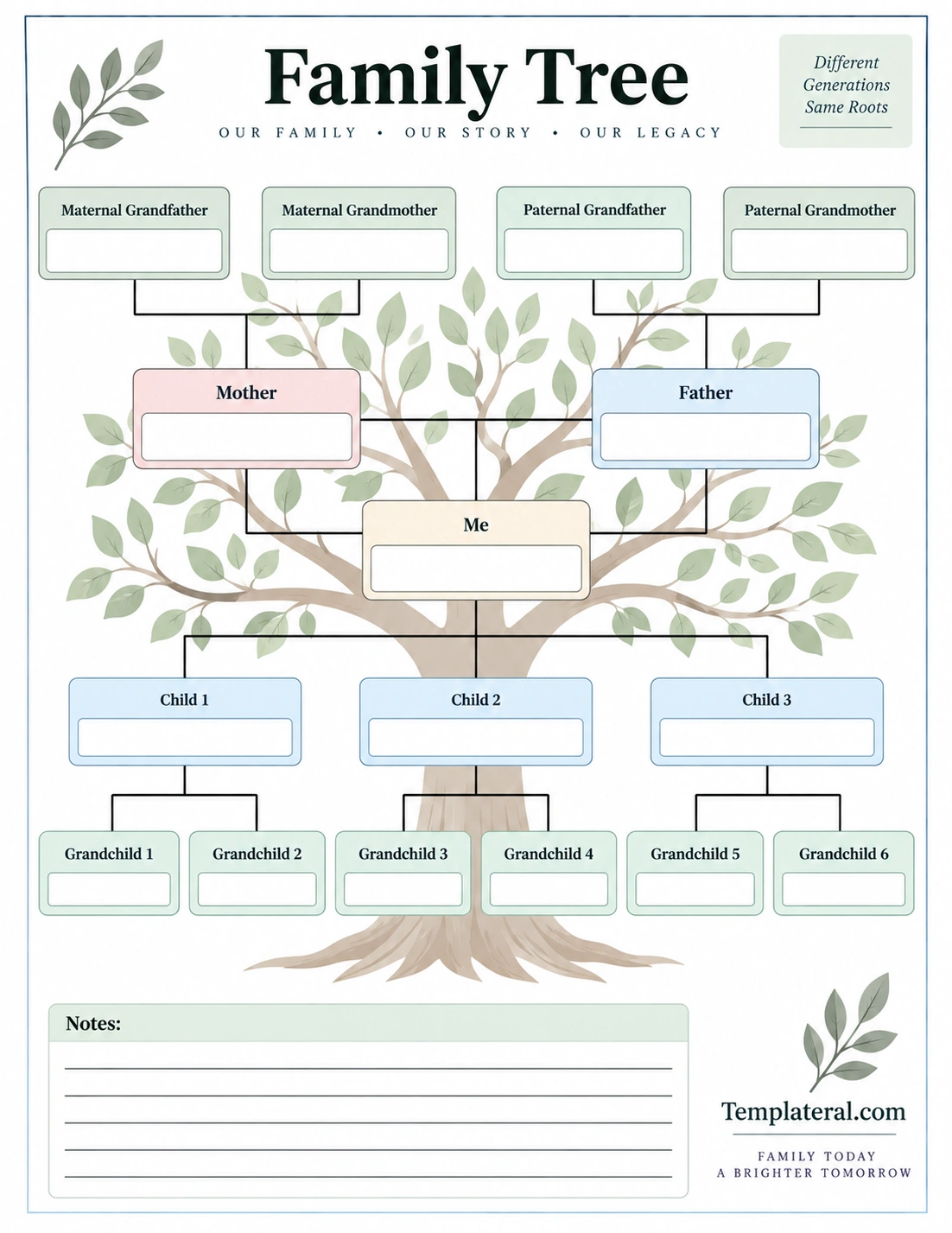
How to Make a Family Tree
Creating a family tree is easiest when you work from information you already know and gradually expand your research.
Start With Yourself
Begin with yourself or the person who will be the central focus of the chart. Write down your full name and then add your parents. From there, continue upward to grandparents and earlier generations as information becomes available.
Add Parents and Grandparents
After entering your parents, add both maternal and paternal grandparents. This creates two primary branches of the family and gives the chart a clear structure.
Add Children and Younger Generations
If the family tree is intended to show multiple generations, continue downward by adding children, grandchildren, and great-grandchildren where appropriate.
Verify the Connections
Before considering your family tree complete, check that every connecting line represents the correct relationship. This is especially important when working with a large family or information collected from several sources.
How to Research Your Family History
Building a family tree can become a genealogy project when you want to explore generations beyond the information your immediate family remembers. Start with conversations with older relatives who may know names, locations, dates, and stories that are not written down elsewhere.
Family documents can also provide useful clues. Depending on what is available, these may include birth certificates, marriage records, obituaries, photographs, letters, journals, family Bibles, immigration documents, and old address books.
When researching historical information, record where each piece of information came from. This makes it easier to verify uncertain details later and prevents different branches of the family from becoming confused.
Family Tree Ideas for Different Uses
Family Tree for Kids
A family tree for kids should be simple and easy to understand. Use a limited number of generations and focus on immediate family members, grandparents, and siblings. Children can write names, draw small pictures, or add simple facts about each relative.
Family Tree School Project
For a school project, a family tree can combine organization with creativity. Students can begin with themselves and add parents, grandparents, and other relatives according to the assignment requirements. A printable family tree worksheet can help establish the basic structure before creating a larger presentation.
Genealogy Family Tree
A genealogy family tree typically contains more detailed information than a basic family chart. Researchers may record multiple generations, dates, locations, marriages, and historical notes. Keeping information organized is particularly important as the number of relatives increases.
Family Heritage Project
A family tree can also be part of a broader family heritage project. In addition to names and relationships, you can document traditions, important places, family stories, recipes, occupations, or memorable events.
Tips for Creating an Accurate Family Tree
A well-organized family tree should make relationships clear while avoiding unsupported assumptions. Use the following practices when recording information.
- Start with information you know: Build the chart gradually instead of trying to complete every generation at once.
- Ask relatives: Older family members may remember names, dates, and stories that are not available in your own records.
- Check multiple sources: When possible, compare important information with more than one reliable record.
- Mark uncertain information: Do not present an estimated date or relationship as confirmed fact.
- Keep names consistent: Use a consistent format throughout the chart.
- Save your sources: Record where important genealogy information came from.
- Update the chart: A family tree can be revised as new information is discovered.
How to Organize a Large Family Tree
A large family tree can quickly become difficult to read. Instead of trying to place every relative on one page, consider creating separate sections for different branches of the family.
For example, you can create one chart for your maternal family and another for your paternal family. You can also create separate charts for different generations. This approach makes the information easier to review and gives you more space for notes.
For a detailed genealogy project, consider keeping a master record separately from a simplified printable family tree. The master record can contain detailed research, while the printable chart can focus on the relationships and information that are easiest for other family members to understand.
Using a Printable Family Tree Worksheet
A printable family tree worksheet is useful when you want to complete the chart by hand. Print the worksheet on standard US Letter paper and use a pencil when researching, especially if some information may need to be corrected later.
You can also use different versions of the worksheet for different purposes. One copy can contain basic names and relationships, while another can include additional notes about family history.
For children, the worksheet can become an educational activity. Parents or teachers can help children identify relatives and explain how generations are connected.
Common Family Tree Mistakes
Trying to Include Everyone Immediately
It is easy to become overwhelmed when attempting to document an entire extended family at once. Start with a manageable number of generations and expand the chart gradually.
Guessing Missing Information
Genealogy often involves incomplete records. Avoid filling gaps with assumptions. Instead, leave the information blank or identify it as uncertain until you can verify it.
Confusing Similar Names
Families sometimes reuse the same first names across generations. Include additional details such as birth year, location, or spouse when necessary to distinguish between relatives.
Making the Chart Too Crowded
A family tree should be easy to follow. If too many names are placed on one page, use separate charts or additional worksheets rather than reducing the text until it becomes difficult to read.
How to Keep Your Family Tree Updated
A family tree is not necessarily a finished document. Families change, new information is discovered, and previously uncertain details may eventually be confirmed.
Keep a digital or physical master copy so that you can update the information without losing earlier research. When making significant changes, record the source of the new information and note which details were previously uncertain.
You can also create a new printable version periodically. This makes it easy to share an updated family history chart with relatives or keep a current copy with your family records.
Conclusion
A family tree is a practical way to organize family relationships while preserving important information about previous and current generations. Whether you are making a simple chart for children, completing a school project, or conducting detailed genealogy research, starting with the people and information you already know makes the process easier.
A printable family tree template can provide a clear starting point for recording names, relationships, and notes. As you discover more about your family history, you can expand the chart, verify information, and create a meaningful record that can be shared with future generations.
Download: Family Tree Template
