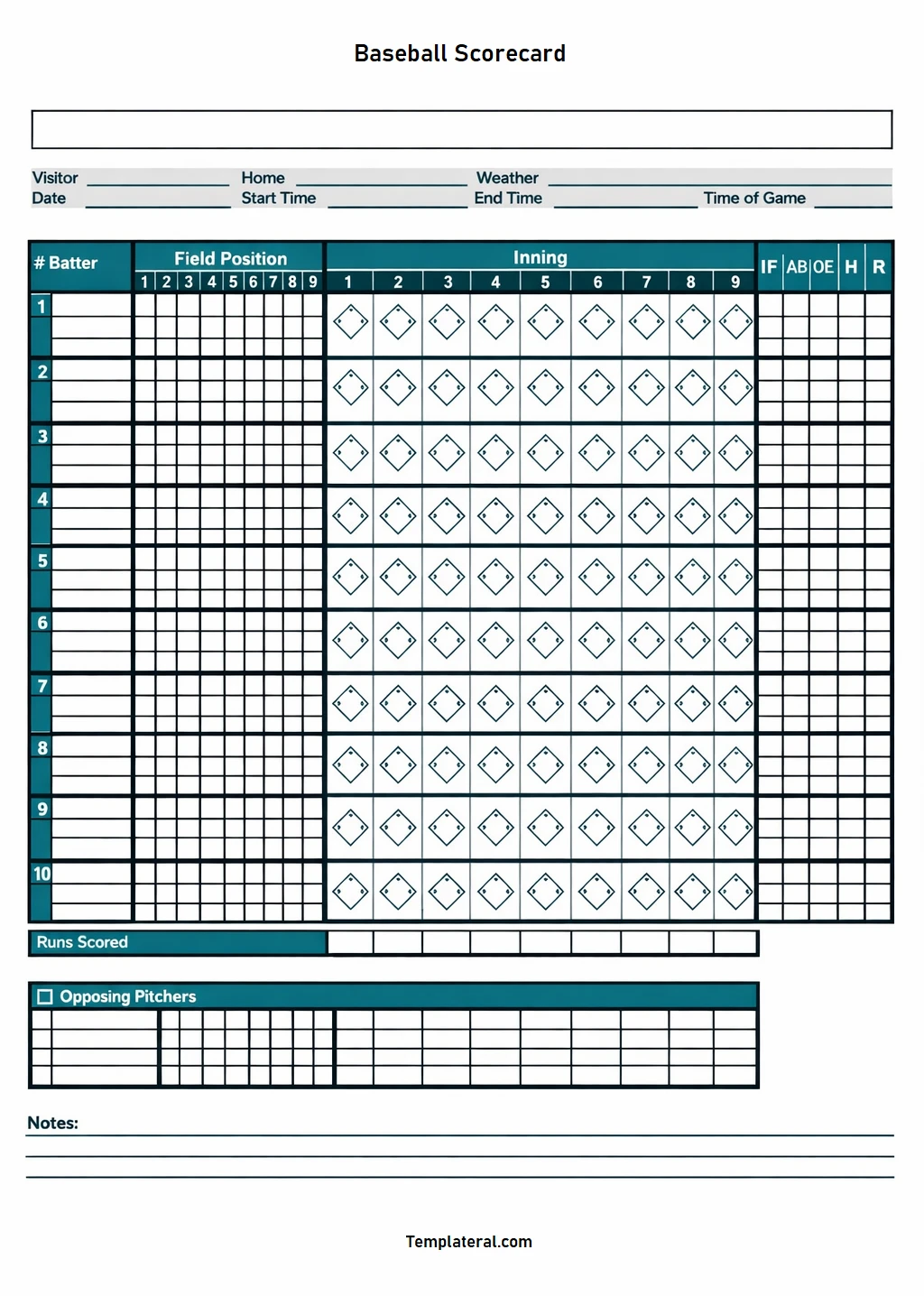
Baseball scorecards are an essential tool for documenting the complete play-by-play action of a game. They record who is batting, who is pitching, and the outcome of every play to create a historical record and statistical breakdown of team and player performance.
A scorecard serves as a detailed account of hits, runs, and outs for each player and pitcher, allowing coaches, fans, and statisticians to analyze individual and team performance, track specific plays, and preserve the game’s history.
What is a Baseball Scorecard?
A baseball scorecard is a method of keeping track of the events that occur during a baseball game. It allows for the documentation of each play, including who is at bat, who is pitching, and the outcome of each play.
Scorecards are commonly used by fans, coaches, and statisticians to analyze player and team performance, track game progress, and create a historical record of the game.
Why Use a Baseball Scorecard?
There are several reasons why using a baseball scorecard is beneficial:
- Historical Record: Scorecards provide a detailed account of each game, allowing for a historical record to be preserved.
- Statistical Analysis: Scorecards allow for in-depth analysis of player and team performance, helping coaches and statisticians track trends and make informed decisions.
- Game Progression: By keeping track of every play, scorecards help fans and coaches follow the progression of the game and anticipate outcomes.
What to Include in a Baseball Scorecard
When creating a baseball scorecard, there are several key elements to include:
- Player Names: List the names of the players on each team, including the starting lineup and substitutes.
- Batting Order: Record the order in which players are batting, including any changes made during the game.
- Pitching Rotation: Keep track of the pitchers used by each team, noting the inning they pitch and any changes made.
- Scoring Plays: Document each play, including hits, runs scored, and outs recorded.
- Fielding Positions: Note the defensive positions played by each player during the game.
How to Keep a Baseball Scorecard
Keeping a baseball scorecard may seem daunting at first, but with practice, it becomes second nature. Here are some tips to help you get started:
- Use Abbreviations: Learn common abbreviations used in scorekeeping to quickly and accurately record plays.
- Stay Organized: Use a clear and consistent format for your scorecard to make it easy to follow along during the game.
- Focus on Key Plays: Record important plays such as hits, runs scored, and double plays to capture the essence of the game.
- Update Regularly: Keep your scorecard up to date after each play to ensure accuracy and avoid missing important details.
Tips for Analyzing a Baseball Scorecard
Once you have completed a baseball scorecard, there are several ways to analyze the data:
- Player Performance: Review individual player stats to identify strengths and weaknesses, helping coaches make informed decisions.
- Team Trends: Look for patterns in team performance, such as scoring trends or defensive strengths, to develop strategies for future games.
- Game Highlights: Identify key plays that influenced the outcome of the game, such as game-winning hits or crucial defensive plays.
Conclusion
Baseball scorecards are a valuable tool for documenting the play-by-play action of a game and analyzing player and team performance. By keeping a detailed record of hits, runs, and outs, scorecards provide a historical account of each game and allow for in-depth statistical analysis.
Whether you are a fan, coach, or statistician, using a baseball scorecard can enhance your understanding of the game and help you appreciate the intricacies of baseball even more.
Baseball Scorecard Template – DOWNLOAD
