Renting out a room in a shared property can be a convenient way for landlords to earn additional income while providing tenants with more affordable housing. However, without clear written terms, misunderstandings about rent, shared spaces, utilities, and household responsibilities can quickly arise. A tenancy agreement renting a room helps prevent these problems by establishing the rights and responsibilities of everyone involved.
Whether you are a landlord renting out a spare bedroom or a tenant looking for a private room in a shared house, having a written room rental agreement is an important step. It explains which room is being rented, which facilities can be shared, how much rent must be paid, and what rules occupants are expected to follow.
In this guide, you will learn what a room tenancy agreement should include, understand the different types of room rental arrangements, and discover how to prepare a clear agreement. You can also use the printable templates provided below to organize important rental information.
What Is a Tenancy Agreement for Renting a Room?
A tenancy agreement for renting a room is a written contract between a landlord and a tenant who agrees to rent an individual room within a residential property. Unlike a standard whole-property lease, this agreement focuses on the tenant’s private room while explaining their permitted use of shared facilities.
For example, a tenant may rent one bedroom in a three-bedroom house while sharing the kitchen, bathroom, dining room, and living area with other occupants. The agreement identifies the rented bedroom and explains how these common spaces may be used.
A room rental agreement typically covers:
- Private accommodation: The specific bedroom or room being rented.
- Shared facilities: Access to the kitchen, bathroom, laundry area, and other common spaces.
- Rental payments: Monthly rent, payment dates, and accepted payment methods.
- Security deposit: The deposit amount and conditions for its return.
- Rental duration: The start date, end date, and applicable notice requirements.
- House rules: Guidelines for guests, pets, noise, cleaning, and shared responsibilities.
Having these details in writing makes expectations easier to understand and provides a useful reference if disagreements occur during the rental period.
What Should a Room Rental Agreement Include?
A well-prepared tenancy agreement should contain enough information to explain the rental arrangement clearly. Although requirements differ depending on local laws, the following sections are commonly included in a room rental contract.
1. Landlord and Tenant Information
Start by identifying both parties. Include the landlord’s full legal name, contact information, and address, along with the tenant’s full name and current contact details.
If a property manager is responsible for handling rent payments or maintenance requests, their contact information can also be included.
2. Description of the Rented Room
Clearly identify the individual room being rented. Include the property address, room number or location, and a short description of the space.
For example, the agreement may describe the rented accommodation as the upstairs bedroom on the left side of the property. If the room includes furniture, such as a bed, wardrobe, or desk, list those items in the agreement or an attached inventory.
3. Shared Areas and Facilities
One important difference between a room tenancy agreement and a whole-house rental contract is the use of common areas. Specify which facilities the tenant can access and whether any restrictions apply.
Common shared areas may include:
- Kitchen and dining area.
- Bathroom and toilet facilities.
- Living room or shared lounge.
- Laundry room and washing facilities.
- Garden, backyard, or outdoor space.
- Parking areas, where applicable.
The agreement should also explain whether certain spaces are private or restricted to particular occupants.
4. Rental Term and Notice Period
State when the tenancy begins and whether the arrangement is fixed-term or periodic. A fixed-term agreement has a defined start and end date, while a periodic arrangement generally continues until it is ended according to the applicable terms and legal requirements.
Include the notice period required when either party wishes to end the agreement. Notice requirements can depend on the location, rental arrangement, and applicable housing legislation. Therefore, avoid using a standard notice period without checking local rules.
5. Rent and Payment Conditions
The rental payment section should explain the financial obligations of the tenant. Include:
- The agreed monthly or weekly rent.
- The date rent must be paid.
- Accepted payment methods.
- Where or to whom payments should be made.
- Any legally permitted late payment charges.
Both parties should understand whether rent includes additional services or whether these expenses must be paid separately.
6. Security Deposit
If a security deposit is required, state the amount, payment deadline, and conditions governing its return. Explain which deductions may be permitted, such as unpaid rent or damage beyond normal wear and tear.
Landlords should also follow local deposit protection, documentation, and refund requirements. These rules may differ significantly between jurisdictions.
7. Utilities and Household Expenses
Shared properties often have multiple occupants using electricity, water, gas, heating, and internet services. The agreement should explain how these expenses are handled.
For example, utilities may be included in the monthly rent, divided equally among occupants, or calculated according to individual usage. State the chosen arrangement clearly to prevent confusion about additional payments.
8. House Rules and Responsibilities
House rules help maintain a comfortable living environment. Consider including written expectations for:
- Cleaning private rooms and shared spaces.
- Washing dishes and maintaining kitchen cleanliness.
- Guest visits and overnight visitors.
- Pet ownership and animal care.
- Quiet hours and acceptable noise levels.
- Smoking and prohibited activities.
- Use of appliances and shared household equipment.
Rules should be reasonable, clearly communicated, and consistent with applicable laws and tenant rights.
9. Signatures and Agreement Date
Include signature spaces for the landlord and tenant. Each party should sign and date the agreement after reviewing its terms. Both parties should retain a complete copy of the signed document.
Different Types of Room Rental Agreements
Not every room rental arrangement follows the same legal structure. Understanding the differences can help landlords and tenants choose an appropriate agreement.
Individual Room Rental Agreement
An individual room rental agreement is signed separately between the landlord and each tenant. Each occupant has their own contract specifying their rent, private room, and responsibilities.
This arrangement can make financial responsibilities easier to separate because each tenant is generally responsible for their own contractual obligations rather than automatically sharing every other occupant’s obligations.
Joint Tenancy Agreement
A joint tenancy agreement is signed by multiple tenants under one shared rental contract. The occupants rent the property together and may share responsibility for the total rent and other contractual obligations.
Depending on the agreement and local law, tenants may be jointly and individually liable for certain obligations. Everyone should understand these responsibilities before signing.
Lodger or Excluded Occupier Agreement
A lodger agreement generally applies when a tenant rents a room in a property where the landlord also lives and shares certain facilities, such as the kitchen or bathroom.
In some jurisdictions, lodgers have different legal protections and termination procedures from tenants who rent an independent property. The correct classification depends on the actual living arrangement and applicable legislation.
Roommate Agreement
A roommate agreement is an arrangement between people who share a home. It usually focuses on household responsibilities, shared expenses, cleaning schedules, guests, and personal boundaries.
It is important to understand that a roommate agreement does not necessarily replace the main tenancy contract between the landlord and the tenants.
How to Create a Tenancy Agreement for Renting a Room
Preparing a room rental contract does not have to be complicated. Following a few practical steps can help both parties establish clear expectations before the tenant moves in.
- Step 1: Identify the parties. Write down the full names and contact information of the landlord and tenant.
- Step 2: Describe the property. Include the property address, rented room description, and available shared facilities.
- Step 3: Agree on the rental terms. Confirm the rent amount, payment schedule, deposit, and tenancy duration.
- Step 4: Explain shared expenses. Decide how electricity, water, internet, and other household bills will be divided.
- Step 5: Establish house rules. Document expectations regarding cleaning, guests, pets, noise, and shared spaces.
- Step 6: Review legal requirements. Check local tenancy laws, deposit regulations, required disclosures, and notice provisions.
- Step 7: Sign and distribute copies. Both parties should sign the final agreement and retain a copy for their records.
It is also helpful to document the room’s condition before move-in. Photographs, an inventory checklist, and written notes can help avoid disagreements about existing damage or missing items.
Free Tenancy Agreement Renting a Room Templates
Using a printable tenancy agreement template can make the preparation process easier. Instead of starting with a blank document, landlords and tenants can use an organized form to record the essential details of their rental arrangement.
The following templates cover different aspects of renting an individual room in a shared property.
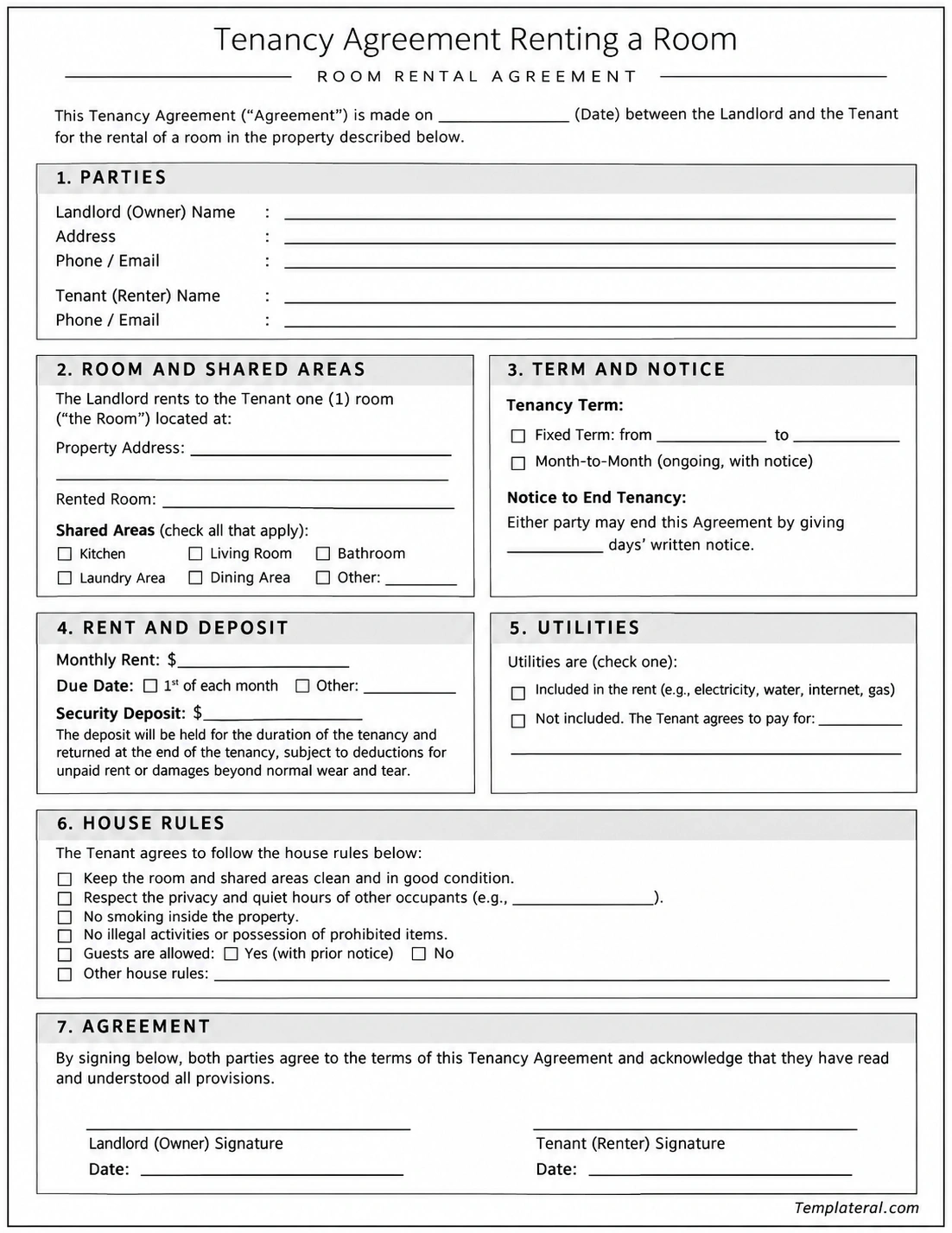
1. Tenancy Agreement Renting a Room Template
This primary template provides a structured layout for recording landlord and tenant information, the rented room, shared facilities, rental duration, rent, utilities, house rules, and signatures.
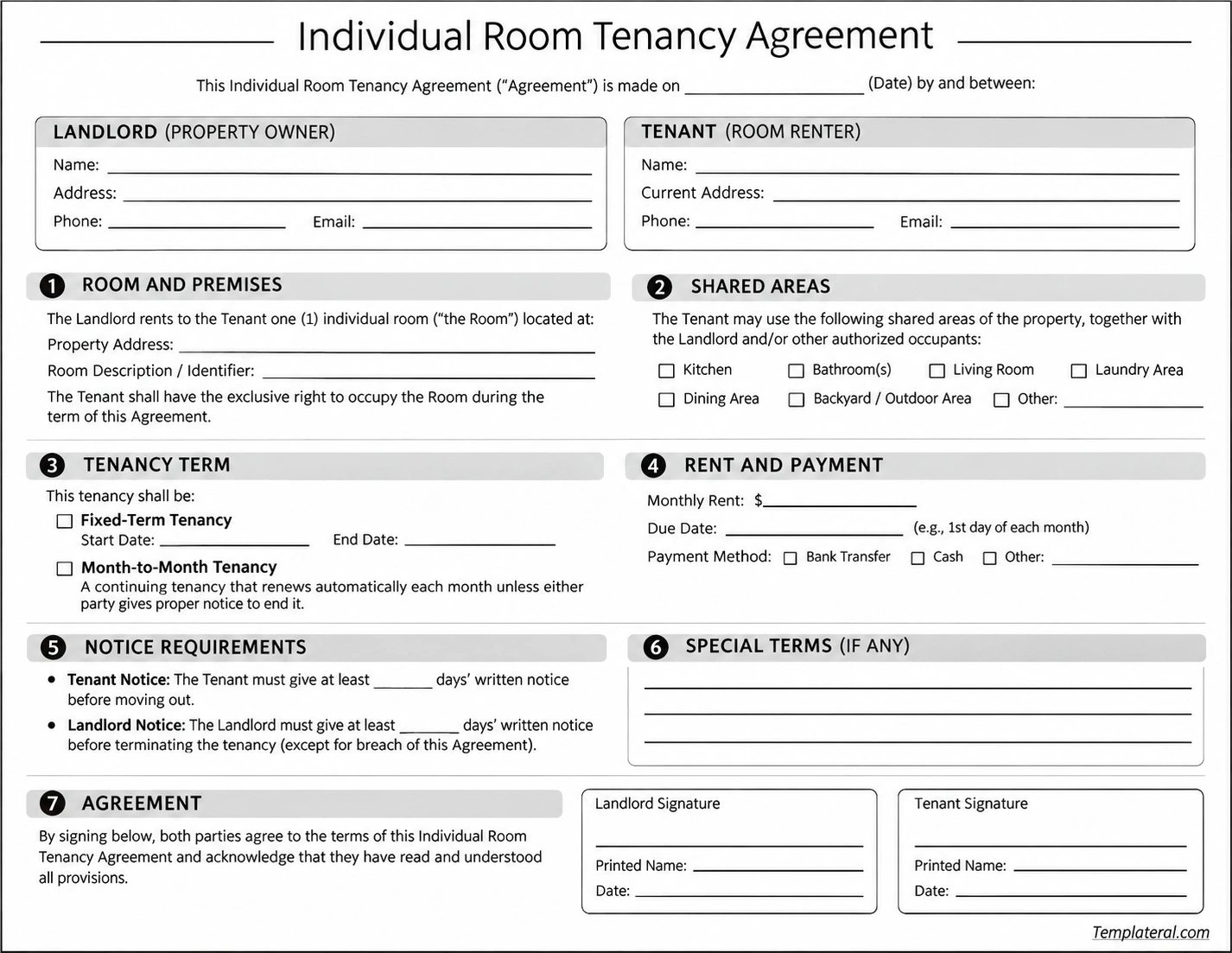
2. Individual Room Tenancy Agreement
This form is useful when each occupant rents a separate bedroom under an individual agreement. It provides dedicated sections for identifying the landlord, tenant, room, shared facilities, rental term, and notice requirements.
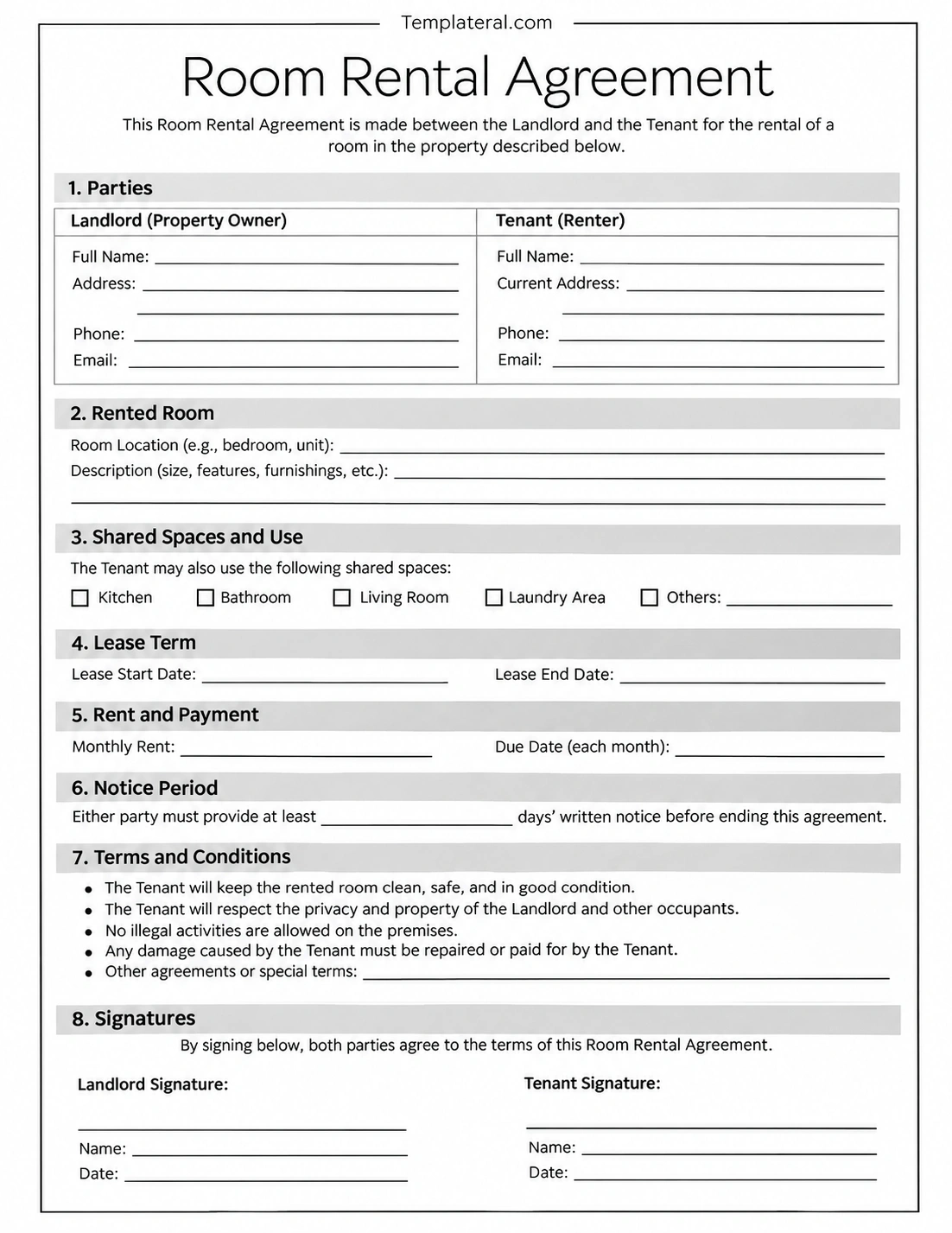
3. Room Rental Agreement Template
This alternative form organizes the main rental conditions into clearly defined sections. It is useful for documenting the room description, shared facilities, lease term, payment conditions, and signatures.
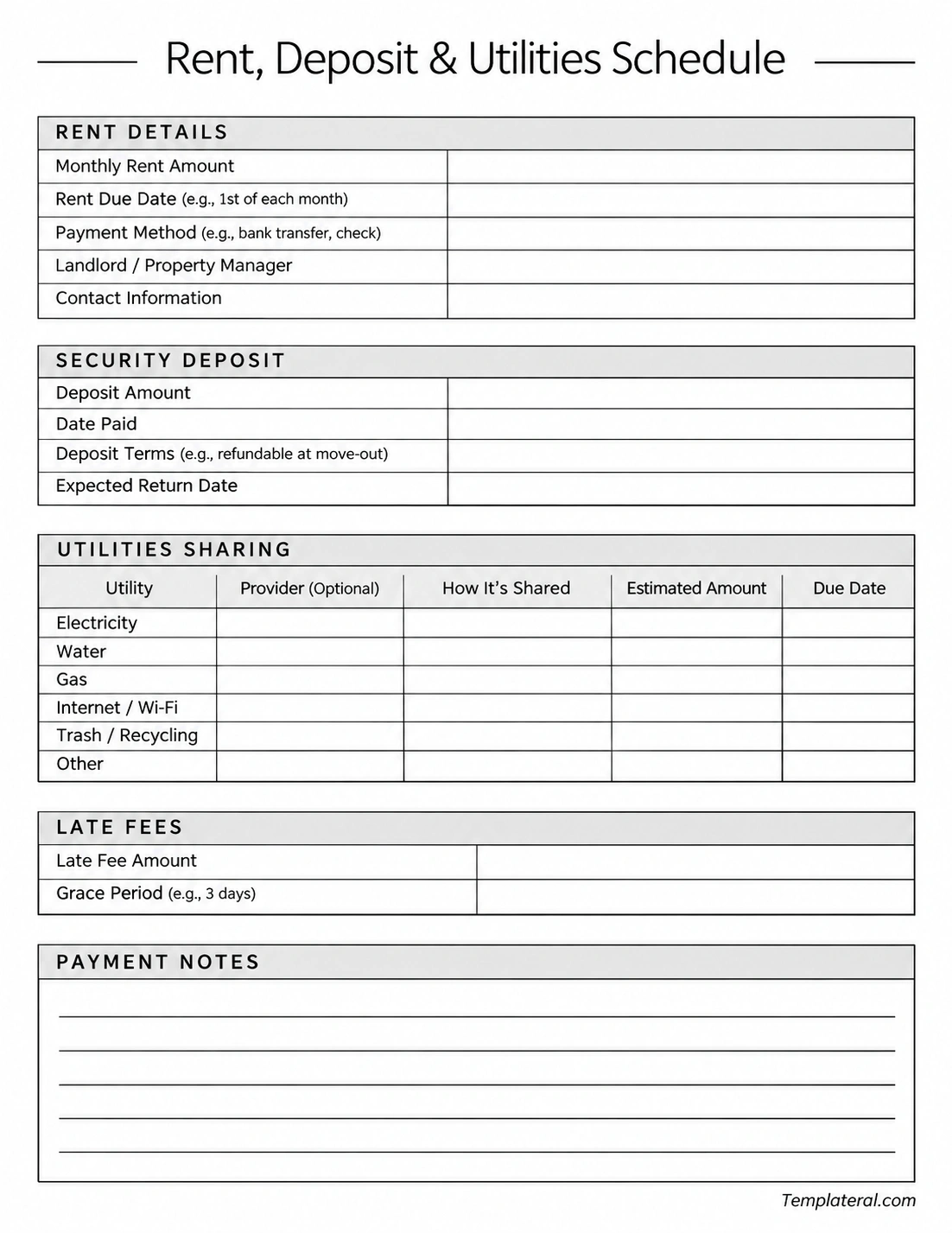
4. Rent, Deposit and Utilities Schedule
Keeping payment information organized can help prevent misunderstandings about monthly expenses. This worksheet provides separate spaces for rent, security deposits, utility contributions, due dates, and payment notes.
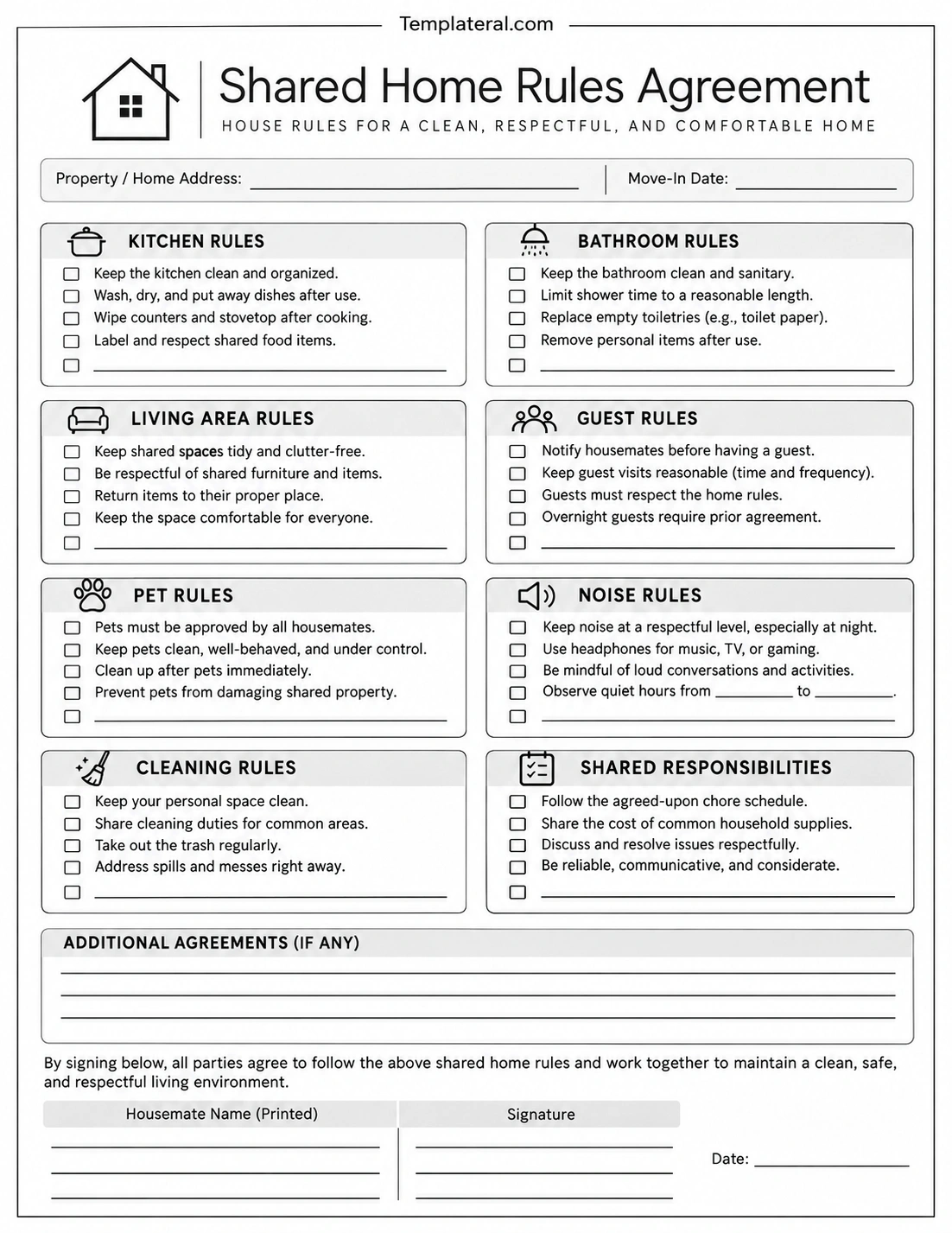
5. Shared Home Rules Agreement
When several people live in one property, written household guidelines can help everyone understand their responsibilities. This printable checklist covers cleaning, guests, pets, noise, kitchen use, and shared household duties.
Common Mistakes to Avoid When Renting a Room
Even a simple room rental arrangement can lead to disagreements when important details are overlooked. Both landlords and tenants should pay attention to the following common mistakes.
- Leaving shared spaces undefined: Specify which common facilities the tenant may use.
- Ignoring utility arrangements: Explain whether bills are included in rent or charged separately.
- Using unclear payment terms: Record exact amounts, payment dates, and accepted methods.
- Forgetting deposit conditions: Document permitted deductions and refund procedures.
- Not documenting property condition: Complete an inventory and record existing damage before move-in.
- Overlooking local housing laws: Make sure the agreement reflects applicable legal requirements.
- Failing to provide a signed copy: Both parties should keep the complete agreement for future reference.
Frequently Asked Questions
1. Do I need a written agreement when renting a room?
A written agreement is strongly recommended because it records the rental terms, payment responsibilities, shared facilities, and house rules. Whether a written contract is legally required depends on local legislation and the type of rental arrangement.
2. What is the difference between a room rental agreement and a standard lease?
A standard lease usually covers an entire property or dwelling, while a room rental agreement focuses on one individual room within a property. It also explains the tenant’s access to shared facilities and responsibilities toward other occupants.
3. Can a landlord rent out individual rooms in the same house?
In many locations, landlords can rent separate rooms to different tenants. However, they should check local occupancy limits, safety regulations, licensing requirements, and applicable housing laws before doing so.
4. Who is responsible for utility bills in a shared house?
Responsibility for utility bills depends on the rental agreement. The landlord may include utilities in the rent, divide expenses equally among occupants, or require tenants to pay a specified portion of the bills.
5. Should a room rental agreement include house rules?
Yes. Including reasonable house rules can help prevent disagreements about guests, cleaning, pets, noise, smoking, and the use of common facilities. Rules should be clear and consistent with local laws.
6. Can a tenant rent a room without signing a lease?
Some rental arrangements may exist without a formal written lease, depending on local law. However, relying only on verbal agreements can make disputes more difficult to resolve. A written and signed document is generally a better way to record everyone’s understanding.
7. What happens if a tenant wants to move out early?
The process depends on whether the agreement is fixed-term or periodic, the applicable termination clauses, and local tenancy laws. Tenants should review the contract and discuss the situation with the landlord before making arrangements to leave.
8. Can I use a free room rental agreement template?
Yes. A free room rental agreement template can provide a useful starting point for documenting the rental arrangement. However, users should customize it to reflect their circumstances and check that its terms comply with local legal requirements.
Conclusion
A tenancy agreement renting a room is an important document for establishing clear expectations between landlords and tenants. It identifies the private room, explains access to shared facilities, outlines rental payments, and records the responsibilities of everyone involved.
Whether you are renting out a spare bedroom or moving into a shared house, taking the time to prepare a written agreement can help reduce misunderstandings and create a more organized living arrangement.
Use the printable room rental agreement templates in this guide as a starting point, review every section carefully, and make sure the final document follows the housing laws that apply to your location. Both parties should understand and agree to the terms before signing.
Tenancy Agreement for Renting a Room Template Word – Download
