Grocery store lists make shopping easier by helping you remember what you need, organize purchases by category, and stay focused while walking through the store. A well-planned grocery list can save time, reduce forgotten items, and make weekly meal planning much more manageable.
Whether you are shopping for one person, a family, or a busy household, having a list before you leave home gives you a clear plan. Instead of trying to remember every item while shopping, you can simply check each item off as you place it in your cart.
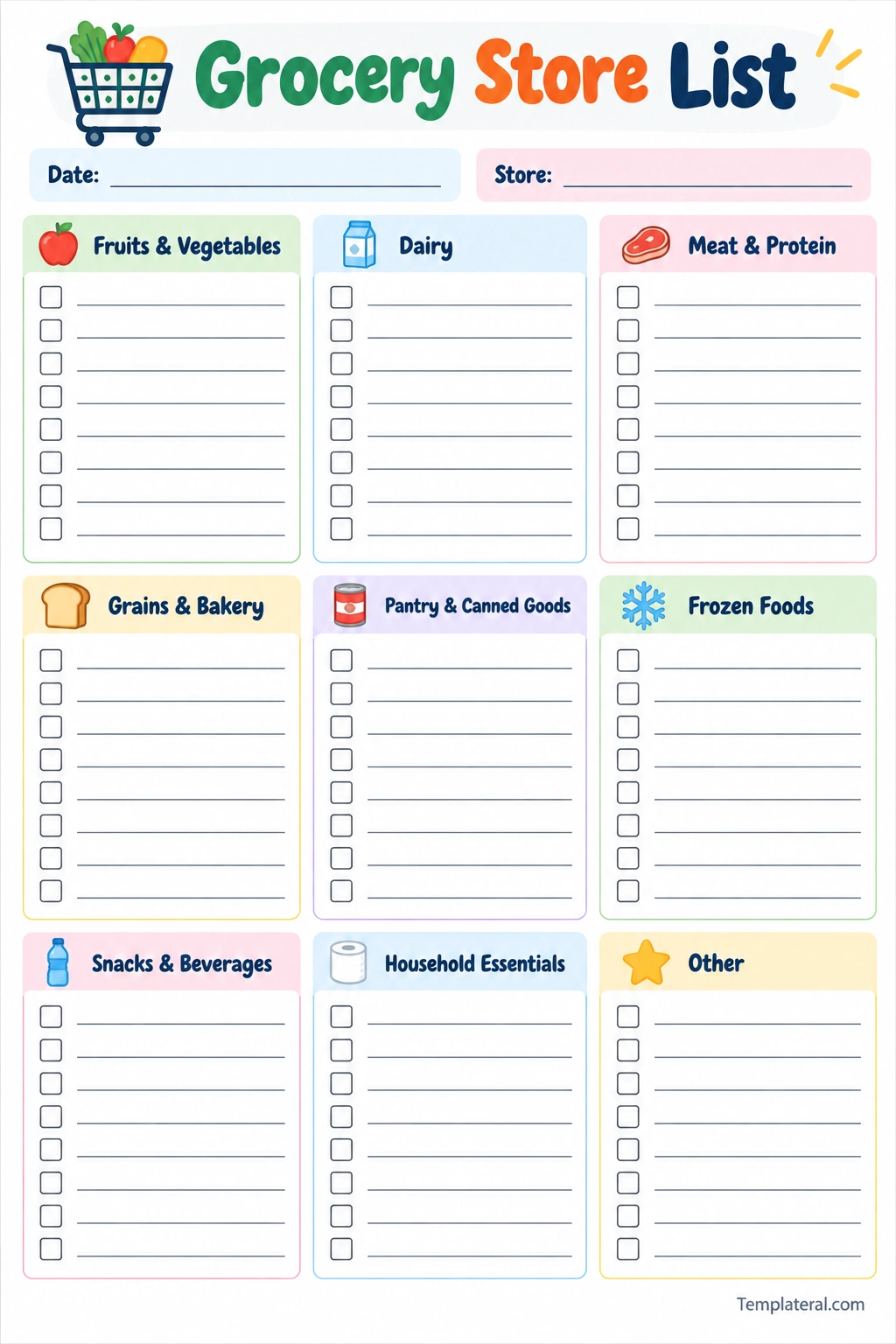
A printable grocery store list can be especially useful because it provides a physical worksheet that can be kept on the refrigerator, kitchen counter, or inside a planner. Organizing the list into categories such as produce, dairy, meat, pantry items, and household essentials can make the shopping trip even more efficient.
What Are Grocery Store Lists?
Grocery store lists are written or digital lists of items that need to be purchased during a grocery shopping trip. They can be as simple as a short list of essential foods or as detailed as a complete weekly shopping plan organized by store section.
A grocery list can include food, beverages, household supplies, personal care products, pet supplies, and other items needed at home.
A typical grocery shopping list may contain:
- Fruits and vegetables
- Dairy products
- Meat and protein
- Grains and bakery items
- Pantry staples
- Canned goods
- Frozen foods
- Snacks and beverages
- Household essentials
- Personal care products
The categories can be changed depending on your household and shopping routine.
Why Use a Grocery Store List?
Creating a grocery list before shopping provides a simple structure for the trip. It can help you focus on what you actually need instead of relying entirely on memory.
Remember Important Items
It is easy to forget small but important items when shopping without a list. Writing everything down before leaving home provides a convenient reminder.
Save Time
An organized grocery list can reduce the amount of time spent walking back and forth between different sections of the store. Grouping similar items together makes it easier to work through the list efficiently.
Plan Meals More Easily
A shopping list can be created around a weekly meal plan. Once you know what meals you intend to prepare, you can identify the ingredients needed for each recipe and add them to the appropriate grocery categories.
Reduce Unnecessary Purchases
A specific list gives you a clear shopping plan. While it does not prevent every impulse purchase, it can help you stay focused on the items you actually intended to buy.
How to Make a Grocery Store List
Creating a useful grocery list does not have to take a lot of time. A simple routine can make the process easier from week to week.
1. Check What You Already Have
Before writing your list, check your refrigerator, freezer, pantry, and storage areas. Look for items that are running low or products that you are likely to need soon.
2. Plan Your Meals
Think about the meals you expect to prepare during the week. Write down the ingredients required for each meal and add them to your grocery list.
3. Add Household Essentials
Food is not the only thing that may need to be purchased. Check whether you need items such as paper towels, trash bags, laundry supplies, cleaning products, or personal care products.
4. Organize Items by Category
Grouping items by category can make your list easier to follow. Instead of writing groceries in the order you remember them, place similar products together.
5. Review the List Before Shopping
Read through the finished list before leaving home. Remove items you already have and add anything you may have forgotten.
Grocery Store List Categories
Organizing grocery store lists by category is one of the simplest ways to make a shopping trip more efficient. The exact categories can be customized to match the layout of your usual grocery store.
Fruits and Vegetables
This section can include fresh produce such as apples, bananas, berries, lettuce, tomatoes, potatoes, onions, carrots, and other vegetables or fruits your household uses regularly.
Dairy
Common dairy items include milk, cheese, yogurt, butter, cream, and other refrigerated products. If you use dairy alternatives, they can be listed in this section as well.
Meat and Protein
This category can include chicken, beef, pork, fish, eggs, tofu, beans, and other protein sources.
Grains and Bakery
Include bread, tortillas, rice, pasta, cereal, oatmeal, flour, and other grain-based products.
Pantry and Canned Goods
Pantry staples can include cooking oil, sauces, spices, canned vegetables, canned beans, pasta sauce, peanut butter, and other shelf-stable foods.
Frozen Foods
Frozen vegetables, frozen fruit, frozen meals, ice cream, and other freezer items can be grouped together.
Snacks and Beverages
This section can include crackers, chips, nuts, granola bars, coffee, tea, juice, sparkling water, and other drinks or snacks.
Household Essentials
Remember non-food items such as toilet paper, paper towels, cleaning products, storage bags, laundry detergent, and other household supplies.
Weekly Grocery Store Lists
A weekly grocery list is useful for households that prefer to complete one major shopping trip each week. Start by reviewing your schedule and deciding which meals you expect to prepare.
After planning the meals, combine the ingredients into one master list. Check your pantry and refrigerator before adding duplicate items.
A weekly grocery list might be divided into:
- Fresh produce
- Refrigerated foods
- Meat and protein
- Pantry staples
- Frozen foods
- Snacks and drinks
- Household supplies
This approach can make the list easier to review and update throughout the week.
Grocery Lists for Families
Family grocery shopping can involve many different preferences and needs. A shared grocery list can make it easier to remember items requested by different members of the household.
Consider keeping a running list in the kitchen. When someone notices that an item is nearly finished, they can add it to the list rather than relying on memory.
Before the weekly shopping trip, review the running list and combine it with the week’s meal plan.
Grocery Lists for One Person
Individuals can benefit from a smaller, more focused grocery list. Shopping for one person often requires careful planning because fresh food can spoil before it is used.
Consider choosing versatile ingredients that can be used in several meals. A small grocery list can focus on the ingredients needed for a few planned meals rather than purchasing a large number of unrelated items.
Tips for Making Grocery Shopping More Efficient
Organize the List Based on Store Layout
If you regularly shop at the same store, arrange your grocery list according to the path you normally take through the store. For example, you might start with produce, continue to dairy and meat, and finish with pantry or household items.
Separate Food From Household Items
Keeping food and non-food purchases in separate sections makes the list easier to scan and reduces the chance of forgetting household essentials.
Use Checkboxes
Checkboxes provide a simple way to mark items as they are placed in the cart. They also make it immediately clear which items still need to be purchased.
Keep a Running List
Instead of creating a new list from scratch every time, maintain a running list throughout the week. Add items when you notice that supplies are running low.
Review Before Checkout
Before leaving the store, quickly review the list. Check whether any essential items remain unchecked.
Common Grocery Shopping Mistakes
A grocery list is most useful when it reflects your actual needs. Avoid these common mistakes when preparing your shopping plan.
- Shopping without checking existing supplies
- Forgetting ingredients needed for planned meals
- Writing items in random order
- Failing to include household essentials
- Adding items without checking whether they are already available at home
- Creating an unrealistic list for a single shopping trip
- Forgetting to update the list when plans change
Printable Grocery Store List vs. Digital Grocery List
Both printable and digital grocery lists can be useful. The best option depends on your personal shopping habits.
A printable grocery store list works well for people who prefer handwriting and want a physical checklist. It can be placed on the refrigerator and updated during the week.
A digital grocery list can be convenient when several household members need to add items remotely or when you want access to the list from your phone.
Some households use both. A running digital list can collect items throughout the week, while a printable worksheet can be used to organize the final shopping trip.
How to Keep Grocery Store Lists Organized
Consistency is more important than complexity. Choose a format that you can easily maintain every week.
Keep frequently purchased items in the same categories and use the same general order each time. Over time, this creates a familiar routine and makes it easier to prepare a new list quickly.
You can also keep a separate list of frequently purchased staples. Items such as milk, eggs, bread, rice, coffee, or cleaning supplies can be checked whenever you prepare your weekly shopping list.
Frequently Asked Questions About Grocery Store Lists
What should I put on a grocery store list?
Include food, beverages, household supplies, and other products you need to purchase. Organize the items into categories such as produce, dairy, meat, pantry, frozen foods, and household essentials.
How do I organize a grocery shopping list?
Group similar items together and, if possible, arrange categories according to the layout of your usual grocery store. This can make the shopping trip easier to navigate.
How often should I make a grocery list?
Many households prepare a grocery list once a week, but the ideal schedule depends on how often you shop and how quickly your household uses food and supplies.
Can a grocery list help with meal planning?
Yes. Planning meals first allows you to identify the ingredients you need and add them directly to your grocery list.
Can I use a printable grocery store list?
Yes. A printable grocery store list provides a convenient physical checklist that can be completed before shopping and checked off during the trip.
Conclusion
Grocery store lists are a simple but useful tool for organizing shopping trips. By checking what you already have, planning meals, recording needed items, and organizing purchases by category, you can create a shopping list that is easier to follow.
A printable grocery store list is particularly useful for households that prefer a physical worksheet. Whether you shop once a week, make several smaller trips, or simply want a better way to remember household essentials, a structured list can become a practical part of your routine.
The most effective grocery list is one that fits your lifestyle. Keep it simple, update it regularly, and organize it in a way that makes sense for your household and your usual shopping route.
Download: Grocery Store Lists Template
