Keeping track of monthly bills can quickly become stressful when due dates, payment amounts, and recurring expenses are scattered across different accounts, emails, and paper statements. A simple bill organizer can make this process much easier by putting important bill information in one convenient place.
A bill organizer helps you record upcoming payments, track due dates, note payment methods, and mark bills as paid. Whether you manage household expenses, personal bills, or recurring subscriptions, an organized system can help you stay on top of your monthly finances without unnecessary stress.
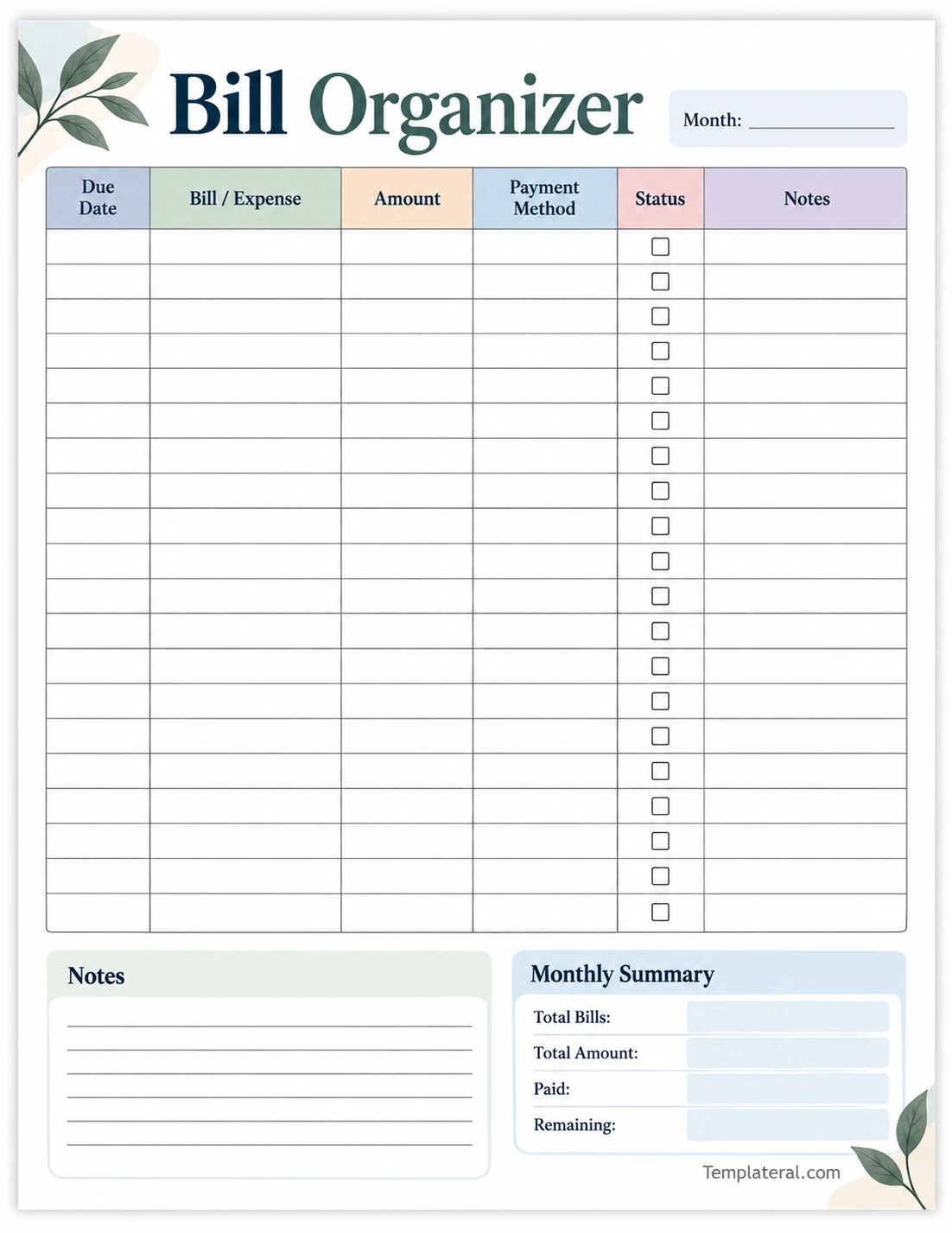
The printable bill organizer template below is designed to make monthly bill tracking simple. You can print it, fill it out by hand, and keep it somewhere you regularly review your household finances.
What Is a Bill Organizer?
A bill organizer is a tool used to keep recurring bills and payment information organized in one place. It can be a printable worksheet, spreadsheet, digital document, or budgeting app. The basic purpose is the same: to help you see what bills are due, when they need to be paid, and how much you need to budget.
A printable bill organizer is particularly useful for people who prefer writing information down instead of managing everything digitally. It can also serve as a quick monthly reference for household expenses.
Depending on your needs, a bill payment organizer may include information such as:
- Bill or expense name
- Due date
- Amount due
- Payment method
- Payment status
- Notes or reminders
Keeping these details together makes it easier to review upcoming expenses and identify bills that still need attention.
Why Use a Bill Organizer?
Monthly bills are often predictable, but that does not mean they are always easy to manage. Different bills may have different due dates, billing cycles, and payment amounts. Without a clear system, it is easy to overlook a payment or forget when a recurring expense is scheduled.
Keep Due Dates Visible
One of the main benefits of a bill organizer is having all your important due dates in one place. Instead of checking several emails, accounts, or statements, you can quickly review your monthly payment schedule.
Seeing upcoming due dates together can also make it easier to plan when money needs to be available for bills.
Track Monthly Expenses
A bill tracker can provide a simple overview of recurring expenses. Recording the amount of each bill allows you to estimate how much of your monthly budget is committed to regular payments.
This can be especially useful for household bills such as utilities, internet, insurance, rent, memberships, and other recurring expenses.
Reduce Missed Payments
Writing down every recurring bill gives you a simple checklist to review throughout the month. Once a payment has been made, you can mark it as paid.
This does not replace payment reminders or account notifications, but it provides an additional visual system for keeping track of your responsibilities.
What to Include in a Monthly Bill Organizer
A useful monthly bill organizer does not need to be complicated. The most important thing is that it contains the information you actually need.
Bill Name
Start by listing the name of each bill or expense. Examples might include electricity, water, internet, insurance, rent, streaming services, or other recurring payments.
Due Date
Record the date each bill is due. Sorting bills by due date can make it easier to see which payments require attention first.
Amount
Write down the expected amount for each bill. For bills that change from month to month, use the most recent amount or your estimated amount for planning purposes.
Payment Method
Adding the payment method can help you remember how each bill is normally paid. You might record a bank transfer, automatic payment, debit account, or another payment method.
Payment Status
A simple checkbox or status column makes it easy to identify which bills have already been paid. Once a payment is completed, mark the corresponding bill as paid.
Notes
The notes section can be used for reminders, unusual charges, billing changes, subscription renewal information, or anything else you want to remember.
How to Use a Bill Organizer
Using a bill organizer is straightforward. The key is to update it consistently and review it at a regular time each month.
1. List All Recurring Bills
Begin by making a complete list of your regular monthly expenses. Look through previous bills, statements, subscriptions, and payment records to make sure you do not leave out an important recurring expense.
2. Add Each Due Date
Write the due date beside every bill. If several payments are due during the same week, having them displayed together can help you prepare for them in advance.
3. Record Expected Amounts
Add the expected amount for each payment. Fixed bills are usually easy to estimate, while variable expenses such as utilities may require an estimate based on previous months.
4. Mark Bills as Paid
After making a payment, immediately update the payment status. This simple habit prevents confusion about which bills have already been handled.
5. Review the Monthly Summary
At the end of the month, review the total number of bills and the total amount paid. This can give you a clearer picture of your recurring expenses and help you prepare for the following month.
Tips for Better Bill Organization
A bill organizer works best when it becomes part of a simple monthly routine. You do not need a complicated budgeting system to keep your bills organized.
- Choose one place to track bills: Avoid keeping some bills on paper and others in random notes or documents.
- Update information when bills change: Record new payment amounts or changed due dates when necessary.
- Review bills before their due dates: Give yourself enough time to make payments.
- Use a consistent format: Keep the same categories each month so information is easy to understand.
- Keep previous records: Saving completed worksheets can help you compare recurring expenses over time.
- Pair the organizer with reminders: Calendar alerts or account notifications can provide an additional reminder for important payments.
Printable Bill Organizer vs. Digital Bill Tracker
Both printable and digital bill tracking systems can be useful. The right option depends on how you prefer to manage information.
A printable bill organizer is useful if you enjoy writing information by hand and want a physical worksheet that can be kept near your household paperwork. It also provides a quick visual overview without opening an app or spreadsheet.
A digital bill tracker may be more convenient if you frequently manage finances from a phone or computer. Digital tools can also provide features such as automatic calculations, notifications, and recurring entries.
For some households, using both methods can work well. A printable worksheet can provide a simple monthly overview while digital reminders handle important payment alerts.
How to Make Bill Tracking a Monthly Habit
The most effective bill organization system is one that you will actually use. Set aside a few minutes at the beginning or end of each month to update your worksheet.
Start by reviewing the previous month’s organizer. Carry forward recurring bills, update amounts that have changed, and add any new subscriptions or expenses. Then check the upcoming due dates and make sure each payment is accounted for.
During the month, mark each bill as paid after completing the payment. At the end of the month, review the completed organizer before preparing the next one.
This routine turns bill tracking into a simple recurring task rather than something you have to reconstruct whenever a payment is due.
Who Can Use a Bill Organizer?
A bill organizer can be useful for many different situations. You do not need to have a complicated financial situation to benefit from a simple payment tracking worksheet.
- Families: Track household bills and recurring expenses in one place.
- Students: Organize rent, utilities, subscriptions, and other regular payments.
- Individuals: Keep personal recurring expenses visible and organized.
- Couples: Create a shared overview of household bills.
- Homeowners: Track utilities, insurance, services, and other recurring household expenses.
- Renters: Keep rent and monthly household payments organized.
Frequently Asked Questions About Bill Organizers
What is the purpose of a bill organizer?
The purpose of a bill organizer is to keep information about recurring bills in one convenient place. It can help you track due dates, payment amounts, payment methods, and whether each bill has been paid.
How do I organize my bills each month?
Start by listing every recurring bill, then record the due date and expected amount. Add the payment method if useful, and mark each bill as paid after completing the payment. Review the organizer regularly throughout the month.
What bills should I include in a bill tracker?
You can include any recurring or important payment, such as rent, mortgage payments, utilities, internet, insurance, subscriptions, memberships, and other regular household expenses.
Is a printable bill organizer useful?
Yes. A printable bill organizer provides a simple physical overview of monthly payments. It can be especially useful for people who prefer handwritten lists and worksheets over digital financial tools.
How often should I update my bill organizer?
A bill organizer should generally be reviewed at least once a month. You can also update it whenever a bill changes, a new recurring expense is added, or a payment has been completed.
Can I use a bill organizer for variable bills?
Yes. Variable bills can be included by recording the expected amount for the current month. After the actual bill arrives, update the amount if necessary.
What is the difference between a bill organizer and a budget planner?
A bill organizer primarily focuses on scheduled payments, due dates, and bill tracking. A budget planner usually covers a broader range of financial information, including income, spending categories, savings goals, and overall financial planning.
Final Thoughts
A bill organizer can turn a collection of scattered payment dates and amounts into a simple monthly checklist. By recording bills, due dates, amounts, payment methods, and payment status in one place, you can make routine bill tracking easier to manage.
The most important part is consistency. Choose a system that feels simple enough to maintain, review it regularly, and update it whenever your recurring expenses change. A printable bill organizer can be a practical starting point for creating a clearer and more organized monthly bill routine.
Download: Bill Organizer Template
