A daily behavior chart is a simple way to help children understand expectations, recognize positive choices, and track progress throughout the day. Instead of waiting until the end of the week to discuss behavior, a daily chart provides a clear snapshot of how a child is doing during different parts of the day.
Teachers, parents, and caregivers can use a daily behavior chart to monitor goals such as following directions, staying on task, using kind words, being respectful, and completing daily routines. Because the chart focuses on one day at a time, it can be easier for children to understand and use consistently.
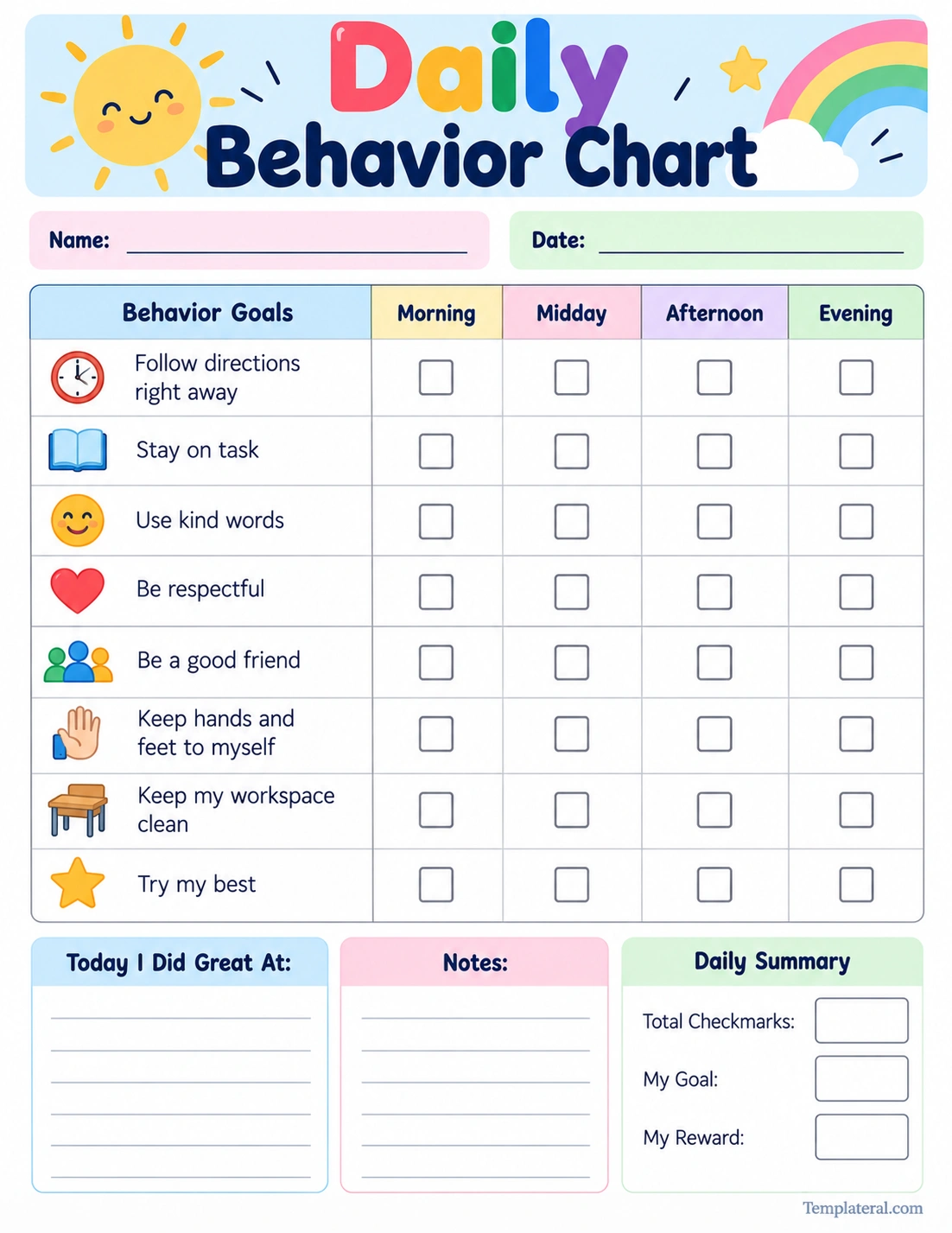
A printable daily behavior chart can also make behavior tracking more organized. The template below includes behavior goals, different parts of the day, checkboxes, a daily summary, and space for notes and positive achievements.
What Is a Daily Behavior Chart?
A daily behavior chart is a visual tracking tool used to record specific behaviors or goals during a single day. It can be used at school, at home, or in other settings where children benefit from clear routines and expectations.
Unlike a weekly behavior chart, which summarizes behavior across several days, a daily behavior chart focuses on what happens today. This makes it useful when a child is working on a particular behavior and needs frequent feedback.
A chart may divide the day into sections such as morning, midday, afternoon, and evening. Teachers or parents can then use checkmarks, stars, points, stickers, or notes to record progress.
Why Use a Daily Behavior Chart?
A well-designed behavior chart can make expectations easier to communicate and provide a consistent framework for discussing progress.
Set Clear Behavior Expectations
Children often respond better to specific expectations than to general instructions such as “behave.” A chart can replace vague expectations with clear goals such as “follow directions,” “stay on task,” or “use kind words.”
Track Behavior Throughout the Day
A daily chart makes it possible to record behavior at different points during the day. This can help identify when a child is successful and when additional support may be useful.
Recognize Positive Choices
The chart can emphasize positive behavior rather than focusing only on mistakes. A checkmark or star can recognize a child for meeting a specific goal.
Encourage Self-Reflection
Older children can participate in completing their charts and reflecting on their progress. A short “Today I Did Great At” section can encourage them to identify something they accomplished well.
Create Consistent Communication
A daily behavior tracker can provide teachers and parents with a simple framework for discussing behavior. Instead of relying entirely on memory, adults can use specific observations from the day.
What Should Be Included in a Daily Behavior Chart?
The best chart is simple enough to use regularly while providing enough information to make the tracking meaningful.
Child’s Name and Date
Include a space for the child’s name and the date. This is particularly helpful when teachers use multiple charts or keep records for several students.
Specific Behavior Goals
Choose a small number of behaviors that are appropriate for the child’s age and situation. Examples include:
- Follow directions right away
- Stay on task
- Use kind words
- Be respectful
- Be a good friend
- Keep hands and feet to myself
- Keep my workspace clean
- Try my best
Time-of-Day Sections
A daily behavior chart can divide the day into morning, midday, afternoon, and evening sections. This makes it easier to see whether behavior goals are being met consistently or only during certain parts of the day.
Daily Summary
A summary area can include the total number of checkmarks, a personal goal, or a reward. The exact format can be adjusted to fit the classroom or home routine.
Notes and Achievements
A notes section provides space for observations or important details. A separate positive achievement section can encourage children to identify something they did well that day.
How to Use a Daily Behavior Chart
Using a behavior chart effectively is more important than simply having one. The chart should become part of an understandable routine rather than another complicated task.
1. Choose Two to Five Important Goals
Start with a manageable number of behaviors. Too many goals can make the chart difficult for children and adults to use consistently.
2. Explain Each Goal
Make sure the child understands what each behavior means. For example, explain what “stay on task” looks like during independent work or what “be respectful” means when talking with classmates.
3. Decide When to Check the Chart
Choose specific points during the day when behavior will be reviewed. This might be after morning activities, before lunch, during afternoon activities, and at the end of the day.
4. Use a Consistent Tracking Method
Use one simple system, such as checkmarks or stars. A consistent method makes the chart easier for children to understand.
5. Review Progress at the End of the Day
Spend a few minutes reviewing the chart. Ask the child what went well and whether there is a behavior goal they would like to improve tomorrow.
Daily Behavior Chart Ideas
There are several ways to adapt a daily behavior tracker to different situations and age groups.
Classroom Daily Behavior Chart
Teachers can use a daily classroom behavior chart to track goals such as following directions, participating appropriately, staying on task, respecting classmates, and completing assignments.
Home Behavior Chart
Parents can adapt the chart for home routines. Goals might include completing homework, following household instructions, using respectful language, helping with chores, or completing bedtime routines.
Morning and Afternoon Behavior Chart
For children who need help with transitions, dividing the day into morning and afternoon sections can make the expectations more manageable.
Student Self-Monitoring Chart
Older children may be able to complete part of the chart themselves. Self-monitoring encourages children to think about their own actions and identify areas where they are making progress.
Behavior Goal Tracker
If a child is working on one specific behavior, the entire chart can focus on that goal. A narrower approach can make it easier to identify progress over time.
Examples of Daily Behavior Goals
The right behavior goals depend on the child’s age, environment, and individual needs. Keep goals observable and specific.
- Following directions: Starts a requested task after receiving an instruction.
- Staying on task: Remains focused during an assigned activity.
- Respect: Uses appropriate words and listens when others are speaking.
- Kindness: Treats classmates, siblings, teachers, and family members appropriately.
- Self-control: Uses an appropriate strategy when frustrated or upset.
- Organization: Keeps school materials or personal belongings in their proper place.
- Participation: Takes part in appropriate classroom or family activities.
- Effort: Makes a reasonable effort to complete assigned work.
Tips for Making a Daily Behavior Chart Effective
A simple chart is usually easier to maintain than a complicated system. These practical tips can help make daily behavior tracking more useful.
Keep Expectations Positive
Whenever possible, describe the behavior you want to see. “Use kind words” is more actionable than simply writing “Do not be rude.”
Use Age-Appropriate Language
Young children may benefit from short phrases and visual symbols. Older students can work with more detailed goals and reflection questions.
Give Specific Feedback
Instead of saying only “good job,” explain what the child did well. For example, “You followed the directions the first time” connects the praise directly to the behavior goal.
Make Tracking Quick
A daily behavior chart should not take a large amount of time to complete. Checkmarks, stars, or short notes can make the process practical during a busy school day.
Review Progress Regularly
Look for patterns rather than focusing on one difficult moment. A series of daily charts may reveal areas of improvement or situations that consistently require additional support.
Daily Behavior Chart vs. Weekly Behavior Chart
A daily behavior chart and a weekly behavior chart can both be useful, but they serve different purposes.
A daily behavior chart provides detailed information about one day. It can be especially useful when a child needs frequent feedback or when a teacher wants to monitor behavior at different times of the day.
A weekly behavior chart provides a broader view. It can show whether behavior goals are being met consistently across several school days.
Some teachers use both. A daily chart can provide detailed observations, while a weekly summary can be used to review overall progress.
Using Positive Reinforcement With a Daily Behavior Chart
A behavior chart can be paired with positive reinforcement to recognize progress. The reinforcement method should be appropriate for the child and consistent with classroom or family expectations.
Positive reinforcement might include:
- Verbal praise
- A positive note home
- Extra classroom responsibility
- Choice of an appropriate activity
- Time for a preferred classroom activity
- A sticker or star
- Recognition of a specific accomplishment
Rewards are not required for every behavior chart. In many situations, specific positive feedback and recognition may be sufficient.
Common Mistakes to Avoid
A behavior chart works best when it supports learning rather than creating unnecessary pressure.
Using Too Many Goals
Trying to track every possible behavior can make the chart confusing. Select the goals that are most relevant to the child’s current needs.
Using Vague Language
Words such as “good,” “bad,” or “behave” do not clearly explain what a child should do. Use observable actions instead.
Using the Chart as a Punishment
The purpose of a behavior chart should be clear. Consider using it as a tool for communication, goal-setting, and positive recognition rather than relying on it primarily as a punishment system.
Publicly Comparing Children
Individual behavior information should generally be handled thoughtfully and privately. Avoid creating public comparisons that could embarrass or discourage a child.
Forgetting Individual Differences
Children have different abilities, circumstances, and support needs. A chart should be adapted when necessary rather than assuming the same behavior system will work equally well for everyone.
How Teachers Can Use a Printable Daily Behavior Chart
A printable daily behavior chart can be kept on a teacher’s desk, in a student folder, or in another appropriate location. The teacher can mark the chart during predetermined points in the day.
At the end of the day, the teacher can briefly review the chart with the student. This creates an opportunity to recognize accomplishments and identify one realistic goal for the following day.
For classrooms with multiple students, teachers may prefer individual charts so that each student’s goals and progress can be handled separately.
How Parents Can Use a Daily Behavior Chart at Home
Parents can adapt a daily behavior chart to common home routines. For example, a chart might track getting ready in the morning, completing homework, helping with household responsibilities, using respectful language, and following bedtime routines.
Keep the system simple and involve the child when choosing goals. Children may be more engaged when they understand why a goal matters and have an opportunity to reflect on their own progress.
Frequently Asked Questions About Daily Behavior Charts
What is a daily behavior chart?
A daily behavior chart is a printable or digital tool used to track specific behaviors and goals throughout one day. It can be used by teachers, parents, or caregivers to monitor progress and recognize positive behavior.
What should I put on a daily behavior chart?
A daily behavior chart can include specific goals such as following directions, staying on task, using kind words, being respectful, keeping a workspace clean, and trying your best. It can also include time-of-day sections, notes, and a daily summary.
How often should a daily behavior chart be checked?
The chart can be checked at predetermined points during the day, such as morning, midday, afternoon, and evening. The best frequency depends on the child’s needs and the setting in which the chart is being used.
Can a daily behavior chart be used at home?
Yes. Parents can adapt a daily behavior chart for home routines such as homework, chores, respectful communication, morning routines, and bedtime.
What is the difference between a daily and weekly behavior chart?
A daily behavior chart focuses on behavior during one day and can provide more frequent feedback. A weekly behavior chart tracks behavior across several days and provides a broader view of progress.
Should a daily behavior chart be used as a punishment?
A behavior chart can be used in different ways, but it is generally more useful when it emphasizes clear expectations, positive recognition, goal-setting, and constructive feedback rather than relying primarily on punishment.
Conclusion
A daily behavior chart provides a simple way to make behavior expectations clear and track progress throughout the day. By dividing goals into manageable sections, teachers and parents can provide more timely feedback and recognize positive choices.
The most effective chart is simple, specific, and appropriate for the child. Focus on observable behaviors, use positive language, review progress regularly, and adjust the system when individual needs change.
Whether you need a classroom behavior tracker, a student behavior chart, or a printable behavior chart for home, a daily format can provide a practical starting point for building consistent routines and encouraging positive behavior.
Download: Daily Behavior Chart Template
