A Character Biography is a detailed description of a fictional character’s background, personality, experiences, relationships, goals, and role in a story. It helps writers understand their characters more deeply and create believable people with unique motivations, strengths, weaknesses, and personal histories.
Whether you are writing a novel, short story, screenplay, comic, role-playing game, or creative writing assignment, a well-developed character biography can make the writing process much easier. Instead of creating a character from a simple name and description, you can build a complete profile that explains who the character is and why they behave the way they do.
A good character biography does not need to include every possible detail. The goal is to identify the information that helps explain the character’s identity, personality, motivations, relationships, and development throughout the story.
What Is a Character Biography?
A Character Biography is a written profile that describes the life and characteristics of a fictional person. It can include basic information such as the character’s name, age, occupation, and place of origin, as well as deeper details such as personality traits, fears, motivations, relationships, conflicts, and goals.
Unlike a simple character description, a biography focuses on the character as a complete individual. It can explain what happened before the story began and how those experiences influenced the character’s behavior.
For example, instead of writing that a character is afraid of failure, a character biography can explain that the character experienced a major setback in childhood and now feels pressure to prove themselves. This additional context gives the character greater depth.
Why Is a Character Biography Important?
Creating a character biography can help writers maintain consistency and develop more believable characters. When you know a character’s history and motivations, it becomes easier to decide how that character might react to different situations.
A detailed character profile can help you:
- Understand a character’s personality
- Develop realistic motivations
- Create meaningful character conflicts
- Keep character details consistent
- Develop relationships between characters
- Plan character development
- Create more realistic dialogue
- Build a stronger story
A biography can also save time during the writing process. Instead of repeatedly deciding what a character would do, you can refer to their established background, personality, values, and goals.
What Should Be Included in a Character Biography?
There is no single required format for a character biography. The information you include should depend on the type of story and the role of the character.
However, the following sections provide a useful foundation for most fictional characters:
- Basic information
- Physical description
- Background
- Family history
- Personality traits
- Strengths and weaknesses
- Skills and abilities
- Interests and hobbies
- Goals and motivations
- Fears and challenges
- Relationships
- Important life events
- Character conflicts
- Character development
- Role in the story
You do not need to complete every section for every character. Minor characters can have shorter profiles, while main characters may require much more detail.
How to Write a Character Biography
Writing a character biography is easier when you build the profile step by step. Start with basic information and gradually move toward the character’s deeper motivations and internal conflicts.
1. Start With Basic Information
Begin with the facts that identify the character. This section can include the character’s name, age, occupation, hometown, current location, role in the story, and other essential details.
For example, a basic character profile might identify someone as a 15-year-old student who lives in a small town and dreams of becoming a writer. These simple details provide a foundation for the rest of the biography.
2. Create a Background Story
The character’s background explains where they came from and what experiences helped shape their identity.
Consider questions such as:
- Where did the character grow up?
- What was their childhood like?
- Who influenced them?
- What important events happened in their past?
- What experiences changed their perspective?
- What relationships shaped their personality?
The background does not need to appear entirely in the final story. Some information may exist only to help the writer understand the character.
3. Develop the Personality
Personality is one of the most important parts of a character biography. Avoid describing a character using only a few generic adjectives such as nice, smart, or brave.
Instead, think about how the character behaves in different situations. A character might be confident when speaking with friends but nervous around strangers. Another character might be friendly and optimistic while secretly struggling with self-doubt.
Consider traits such as:
- Curiosity
- Confidence
- Patience
- Ambition
- Empathy
- Creativity
- Humor
- Stubbornness
- Impulsiveness
- Perfectionism
4. Identify Strengths and Weaknesses
Believable characters usually have both strengths and weaknesses. A character who is perfect at everything can feel unrealistic and may have difficulty creating meaningful conflict.
Strengths might include creativity, courage, intelligence, leadership, loyalty, determination, or problem-solving ability. Weaknesses might include impatience, insecurity, fear of failure, stubbornness, poor communication, or impulsive decision-making.
Strong character development often happens when a character’s strengths and weaknesses interact with one another.
5. Define Goals and Motivations
A character’s goals explain what they want, while motivations explain why they want it. These two elements are essential for creating believable actions and decisions.
For example, a character may want to win a competition because they want recognition from their family. Another character may want to leave their hometown because they are searching for independence.
Ask yourself:
- What does the character want?
- Why is this goal important?
- What are they willing to do to achieve it?
- What could stop them?
- What happens if they fail?
6. Add Fears and Internal Conflicts
Fear and internal conflict can make characters more complex. A character may have an external problem, but they can also struggle with an internal belief or emotional obstacle.
For example, a talented character may avoid opportunities because they are afraid of being judged. A naturally caring character may have difficulty trusting others after experiencing betrayal.
These internal conflicts can create opportunities for meaningful character growth.
7. Develop Relationships
Characters rarely exist independently. Their relationships with family members, friends, mentors, rivals, coworkers, and other characters can reveal important aspects of their personality.
For each important relationship, consider how the two characters interact and what they want from one another.
You can include:
- Family relationships
- Friendships
- Romantic relationships
- Mentor relationships
- Rivalries
- Professional relationships
- Conflicts with other characters
A relationship can also change throughout the story. A rival might eventually become an ally, while a close friendship might become strained by a difficult decision.
Character Biography Example
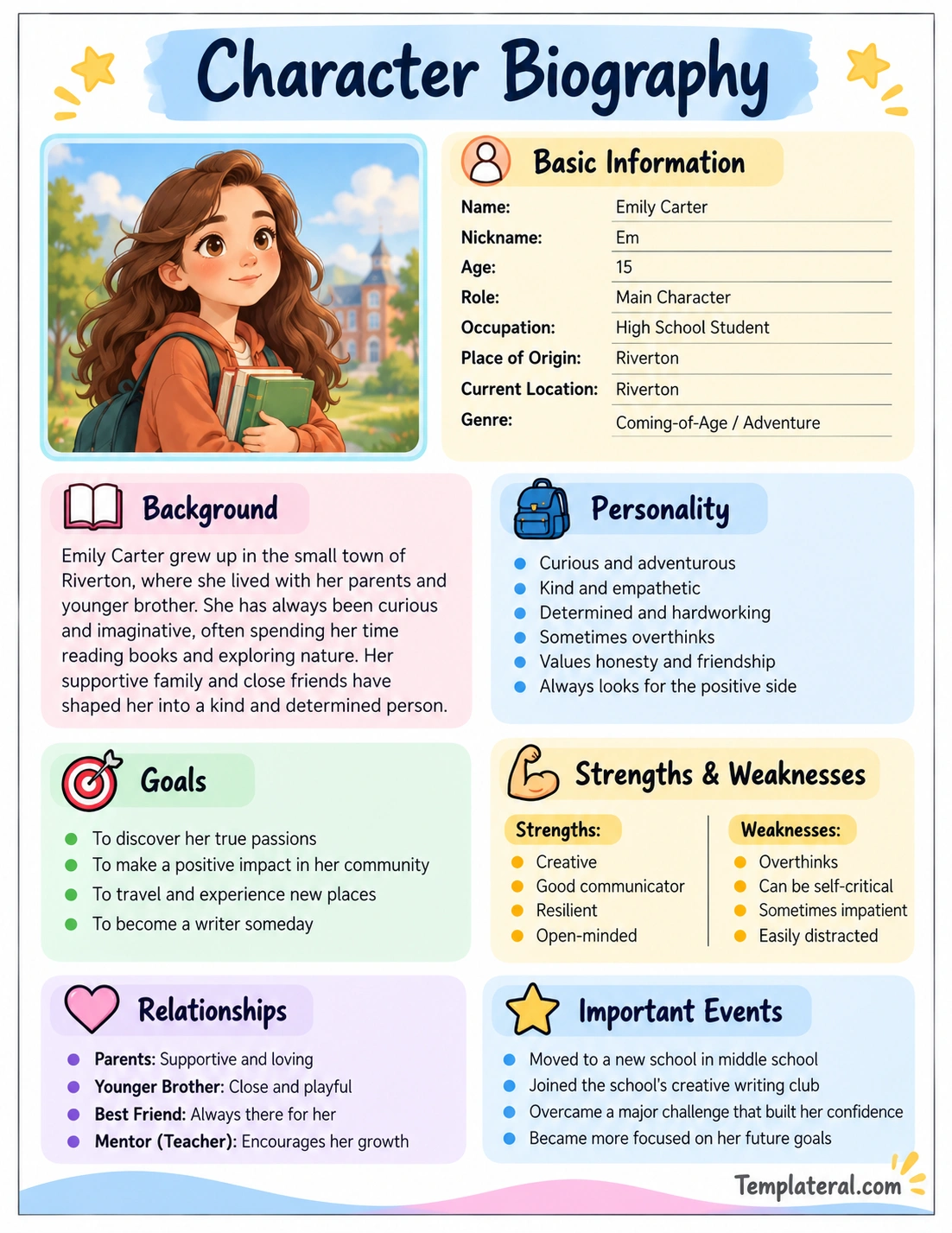
Consider a fictional character named Emily Carter. She is a teenager living in a small town and has a strong interest in writing and exploring new places.
Her biography might explain that Emily grew up in a supportive family and developed a love of books at an early age. She is curious, creative, and determined, but she sometimes overthinks important decisions and worries about disappointing others.
Her primary goal is to discover what she wants to do with her future and eventually become a writer. Her strengths include creativity, communication, resilience, and an open mind. Her weaknesses include self-doubt and impatience.
This combination of strengths, weaknesses, experiences, and goals creates a more complete character than simply describing Emily as a creative teenager.
Character Biography for Fiction Writing
Writers can use a character biography before beginning a novel or short story. Creating the profile early can help establish the character’s voice, behavior, history, and motivations.
For a major character, consider developing a detailed profile that includes both visible and hidden characteristics. The reader may not need to know every detail, but the writer can use that information to make decisions throughout the story.
For example, knowing that a character grew up in an unstable environment may influence how they respond to authority, friendship, trust, and conflict.
Character Biography for Creative Writing Assignments
Students can use a Character Biography as a planning tool for creative writing assignments. Instead of immediately writing a story, students can first develop the main character’s identity and motivations.
A simple character profile can ask students to describe:
- Name and age
- Appearance
- Personality
- Family background
- Interests
- Strengths
- Weaknesses
- Goals
- Fears
- Important experiences
- Relationships
- Future plans
Once these questions are answered, students can use the information to create a short story, fictional diary entry, narrative essay, or character introduction.
Character Biography for Screenwriting
Screenwriters can also benefit from detailed character biographies. A screenplay may have limited space for explaining a character’s history, so understanding that history beforehand can help create more natural dialogue and actions.
A screenwriting character biography can include information about the character’s personal history, relationships, motivations, goals, fears, habits, and emotional development.
The biography should support the screenplay rather than become a replacement for storytelling. The audience should usually learn about the character through actions, dialogue, decisions, and interactions.
How to Make a Character More Believable
A believable character does not need to be realistic in every detail, but their behavior should make sense within the world of the story.
Give the Character Contradictions
Real people can have seemingly contradictory qualities. A character can be generous but competitive, confident but insecure, outgoing but uncomfortable in unfamiliar situations, or intelligent but occasionally careless.
Give the Character Something to Lose
Meaningful stakes make goals more powerful. Think about what the character could lose if they fail and why that loss matters.
Let the Character Change
Character development is often more interesting when experiences affect the character. A character may become more confident, learn to trust others, overcome a fear, accept responsibility, or change an important belief.
Tips for Creating a Useful Character Biography
- Start with the story role: Decide whether the character is a protagonist, antagonist, supporting character, mentor, rival, or another role.
- Focus on motivation: Understand what the character wants and why.
- Create meaningful flaws: Give the character weaknesses that can affect the story.
- Use specific details: Small details can make a character easier to remember.
- Connect the past to the present: Show how previous experiences influence current behavior.
- Keep important information consistent: Track names, ages, relationships, locations, and major events.
- Allow room for change: A strong character can develop as the story progresses.
Common Character Biography Mistakes
Making the Character Perfect
A character without meaningful weaknesses may lack opportunities for conflict or growth. Give important characters limitations and challenges that affect their decisions.
Adding Details That Do Not Matter
Not every detail needs to appear in a character profile. Focus on information that helps explain the character or contributes to the story.
Confusing Personality With Appearance
Physical appearance is useful, but it does not replace personality. A complete character biography should explain how the character thinks, feels, behaves, and responds to challenges.
Ignoring Character Development
A character biography should not necessarily remain static. As the story progresses, the character’s beliefs, relationships, goals, and abilities may change.
Frequently Asked Questions About Character Biography
What is a Character Biography?
A Character Biography is a detailed profile of a fictional character. It can describe the character’s background, personality, appearance, goals, motivations, relationships, strengths, weaknesses, fears, and important life events.
Why do writers create Character Biographies?
Writers create character biographies to better understand their characters and maintain consistency throughout a story. A biography can also help writers develop realistic motivations, conflicts, relationships, and character arcs.
What should a Character Biography include?
A character biography can include basic information, background, personality, appearance, strengths, weaknesses, goals, motivations, fears, relationships, skills, important events, and character development.
How long should a Character Biography be?
There is no fixed length. A minor character may need only a short paragraph, while a protagonist may require several pages of notes. The ideal length is enough to help the writer understand the character and maintain consistency.
Can students use a Character Biography?
Yes. Students can use a character biography for creative writing assignments, short stories, narrative projects, book-related activities, and character development exercises.
What is the difference between a Character Biography and a Character Profile?
The terms are often used interchangeably. A character profile may focus more on facts and traits, while a character biography often provides more information about the character’s history, experiences, relationships, and development.
Conclusion
A Character Biography is a valuable tool for developing believable and memorable fictional characters. By exploring a character’s background, personality, strengths, weaknesses, goals, fears, relationships, and important experiences, writers can create characters who feel more complete and consistent.
You do not need to include every possible detail. Focus on the information that helps explain the character’s behavior and supports the story. A well-planned character biography can provide a strong foundation for novels, short stories, screenplays, comics, role-playing games, and creative writing assignments.
Most importantly, remember that a character biography is a tool for storytelling. Use it to understand the character, then let that understanding influence their choices, relationships, conflicts, and growth throughout the story.
Download: Character Biography Template
