A habit tracker is a simple tool for recording daily habits and seeing your progress over time. Instead of relying on memory, you can use a habit tracking worksheet to mark whether you completed a specific habit each day. This makes it easier to recognize patterns, stay consistent, and adjust your routine when necessary.
Whether you want to exercise regularly, drink more water, read every day, improve your sleep routine, or spend less time on your phone, a habit tracker can turn a vague goal into something measurable. A printable habit tracker is particularly useful because it provides a clear visual record that you can keep on your desk, planner, bulletin board, or notebook.
What Is a Habit Tracker?
A habit tracker is a chart, worksheet, planner page, or digital tool used to monitor how consistently you perform specific habits. Most habit trackers organize habits into rows and days into columns, allowing you to mark each completed habit throughout the month.
A typical monthly habit tracker may include space for several habits, a calendar-style grid, monthly goals, notes, and a section for reviewing overall progress.
For example, you might track:
- Drinking enough water
- Exercising
- Reading
- Going to bed on time
- Meditating
- Eating nutritious meals
- Practicing gratitude
- Limiting screen time
- Studying or learning a new skill
- Completing an important daily task
The purpose is not simply to create a long checklist. A useful habit tracker helps you understand your behavior and make gradual improvements.
Why Use a Habit Tracker?
Building a habit can be difficult when progress is difficult to see. A tracker creates a simple visual record that can make consistency easier to understand.
Make Progress Visible
Checking off a habit each day creates a visible record of your effort. After several days or weeks, the completed boxes can show how consistently you have followed your routine.
Stay Accountable
Writing down whether you completed a habit creates a small moment of accountability. Instead of simply thinking about whether you exercised or read that day, you have a specific place to record the result.
Identify Patterns
A monthly habit tracker can reveal patterns that are easy to miss. For example, you may notice that you exercise less frequently on weekends or that you are more consistent with reading when you schedule it before bed.
Keep Goals Manageable
Large goals can feel overwhelming. Tracking smaller daily actions makes a long-term objective easier to approach one step at a time.
How to Use a Habit Tracker
Using a printable habit tracker is straightforward. The key is to choose habits that are meaningful and easy to measure.
1. Choose Your Habits
Start with a small number of habits rather than trying to change everything at once. Choose behaviors that directly support what you want to improve.
For example, instead of writing a broad goal such as “be healthier,” choose specific actions such as “walk for 20 minutes” or “drink water throughout the day.”
2. Write the Habits in the Tracker
Enter each habit into a separate row. Use short descriptions so that the tracker remains easy to read.
3. Mark Each Day
At the end of each day, mark the corresponding box when you complete the habit. You can use check marks, dots, colors, initials, or another simple system.
4. Review Your Progress
At the end of the week or month, look at your completed entries. Consider which habits were easy to maintain and which ones need adjustment.
5. Adjust Your Routine
A habit tracker is not meant to punish you for missing a day. Instead, use the information to understand what worked and what did not. If a habit is consistently difficult, consider making the action smaller or changing when you perform it.
What Should You Track?
The best habits to track are behaviors that you can clearly define and reasonably repeat. Your list should reflect your own goals rather than trying to include every popular habit.
Health and Wellness Habits
- Drink water
- Exercise or walk
- Stretch
- Eat a balanced meal
- Follow a consistent bedtime routine
- Take scheduled medications or supplements as directed
Productivity Habits
- Plan the day’s priorities
- Complete a focused work session
- Organize your workspace
- Review your task list
- Limit unnecessary distractions
Personal Development Habits
- Read a book
- Practice a language
- Study a new subject
- Write in a journal
- Practice a creative skill
Mindfulness and Reflection
- Meditate
- Practice gratitude
- Spend quiet time without screens
- Write down a positive experience
- Reflect on the day’s accomplishments
How to Create a Good Habit Tracking System
A habit tracker works best when it is simple enough to use every day. If tracking takes too much time, it can become another task that you eventually stop doing.
Keep the Number of Habits Reasonable
You do not need to track dozens of habits. Start with three to five important behaviors and add more only if the system remains manageable.
Make Each Habit Specific
A habit should be clear enough that you can easily decide whether you completed it. “Exercise for 20 minutes” is easier to track than “get fit.”
Choose a Consistent Tracking Time
Consider updating your tracker at the same time each day. Some people prefer checking their habits in the evening, while others prefer recording progress immediately after completing an activity.
Use Simple Marks
A check mark is usually enough. You can also use circles, colored pencils, stickers, or symbols if you enjoy a more visual system.
Monthly Habit Tracker vs. Weekly Habit Tracker
Both monthly and weekly habit trackers can be useful, but they serve slightly different purposes.
A monthly habit tracker gives you a broader view of consistency. It is useful when you want to see how a habit develops across several weeks.
A weekly habit tracker provides a smaller and more focused view. It can be useful when you are starting a new routine or when you prefer to review your habits frequently.
If you are unsure which format to use, a monthly tracker is a practical starting point because it provides enough space to identify longer patterns without requiring a complicated system.
Tips for Staying Consistent
Tracking a habit is only useful when you continue using the system. These practical strategies can make the process easier.
- Start small: Choose habits that are realistic for your current schedule.
- Connect habits: Attach a new habit to an activity you already do regularly.
- Keep the tracker visible: Place it somewhere you naturally look every day.
- Prepare in advance: Decide what you will track before starting the month.
- Review regularly: Look at your progress instead of waiting until the end of the month.
- Don’t aim for perfection: Missing one day does not erase your previous progress.
- Adjust when necessary: Change a habit that is unrealistic rather than abandoning the entire system.
Using a Printable Habit Tracker
A printable habit tracker is an easy alternative to a digital habit tracking app. You can print a fresh page at the beginning of each month and keep it in a planner or place it somewhere visible.
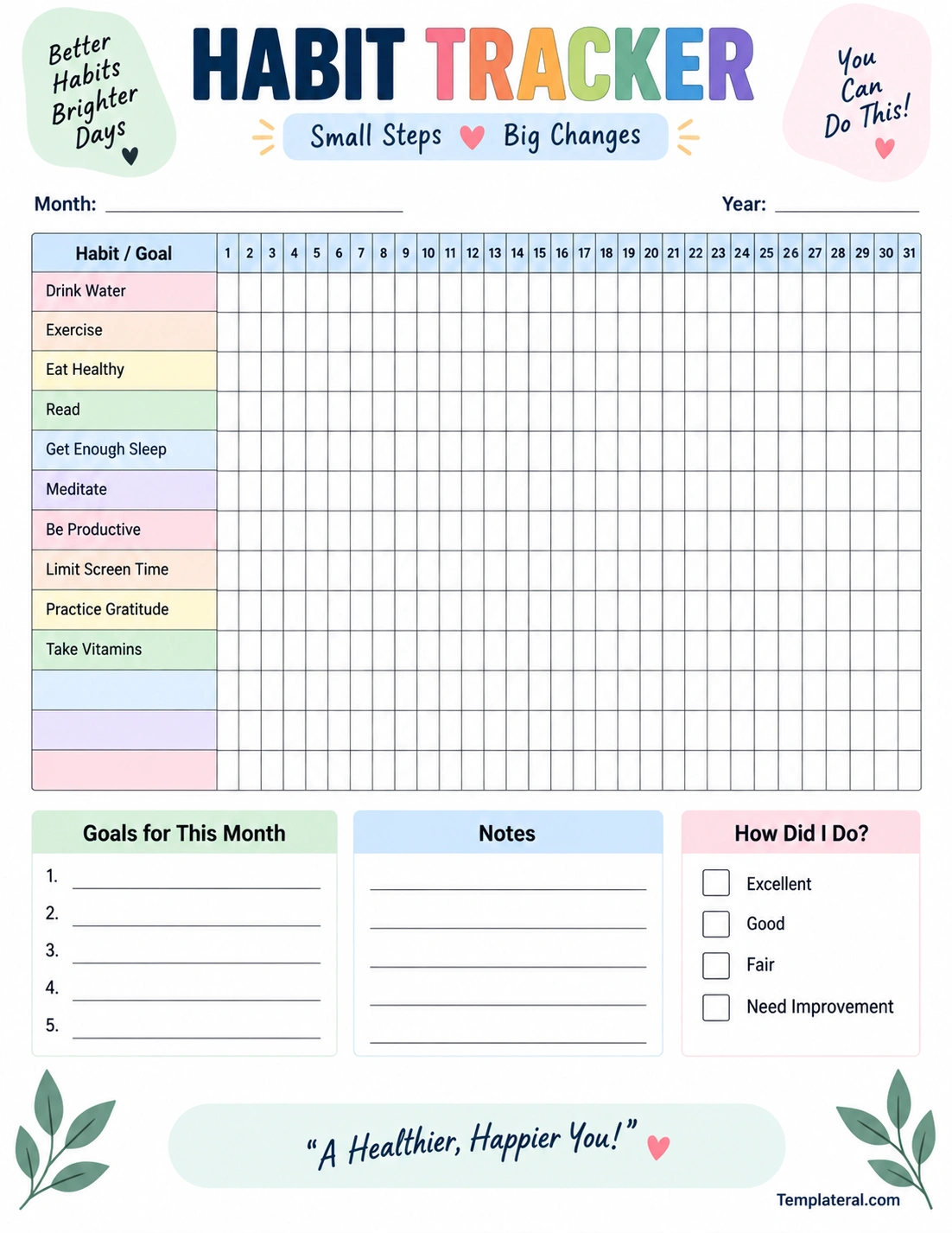
The printable template shown above includes a daily grid covering days 1 through 31, allowing it to work for different months. It also includes space for monthly goals, notes, and a simple self-review section.
You can customize the blank habit rows with your own goals. For example, you could replace the suggested habits with studying, writing, practicing an instrument, completing household tasks, or another behavior that matters to you.
Habit Tracker Ideas for Different Goals
For Students
Students can track study sessions, reading, homework completion, revision, exercise, sleep, or preparation for upcoming assignments.
For Work and Productivity
A productivity habit tracker can focus on completing priority tasks, limiting distractions, planning the next day, organizing email, or dedicating time to important projects.
For Personal Growth
Personal development tracking might include reading, journaling, practicing a skill, learning something new, or spending time on a creative activity.
For Daily Routines
A routine tracker can help organize simple activities such as making the bed, tidying a workspace, preparing for the next day, exercising, or following a regular bedtime routine.
Common Habit Tracking Mistakes
Even a simple tracker can become ineffective if it is used in an overly complicated way. Avoid turning the worksheet into a source of unnecessary pressure.
- Tracking too many habits: A long list can become difficult to maintain.
- Choosing vague goals: Make each habit measurable.
- Expecting perfection: Occasional missed days are normal.
- Ignoring the data: Review your tracker to learn what patterns are emerging.
- Making tracking complicated: A simple check mark is often enough.
Final Thoughts
A habit tracker provides a simple way to turn daily actions into visible progress. By recording habits consistently, you can see patterns, evaluate your routine, and make small adjustments that support your larger goals.
You do not need an elaborate productivity system to get started. A printable habit tracker, a few meaningful habits, and a few minutes of daily attention can provide a practical foundation for building more consistent routines.
Choose habits that matter to you, keep the system simple, and use your monthly results as information rather than judgment. Over time, the small marks on a habit tracking worksheet can become a useful record of your progress.
Download: Habit Tracker Template
