A classroom behavior chart can help teachers create clear expectations, encourage positive behavior, and give students a simple way to understand their daily progress. When designed thoughtfully, a behavior chart can become a useful classroom management tool without making students feel overwhelmed or singled out.
Instead of relying only on verbal reminders, teachers can use a printable behavior chart to establish specific goals such as following directions, staying on task, using kind words, and respecting classmates. The chart can then provide a simple visual record of progress throughout the school week.
Whether you teach kindergarten, elementary school, or another grade level, a classroom behavior chart can be customized to match your students, routines, and classroom expectations.
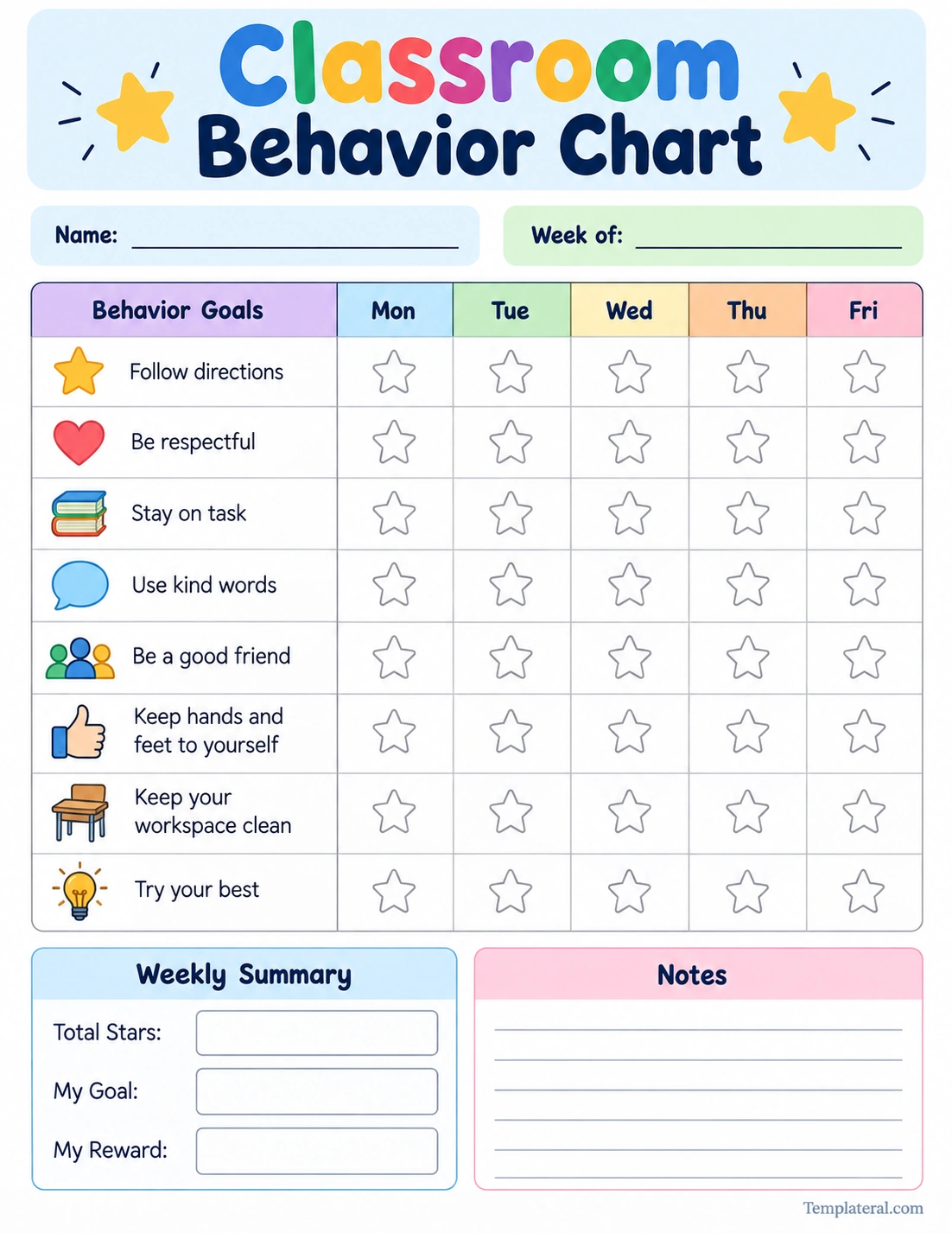
This printable classroom behavior chart template provides a simple weekly format with behavior goals, weekday tracking, a summary section, and space for notes.
What Is a Classroom Behavior Chart?
A classroom behavior chart is a visual classroom management tool used to track specific behaviors or behavior goals over a period of time. Teachers can use it to recognize positive actions, reinforce classroom expectations, and help students understand what behaviors are expected during the school day.
A behavior chart may use stars, check marks, colors, points, stickers, or other simple symbols. The format can range from an individual student chart to a classroom-wide behavior tracker.
The most effective charts focus on clear, observable behaviors rather than vague descriptions. For example, “follow directions” is easier for a student to understand than a general instruction such as “behave well.”
Why Use a Classroom Behavior Chart?
Classroom behavior charts can support a structured learning environment by making expectations visible and easier to discuss. They can also give teachers a consistent way to recognize progress.
Make Expectations Clear
Students are more likely to understand a classroom expectation when it is specific. A behavior chart can list goals such as listening when someone is speaking, completing assignments, keeping hands to yourself, and using respectful language.
Encourage Positive Behavior
A chart can be designed to focus on behaviors students are doing well. For example, a teacher may give a star when a student demonstrates a particular positive behavior.
This creates an opportunity to recognize effort and progress instead of focusing exclusively on mistakes.
Track Progress
A weekly behavior chart gives teachers and students a simple visual record. Reviewing the chart can help identify patterns and provide opportunities to discuss progress.
Support Classroom Routines
When behavior goals are connected to everyday classroom routines, students can become more familiar with what is expected during different parts of the school day.
What Should Be Included in a Classroom Behavior Chart?
A useful classroom behavior chart does not need to be complicated. The most important elements are clear goals, a simple tracking method, and enough space to record progress.
Student Name and Date
For an individual chart, include a space for the student’s name and the week or date being tracked. This makes it easier to organize charts when they are used regularly.
Specific Behavior Goals
Choose behaviors that are observable and easy to understand. Common classroom behavior goals include:
- Follow directions
- Be respectful
- Stay on task
- Use kind words
- Be a good friend
- Keep hands and feet to yourself
- Keep the workspace clean
- Try your best
Daily Tracking Areas
A weekly classroom behavior chart can include columns for Monday through Friday. Teachers can use check marks, stars, initials, or another consistent method to record progress.
Notes Section
A notes section gives teachers space to record observations, positive accomplishments, areas for improvement, or topics to discuss with parents or guardians.
Weekly Summary
A summary area can provide a quick overview of the student’s progress. Depending on the classroom system, it might include total points, stars earned, goals, or a short reflection.
How to Use a Classroom Behavior Chart
The value of a behavior chart comes from how it is introduced and used. A chart should support classroom expectations rather than become a source of unnecessary pressure.
1. Explain the Purpose
Before using the chart, explain what it is for and how it works. Students should understand that the chart is designed to help them recognize and practice positive classroom behaviors.
2. Choose a Few Clear Goals
Avoid creating an overwhelming list of expectations. Select a manageable number of behaviors that are especially relevant to your classroom.
3. Define Each Behavior
Explain what each behavior looks like in practice. For example, “stay on task” might mean beginning an assignment promptly, working during independent work time, and asking for help when needed.
4. Track Consistently
Use the same tracking method throughout the week. Consistency helps students understand how the system works and makes the information more meaningful.
5. Review Progress
Take time to discuss progress with students when appropriate. Ask what went well, what was difficult, and what goal they would like to work on next.
Classroom Behavior Chart Ideas
There are many ways to design a behavior chart. The best format depends on the age of the students, classroom environment, and purpose of the chart.
Weekly Behavior Chart
A weekly behavior chart tracks progress from Monday through Friday. This format works well for teachers who want a simple overview of behavior goals throughout the school week.
Daily Behavior Chart
A daily chart can divide the school day into sections such as morning work, reading, math, lunch, recess, and afternoon activities. This allows teachers to identify when certain behaviors occur.
Positive Behavior Chart
A positive behavior chart focuses primarily on recognizing appropriate actions. Instead of recording every problem, the teacher can use stars, check marks, or positive notes to recognize progress.
Behavior Goal Chart
A behavior goal chart allows students to work toward one or more specific objectives. This can be useful when a student needs additional support with a particular classroom routine.
Individual Student Behavior Chart
An individual chart provides more personalized tracking. It can be adapted to a student’s specific goals and reviewed privately with the student.
Tips for Creating an Effective Behavior Chart
A classroom behavior chart should be easy to understand and practical to use. These tips can help you create a system that fits naturally into your classroom routine.
- Keep the language simple. Use words students can understand.
- Focus on observable behaviors. Describe actions rather than personality traits.
- Use positive language. Explain what students should do rather than only what they should avoid.
- Keep the chart visually simple. Too many colors, categories, or tracking rules can make it difficult to use.
- Be consistent. Apply the same expectations and tracking method throughout the week.
- Allow room for individual needs. Not every student will respond to the same system.
- Review the chart regularly. Use the information to support conversations and classroom planning.
Using Positive Reinforcement With a Behavior Chart
Positive reinforcement can be incorporated into a classroom behavior system by recognizing students when they demonstrate desired behaviors.
For example, a teacher might acknowledge a student for following directions promptly, helping a classmate, completing work independently, or using respectful language.
Recognition does not always need to involve a physical reward. A positive comment, note, classroom privilege, or opportunity to celebrate progress may also be meaningful depending on the classroom and school policies.
The goal is to make the desired behavior clear and reinforce the connection between the student’s actions and the classroom expectations.
Classroom Behavior Chart vs. Behavior Checklist
A classroom behavior chart and a behavior checklist are similar but can serve different purposes.
A behavior checklist generally provides a list of behaviors that can be marked when completed or observed. A classroom behavior chart often adds a time period, progress-tracking system, or visual representation of behavior.
For example, a checklist might contain five classroom expectations. A weekly behavior chart could allow the teacher to track those five expectations across Monday through Friday.
Both tools can be useful. Choose the format that is easiest to maintain and best matches your classroom management goals.
Benefits of a Printable Classroom Behavior Chart
A printable behavior chart has several practical advantages for teachers.
Easy to Prepare
A printable template can be prepared quickly without requiring a complicated digital system.
Simple to Customize
Teachers can print the chart and add student names, classroom-specific goals, notes, or other information as needed.
Easy to Review
Physical charts can be collected and reviewed at the end of the week. They can also provide a simple record for teacher planning and student discussions.
Useful for Different Grade Levels
A basic behavior chart can be adapted for preschool, kindergarten, elementary school, and other educational settings by changing the language and tracking method.
How to Avoid Common Behavior Chart Problems
Although behavior charts can be useful, the way they are implemented matters. A poorly designed system can create confusion or make students feel embarrassed.
Avoid Public Shaming
Consider using individual charts privately rather than publicly displaying a student’s behavior record. The purpose should be to support learning and positive behavior, not embarrass students.
Do Not Make the System Too Complicated
If a chart takes too much time to update, it may become difficult to maintain. Keep the tracking process quick and straightforward.
Avoid Vague Expectations
Terms such as “good behavior” can mean different things to different students. Specific expectations are easier to explain, observe, and discuss.
Do Not Rely on One Strategy for Every Student
Students have different needs and respond differently to classroom management strategies. A behavior chart should be one tool within a broader approach to classroom routines and student support.
How Parents Can Use Behavior Charts at Home
The same principles can sometimes be adapted for home use. Parents may create a simple behavior tracker for routines such as completing homework, following household rules, using respectful language, or helping with age-appropriate responsibilities.
When a chart is used at home, keep expectations realistic and focus on specific behaviors. It can also be helpful to involve children in selecting goals so they understand what they are working toward.
Frequently Asked Questions About Classroom Behavior Charts
What is the purpose of a classroom behavior chart?
The purpose of a classroom behavior chart is to make behavior expectations visible and provide a simple way to track progress toward specific classroom goals. It can also support positive reinforcement and teacher-student discussions.
What behaviors should be included on a classroom behavior chart?
Common behaviors include following directions, staying on task, being respectful, using kind words, keeping hands and feet to oneself, keeping a workspace clean, and trying one’s best. The behaviors should be specific and appropriate for the students’ age.
Should classroom behavior charts be displayed publicly?
Not necessarily. Individual behavior information can be kept private to avoid embarrassment or public comparison. Teachers can use individual charts and discuss progress privately with students when appropriate.
How often should a classroom behavior chart be updated?
A chart can be updated daily, during specific classroom periods, or at another interval that fits the teacher’s routine. A weekly chart is a simple option because it provides a manageable period for tracking and review.
Can I customize a classroom behavior chart?
Yes. A printable classroom behavior chart can be customized with different behavior goals, tracking symbols, dates, student information, and reward or reflection sections.
Are behavior charts appropriate for every student?
Not necessarily. Students have different needs, and classroom management strategies should be adapted accordingly. A behavior chart can be one tool among several approaches used to support positive classroom behavior.
Conclusion
A classroom behavior chart can provide a simple and visual way to communicate classroom expectations, recognize positive behavior, and track progress throughout the school week. When the goals are clear and the tracking system is easy to use, the chart can fit naturally into a teacher’s classroom management routine.
For the best results, focus on specific and observable behaviors, use positive language, review progress regularly, and adapt the system to individual student needs. A printable classroom behavior chart can then become a practical resource for building consistent routines and encouraging students to develop positive classroom habits.
Download: Classroom Behavior Chart Template
