An Air Force Biography provides a clear overview of an individual’s military career, professional achievements, education, assignments, and contributions to the United States Air Force. It helps readers understand an airman’s background, responsibilities, qualifications, and experience in military service.
Whether you are preparing an officer biography, creating a military profile, or looking for an Air Force Biography example, a well-organized biography makes important career information easy to understand. The best biographies use accurate details, concise language, and a professional tone.
In this guide, you will learn what an Air Force Biography should include, how to organize the information, and how to create a polished military career summary. You will also find a sample biography and practical tips for writing a credible and informative profile.
What Is an Air Force Biography?
An Air Force Biography is a professional summary of an individual’s background and career in the Air Force. It typically highlights military rank, specialty, education, assignments, leadership experience, awards, and notable accomplishments.
Military biographies may be used on official unit websites, leadership pages, event programs, professional introductions, and other publications. The exact format depends on the purpose of the biography and the organization’s requirements.
Unlike a traditional resume, which often emphasizes employment history and job qualifications, an Air Force bio focuses on military service, professional development, leadership responsibilities, and contributions to the mission.
What to Include in an Air Force Biography
A strong Air Force Biography presents relevant information in a logical order. Although formats vary, the following sections provide a useful starting point.
1. Personal Information and Military Rank
Begin with the individual’s name, current rank, career field, and current assignment when appropriate. Include only personal information that is necessary for the intended audience and authorized for publication.
- Full name: The person’s official or preferred professional name.
- Military rank: The current rank or appropriate rank for the publication.
- Specialty: The person’s military occupational field or professional role.
- Unit or organization: The relevant squadron, group, wing, or other assignment.
- Duty location: Include only when relevant and approved for release.
2. Professional Summary
The professional summary introduces the individual’s experience, responsibilities, and areas of expertise. It should communicate the person’s professional background without relying on vague statements or exaggerated claims.
For example, an officer biography might highlight aviation experience, operational planning, personnel leadership, training, or mission support. Choose details that accurately reflect the individual’s actual duties and accomplishments.
3. Education and Military Training
Education and training demonstrate professional development and technical preparation. Include relevant degrees, military schools, specialized courses, and professional qualifications when appropriate.
- Academic degrees and institutions.
- Officer training or enlisted professional military education.
- Technical schools and career-specific courses.
- Advanced training or recognized professional qualifications.
List qualifications accurately and follow any official formatting requirements. Avoid including unfinished programs as completed credentials.
4. Assignments and Career History
Assignments show how an individual’s career has developed over time. Present relevant positions in chronological order, using dates, unit names, duty titles, and locations when disclosure is appropriate.
For each assignment, explain the person’s role and responsibilities. Where possible, identify meaningful achievements that demonstrate leadership, operational experience, technical expertise, or support for the mission.
5. Awards and Decorations
Military awards and decorations can help document recognized service and accomplishments. Include only awards that the individual has actually received and use the correct official names.
Follow applicable guidance for listing decorations, badges, and other recognitions. Do not imply that a person received an award simply because it is common within a particular career field.
6. Leadership and Professional Achievements
A compelling Air Force Biography goes beyond a list of positions. It explains how the individual’s experience contributed to a team, unit, training program, or mission.
Useful examples may include leading a team, improving a training process, supporting mission readiness, mentoring junior personnel, or contributing to an authorized operational objective. Describe achievements accurately and avoid disclosing classified, controlled, or otherwise sensitive information.
Air Force Biography Example
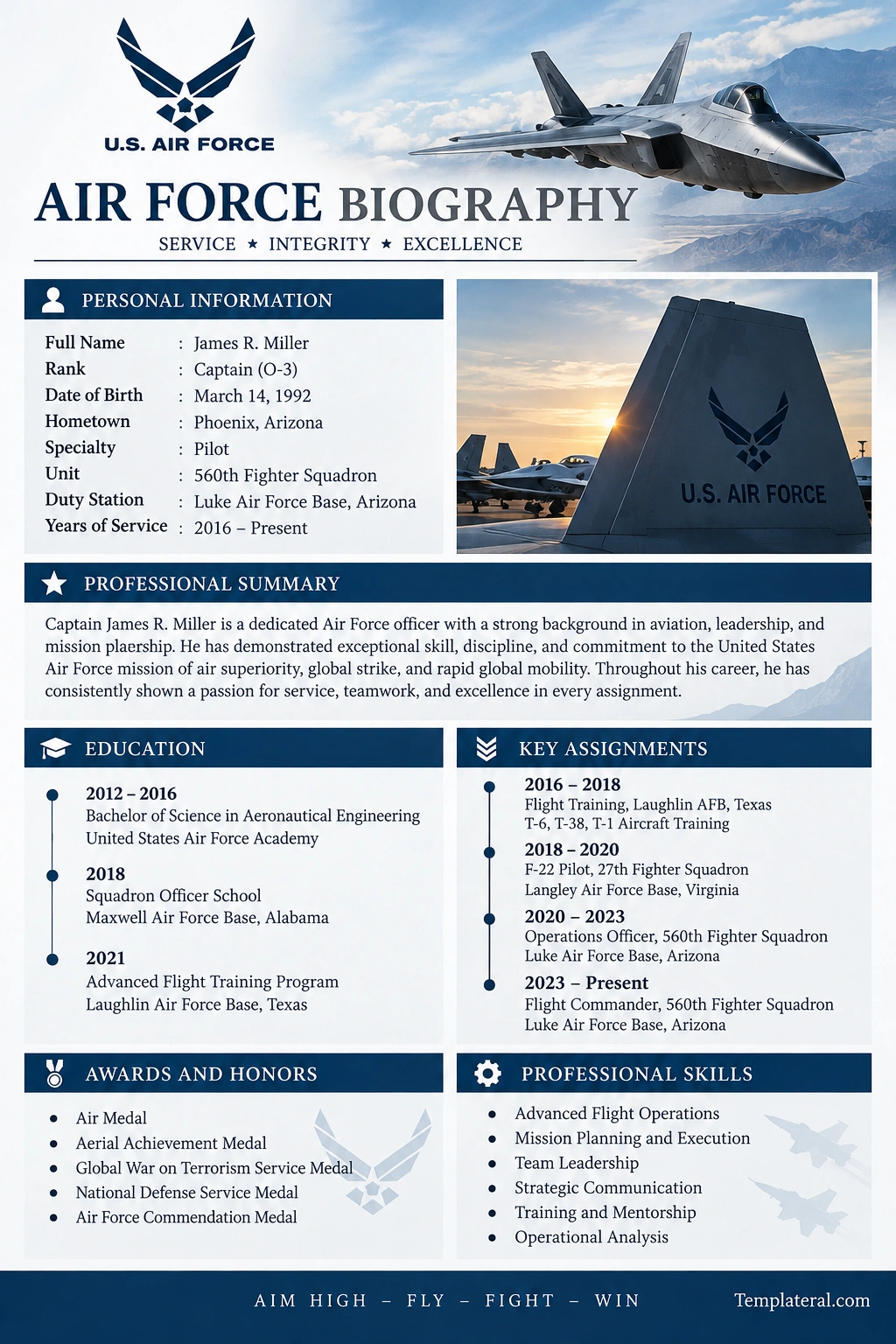
The following fictional example illustrates how a military biography can combine professional experience, education, assignments, and leadership. It is a writing example, not an official military record or a verified biography.
Sample Officer Biography
Captain James R. Miller — Fictional Example
Professional Background: Captain James R. Miller is a fictional Air Force officer with experience in aviation operations, mission planning, team leadership, and professional training. His career summary emphasizes operational knowledge, disciplined decision-making, and a commitment to supporting organizational objectives.
Education and Training: In this illustrative profile, Miller completed a bachelor’s degree in aeronautical engineering and attended relevant military training programs. These qualifications provide an example of how academic preparation and professional development may be summarized.
Career Assignments: His fictional career history includes flight training, an operational squadron assignment, and a leadership position. Each entry would normally identify the applicable dates, unit, duty title, and location, subject to official publication requirements.
Professional Achievements: The sample highlights team coordination, training support, mission planning, and operational readiness as areas of professional responsibility. Actual achievements should be added only when supported by verified records.
This sample demonstrates the structure of an Air Force officer biography. When preparing a real profile, replace every fictional detail with accurate, authorized information.
How to Write an Air Force Biography Step by Step
Step 1: Identify the Purpose
Decide where the biography will appear and who will read it. An official leadership page may require a formal third-person narrative, while an event introduction may need only a short professional summary.
Check whether the organization provides an approved biography template, style guide, or submission requirements before drafting the content.
Step 2: Gather Verified Information
Collect the necessary career details before writing. Use reliable records and confirm dates, ranks, job titles, education, awards, and assignments. Verify spelling and official terminology to prevent avoidable errors.
Step 3: Organize the Career Timeline
Arrange assignments and qualifications in a consistent chronological order. Make sure the timeline is easy to follow and does not contain unexplained gaps or conflicting dates.
For a narrative biography, begin with the current role and summarize earlier career milestones in a logical sequence. For a structured profile, use clearly labeled sections.
Step 4: Highlight Relevant Accomplishments
Select accomplishments that support the purpose of the biography. Strong details explain the individual’s contribution rather than simply stating that the person is dedicated or hardworking.
Whenever possible, use verified outcomes, responsibilities, or examples of leadership. Do not invent statistics, operational results, commendations, or career milestones to make the profile appear more impressive.
Step 5: Write in a Professional Tone
Use clear, direct sentences and a consistent point of view. Many official biographies use third-person language, such as “Captain Miller serves as…” or “Major Smith previously held…” Follow the publication’s specific style requirements.
Avoid unnecessary jargon, overly long paragraphs, informal expressions, and repeated descriptions of the same achievement.
Step 6: Review Accuracy and Security
Before publishing, confirm that the biography follows applicable release, privacy, and information-security requirements. Do not include classified details, sensitive operational information, personal contact details, or other restricted material.
Ask the appropriate supervisor, public affairs representative, or designated reviewer to approve the content when required.
Tips for Creating a Professional Air Force Bio
Use the following practices to improve clarity, consistency, and credibility.
- Keep the information relevant: Focus on details that help readers understand the person’s service and professional qualifications.
- Use accurate military terminology: Confirm ranks, unit names, career fields, and award titles before publication.
- Maintain consistent formatting: Use the same date style, heading format, and punctuation throughout the biography.
- Prioritize significant achievements: Include the most relevant contributions instead of listing every routine duty.
- Protect sensitive information: Share only information authorized for the intended audience.
- Proofread carefully: Check names, dates, grammar, spelling, and abbreviations.
- Follow official guidance: Use the prescribed format when preparing an official Air Force biography.
Air Force Biography Template: A Simple Structure
If you need a starting point, use the following outline to organize the information before turning it into a finished biography.
- Name and rank: Identify the individual using the approved professional designation.
- Current position: State the current role, unit, or organization when authorized.
- Career overview: Summarize relevant experience and professional specialties.
- Education and training: List applicable degrees, schools, and qualifications.
- Previous assignments: Summarize significant roles and career milestones.
- Awards and achievements: Include verified recognitions and contributions.
- Closing summary: End with a concise statement about professional experience or current responsibilities.
This outline is a general writing aid rather than an official U.S. Air Force form. Always use the required format when submitting a biography for an official purpose.
Frequently Asked Questions About Air Force Biography
What is an Air Force Biography?
An Air Force Biography is a professional account of an individual’s military career, including relevant assignments, education, training, leadership responsibilities, awards, and accomplishments.
How long should an Air Force Biography be?
The ideal length depends on the intended use. A short introduction may require only one paragraph, while an official profile may include several paragraphs or structured sections. Follow the organization’s word limit or submission guidelines whenever available.
What should an Air Force officer biography include?
An Air Force officer biography commonly includes the officer’s name, rank, current position, career background, education, significant assignments, leadership experience, and verified awards. The required details vary by publication and purpose.
Can I use an Air Force Biography template?
Yes. A template can help organize personal details, career history, education, awards, and professional achievements. However, a general template should not replace an official format when one is required.
Should an Air Force Biography be written in first person or third person?
Third person is common for formal professional biographies because it creates a consistent, objective tone. However, the correct choice depends on the intended audience and publication requirements.
Can I include awards and military decorations?
Yes, when they are relevant and accurately documented. Use the correct names and follow applicable rules for displaying awards and decorations. Never list an award that the individual has not received.
Is an Air Force Biography the same as a military resume?
No. A biography is generally a narrative summary of a person’s background and career. A military resume is typically organized around qualifications, experience, and skills for a specific application or professional opportunity.
Can I publish an Air Force Biography online?
You can publish a biography when you have the necessary authorization and the content complies with applicable privacy, security, and public-release requirements. Official military profiles should follow the relevant organization’s review process.
Conclusion
A professional Air Force Biography helps readers understand an individual’s military background, education, assignments, leadership experience, and career achievements. By organizing verified information into clear sections, you can create a profile that is informative, credible, and easy to read.
Start by identifying the purpose of the biography, gathering accurate career details, and highlighting the most relevant accomplishments. Then review the language, formatting, and information-security requirements before publication.
Whether you are preparing an Air Force officer biography, developing a military career profile, or using an Air Force Biography example as a reference, a clear structure and accurate details will help you create a professional result.
Download: Air Force Biography template
