Keeping track of bills can be challenging when you have multiple due dates, payment amounts, and recurring expenses to remember each month. A simple Bill Pay Checklist can make the process easier by giving you one place to record upcoming payments and check them off when they are complete.
Whether you are managing household bills, personal expenses, subscriptions, or recurring services, a bill payment checklist can help you create a consistent monthly routine. Instead of relying on memory, you can use a simple worksheet to see what needs to be paid and what has already been completed.
A printable Bill Pay Checklist is especially useful if you prefer a straightforward system that you can keep on your desk, inside a planner, or with your monthly paperwork.
What Is a Bill Pay Checklist?
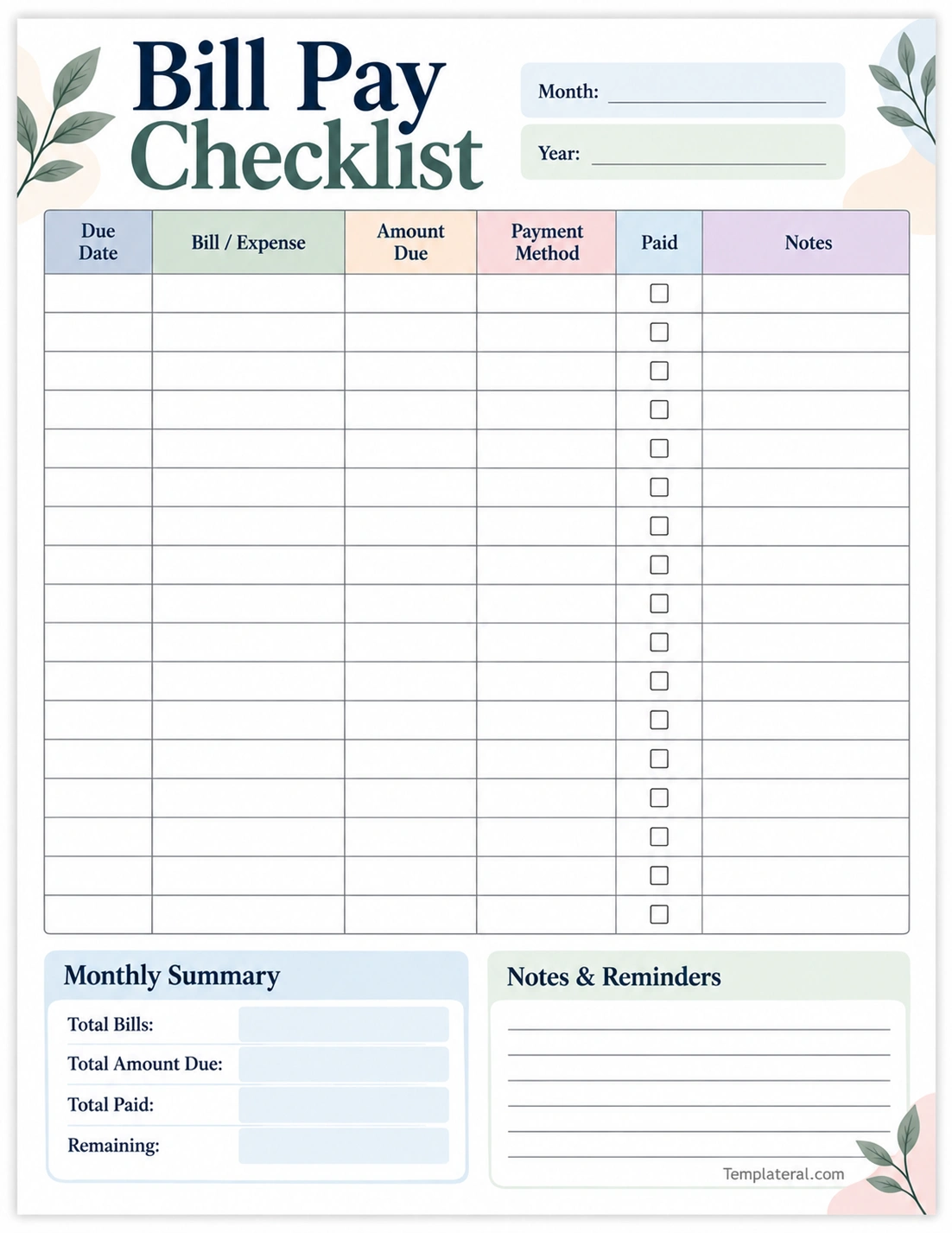
A Bill Pay Checklist is a simple list or worksheet used to track bills that need to be paid during a specific period. It typically includes information such as the bill name, due date, amount due, payment method, and payment status.
The main purpose is to create a clear visual record of your regular payments. Instead of checking different statements or trying to remember which bills have already been paid, you can review one checklist throughout the month.
A typical bill payment checklist may include:
- Bill or expense: The name of the payment.
- Due date: The date the payment is expected.
- Amount due: The expected payment amount.
- Payment method: How the bill will be paid.
- Paid status: A checkbox or mark showing that payment is complete.
- Notes: Space for reminders or payment details.
Why Use a Bill Pay Checklist?
A checklist can turn monthly bill management into a simple routine. The goal is not to create a complicated financial system but to make important payment information easier to see and review.
Keep Bill Due Dates Organized
Different bills often have different due dates. A checklist lets you record those dates together so you can see upcoming payments at a glance.
This is particularly helpful when several bills are due during the same week. Having them listed in one place makes it easier to review your payment schedule before the due dates arrive.
Track Which Bills Have Been Paid
One of the simplest benefits of a bill checklist is the ability to mark payments as complete. Once a bill has been paid, check the corresponding box or update its status.
This prevents confusion when you have several similar payments during the month and are no longer sure which ones have already been handled.
Create a Consistent Monthly Routine
A bill payment checklist can become part of your regular monthly routine. You can prepare a new checklist at the beginning of each month, add your recurring bills, and update the list as payments are completed.
Over time, this simple habit can make bill tracking feel more manageable and predictable.
What Should Be Included on a Bill Pay Checklist?
A useful checklist does not need to contain dozens of fields. The best format includes the information that helps you make and track your payments.
Bill Name
Start with the name of the bill or expense. Examples include rent, electricity, water, internet, insurance, memberships, and subscriptions.
Due Date
Record the date each payment is due. You can organize your list chronologically so the bills with the earliest due dates appear first.
Amount Due
Enter the expected amount for each bill. Fixed expenses are generally easy to record, while variable bills can be entered using an estimated amount until the current statement is available.
Payment Method
Recording the payment method can make your checklist more useful. You might note whether a bill is paid by bank transfer, automatic payment, debit account, or another method.
Paid Checkbox
A dedicated checkbox gives you a quick way to confirm that a payment has been completed. Checking off each bill can also provide a clear sense of progress as you work through the monthly list.
Notes and Reminders
The notes section can be used for information such as billing changes, confirmation details, unusual charges, or reminders to review a particular account.
How to Use a Bill Pay Checklist
Using a Bill Pay Checklist is simple. The most important part is to keep the information current and review it regularly.
1. List Your Recurring Bills
Begin by writing down your regular monthly bills. Review previous statements, subscriptions, and household expenses so you can create a complete list.
Common examples include:
- Rent or housing payments
- Electricity and other utilities
- Internet and phone services
- Insurance payments
- Streaming subscriptions
- Memberships
- Other recurring household expenses
2. Add the Due Dates
Enter the due date for every bill. If possible, arrange the checklist from the earliest due date to the latest. This makes the worksheet easier to scan throughout the month.
3. Record the Expected Amount
Add the amount you expect to pay. If the amount changes from month to month, use the most recent statement or an estimate and update it when the actual bill arrives.
4. Check Your Payment Method
Record how each bill is normally paid. This can help you remember which payments require manual action and which ones are scheduled automatically.
5. Mark Each Bill as Paid
After completing a payment, immediately mark it as paid on your checklist. Updating the worksheet right away reduces the chance of forgetting whether a particular payment has been completed.
6. Review the Checklist
At the end of the month, review your completed checklist. Check for bills that were higher or lower than expected and note any recurring expenses that may need attention in the following month.
Tips for Using a Monthly Bill Checklist
A checklist works best when it is easy to maintain. A few simple habits can make your bill tracking system more effective.
- Keep your checklist in one consistent location. Choose a place where you will see it regularly.
- Update it when something changes. Add new recurring expenses and change amounts or due dates when necessary.
- Review upcoming payments early. Do not wait until the due date to check your list.
- Mark payments immediately. Update the paid status as soon as a payment is completed.
- Use reminders when needed. Calendar alerts can complement your physical checklist.
- Keep completed checklists if useful. Previous worksheets can help you review recurring expenses and identify changes over time.
Printable Bill Pay Checklist vs. Digital Bill Tracker
There are several ways to track bills, and both printable and digital systems can be useful.
A printable Bill Pay Checklist provides a physical overview of your monthly payments. It is useful for people who prefer handwriting information or want a worksheet they can keep with their household documents.
A digital bill tracker can be convenient when you regularly manage expenses from a phone or computer. Digital tools may also provide features such as automatic calculations, notifications, recurring entries, and searchable records.
You can also combine the two approaches. For example, a printable checklist can provide your monthly overview while digital reminders alert you when important payment dates are approaching.
How to Organize Bills by Due Date
Organizing bills by due date is one of the easiest ways to make a payment checklist easier to use. Start with bills that are due at the beginning of the month and continue through the final due dates.
If you have many recurring expenses, you can also group them by week. This gives you a simple view of which payments are coming up without having to review the entire month at once.
Another option is to highlight or mark bills that require manual payment. Automatic payments can remain on the checklist for recordkeeping, but manually paid bills may need additional attention before their due dates.
How a Bill Pay Checklist Can Support a Budget
A bill checklist and a budget serve different purposes, but they can work together. A budget provides a broader view of income, spending, savings, and financial goals, while a bill checklist focuses specifically on scheduled payments.
Recording expected bill amounts can help you see how much of your monthly money is committed to recurring expenses. This information can then be considered when planning other spending and savings categories.
For example, reviewing your checklist at the beginning of the month can help you identify the total amount of regular bills you expect to pay. You can then use that information as part of your broader monthly budget planning.
Who Can Benefit From a Bill Pay Checklist?
A Bill Pay Checklist can be useful for anyone who wants a simple way to organize recurring payments.
- Families: Track household bills and recurring expenses in one place.
- Couples: Maintain a shared overview of household payments.
- Students: Organize rent, utilities, subscriptions, and other regular expenses.
- Renters: Keep housing-related and recurring bills easy to review.
- Homeowners: Track utilities, insurance, services, and other household expenses.
- Busy professionals: Use a simple checklist to reduce the need to remember multiple payment dates.
Frequently Asked Questions About Bill Pay Checklists
What is a Bill Pay Checklist?
A Bill Pay Checklist is a list or worksheet used to organize bills, due dates, payment amounts, and payment status. It provides a simple way to see which bills need to be paid and which payments have already been completed.
How do I make a bill payment checklist?
Start by listing your recurring bills and adding the due date, expected amount, payment method, and payment status for each one. You can use a printable worksheet, spreadsheet, planner, or digital bill tracker.
What bills should I put on my checklist?
Include regular payments that you need to track, such as rent, utilities, insurance, internet, phone services, subscriptions, memberships, and other recurring household expenses.
Should I organize my bill checklist by due date?
Yes. Organizing bills by due date can make the checklist easier to review. You can place the earliest payments first so upcoming bills are immediately visible.
Can I use a printable Bill Pay Checklist every month?
Yes. A printable checklist can be used as a monthly worksheet. You can create a new copy each month and update recurring bills, amounts, and due dates as needed.
What is the difference between a bill checklist and a budget planner?
A bill checklist focuses on payments, due dates, and payment status. A budget planner covers a broader financial picture, which may include income, spending categories, savings, and financial goals.
Can a Bill Pay Checklist help prevent missed payments?
A checklist can make upcoming bills more visible and provide a clear way to track payment status. It works best when combined with regular reviews and, when appropriate, calendar or account reminders.
Final Thoughts
A Bill Pay Checklist provides a simple way to organize monthly payments without creating a complicated system. By recording bill names, due dates, amounts, payment methods, and payment status, you can create a clear overview of your recurring expenses.
The key is consistency. Review your checklist regularly, update it when bills change, and mark payments as soon as they are completed. Whether you prefer a printable worksheet or a digital bill tracker, a simple and repeatable system can make monthly bill management easier to handle.
Download: Bill Pay Checklist Template
