A smiley face behavior chart is a simple visual tool that helps children understand behavior expectations and recognize their progress. Instead of relying on complicated points or lengthy explanations, this type of behavior chart uses familiar facial expressions to make daily behavior tracking easy to understand.
Teachers and parents can use a smiley face behavior chart to track goals such as following directions, staying on task, using kind words, being respectful, and trying their best. The simple visual format can be especially useful for younger children who respond well to clear symbols and straightforward feedback.
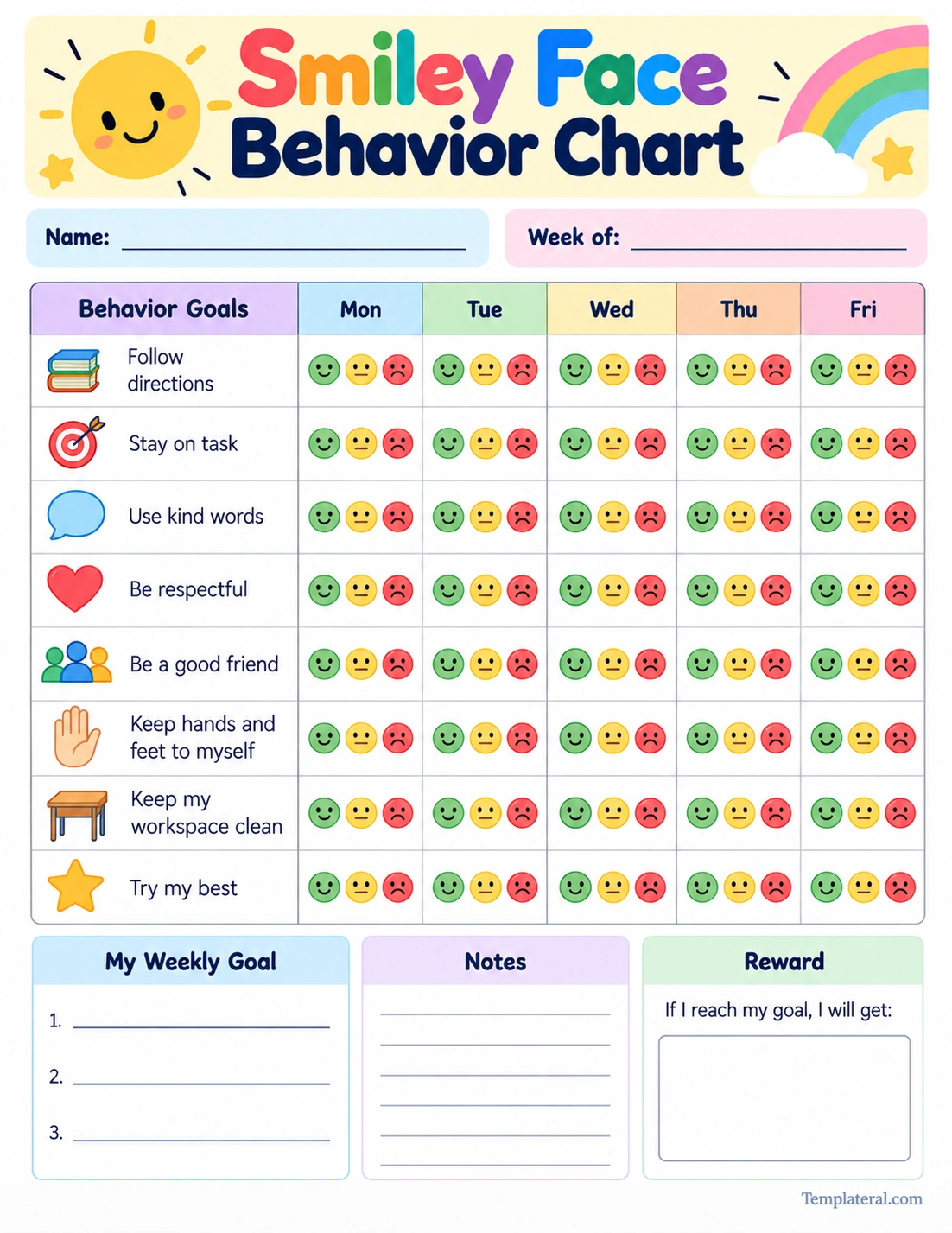
A printable smiley face behavior chart can also make behavior tracking easier to organize. The template below provides behavior goals, Monday-through-Friday tracking, weekly goals, notes, and a reward section.
What Is a Smiley Face Behavior Chart?
A smiley face behavior chart is a visual behavior tracking worksheet that uses facial expressions to represent progress toward specific behavior goals. A typical chart may include a happy face for meeting an expectation, a neutral face for partial progress, and a sad face for behavior that needs more attention.
The purpose is to make behavior feedback more concrete and understandable. Children can quickly recognize the difference between the facial expressions without having to interpret complicated numbers or written ratings.
A smiley face chart can be used at school, at home, or in other settings where children are learning routines and appropriate behavior.
Why Use a Smiley Face Behavior Chart?
Visual behavior charts can provide children with an easy-to-understand way to connect their actions with specific expectations. A smiley face behavior chart adds a familiar visual element that can make the tracking process more accessible.
Make Behavior Expectations Clear
A chart can turn broad expectations into specific goals. Instead of simply telling a child to “behave,” a teacher can identify actions such as following directions, staying on task, or using kind words.
Provide Simple Visual Feedback
Facial expressions are easy for many young children to recognize. A smiley face can communicate positive progress quickly, while a neutral or sad face can indicate that a goal needs additional attention.
Encourage Positive Behavior
The chart can focus on recognizing behaviors that children are practicing successfully. Positive feedback can help reinforce classroom routines and expectations.
Support Daily Reflection
At the end of the day, children can review their smiley faces and think about what went well. Older elementary students can also identify one behavior they want to improve.
Make Communication Easier
A completed behavior chart can provide a simple starting point for teacher-student or parent-child conversations. Instead of discussing behavior only in general terms, adults can refer to specific goals recorded on the chart.
How Does a Smiley Face Behavior Chart Work?
A basic chart usually contains several behavior goals and a tracking area for each day or activity period. The adult or child selects the appropriate facial expression based on how the behavior goal was met.
For example, a chart might use:
- Happy face: The behavior goal was met.
- Neutral face: The child made some progress but needs more practice.
- Sad face: The behavior goal was not met or needs additional support.
The exact meaning of each face should be explained before the chart is used. Teachers and parents may also choose different symbols if they better match the child’s age or needs.
What Should Be Included in a Smiley Face Behavior Chart?
A useful behavior chart does not need to contain many elements. A few clearly defined sections can make it practical and easy to use.
Student Name and Date
Include a space for the child’s name and the week or date being tracked. This is particularly helpful when teachers use individual charts for several students.
Behavior Goals
Select a manageable number of specific behaviors. Examples include:
- Follow directions
- Stay on task
- Use kind words
- Be respectful
- Be a good friend
- Keep hands and feet to myself
- Keep my workspace clean
- Try my best
Daily Tracking
A Monday-through-Friday layout can show how a child progresses across the school week. Each behavior can have a smiley face, neutral face, or sad face for each day.
Weekly Goal
A weekly goal section gives the child a clear target to work toward. Keep the goal realistic and connected to one or two important behaviors.
Notes
A notes section allows teachers or parents to record brief observations, achievements, challenges, or other useful information.
Reward or Recognition
An optional reward section can be used when a classroom or family already has an appropriate recognition system. Rewards are not required for a behavior chart to be useful.
How to Use a Smiley Face Behavior Chart
Introducing the chart properly can help children understand that it is a tool for learning and reflection rather than simply a way to record mistakes.
1. Choose a Few Behavior Goals
Start with two to five goals that are most relevant to the child. Tracking too many behaviors can make the chart confusing.
2. Explain the Facial Expressions
Before using the chart, explain what each face means. For example, a happy face can mean the child met the expectation, while a neutral face means the child needs more practice.
3. Explain Each Behavior
Use examples to show children what the behavior looks like. “Be respectful” could mean listening when another person is talking, using polite language, and treating classroom materials appropriately.
4. Update the Chart Consistently
Choose a consistent time for recording behavior. Depending on the child’s needs, the chart can be updated after specific activities, several times during the day, or at the end of the day.
5. Review Progress
Use the completed chart to discuss successes and areas for improvement. Focus on specific actions instead of making general statements about the child’s character.
Smiley Face Behavior Chart Ideas
The same basic concept can be adapted for different settings and age groups.
Classroom Smiley Face Chart
Teachers can use a classroom smiley face behavior chart to monitor behaviors such as following directions, staying on task, participating appropriately, and respecting classmates.
Daily Smiley Face Behavior Chart
A daily chart can divide the school day into sections such as morning work, reading, math, lunch, recess, and afternoon activities.
Weekly Smiley Face Behavior Chart
A weekly format provides a broader view of behavior. Children can see how their choices change from one school day to another.
Preschool and Kindergarten Behavior Chart
Young children may benefit from the visual simplicity of facial expressions. Keep the behavior goals short and use language that matches their developmental level.
Elementary Student Behavior Chart
For elementary students, a smiley face chart can be combined with more specific behavior goals and a short reflection or weekly goal section.
Home Behavior Chart
Parents can use a similar chart for routines such as completing homework, following instructions, helping with household tasks, and using respectful language.
Examples of Behavior Goals for a Smiley Face Chart
The most useful behavior goals are specific, observable, and appropriate for the child’s age.
- Follow directions: Begin a requested task after receiving an instruction.
- Stay on task: Focus on the assigned activity during work time.
- Use kind words: Speak respectfully to teachers, family members, and classmates.
- Be respectful: Listen when others are speaking and treat materials appropriately.
- Be a good friend: Cooperate with classmates and use appropriate social behavior.
- Keep hands and feet to myself: Respect other people’s personal space.
- Keep my workspace clean: Organize materials and clean the assigned area.
- Try my best: Make a reasonable effort on classroom activities.
Tips for Using a Smiley Face Behavior Chart Effectively
Keep the Chart Simple
Young children should be able to understand the chart quickly. Use short phrases and familiar symbols rather than complicated scoring systems.
Focus on Specific Behaviors
Avoid vague descriptions such as “good” or “bad.” Specific behaviors make it easier for children to understand what they should practice.
Use Positive Language
Describe the behavior you want to see. For example, “Use kind words” gives a child a clear action to practice.
Give Specific Feedback
Connect positive feedback to the behavior. Instead of saying only “Good job,” explain what the child did well, such as following directions or staying focused.
Set Realistic Goals
A behavior goal should be achievable. Start with a manageable target and adjust it as the child develops the skill.
Review Progress Regularly
Reviewing the chart at the end of the day or week can help identify patterns. Look for improvement as well as areas that may require additional support.
Using Positive Reinforcement With a Smiley Face Chart
A smiley face behavior chart can be combined with positive reinforcement. When a child meets a behavior goal, the adult can recognize the specific action that led to the positive result.
Positive reinforcement may include:
- Specific verbal praise
- A positive note
- Recognition of an accomplishment
- An appropriate classroom privilege
- Choice of a preferred activity
- A sticker or other simple visual recognition
The goal is not necessarily to provide a physical reward every time a child receives a happy face. Positive feedback and recognition can also reinforce appropriate behavior.
Smiley Face Behavior Chart vs. Traditional Behavior Chart
A traditional behavior chart may use points, numbers, colors, or written comments to record behavior. A smiley face behavior chart uses facial expressions as the primary visual feedback.
The smiley face format can be especially easy for younger children because the symbols provide an immediate visual cue. Older students may prefer more detailed tracking systems that allow them to record specific information or reflect on their behavior.
The best format depends on the child’s age, understanding, goals, and the setting where the chart is used.
Benefits of a Printable Smiley Face Behavior Chart
A printable behavior chart is a convenient option for teachers and parents who want a simple worksheet that can be used immediately.
- Easy to print: Keep copies available for daily or weekly use.
- Simple to understand: Facial expressions provide familiar visual cues.
- Easy to customize: Adapt behavior goals to the child or classroom.
- No technology required: The chart can be completed with a pencil, pen, or stickers.
- Easy to review: Completed charts provide a visual record of progress.
Common Mistakes to Avoid
Using the Chart to Shame a Child
A behavior chart should support learning and constructive feedback. Avoid using it to embarrass children or publicly compare one child with another.
Using Too Many Behavior Categories
A long list of goals can make the chart difficult to understand. Focus on the most important behaviors.
Changing the Meaning of the Faces
Children need consistency. If a happy face means “met the goal” on one day but something different on another, the chart can become confusing.
Focusing Only on Negative Behavior
Use the chart as an opportunity to recognize progress. A behavior tracker should not become a record that only highlights mistakes.
Ignoring Individual Needs
Children have different strengths and support needs. Adjust behavior goals and expectations when appropriate rather than assuming the same system works for everyone.
How Parents Can Use a Smiley Face Behavior Chart at Home
A smiley face behavior chart can be adapted for home routines. Parents may choose two or three goals that are relevant to the child’s daily responsibilities.
For example, a home chart might track:
- Completed homework
- Followed instructions
- Used respectful words
- Completed a household responsibility
- Prepared for bedtime
Keep home goals realistic and explain what each facial expression means. Children can also participate in reviewing their chart and identifying something they did well.
How to Make a Smiley Face Behavior Chart More Effective
A behavior chart is most useful when it is part of a larger routine. Clear expectations, consistent communication, and positive feedback can make the tracking system more meaningful.
Consider these simple practices:
- Introduce the chart before using it.
- Explain each behavior goal with examples.
- Use the same meaning for each facial expression.
- Record behavior at consistent times.
- Recognize improvement as well as success.
- Review the chart privately when appropriate.
- Change goals when a child has mastered a skill.
Frequently Asked Questions About Smiley Face Behavior Charts
What is a smiley face behavior chart?
A smiley face behavior chart is a visual behavior tracker that uses facial expressions to show how well a child is meeting specific behavior goals. It can be used in classrooms or at home.
What do the faces mean on a behavior chart?
A common system uses a happy face to represent meeting a behavior goal, a neutral face for partial progress, and a sad face when a goal needs more attention. The exact meanings should be explained clearly before the chart is used.
What behaviors should I put on a smiley face behavior chart?
Common goals include following directions, staying on task, using kind words, being respectful, being a good friend, keeping hands and feet to oneself, keeping a workspace clean, and trying one’s best.
Are smiley face behavior charts good for young children?
The visual format can be easy for young children to understand because facial expressions provide familiar visual cues. Behavior goals should still be age-appropriate and clearly explained.
Can I use a smiley face behavior chart at home?
Yes. Parents can adapt a smiley face behavior chart for homework, household routines, respectful communication, chores, and other age-appropriate goals.
How often should I update a smiley face behavior chart?
The chart can be updated daily or at specific points during the day. The best schedule depends on the child’s needs and how the chart is being used.
Conclusion
A smiley face behavior chart provides a simple visual way to track behavior goals and recognize progress. Its familiar facial expressions can make feedback easier for children to understand, especially when the goals are specific and age-appropriate.
For the best results, keep the chart simple, explain what each face represents, use consistent expectations, and focus on positive feedback and constructive reflection. Whether used in an elementary classroom, preschool setting, or home environment, a printable smiley face behavior chart can be a practical addition to a broader behavior support routine.
Download: Smiley Face Behavior Chart Template
