An elementary behavior chart can help teachers create clear classroom expectations, recognize positive choices, and give elementary students a simple way to track their progress. At the elementary level, children are still developing important skills such as self-control, cooperation, responsibility, and respectful communication.
A visual behavior chart makes these expectations easier to understand. Instead of using broad instructions such as “behave,” teachers can identify specific goals such as following classroom rules, staying on task, using kind words, and keeping hands and feet to themselves.
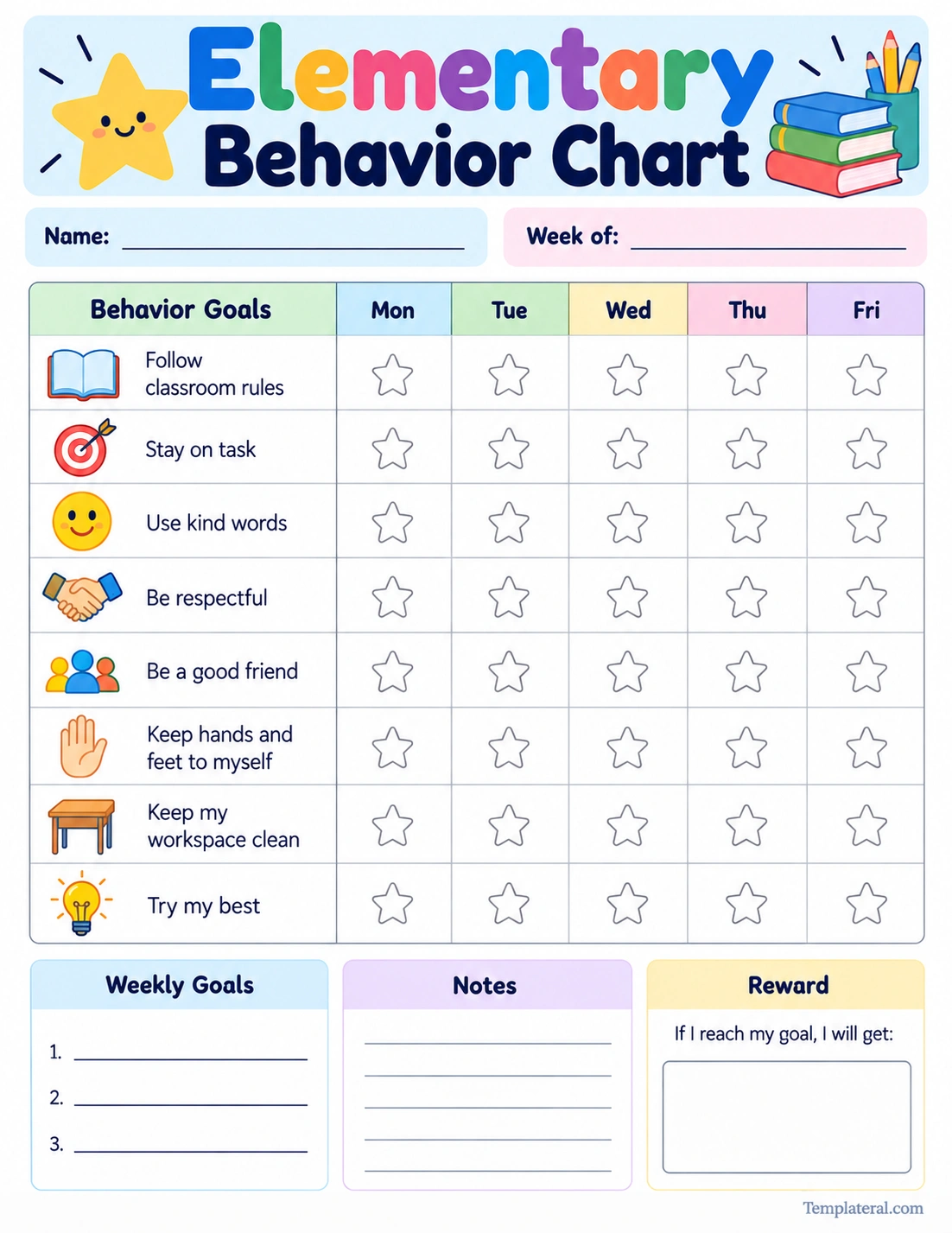
A printable elementary behavior chart can also make daily classroom management more organized. The template below provides a weekly format with behavior goals, Monday through Friday tracking, weekly goals, notes, and a reward section.
What Is an Elementary Behavior Chart?
An elementary behavior chart is a visual classroom management tool designed to help elementary-age students understand and track specific behavior expectations. Teachers can use it to record progress, recognize positive choices, and encourage students to work toward clearly defined goals.
A chart may use stars, checkmarks, stickers, colors, points, or other simple symbols. The important part is that the system is easy for students to understand and easy for teachers to maintain.
Unlike a general classroom rules poster, a behavior chart provides a way to monitor progress over a specific period. A weekly chart, for example, can show how a student is progressing from Monday through Friday.
Why Use an Elementary Behavior Chart?
Elementary students often benefit from visual reminders and clearly defined routines. A behavior chart can provide structure while giving students opportunities to recognize their own progress.
Make Classroom Expectations Clear
Specific behavior goals are easier to understand than vague instructions. A chart can turn classroom expectations into simple actions that students can recognize and practice.
Encourage Positive Behavior
A behavior chart can focus attention on the behaviors teachers want to see. Recognizing positive actions can help reinforce classroom routines and expectations.
Help Students Understand Progress
A visual record can make progress easier to see. Students can look at their completed chart and identify areas where they have met their goals.
Support Consistent Classroom Routines
When behavior expectations are reviewed regularly, students have repeated opportunities to practice them. A chart can become part of a broader classroom management routine.
Make Parent Communication Easier
When appropriate, a behavior chart can provide a starting point for conversations between teachers, parents, and students. Specific observations are often more useful than general statements about behavior.
What Should Be Included in an Elementary Behavior Chart?
A good elementary behavior chart should be simple, readable, and appropriate for the students using it. Several elements can make the chart more practical.
Student Name and Week
Include a space for the student’s name and the week being tracked. This makes individual charts easier to organize and review.
Behavior Goals
Choose a small number of specific goals. Common elementary behavior goals include:
- Follow classroom rules
- Stay on task
- Use kind words
- Be respectful
- Be a good friend
- Keep hands and feet to myself
- Keep my workspace clean
- Try my best
Daily Tracking Columns
A Monday-through-Friday format allows teachers to track behavior across the school week. Stars, checkmarks, or other symbols can be used to indicate progress.
Weekly Goals
A dedicated goals section gives students an opportunity to identify one or more behaviors they want to improve during the week.
Notes
A notes section can be used for brief observations, positive accomplishments, reminders, or information that may be useful when reviewing the student’s progress.
Reward or Recognition Section
If a classroom uses rewards, a chart can include a place to record an agreed-upon recognition for reaching a goal. Rewards should be appropriate for the classroom and consistent with school policies.
How to Use an Elementary Behavior Chart
A behavior chart is most useful when students understand how it works. Introducing the chart clearly can help make it part of the classroom routine.
1. Choose Appropriate Behavior Goals
Select behaviors that are realistic and relevant to the student’s current needs. Avoid trying to track every possible classroom behavior.
2. Explain What Each Goal Means
Elementary students may interpret broad phrases differently. Explain exactly what each behavior looks like in the classroom.
For example, “stay on task” could mean starting an assignment when instructed, continuing to work during independent time, and asking for help appropriately.
3. Introduce the Tracking System
Explain what a star, checkmark, or other symbol means. Students should understand how the chart is completed before they begin using it.
4. Check Progress Consistently
Choose appropriate times to update the chart. This might happen once at the end of the school day or at several predetermined points during the day.
5. Review the Chart
At the end of the week, review the chart with the student. Discuss successes and identify one realistic goal for the following week.
Elementary Behavior Chart Ideas
There are many ways to adapt a behavior chart for elementary classrooms. The right format depends on the student’s age, classroom routine, and behavior goals.
Weekly Elementary Behavior Chart
A weekly chart tracks behavior from Monday through Friday. This is a practical option for teachers who want to see progress over an entire school week.
Daily Behavior Chart for Elementary Students
A daily chart provides more frequent feedback. It can divide the day into morning, midday, afternoon, and other classroom periods.
Positive Behavior Chart
A positive behavior chart emphasizes behaviors students are doing well. Teachers can use stars or checkmarks to recognize appropriate actions and effort.
Individual Student Behavior Chart
An individual chart allows behavior goals to be personalized. This can be useful when a student is working on a particular classroom routine or skill.
Classroom Behavior Tracker
A classroom behavior tracker can help teachers monitor specific goals consistently. Individual student charts can be kept separately when privacy is important.
Examples of Elementary Behavior Goals
Elementary students can work on many different classroom behaviors. The most useful goals are specific enough to observe and discuss.
- Follow classroom rules: Follow established classroom procedures and expectations.
- Stay on task: Focus on the assigned activity during appropriate work time.
- Use kind words: Speak respectfully to teachers and classmates.
- Be respectful: Listen to others and treat classroom materials appropriately.
- Be a good friend: Cooperate with classmates and include others appropriately.
- Keep hands and feet to myself: Respect other students’ personal space.
- Keep my workspace clean: Organize materials and clean the assigned work area.
- Try my best: Make an appropriate effort on classroom activities.
Tips for Making an Elementary Behavior Chart Effective
A behavior chart should support the classroom rather than create additional complexity. These tips can help teachers use one effectively.
Keep the Chart Simple
Elementary students should be able to understand the chart without lengthy explanations. Use short phrases, clear categories, and easy-to-recognize symbols.
Use Positive Language
Describe the behavior you want to see. “Use kind words” is generally more actionable than “Do not be mean.”
Set Realistic Goals
Behavior goals should be achievable. If a student is working on a particular skill, start with a realistic target and adjust it as progress develops.
Recognize Effort and Progress
Look for improvement, not only perfect results. Specific feedback can help students understand which actions contributed to their progress.
Be Consistent
Use the chart according to the same basic expectations each day. Inconsistent tracking can make it difficult for students to understand the system.
Allow Room for Individual Needs
Not every student responds to the same classroom management strategy. Adapt the chart when necessary to support individual circumstances and learning needs.
Positive Reinforcement and Elementary Behavior Charts
Positive reinforcement can be incorporated into an elementary behavior chart by recognizing students when they demonstrate desired behaviors.
Recognition might include a specific compliment, positive note, classroom privilege, sticker, star, or another appropriate form of acknowledgment.
The most important part is connecting the recognition to the behavior. Instead of simply saying “Great job,” a teacher might say, “You started your assignment right away and stayed focused.” This helps students understand why the behavior was positive.
A reward system is not required for every behavior chart. Some classrooms may use verbal recognition, reflection, or progress tracking without physical rewards.
Elementary Behavior Chart vs. Classroom Rules Chart
A classroom rules chart and a behavior chart are related but serve different purposes.
A classroom rules chart typically explains the rules students are expected to follow. It may remain posted as a visual reminder throughout the school year.
An elementary behavior chart is generally used to track behavior or progress over a specific period. It can show how a student is meeting particular goals throughout a day or week.
Both tools can work together. Classroom rules establish expectations, while a behavior chart can provide a way to monitor selected behaviors.
Benefits of a Printable Elementary Behavior Chart
A printable behavior chart can be a convenient option for teachers who want a straightforward tracking system.
- Easy to prepare: Print the template and add the necessary student information.
- Easy to customize: Adapt goals and tracking methods to your classroom.
- Simple to review: Completed charts can provide a visual record of progress.
- Flexible: Use the chart for daily or weekly behavior goals.
- Accessible: A printed worksheet does not require a device or specialized software.
Common Mistakes to Avoid
Behavior charts can be useful, but how they are implemented matters. Avoiding common problems can help make the system more supportive.
Tracking Too Many Behaviors
Too many goals can make the chart overwhelming. Focus on the behaviors that are most important at the moment.
Using Vague Expectations
Words such as “good behavior” do not tell students exactly what they should do. Use specific and observable behaviors instead.
Publicly Comparing Students
Individual behavior information should be handled thoughtfully. Avoid using charts to publicly rank or embarrass students.
Using the Chart Only When Problems Occur
A behavior chart can be more useful when it recognizes positive progress as well as areas that need improvement.
Ignoring Student Feedback
When appropriate, ask students how they feel about their goals and whether they understand the expectations. Their feedback can help teachers refine the system.
How Parents Can Use an Elementary Behavior Chart at Home
An elementary behavior chart does not have to be limited to the classroom. Parents can adapt the concept for home routines and age-appropriate responsibilities.
Possible goals include completing homework, following instructions, using respectful language, completing chores, preparing school materials, or following a bedtime routine.
Keep home expectations separate from school expectations when necessary. A child may benefit from a simple home chart that focuses on only two or three routines.
How to Review an Elementary Behavior Chart
Reviewing the chart can be as important as completing it. At the end of the week, look for patterns rather than focusing only on individual marks.
Ask questions such as:
- Which behavior goal was easiest to meet?
- Which goal needs more practice?
- When did the student have the most success?
- What classroom routine may have affected the behavior?
- What is one realistic goal for next week?
This type of reflection can turn the chart into a tool for goal-setting rather than simply a record of behavior.
Frequently Asked Questions About Elementary Behavior Charts
What is an elementary behavior chart?
An elementary behavior chart is a visual tool used to track specific behavior goals for elementary-age students. It can help teachers communicate expectations, recognize positive behavior, and review progress over a day or week.
What should be included in an elementary behavior chart?
A chart can include a student’s name, dates, specific behavior goals, daily tracking areas, weekly goals, notes, and an optional reward or recognition section.
What are good behavior goals for elementary students?
Common goals include following classroom rules, staying on task, using kind words, being respectful, being a good friend, keeping hands and feet to oneself, keeping a workspace clean, and trying one’s best.
Should elementary behavior charts be used for every student?
Not necessarily. Students have different needs, and classroom management strategies should be adapted accordingly. A behavior chart can be one tool within a broader classroom support approach.
Can I use an elementary behavior chart at home?
Yes. Parents can adapt an elementary behavior chart for homework, chores, morning routines, respectful communication, and other age-appropriate goals.
How often should an elementary behavior chart be reviewed?
A chart can be reviewed daily for immediate feedback and weekly for a broader look at progress. The frequency should match the student’s needs and the teacher’s or parent’s routine.
Conclusion
An elementary behavior chart can provide a simple and visual way to communicate classroom expectations, recognize positive choices, and track progress. By focusing on specific behavior goals, teachers can make expectations easier for elementary students to understand and practice.
The most useful chart is simple, consistent, age-appropriate, and flexible enough to accommodate individual needs. Whether used as a weekly classroom behavior tracker, a daily student behavior chart, or a home behavior tool, a printable template can make behavior tracking easier to organize.
Use the chart as one part of a broader classroom management approach, combine it with clear expectations and constructive feedback, and focus on helping students develop positive habits that support learning and cooperation.
Download: Elementary Behavior Chart Template
