A great pinewood derby car design starts with a good idea and a simple plan. Whether you are designing a car for a Cub Scout race, a school project, or a family building activity, sketching the car before cutting the wood can make the entire process easier. A design worksheet also helps organize the shape, colors, details, and overall appearance of the finished car.
From sleek racing shapes to creative themed cars, there are many ways to approach a pinewood derby project. The key is to create a design that can be built from a standard wooden block while still reflecting the builder’s personality and creativity.
What Is a Pinewood Derby Car Design?
A pinewood derby car design is a visual plan showing how a wooden derby car should look before it is cut, shaped, painted, and assembled. A good design can include multiple views of the car, such as the top, side, front, and back views.
Planning the design first gives you an opportunity to experiment with different shapes without making permanent changes to the wood. You can also decide where to place colors, numbers, stripes, decals, or other decorative elements before beginning construction.
For younger builders, the design process is also an important part of the project. Drawing a car provides an opportunity to practice planning, measuring, creativity, and problem-solving.
Why Plan Your Pinewood Derby Car Before Building?
It can be tempting to start cutting the wood as soon as you have an idea. However, spending a little time on a pinewood derby car design can prevent mistakes and make the building process more organized.
- Visualize the finished car: A sketch makes it easier to see what the final design may look like.
- Compare different ideas: You can create several concepts before choosing one.
- Plan the shape: Different views help you understand the proportions of the car.
- Organize decorative details: Colors, numbers, stripes, and themes can be planned in advance.
- Reduce construction mistakes: A clear plan can help guide cutting, sanding, painting, and finishing.
- Make the project more collaborative: Children and adults can discuss the design before construction begins.
Pinewood Derby Car Design Ideas
There is no single style that every pinewood derby car needs to follow. A simple design can look excellent when the shape and details work together. Consider the overall theme before adding too many decorative elements.
Sleek Racing Car
A sleek racing design uses a streamlined appearance with smooth lines and a relatively simple body. This style can be drawn with a low profile, angled front section, and clean sides.
The advantage of a simple racing theme is that it is easy to visualize and decorate. A strong color combination and a racing number can provide enough detail without making the design overly complicated.
Sports Car Design
A sports car inspired design can include a longer hood, curved body lines, decorative side details, and a distinctive color scheme. You can add visual elements such as racing stripes or a number to create a more recognizable theme.
Classic Car Design
A classic car theme can use rounded shapes and traditional colors. The design can focus more on appearance and character than on an aggressive racing profile.
Animal or Character Theme
A themed pinewood derby car can be inspired by an animal, fictional character, favorite hobby, or other creative idea. The theme can influence the shape, colors, and decorations of the car.
When creating a themed design, keep the basic construction requirements in mind. Decorative ideas should still be practical to build and should not interfere with the wheels or other required components.
Use Multiple Views When Designing the Car
One of the most useful features of a pinewood derby car design template is the ability to draw the car from several directions. A single side view may not show enough information to understand the complete shape.
Top View
The top view shows the car from above. It is useful for planning the overall width, length, wheel positions, body shape, and decorative patterns.
Side View
The side view helps define the profile of the car. You can use it to plan the front slope, roofline, rear section, and overall height.
Front View
The front view shows the width and height of the car from the front. It can help you visualize the shape of the nose and the relationship between the body and wheels.
Back View
The back view can be used to plan the rear shape and decorative details. It is especially useful when the design has a distinctive rear section.
Perspective View
A simple three-dimensional or perspective sketch gives you a better idea of how the finished car may look as a complete object. It does not need to be a professional technical drawing. Even a basic perspective sketch can be helpful during planning.
How to Create a Pinewood Derby Car Design
Creating your own design does not require advanced drawing skills. The process can be broken into a few simple steps.
1. Choose a General Theme
Start by deciding what kind of car you want to create. It could be a traditional race car, sports car, classic car, futuristic vehicle, or themed design.
2. Sketch the Basic Shape
Draw the basic body shape before adding small details. Focus on the overall proportions first. At this stage, the goal is to establish the main silhouette rather than create a finished illustration.
3. Draw Different Views
Create top, side, front, and back views when possible. Comparing the different views can reveal design problems that may not be obvious from a single drawing.
4. Plan the Color Scheme
Choose a small group of colors that work well together. Two or three main colors are often enough to create a clear visual theme.
- Choose a primary body color.
- Select one or two complementary colors.
- Decide whether the wheels or small details need additional colors.
- Plan the placement of stripes, numbers, or other decorations.
5. Add Design Details
Once the basic shape and colors are decided, add details such as a racing number, stripes, windows, logos created for the project, flames, geometric patterns, or other decorations.
6. Review the Design Before Building
Look at the design from every view and consider whether each feature can realistically be created. Simplifying a complicated design before construction is usually easier than trying to fix a difficult shape after cutting.
Tips for Creating a Practical Pinewood Derby Car
A creative design should also be practical. The exact construction and race requirements can vary depending on the organization hosting the event, so always check the current rules before finalizing the design.
- Check the required car dimensions before drawing the final design.
- Make sure the planned wheel locations are compatible with the race rules.
- Avoid adding unnecessary details that make construction difficult.
- Consider how much sanding will be required to create curved or angled sections.
- Leave enough space for painting and finishing.
- Check the rules regarding weight, wheels, axles, and other modifications.
- Keep the design simple enough that the builder can complete it safely.
How to Make the Design Easier to Build
A beautiful sketch can sometimes be difficult to turn into a physical wooden car. When designing your pinewood derby car, think about the tools and skills available for the project.
Simple straight lines and broad curves are generally easier to transfer to a wooden block than extremely complex shapes. If a design contains many small sections, consider which parts can be painted or decorated instead of physically carved into the wood.
You can also separate the design into three levels: the main body shape, secondary shaping, and decorative details. Complete the main body first, then add smaller details only when they are practical.
Using a Pinewood Derby Design Worksheet
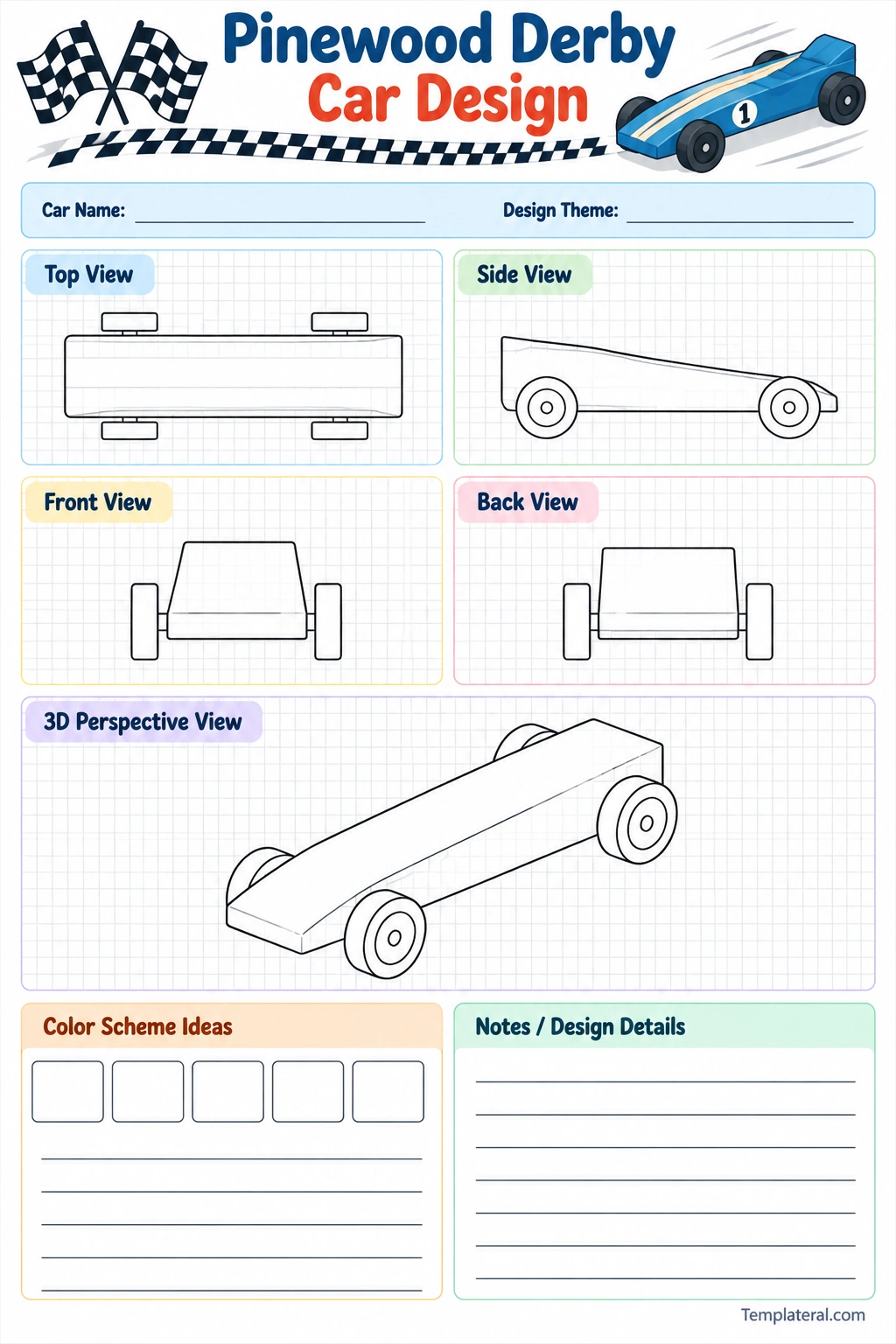
A pinewood derby car design worksheet provides a dedicated place to organize the entire concept. Instead of keeping separate sketches and notes, you can record the major design decisions on one printable page.
For example, you can use the top-view section to plan the body shape, the side-view section to draw the profile, and the perspective section to visualize the finished car. The color section can then be used to record the planned paint colors.
The notes area is useful for recording measurements, decoration ideas, construction reminders, or questions that need to be checked before building.
Common Pinewood Derby Design Mistakes
Some design problems can be avoided simply by reviewing the plan before construction begins.
Making the Design Too Complicated
Too many curves, small parts, and decorative features can make the project unnecessarily difficult. A clean design with a strong silhouette can often look better than a complicated design with too many competing elements.
Ignoring Different Views
A design that looks good from the side may not work from the top or front. Using several views helps create a more consistent shape.
Choosing Colors Too Late
Paint colors can change the overall appearance of the car. Planning the color scheme early makes it easier to decide which details should be emphasized.
Forgetting the Race Rules
Design creativity should always be balanced with the requirements of the specific derby. Rules can vary, so review the official rules before cutting or modifying the car.
Printable Pinewood Derby Car Design Template
A printable pinewood derby car design template can be especially useful for children, parents, teachers, scout leaders, and groups working on multiple cars. Each builder can create an individual concept before the construction stage begins.
Printing the worksheet also creates a physical record of the project. Builders can make notes, compare ideas, and return to the original concept during construction.
If the first idea does not work, simply create another design. This makes the planning stage low-risk and encourages experimentation before any permanent changes are made to the wooden block.
Pinewood Derby Car Design Checklist
Before starting construction, review your design with this simple checklist:
- Choose a clear car theme or overall style.
- Draw the main body shape.
- Complete the top and side views.
- Add front and back views when useful.
- Create a simple perspective drawing.
- Choose the main colors.
- Plan numbers, stripes, and decorative elements.
- Check the dimensions and race requirements.
- Review wheel and axle placement.
- Confirm that the design can realistically be built.
- Keep construction safety in mind.
Frequently Asked Questions
What should I include in a pinewood derby car design?
A useful design can include the car name, theme, top view, side view, front view, back view, perspective view, color scheme, and notes about construction or decoration.
Do I need to be good at drawing to design a pinewood derby car?
No. A pinewood derby design is a planning tool rather than a professional illustration. Simple lines and basic shapes are enough to communicate the main idea.
Can children create their own pinewood derby car designs?
Yes. Designing the car can be an enjoyable part of the project. Children can sketch ideas and choose themes or colors while an adult helps with tools and construction when appropriate.
Should I make the car design complicated?
Not necessarily. A simple design can be attractive, memorable, and easier to build. Start with a strong basic shape and add only the details that contribute to the theme.
Can I use a printable pinewood derby design template?
Yes. A printable worksheet provides organized spaces for different views, colors, and notes. It can make the planning process easier, especially when multiple design ideas need to be compared.
Conclusion
A well-planned pinewood derby car design can make the building process more organized, creative, and enjoyable. Starting with sketches allows you to explore different shapes, themes, colors, and details before making permanent changes to the wood.
Using multiple views is particularly helpful because it allows you to understand the car from different angles. A printable design worksheet can bring these ideas together in one place, making it easier to move from the first sketch to the finished pinewood derby car.
Whether you choose a simple racing design or a creative themed vehicle, focus on creating a design that is practical to build and appropriate for the applicable derby rules. A clear plan gives every builder a strong starting point for turning an idea on paper into a finished car.
Download: Pinewood Derby Car Design
