A behavior chart is a simple visual tool that can help children understand expectations, track daily behavior, and recognize positive progress. Parents, teachers, and caregivers can use a behavior chart at home or in the classroom to make routines and behavioral goals easier to understand.
Instead of relying only on verbal reminders, a behavior chart provides a clear way to record progress over time. Depending on the child’s age and needs, it can include daily goals, checkmarks, stars, points, or other simple forms of feedback.
A printable behavior chart can also be customized for different situations, such as completing morning routines, following classroom rules, using respectful language, finishing homework, or staying on task. The key is to keep the chart simple, consistent, and focused on behaviors that a child can realistically work toward.
What Is a Behavior Chart?
A behavior chart is a visual tracking sheet used to record specific behaviors or goals. It gives children a concrete way to see what is expected of them and how they are progressing.
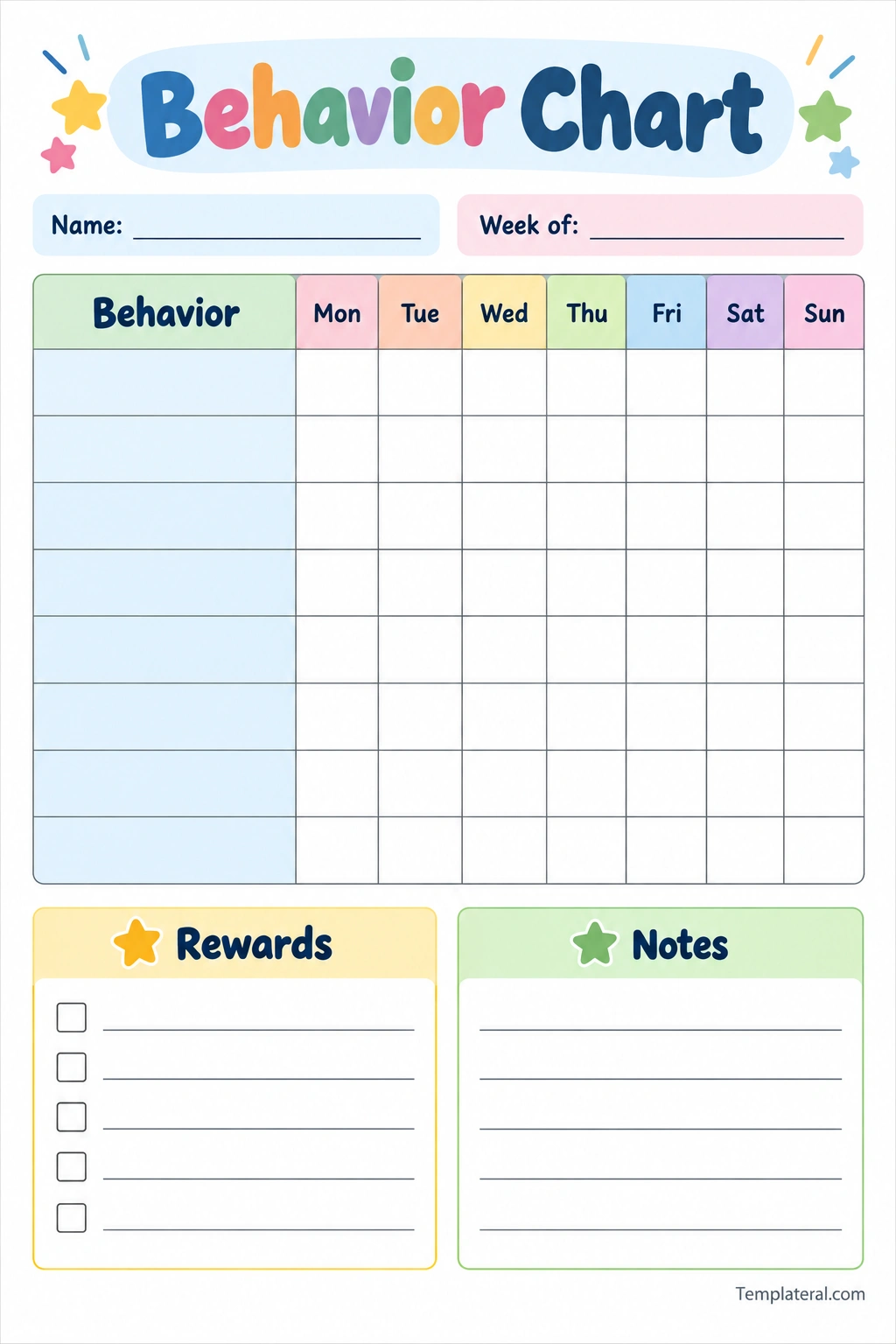
A typical chart may contain several behavior goals on the left side and days of the week across the top. A parent or teacher can then use checkmarks, stars, symbols, or short notes to record progress.
For example, a chart might track goals such as:
- Following directions
- Using kind words
- Completing homework
- Cleaning up after activities
- Getting ready on time
- Keeping hands to oneself
- Staying focused during assignments
The exact goals should depend on the child’s age, environment, and individual needs.
Why Use a Behavior Chart?
A well-designed behavior chart can make expectations more visible and easier to understand. Children often respond better when a goal is presented in a simple visual format rather than through repeated verbal instructions alone.
Creates Clear Expectations
A behavior chart can identify exactly which behaviors are being encouraged. Instead of saying “be good,” adults can define a specific goal such as “raise your hand before speaking” or “put toys away after playing.”
Makes Progress Visible
Daily progress can be difficult for children to notice. A chart gives them something concrete to look at. Seeing several completed boxes or earned stars can help reinforce the idea that small improvements add up over time.
Encourages Consistency
Using the same chart throughout the week can help create a predictable routine. Parents and teachers can review the chart at a consistent time rather than constantly discussing behavior throughout the day.
Supports Positive Feedback
A behavior chart works best when it focuses on recognizing desired behavior. Positive feedback can be as simple as verbal praise, a high five, extra reading time, or another age-appropriate reward.
How to Create an Effective Behavior Chart
Creating a behavior chart does not need to be complicated. A simple printable worksheet can be enough to get started.
1. Choose a Few Specific Behaviors
Start with two to five behaviors rather than trying to track everything at once. Each behavior should be specific and easy to understand.
For example, instead of writing “Have a good day,” use a measurable goal such as “Complete morning routine without repeated reminders.”
2. Make the Goals Age Appropriate
A behavior chart for a preschooler will usually look different from one designed for an older child. Younger children may benefit from simple words and visual symbols, while older children can work with more detailed goals.
3. Choose a Simple Tracking System
You can use checkmarks, stars, smiley faces, points, stickers, or another simple system. The method should be easy enough that adults can use it consistently.
- Checkmarks: Simple and easy to understand.
- Stars: Useful for younger children.
- Points: Helpful when working toward a larger goal.
- Stickers: A visual option for younger children.
- Notes: Useful when additional context is needed.
4. Set a Reasonable Time Period
A weekly behavior chart is often practical because it provides enough time to identify patterns without making the tracking period feel too long. For some goals, a daily chart may work better.
5. Explain the Chart Before Using It
Make sure the child understands what each behavior means and how the chart will be used. Explain when the chart will be updated and what happens when goals are reached.
Behavior Chart Ideas for Home
Parents can use behavior charts to support everyday routines and household expectations. The goal should be to encourage specific positive actions rather than simply documenting mistakes.
Morning Routine Chart
A morning behavior chart can track activities such as getting dressed, brushing teeth, eating breakfast, packing a backpack, and getting ready to leave.
Homework Behavior Chart
For school-age children, a chart can focus on starting homework on time, staying focused, completing assignments, and putting school materials away.
Chore Chart
A behavior chart can also be combined with household responsibilities. Examples include making the bed, putting laundry away, cleaning up toys, feeding a pet, or helping with simple household tasks.
Behavior Chart Ideas for the Classroom
Teachers may use behavior charts to reinforce classroom expectations and encourage students to participate positively in daily activities.
Possible classroom goals include:
- Following classroom instructions
- Raising a hand before speaking
- Completing assigned work
- Respecting classmates
- Keeping classroom materials organized
- Remaining on task
For classroom use, it is important to keep the system simple and respectful. A private or individualized tracking method may be preferable to publicly displaying a student’s behavior record.
Tips for Using a Behavior Chart Successfully
Focus on Positive Behaviors
Whenever possible, describe what the child should do rather than focusing only on what they should stop doing. “Use gentle hands” is generally clearer than simply saying “Don’t hit.”
Keep Expectations Realistic
Too many goals can make a chart overwhelming. Choose behaviors that are achievable and relevant to the current situation.
Give Feedback Consistently
Update the chart according to the schedule you established. Inconsistent tracking can make it difficult for a child to understand how the system works.
Celebrate Progress
Recognition does not always need to involve a physical reward. Specific praise can be meaningful. For example, saying “You started your homework without a reminder today” gives the child clear feedback about what they did well.
Review and Adjust the Chart
Behavior goals can change over time. Once a child consistently meets a goal, consider replacing it with another appropriate skill rather than continuing to track the same behavior indefinitely.
Common Mistakes to Avoid
A behavior chart is only useful when it supports a clear and consistent approach. Several common mistakes can reduce its effectiveness.
- Tracking too many behaviors at once
- Using vague goals that are difficult to measure
- Changing the rules from day to day
- Using the chart primarily to punish mistakes
- Expecting immediate changes
- Making the system too complicated to maintain
The purpose of a behavior chart should be to provide structure, feedback, and encouragement. It should not become a source of shame or constant criticism.
How to Use a Printable Behavior Chart
A printable behavior chart can be especially convenient because it can be placed somewhere easy to access and updated by hand.
Print the chart on standard letter-size paper and fill in the child’s name and the week or date range. Add a small number of clearly defined behaviors. During the day or at the agreed review time, mark the appropriate boxes.
At the end of the week, review the chart together. Look for progress, discuss any challenges, and decide whether the current goals should remain the same or be adjusted.
Frequently Asked Questions About Behavior Charts
What should be included on a behavior chart?
A basic behavior chart can include the child’s name, date or week, specific behavior goals, days of the week, and a simple tracking method such as checkmarks or stars. A notes or rewards section can also be useful.
How many behaviors should I track?
There is no universal number, but starting with a small number of specific goals can make the chart easier to understand and maintain. You can add or change goals as the system develops.
Can a behavior chart be used at home and school?
Yes. Behavior charts can be adapted for different environments. A home chart may focus on routines and responsibilities, while a classroom chart may focus on learning behaviors and classroom expectations.
Should behavior charts use rewards?
Rewards are optional. Some families and teachers use small rewards or privileges, while others rely primarily on positive feedback and recognition. The appropriate approach depends on the child and the goals being addressed.
Conclusion
A behavior chart can be a practical way to make expectations clear, track progress, and recognize positive behavior. The most useful charts are simple, specific, age appropriate, and easy to use consistently.
Whether you need a chart for home routines, classroom expectations, homework, chores, or daily habits, a printable template can provide a convenient starting point. Focus on a few realistic goals, give consistent feedback, and adjust the chart as the child’s needs change.
Download: Behavior Chart Template
