Creating effective lessons starts with a clear plan. Lesson plans help teachers organize learning objectives, activities, materials, assessments, and timing before a class begins. A well-prepared lesson plan can make teaching more focused while helping students understand what they are expected to learn.
Whether you are an elementary school teacher, high school educator, tutor, homeschool parent, or instructor, a structured lesson plan can make daily teaching easier. It also provides a useful reference that can be reviewed and improved after each lesson.
A simple lesson plan does not need to be complicated. The goal is to create a practical roadmap that connects what students need to learn with how you will teach, practice, and assess those skills.
What Are Lesson Plans?
Lesson plans are structured outlines that describe how a teacher will conduct a specific lesson. They typically explain what students should learn, what activities they will complete, what resources are needed, and how learning will be evaluated.
A lesson plan can be designed for a single class period or adapted for multiple sessions. The level of detail depends on the subject, grade level, teaching style, and purpose of the lesson.
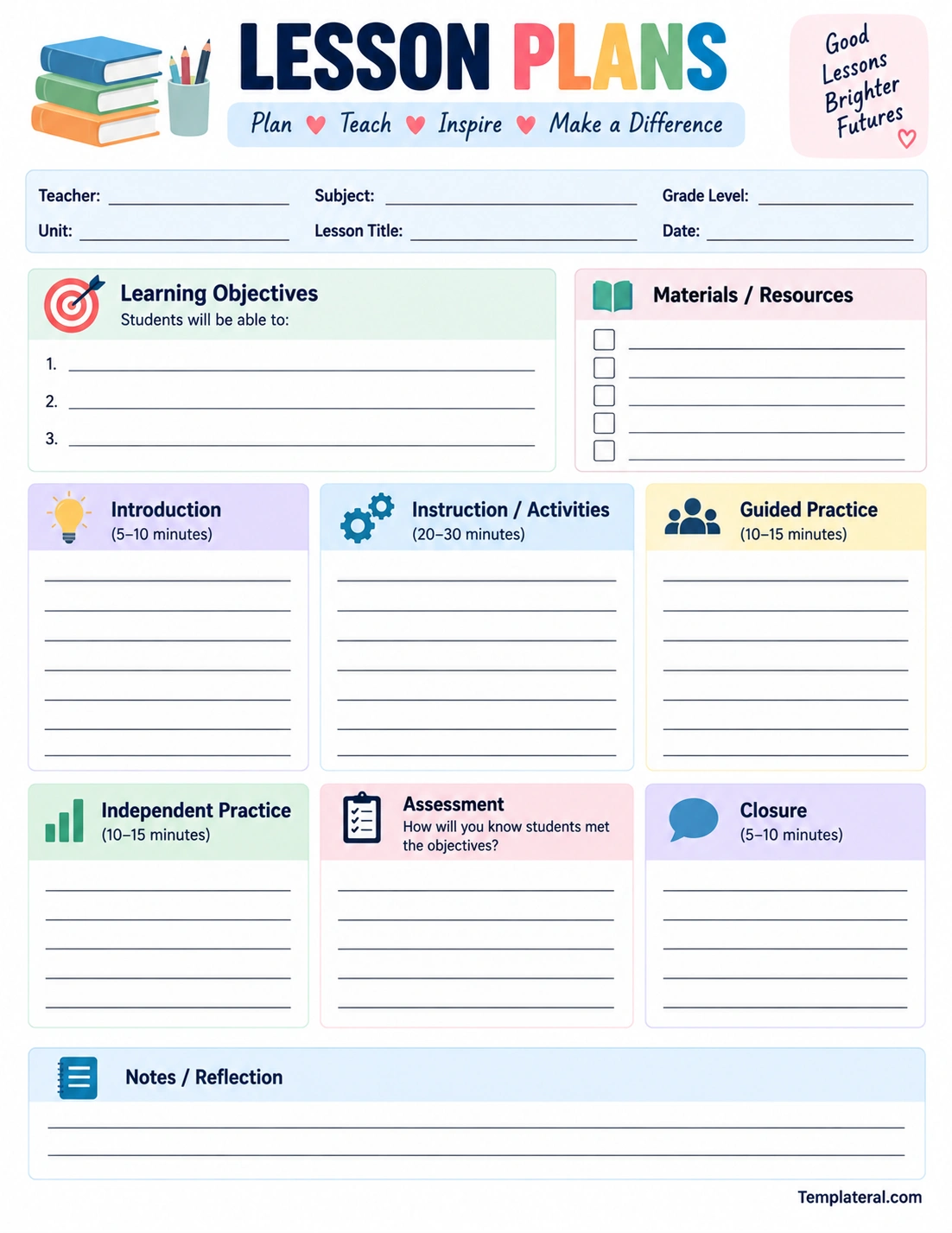
A basic lesson plan may include:
- Lesson title and subject
- Grade level or student group
- Learning objectives
- Required materials and resources
- Introduction or warm-up activity
- Main instruction and classroom activities
- Guided practice
- Independent practice
- Assessment
- Lesson closure
- Teacher notes and reflection
Why Are Lesson Plans Important?
Lesson planning gives teachers an opportunity to think through the learning experience before entering the classroom. Instead of deciding what to do next during the lesson, teachers can follow a prepared structure while still making adjustments when necessary.
Keep Lessons Organized
A lesson plan provides a logical sequence for the class. Teachers can move from introduction to instruction, practice, assessment, and closure without losing sight of the main learning objective.
Clarify Learning Objectives
Clear objectives help teachers identify exactly what students should know or be able to do by the end of the lesson. They also make it easier to select appropriate activities and assessments.
Manage Classroom Time
Time is an important part of effective teaching. A lesson plan can assign approximate time periods to different activities so that too much time is not spent on one part of the lesson.
Prepare Materials in Advance
Listing materials and resources in advance helps teachers prepare everything they need before class. This can include worksheets, textbooks, presentations, writing supplies, technology, or other instructional resources.
What Should a Lesson Plan Include?
There is no single format that works for every teacher. However, most useful lesson plans contain several core components.
1. Lesson Information
Start with basic information such as the teacher’s name, subject, grade level, lesson title, unit, and date. These details make the lesson plan easier to organize and reuse later.
2. Learning Objectives
Learning objectives describe the expected outcome of the lesson. Try to make them specific and observable rather than using vague statements.
For example, instead of writing “Students will understand fractions,” a more specific objective could be “Students will be able to compare two fractions using greater-than, less-than, or equal-to symbols.”
3. Materials and Resources
List everything needed for the lesson. Preparing these resources ahead of time can reduce interruptions and make classroom instruction more efficient.
- Books or textbooks
- Printable worksheets
- Whiteboard or presentation materials
- Writing supplies
- Digital resources
- Hands-on learning materials
4. Introduction
The introduction should capture students’ attention and connect the new topic with something they already know. A short question, review activity, demonstration, discussion, or real-world example can work well.
5. Instruction and Activities
This is the main part of the lesson. Describe how new information will be introduced and what students will do to practice the concept.
Depending on the subject, activities might include demonstrations, discussions, reading, problem-solving, experiments, writing exercises, group activities, or creative projects.
6. Guided Practice
Guided practice gives students an opportunity to apply what they have learned with support from the teacher. This stage is useful for identifying misunderstandings before students work independently.
7. Independent Practice
During independent practice, students complete tasks on their own. The activity should give them an opportunity to demonstrate whether they can apply the lesson objective without continuous teacher assistance.
8. Assessment
Assessment helps determine whether students have achieved the intended objectives. It does not always need to be a formal test.
Simple assessment methods can include questions, short quizzes, exit tickets, completed worksheets, demonstrations, discussions, or observation.
9. Closure
A lesson closure gives students a chance to review the main idea and reflect on what they learned. A short summary, discussion question, or exit ticket can provide an effective ending.
10. Notes and Reflection
After the lesson, record observations about what worked well and what could be improved. These notes can make future lesson planning faster and more effective.
How to Create Effective Lesson Plans
Creating a lesson plan becomes easier when you start with the desired learning outcome and work backward toward the activities and assessment.
Start With the Learning Goal
Before choosing activities, decide what students should learn. A clear goal provides direction for the entire lesson.
Match Activities to Objectives
Every major activity should support the learning objective. Avoid adding activities simply because they seem interesting if they do not contribute to the intended learning outcome.
Plan for Different Learning Needs
Students may have different levels of knowledge, learning preferences, and support needs. Consider how an activity can be adapted when some students need additional guidance or when others are ready for a greater challenge.
Include Flexible Timing
Estimated times are helpful, but classroom lessons rarely follow a perfect schedule. Leave enough flexibility to spend additional time on difficult concepts or move ahead when students demonstrate strong understanding.
Keep the Format Practical
A lesson plan should be easy to read while teaching. Use clear headings, short notes, checklists, and organized sections instead of writing unnecessary paragraphs.
Lesson Plan Ideas for Different Subjects
The basic structure of a lesson plan can be adapted to almost any subject.
- Math: Introduce a concept, demonstrate examples, complete guided problems, and provide independent practice.
- Science: Begin with a question, introduce the concept, conduct an investigation, record observations, and discuss results.
- English: Introduce vocabulary or a text, discuss key ideas, complete reading or writing activities, and assess understanding.
- History: Introduce historical context, examine primary or secondary sources, discuss important events, and complete a written or discussion-based assessment.
- Art: Demonstrate a technique, explain the project requirements, allow students to create, and review their finished work.
- Physical Education: Explain the activity, demonstrate skills, provide practice time, and assess participation or performance.
Using a Printable Lesson Plan Template
A printable lesson plan template can simplify the planning process by providing dedicated spaces for the most important parts of a lesson. Instead of creating a new layout from scratch, teachers can fill in the relevant information and focus more attention on instructional preparation.
A printable template can be especially useful for organizing multiple lessons throughout the week. Completed plans can also be kept in a teaching binder or digital archive for future reference.
When choosing a lesson plan template, look for a design that includes enough space for your needs without becoming unnecessarily complicated. A clean layout with clearly labeled sections is usually easier to use repeatedly.
Tips for Better Lesson Planning
Small improvements to the planning process can make lesson plans more useful and easier to maintain.
- Keep objectives specific: Write outcomes that can be observed or assessed.
- Plan the most important activities first: Focus on activities that directly support the lesson objective.
- Prepare materials early: Gather worksheets, books, technology, and other resources before class.
- Estimate realistic timing: Give students enough time to understand and practice new concepts.
- Include assessment: Decide how you will know whether students met the objective.
- Leave room for notes: Record observations that can improve future lessons.
- Review completed plans: Use previous lesson plans as references when preparing similar lessons.
Common Mistakes to Avoid When Writing Lesson Plans
Even a detailed lesson plan can become less effective if it is overloaded with unnecessary information or disconnected activities.
Too Many Activities
Trying to fit too many activities into one lesson can make the class feel rushed. It is often better to complete a smaller number of meaningful activities well.
Unclear Objectives
Vague objectives make it difficult to determine whether students have achieved the intended outcome. Use specific language that describes what students should be able to do.
No Assessment Strategy
If a lesson does not include a way to check understanding, it can be difficult to determine whether students have learned the material. Even a short question or exit ticket can provide useful information.
Ignoring Reflection
Lesson planning should not end when the class ends. A few notes about student responses, timing, challenges, and successful activities can make future planning more effective.
How to Use Lesson Plans From One Class to the Next
Lesson plans can become valuable teaching resources over time. After completing a lesson, save the plan and add short notes about what happened in the classroom.
When teaching the same topic again, review the previous plan and adjust activities, timing, materials, or assessment methods based on your experience. This creates a growing collection of teaching resources that can save time in the future.
Teachers can also organize lesson plans by subject, grade level, unit, school year, or topic. A consistent filing system makes older plans easier to find when needed.
Final Thoughts
Effective lesson plans provide a practical structure for turning learning objectives into organized classroom experiences. They help teachers prepare materials, manage time, select appropriate activities, assess student understanding, and reflect on what worked.
The best lesson plan is not necessarily the longest or most detailed one. It is the one that gives the teacher enough structure to teach confidently while remaining flexible enough to respond to students’ needs.
Using a clean printable lesson plans template can make this process even easier. With clear sections for objectives, materials, activities, assessment, closure, and reflection, teachers can create organized plans that are practical to use before, during, and after each lesson.
Download: Lesson Plans Template
