Relationships are a beautiful journey filled with love, laughter, and shared experiences. However, as two individuals come together, conflicts and misunderstandings will inevitably arise. This is where a relationship agreement can play a vital role in fostering better communication, reducing misunderstandings, and building trust between partners.
By establishing clear expectations, boundaries, and commitments, couples can create a framework to navigate potential conflicts and define their shared vision.
What is a Relationship Agreement?
A relationship agreement is a document that outlines the expectations, boundaries, and commitments between partners in a relationship. It serves as a roadmap for couples to navigate their journey together by explicitly addressing important topics such as finances, household chores, personal needs, and communication styles.
By having a relationship agreement in place, couples can create a solid foundation for their relationship and ensure that both partners are on the same page.
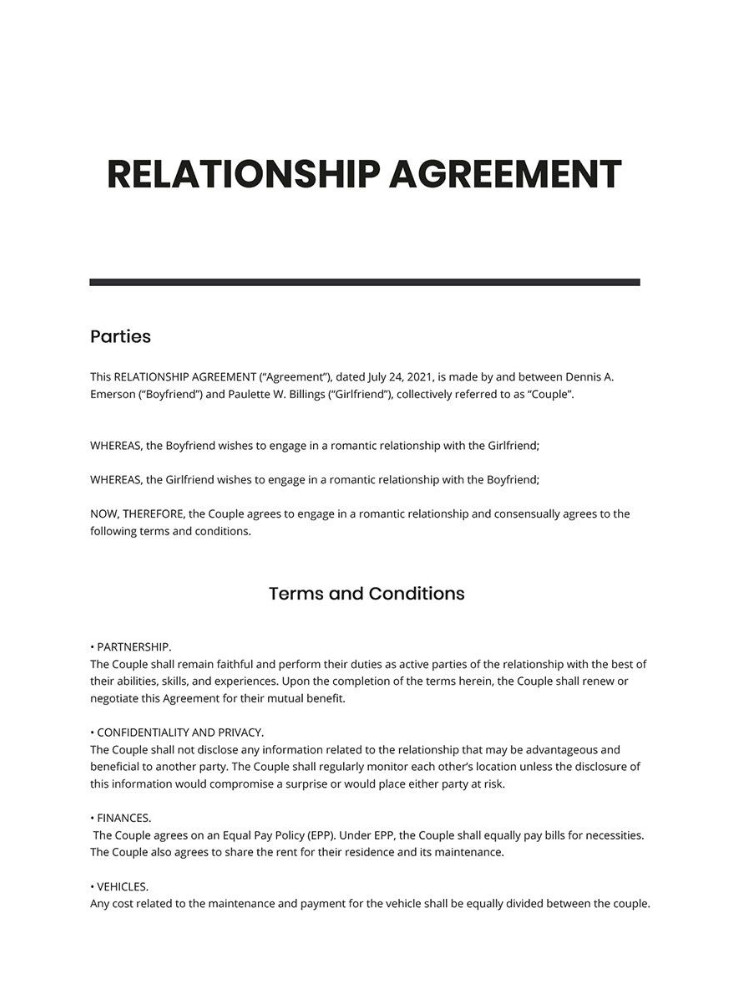
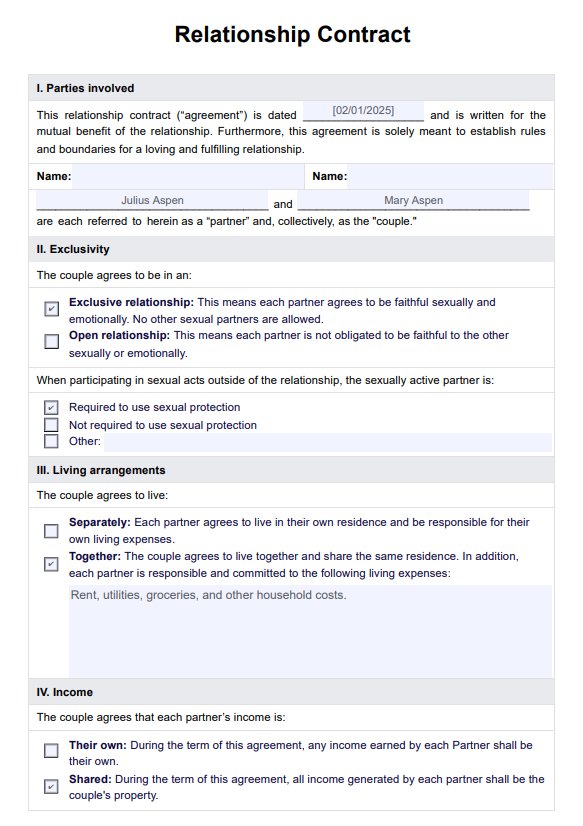
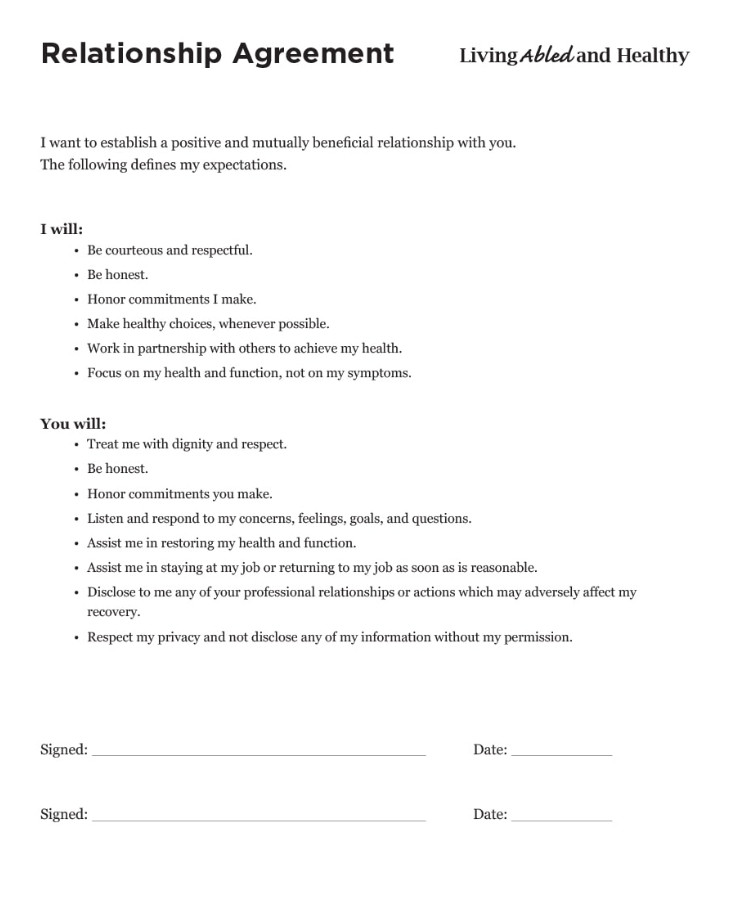
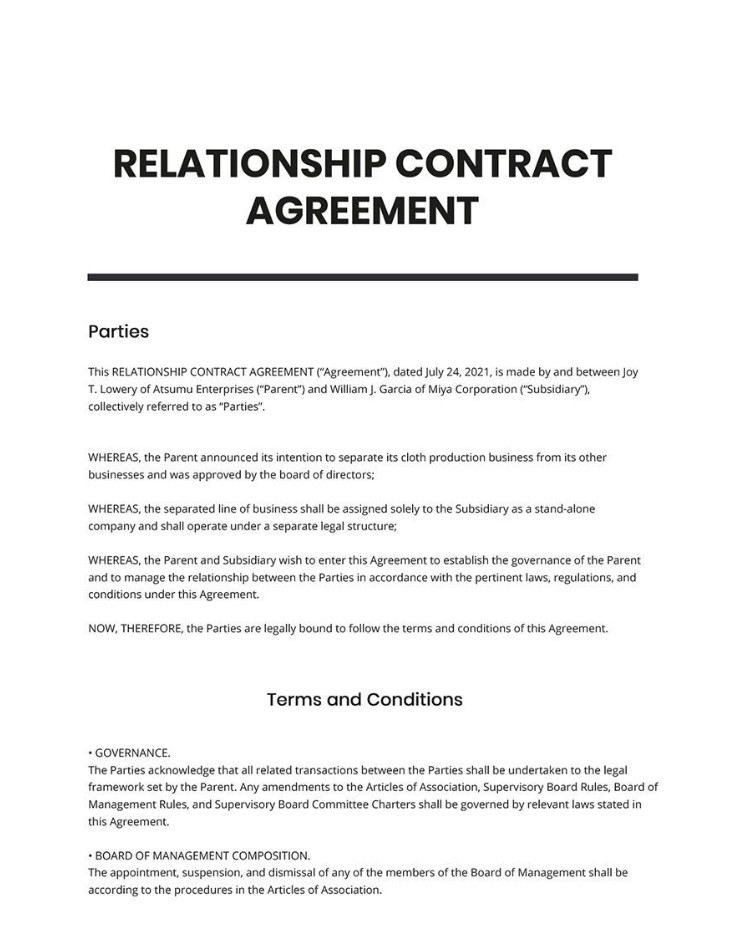
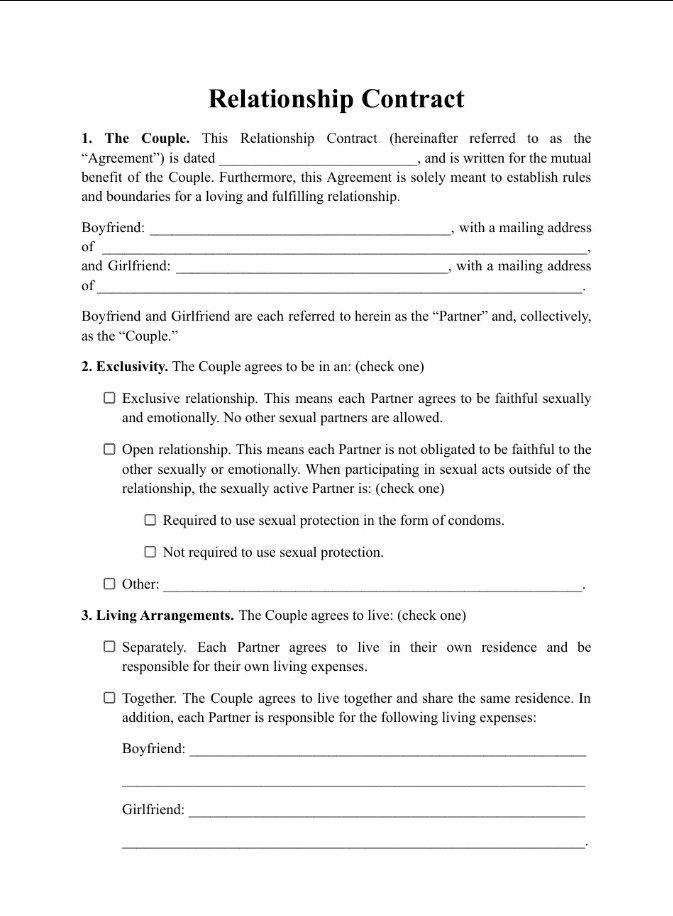
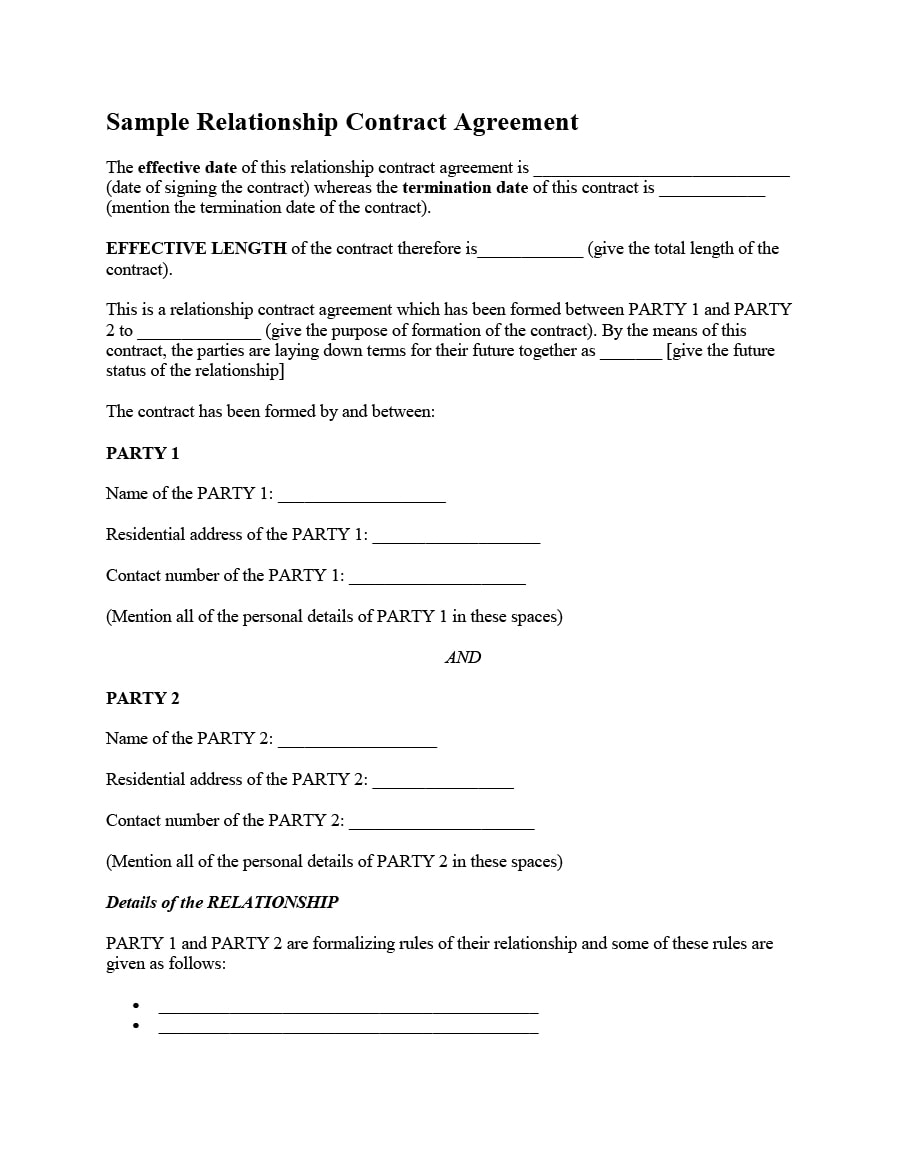
Examples
Why Should You Have a Relationship Agreement?
There are several benefits to having a relationship agreement in place. Here are some reasons why you should consider creating one with your partner:
Promoting Personal Growth and Development
One of the key benefits of having a relationship agreement is the opportunity it provides for personal growth and development. By openly discussing and addressing personal needs and desires within the relationship, partners can support each other in becoming the best versions of themselves.
Strengthening Emotional Intimacy
Emotional intimacy is essential for creating a deep and meaningful connection between partners. A relationship agreement encourages partners to share their thoughts, feelings, and vulnerabilities, fostering emotional closeness and understanding in the relationship.
Fostering Respect and Appreciation
Respect and appreciation are fundamental to a healthy and thriving relationship. By outlining expectations and commitments in a relationship agreement, partners can demonstrate respect for each other’s boundaries, needs, and contributions, leading to a greater sense of appreciation and gratitude within the partnership.
Enhancing Conflict Resolution Skills
Conflicts are a natural part of any relationship, but how they are resolved can make a significant difference in the overall health of the partnership. A relationship agreement provides a structured approach to conflict resolution, helping partners navigate disagreements in a respectful, constructive, and solution-oriented manner.
Promoting Equality and Fairness
Equality and fairness are essential aspects of a balanced and mutually fulfilling relationship. A relationship agreement allows partners to discuss and negotiate the distribution of responsibilities, resources, and decision-making power, ensuring that both individuals are valued and respected in the partnership.
Creating a Sense of Security and Stability
Security and stability are foundational elements of a successful relationship. A relationship agreement can provide partners with a sense of security by establishing clear expectations, boundaries, and commitments, creating a safe and predictable environment in which the relationship can thrive.
Encouraging Individual Accountability
Individual accountability is crucial for maintaining trust and integrity in a relationship. A relationship agreement holds partners accountable for their actions, words, and commitments, promoting a sense of responsibility and ownership in upholding the agreements made within the partnership.
Building Long-Term Resilience
Relationships are dynamic and ever-evolving, requiring adaptability and resilience to withstand challenges and changes over time. A relationship agreement can help partners build long-term resilience by providing a framework for growth, communication, and problem-solving that can sustain the partnership through various life stages and circumstances.
What to Include in a Relationship Agreement?
When creating a relationship agreement, it’s important to include specific topics and guidelines that are relevant to your relationship. Here are some key areas to consider including in your agreement:
Financial Management
Financial management is a critical aspect of any relationship, as it can impact the stability and well-being of both partners. In your relationship agreement, be sure to discuss how finances will be handled, including income distribution, savings goals, spending limits, and any joint financial responsibilities.
Household Responsibilities
Household chores and tasks are often a point of contention in relationships, leading to tension and resentment if not addressed proactively. In your agreement, clearly outline each partner’s responsibilities for cleaning, cooking, shopping, and other household duties, ensuring that both individuals contribute equitably to maintaining a harmonious living environment.
Emotional Support and Needs
Emotional support is essential for nurturing a strong and healthy relationship. Include a section in your agreement that addresses each partner’s emotional needs, communication preferences, and strategies for providing comfort and reassurance during times of stress or conflict.
Conflict Resolution Strategies
Conflicts are a natural part of any relationship, but how they are managed can make a significant difference in the relationship’s longevity and well-being. Discuss in your agreement the strategies you will use to resolve conflicts constructively, including active listening, compromising, seeking third-party mediation, and setting boundaries for respectful communication.
How to Create a Relationship Agreement
Creating a relationship agreement can be a collaborative process between you and your partner. Here are some steps to help you get started:
Schedule a Meeting
Set aside dedicated time to sit down with your partner and discuss the idea of creating a relationship agreement. Make sure you both are open to the process and willing to contribute. Choose a quiet and comfortable setting where you can have an open and honest conversation without distractions.
Open Dialogue
Initiate an open dialogue with your partner about the importance of creating a relationship agreement. Share your thoughts, feelings, and intentions behind wanting to establish clear expectations, boundaries, and commitments in your relationship. Encourage your partner to express their thoughts and concerns as well.
Identify Key Topics
Brainstorm together and identify the key topics you want to address in your relationship agreement. Start by discussing areas of your relationship that are important to both of you, such as finances, communication, household responsibilities, personal goals, and expectations for the future. Make a list of these topics to guide your agreement-building process.
Set Goals and Objectives
Define the goals and objectives you hope to achieve through your relationship agreement. Discuss what success looks like for both of you and how the agreement will help you strengthen your bond, improve communication, and navigate challenges effectively. Establish a shared vision for your relationship moving forward.
Draft the Agreement
Begin drafting your relationship agreement by outlining the key topics and guidelines you identified during your discussions. Be clear, specific, and concise in your language, ensuring that both partners understand and agree to the terms outlined. Consider using bullet points or numbered lists to organize the information for easier readability.
Review and Revise
Once you have a draft of your relationship agreement, review it together with your partner. Discuss any areas of concern, confusion, or disagreement, and work collaboratively to revise the agreement until both partners are satisfied with the terms. Be open to making adjustments and compromises to ensure that the agreement reflects the needs and values of both individuals.
Seek Feedback
Consider seeking feedback from a trusted friend, family member, or counselor who can provide an outside perspective on your relationship agreement. Getting input from a neutral third party can help you identify any blind spots, clarify ambiguous language, and strengthen the overall effectiveness of the agreement in supporting your relationship goals.
Sign and Date the Agreement
Once you have finalized your relationship agreement, sign and date the document as a symbol of your commitment to honoring the terms outlined. Make copies of the agreement for each partner to keep, and consider storing a digital copy in a secure location for easy access. Revisit the agreement regularly to ensure that it remains relevant and up-to-date.
Implement and Follow Through
Put your relationship agreement into action by implementing the guidelines, expectations, and commitments outlined in the document. Practice open communication, mutual respect, and accountability in your daily interactions with your partner, using the agreement as a tool to guide your behavior, decisions, and responses to challenges.
Monitor and Evaluate
Monitor the effectiveness of your relationship agreement over time and evaluate its impact on your relationship dynamics, communication patterns, and overall satisfaction. Check in with your partner regularly to discuss any challenges, successes, or areas for improvement related to the agreement, and be willing to make adjustments as needed to ensure its continued relevance and effectiveness.
Seek Professional Support
If you encounter difficulties in creating or implementing your relationship agreement, don’t hesitate to seek professional support from a therapist, counselor, or relationship coach. These professionals can provide guidance, mediation, and tools to help you strengthen your relationship, address conflicts, and navigate challenges healthily and constructively.
Tips for a Successful Relationship Agreement
Here are some additional tips to help you create a successful relationship agreement:
- Be Specific: Clearly define the expectations and commitments you are making to each other.
- Be Flexible: Allow room for growth and change within your relationship agreement.
- Be Respectful: Approach the creation of your agreement with empathy and understanding for your partner’s perspective.
- Be Honest: Be open and honest about your needs, desires, and boundaries in the relationship.
- Be Willing to Compromise: Remember that relationships are a two-way street, and both partners may need to make compromises for the greater good of the partnership.
- Be Patient: Building a successful relationship agreement takes time and effort, so be patient with yourself and your partner throughout the process.
- Be Consistent: Consistency is key in maintaining a healthy and thriving relationship, so make sure to regularly revisit and revise your agreement as needed.
