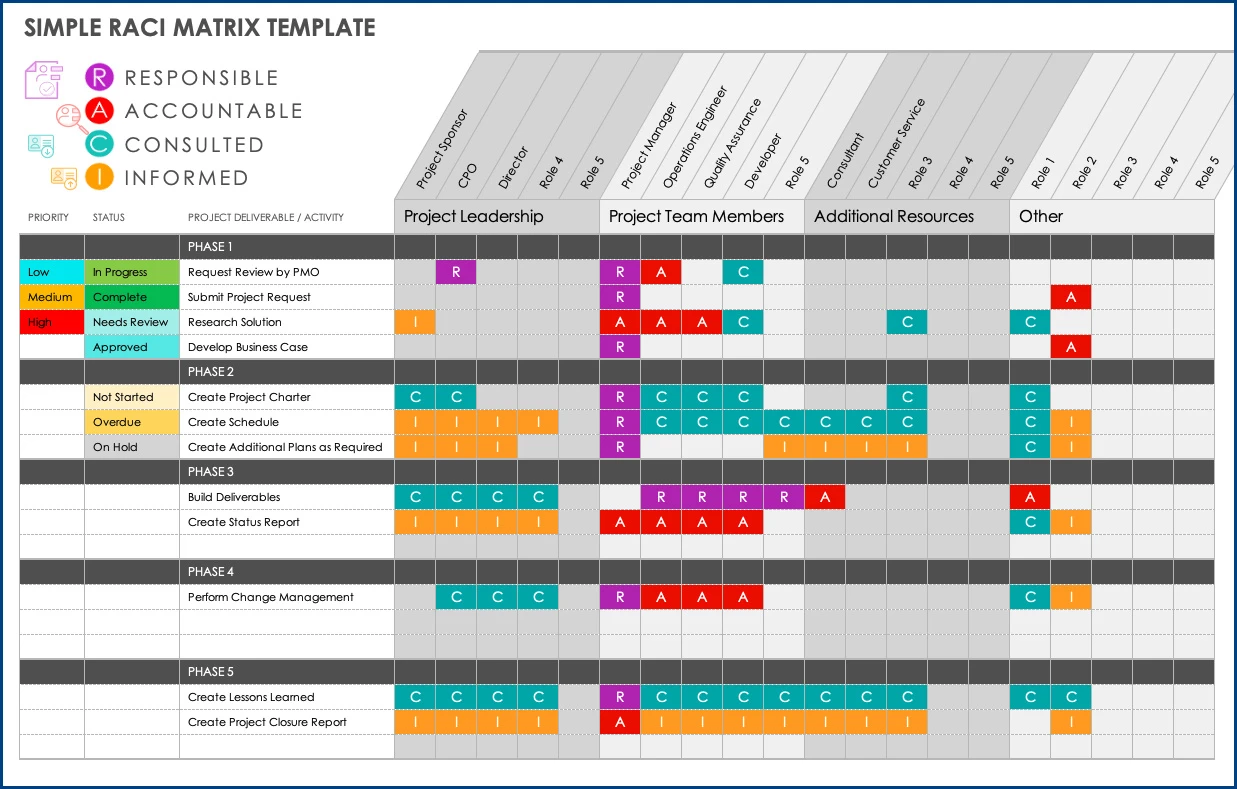
When it comes to project management, one of the key challenges that teams often face is confusion around roles and responsibilities. Without a clear understanding of who is responsible for what, tasks can fall through the cracks, deadlines can be missed, and overall project efficiency can suffer. This is where RACI charts come in.
By defining who is Responsible, Accountable, Consulted, and Informed for each task or decision in a project, RACI charts help to streamline communication, improve decision-making processes, reduce overlap, and ensure that everyone understands their duties.
What is a RACI Chart?
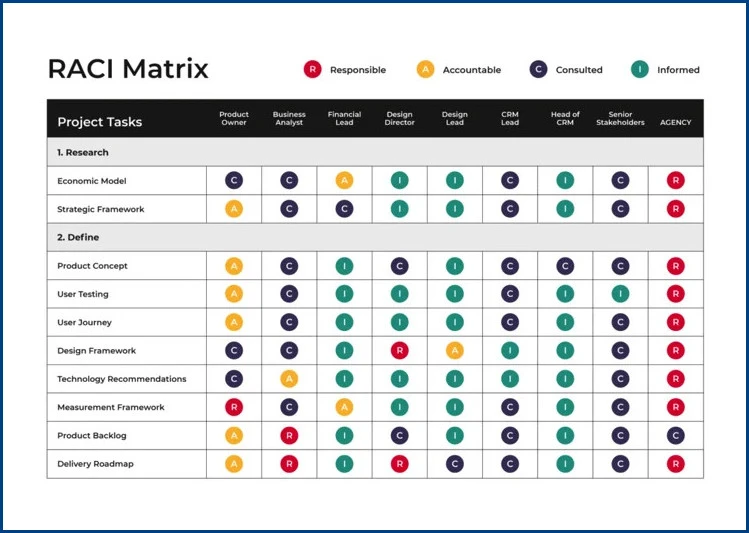
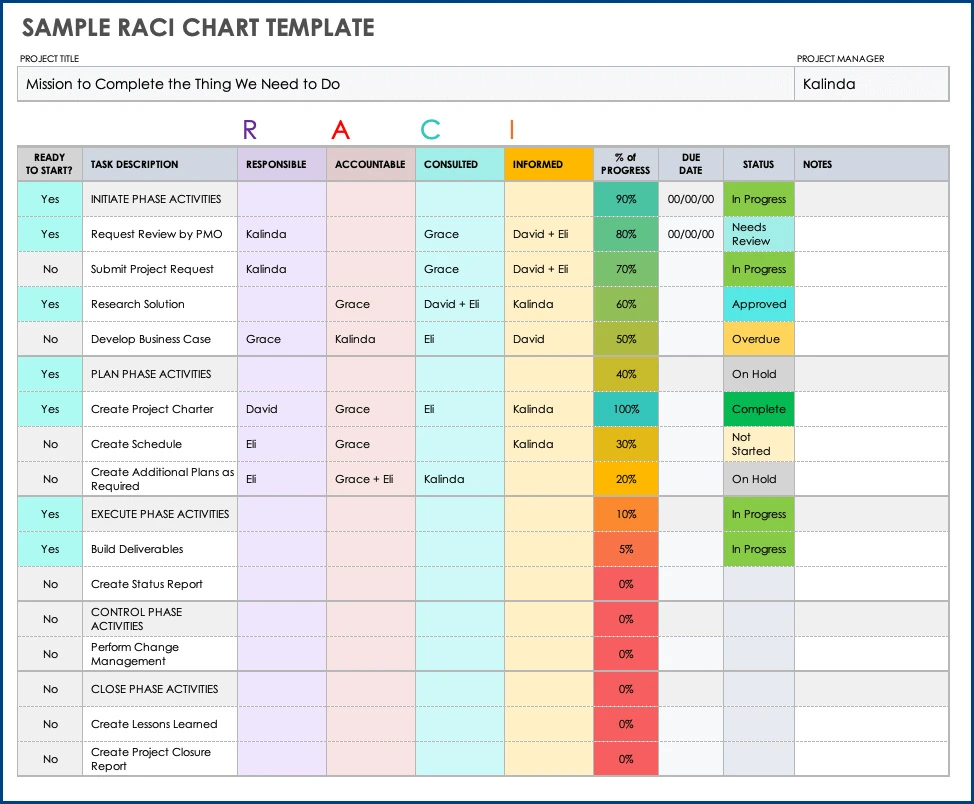
A RACI chart is a matrix that clearly defines the roles and responsibilities for each task in a project. The acronym RACI stands for Responsible, Accountable, Consulted, and Informed. In a RACI chart, each task or decision is listed, and the individuals involved are assigned one or more of these roles to indicate their level of involvement.
Why Use a RACI Chart?
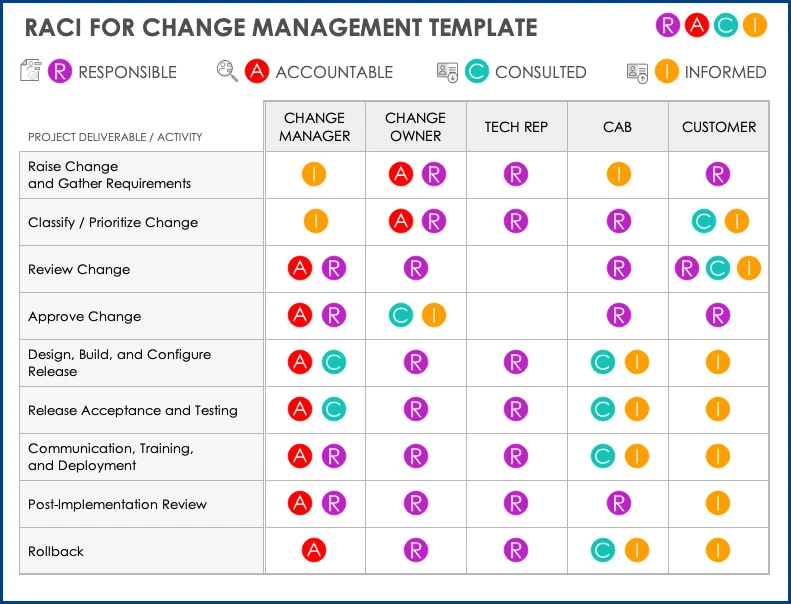
There are several key benefits to using a RACI chart in project management:
Enhanced Clarity and Accountability
One of the primary reasons to use a RACI chart is to enhance clarity and accountability within a project. By clearly defining roles and responsibilities, team members have a clear understanding of who is responsible for what tasks. This clarity helps to prevent confusion and ensures that tasks are completed efficiently and effectively. Additionally, by assigning an “Accountable” role to each task, a RACI chart helps to establish clear lines of accountability within the team. This ensures that there is a designated individual who is ultimately responsible for the success of each task, promoting accountability and ownership within the team.
Improved Communication and Collaboration
Another key benefit of using a RACI chart is improved communication and collaboration. By clearly defining who needs to be consulted and informed for each task, a RACI chart helps to facilitate better communication within the team. Team members know exactly who to go to for input or feedback on a task, which helps to streamline decision-making processes and ensure that all perspectives are considered. Additionally, by keeping team members informed of task progress through the “Informed” role, a RACI chart promotes transparency and collaboration within the team. This open communication helps to build trust among team members and fosters a more collaborative working environment.
Efficient Decision-Making and Task Allocation
Using a RACI chart can also lead to more efficient decision-making and task allocation within a project. By clearly defining roles and responsibilities upfront, team members can make decisions more quickly and effectively. The presence of a designated “Responsible” individual for each task ensures that decisions are made by the appropriate person, streamlining the decision-making process. Additionally, by assigning roles for each task, a RACI chart helps to ensure that tasks are allocated appropriately among team members. This balanced distribution of work helps to prevent overload on any one individual and promotes a more equitable workload distribution within the team.
Reduced Risk of Errors and Omissions
One of the key advantages of using a RACI chart is the reduced risk of errors and omissions within a project. By clearly defining roles and responsibilities, a RACI chart helps to ensure that all tasks are accounted for and that nothing falls through the cracks. The presence of a designated “Responsible” individual for each task ensures that there is clear ownership over the completion of that task, reducing the likelihood of errors or oversights. Additionally, the inclusion of a “Consulted” role ensures that all relevant stakeholders are involved in decision-making processes, reducing the risk of overlooking important perspectives. By using a RACI chart, teams can minimize the risk of errors and omissions and ensure that projects are completed successfully.
Enhanced Project Efficiency and Effectiveness
Overall, using a RACI chart can lead to enhanced project efficiency and effectiveness. By providing clarity around roles and responsibilities, a RACI chart helps to ensure that tasks are completed on time and within budget. The improved communication and collaboration facilitated by a RACI chart help to streamline decision-making processes and promote better teamwork within the project. Additionally, the efficient task allocation and reduced risk of errors and omissions afforded by a RACI chart help to ensure that projects are completed successfully and that team members are working effectively towards project goals. By using a RACI chart, teams can enhance their project management processes and achieve better outcomes.
Key Elements of a RACI Chart
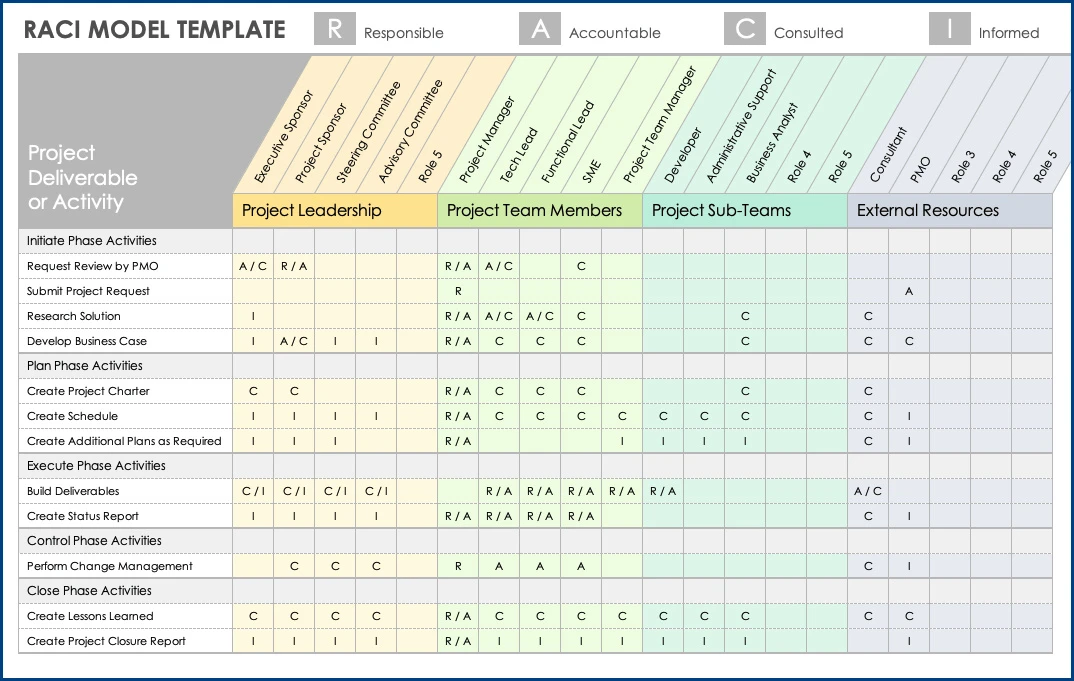
When creating a RACI chart, there are a few key elements to keep in mind:
Task or Decision
The first key element of a RACI chart is the task or decision that needs to be made. Each task or decision should be clearly defined and listed as a row in the chart. This ensures that all tasks are accounted for and that team members have a clear understanding of what needs to be done.
Responsible
The “Responsible” role in a RACI chart is crucial for ensuring that tasks are completed effectively. The individual or team assigned the “Responsible” role is responsible for carrying out the work required to achieve the task’s objectives. This role ensures that there is clear ownership over each task and that tasks are completed efficiently.
Accountable
The “Accountable” role in a RACI chart is responsible for ensuring that tasks are completed successfully. This individual is ultimately answerable for the task’s completion or the decision being made. The presence of an “Accountable” role helps to establish clear lines of accountability within the team and ensures that there is one designated individual who is responsible for the success of each task.
Consulted
The “Consulted” role in a RACI chart involves people who need to provide input or advice on the task or decision. These individuals are consulted for their expertise, feedback, or perspective on the task at hand. The “Consulted” role ensures that all relevant stakeholders are involved in decision-making processes and that important perspectives are considered.
Informed
The “Informed” role in a RACI chart includes people who need to be kept informed of the task’s progress or the decision that has been made. These individuals are informed of outcomes, updates, or changes related to the task or decision. The “Informed” role promotes transparency within the team and ensures that all team members are kept up-to-date on project developments.
How to Create a RACI Chart
Creating a RACI chart is a straightforward process that involves the following steps:
Identify Tasks or Decisions
The first step in creating a RACI chart is to identify all the tasks or decisions that need to be made. List out each task or decision as a row in the chart to ensure that all tasks are accounted for and that team members have a clear understanding of what needs to be done.
Assign Roles
Once you have identified the tasks or decisions, the next step is to assign roles to each task. Determine who is responsible, accountable, consulted, and informed for each task or decision. This ensures that all team members have clear roles and responsibilities within the project.
Fill in the Chart
After assigning roles, fill in the RACI chart with the names of individuals or teams assigned to each role for each task or decision. This ensures that everyone knows who is responsible for what tasks and promotes clarity and accountability within the team.
Review and Adjust
Once the RACI chart is completed, review it with the team to ensure that everyone agrees on roles and responsibilities. Make any necessary adjustments as needed to ensure that roles are assigned appropriately and that team members are clear on their responsibilities. By reviewing and adjusting the RACI chart as needed, you can ensure that the chart accurately reflects the roles and responsibilities within the project.
By following these tips and best practices for using RACI charts effectively in your projects, you can enhance communication, clarify roles and responsibilities, streamline decision-making processes, and improve overall project efficiency. Incorporate RACI charts into your project management processes to help your team work more cohesively towards achieving project goals and delivering successful outcomes.
