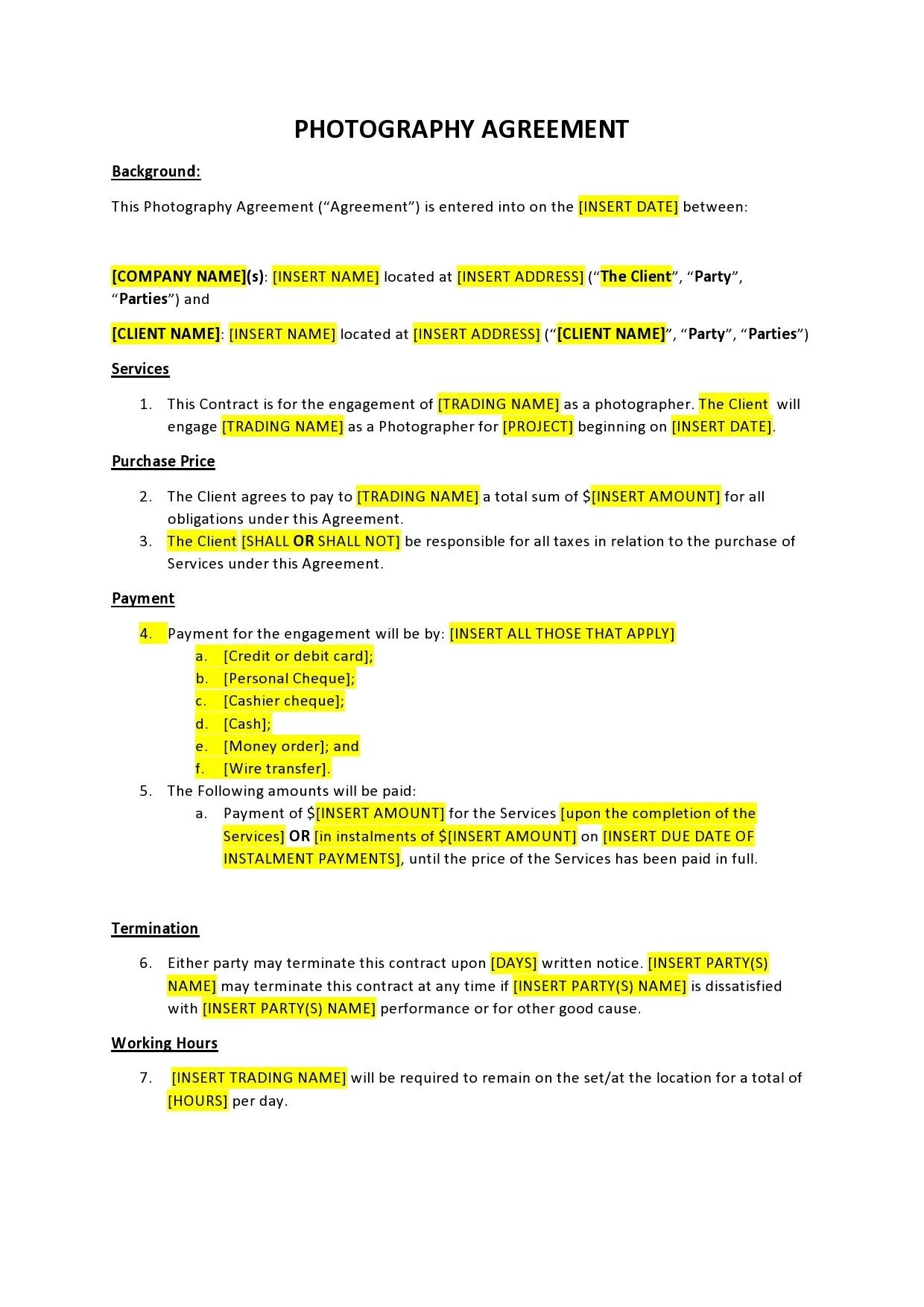
When hiring a photographer for an event or a special occasion, it’s crucial to have a photography agreement in place. This legally binding document outlines the expectations, rights, and responsibilities of both the photographer and the client, ensuring clarity and preventing disputes. By having a photography agreement, both parties are protected as key details such as the scope of work, payment terms, usage rights, deadlines, and cancellation policies are clearly defined.
Let’s dive deeper into why a photography agreement is essential and what it should include.
What is a Photography Agreement?
A photography agreement is a contract between a photographer and a client that establishes the terms and conditions of their working relationship. It serves as a roadmap for the project, outlining the specific details of the photography services to be provided and the expectations of both parties.
This document helps prevent misunderstandings and ensures that both the photographer and the client are on the same page throughout the process.
Why You Need a Photography Agreement
Having a photography agreement in place is essential for several reasons:
- Clarity: A photography agreement helps clarify the expectations, rights, and responsibilities of both parties involved in the project.
- Legal Protection: This document serves as a legal contract that can protect both the photographer and the client in case of any disputes or misunderstandings.
- Professionalism: Utilizing a photography agreement shows professionalism and helps establish credibility with clients.
- Setting Expectations: By outlining key details such as payment terms, usage rights, and deadlines, a photography agreement helps set clear expectations for the project.
What to Include in a Photography Agreement
When drafting a photography agreement, there are several key components that should be included:
- Client and Photographer Information: Include the names, addresses, and contact information of both parties.
- Scope of Work: Clearly define the photography services to be provided, including the date, time, and location of the shoot.
- Payment Terms: Outline the payment schedule, including any deposits, fees, and payment methods.
- Usage Rights: Specify how the photos will be used, whether for personal or commercial purposes, and if there are any restrictions on usage.
- Deadlines: Agree upon deadlines for delivering the final photos and any edits or revisions.
- Cancellation Policy: Include details on what happens if either party needs to cancel or reschedule the shoot.
- Additional Services: If there are any additional services or products to be included, such as prints or albums, outline them in the agreement.
How to Draft a Photography Agreement
When drafting a photography agreement, it’s essential to be thorough and clear in your language. Here are some tips to help you create a comprehensive and effective contract:
- Use Clear Language: Avoid using jargon or confusing terminology. Write the agreement in plain language that is easy for both parties to understand.
- Be Specific: Include specific details about the services to be provided, including the number of hours of coverage, the number of final images, and any additional costs.
- Consult a Legal Professional: If you’re unsure about any legal aspects of the agreement, consider consulting with a legal professional to ensure that your contract is legally sound.
- Get Signatures: Make sure both parties sign the agreement to indicate their acceptance of the terms and conditions. Keep a copy for your records.
Tips for a Successful Photography Agreement
Here are some additional tips to help you create a successful photography agreement:
- Communicate Clearly: Keep the lines of communication open with your client throughout the process to ensure that everyone is on the same page.
- Set Realistic Expectations: Be clear about what you can deliver and manage your client’s expectations accordingly.
- Be Flexible: While it’s important to have a contract in place, be willing to work with your client if unforeseen circumstances arise.
- Review and Revise: Periodically review and update your photography agreement to ensure that it reflects your current business practices and policies.
By taking the time to create a thorough and detailed photography agreement, you can protect yourself and your clients and ensure a successful working relationship. Remember, clarity is key, so be sure to include all the necessary details and communicate openly with your client throughout the process. A well-crafted photography agreement can help you avoid misunderstandings and disputes, allowing you to focus on what you do best – capturing beautiful moments through your lens.
Photography Agreement Template – Word
