A job application is an important part of the hiring process. It gives an employer information about your background, education, work experience, skills, and qualifications for a position. Depending on the employer, an application may be completed online, submitted on paper, or provided through a company’s hiring system.
A well-prepared job application should be accurate, complete, and easy to review. Even when you have a strong resume, an application form may ask for additional information that helps an employer understand your experience and determine whether you meet the requirements of the position.
Understanding what information to prepare before completing an application can save time and help reduce mistakes. A printable job application template can also be useful for organizing your information before entering it into an online application.
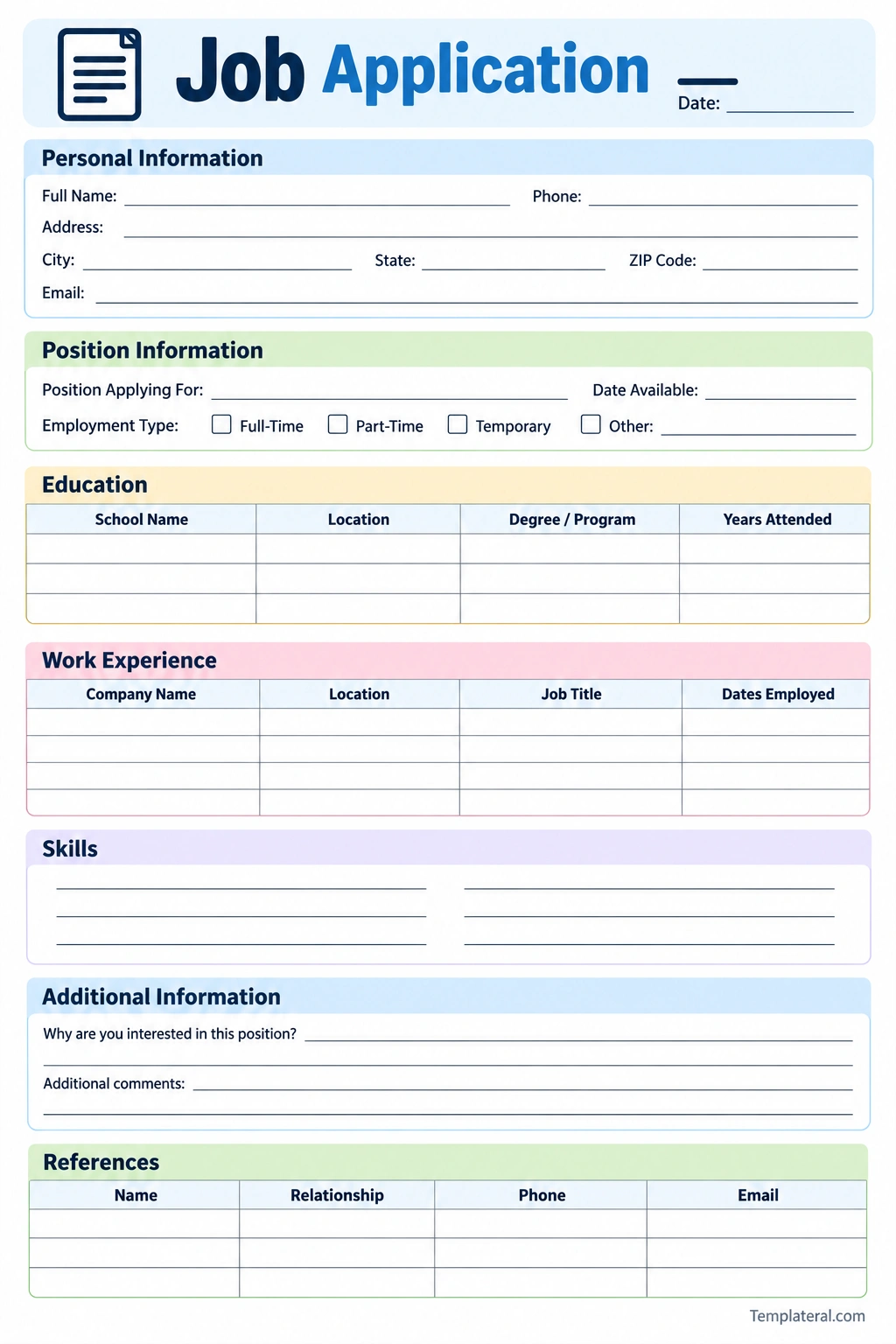
What Is a Job Application?
A job application is a form or process used by an employer to collect information from someone applying for a position. It commonly asks for contact information, employment history, education, skills, availability, and references.
Some employers use a traditional application form, while others use an online application system. Although the format may differ, the purpose is generally the same: to collect relevant information from applicants in a consistent format.
A typical job application may request:
- Full name and contact information
- Address
- Position being applied for
- Employment preferences or availability
- Education history
- Previous work experience
- Professional skills
- References
- Additional information
Why Is a Job Application Important?
A job application provides an employer with information that may not appear in exactly the same format on a resume. It can also help the hiring team compare applicants using a consistent set of questions.
Provides Relevant Background Information
An application gives employers a structured overview of your education, previous employment, skills, and other information relevant to the position.
Shows Attention to Detail
Completing an application carefully demonstrates that you can follow instructions and provide information accurately. Spelling errors, missing sections, or inconsistent dates can make an application harder to review.
Creates a Consistent Record
Employers may use application forms to collect the same basic information from multiple candidates. This makes it easier for hiring teams to review relevant details during the recruitment process.
What Information Do You Need for a Job Application?
Preparing your information before starting an application can make the process much faster. Gather the following details whenever they are relevant to the position.
Personal Information
Most applications begin with basic contact information. This may include your full name, address, phone number, and email address.
Use current contact information and make sure your email address is professional and easy to recognize.
Position Information
Be prepared to provide the exact position you are applying for. If the employer has multiple openings, using the correct job title can help ensure your application is associated with the intended position.
Education History
You may need to provide information about schools, colleges, training programs, degrees, certifications, or other relevant education.
Depending on the application, you may be asked for:
- School or institution name
- Location
- Degree or program
- Field of study
- Years attended
- Graduation date
Work Experience
Prepare the names of previous employers, job titles, employment dates, locations, and a brief description of your responsibilities. Keep dates and job titles consistent with your resume and other application materials.
Skills
List skills that are relevant to the position. These may include technical skills, communication abilities, software knowledge, languages, certifications, or job-specific abilities.
References
Some applications request professional references. Prepare the names and contact information of people who have agreed to serve as references before listing them.
How to Fill Out a Job Application
Completing an application carefully can help you avoid preventable errors. The following process can make the task more organized.
1. Read the Instructions First
Before entering information, review the entire application and any instructions provided by the employer. Pay attention to required fields, document requirements, deadlines, and specific questions.
2. Prepare Your Information
Gather your resume, employment history, education records, certification details, and reference information. Having everything available reduces the chance of leaving important sections incomplete.
3. Enter Accurate Information
Double-check names, dates, phone numbers, email addresses, job titles, and other factual details. Accuracy is important because employers may verify information during the hiring process.
4. Answer Questions Clearly
When an application includes open-ended questions, provide concise and relevant answers. Focus on information that demonstrates how your experience relates to the position.
5. Review Before Submitting
Read the completed application from beginning to end. Check for spelling mistakes, missing information, inconsistent dates, and unanswered required questions.
Job Application vs. Resume
A job application and resume serve related but different purposes.
A resume is usually a customized summary of your professional background. It can highlight selected experience, accomplishments, skills, education, and qualifications.
A job application is an employer’s structured request for information. It may ask for details in a specific format and can include questions that are not included on your resume.
When an employer requests both documents, make sure the information is consistent across them. Differences in employment dates, job titles, or other basic details can create unnecessary questions.
Tips for Completing a Job Application
Use Consistent Information
Check that your application matches your resume where the same information appears. Consistency makes your application easier to understand.
Use Professional Language
Keep your answers clear and professional. Avoid unnecessary slang, excessive abbreviations, or casual language in formal application fields.
Customize Relevant Answers
Whenever an application asks why you are interested in a position or what qualifications you bring, focus your response on the specific role rather than using a generic statement.
Do Not Leave Required Fields Blank
If a field is required, provide the requested information. If a question genuinely does not apply, follow the application’s instructions for indicating that it is not applicable.
Check Your Contact Information
A correct phone number and email address are particularly important because employers may use them to contact applicants about interviews or next steps.
Common Job Application Mistakes to Avoid
Small mistakes can make an otherwise strong application less polished. Review your application carefully before submitting it.
- Submitting an application with spelling errors
- Using incorrect employment dates
- Leaving required fields incomplete
- Providing an unprofessional email address
- Entering inconsistent information compared with your resume
- Failing to follow application instructions
- Submitting the wrong document or file
- Using vague answers to important questions
Using a Printable Job Application Template
A printable job application template can be useful as a preparation worksheet, particularly when you want to organize your information before completing an employer’s official application.
You can use a blank template to collect personal information, education history, work experience, skills, references, and other relevant details in one place.
This can be especially helpful for applicants who are applying to several positions. Instead of repeatedly searching for employment dates or contact information, you can keep your basic information organized and ready to reference.
However, when an employer provides its own official application form, use the employer’s form and instructions rather than substituting a generic template.
Job Application Preparation Checklist
Before starting an application, review this simple checklist:
- Update your resume.
- Prepare your employment history.
- Confirm previous job titles and dates.
- Gather education and certification information.
- Prepare a list of relevant skills.
- Contact potential references for permission.
- Check your phone number and email address.
- Read the job description carefully.
- Prepare answers for common application questions.
- Review everything before submitting.
How to Make a Job Application Stand Out
A job application should remain truthful and relevant while clearly communicating your qualifications. Start by understanding what the employer is looking for in the job description.
When the application asks about experience or skills, emphasize qualifications that are genuinely relevant to the position. Use specific examples when appropriate rather than making broad claims without supporting details.
For example, instead of simply writing “good communication skills,” you could describe a relevant responsibility or experience that demonstrates how you used communication skills in a professional or academic setting.
Frequently Asked Questions About Job Applications
What should I include in a job application?
A job application may include personal information, education, work experience, skills, availability, references, and answers to employer-specific questions. The exact requirements vary by employer and position.
Should a job application match my resume?
Information that appears on both documents should be accurate and consistent. The application and resume can use different formats, but basic facts such as employment dates and job titles should not conflict.
Can I use a printable job application template?
Yes. A printable template can be useful for organizing your information before completing an official employer application. If an employer provides its own application, follow the employer’s required format.
What information should I prepare before applying for a job?
Prepare your contact information, employment history, education details, relevant skills, certifications, references, and an updated resume. Having these details ready can make the application process more efficient.
How can I avoid mistakes on a job application?
Read the instructions carefully, enter accurate information, use consistent dates and job titles, proofread your answers, and review every required field before submitting the application.
Conclusion
A job application is an important part of the hiring process and gives employers a structured view of your background and qualifications. Taking time to prepare your information before completing the form can make the process more efficient and help you avoid common mistakes.
Keep your contact information, employment history, education, skills, and references organized. Read each employer’s instructions carefully, provide accurate information, and review the completed application before submitting it.
A printable job application template can also serve as a convenient preparation worksheet, helping you organize the information you may need when applying for different positions.
Download: Job Application Template Word
