A to do list form is a simple and practical way to organize tasks, priorities, reminders, and goals in one place. Whether you are planning your workday, managing household responsibilities, organizing school assignments, or preparing for a busy week, a well-designed to do list can make it easier to see what needs to be done.
Writing tasks down can also reduce the need to keep everything in your head. Instead of trying to remember appointments, errands, deadlines, and small responsibilities, you can record them on a single printable worksheet and work through them one at a time.
A printable to do list form can be particularly useful when you prefer writing by hand. It can be placed on a desk, refrigerator, planner, bulletin board, or workspace where the list is easy to see throughout the day.
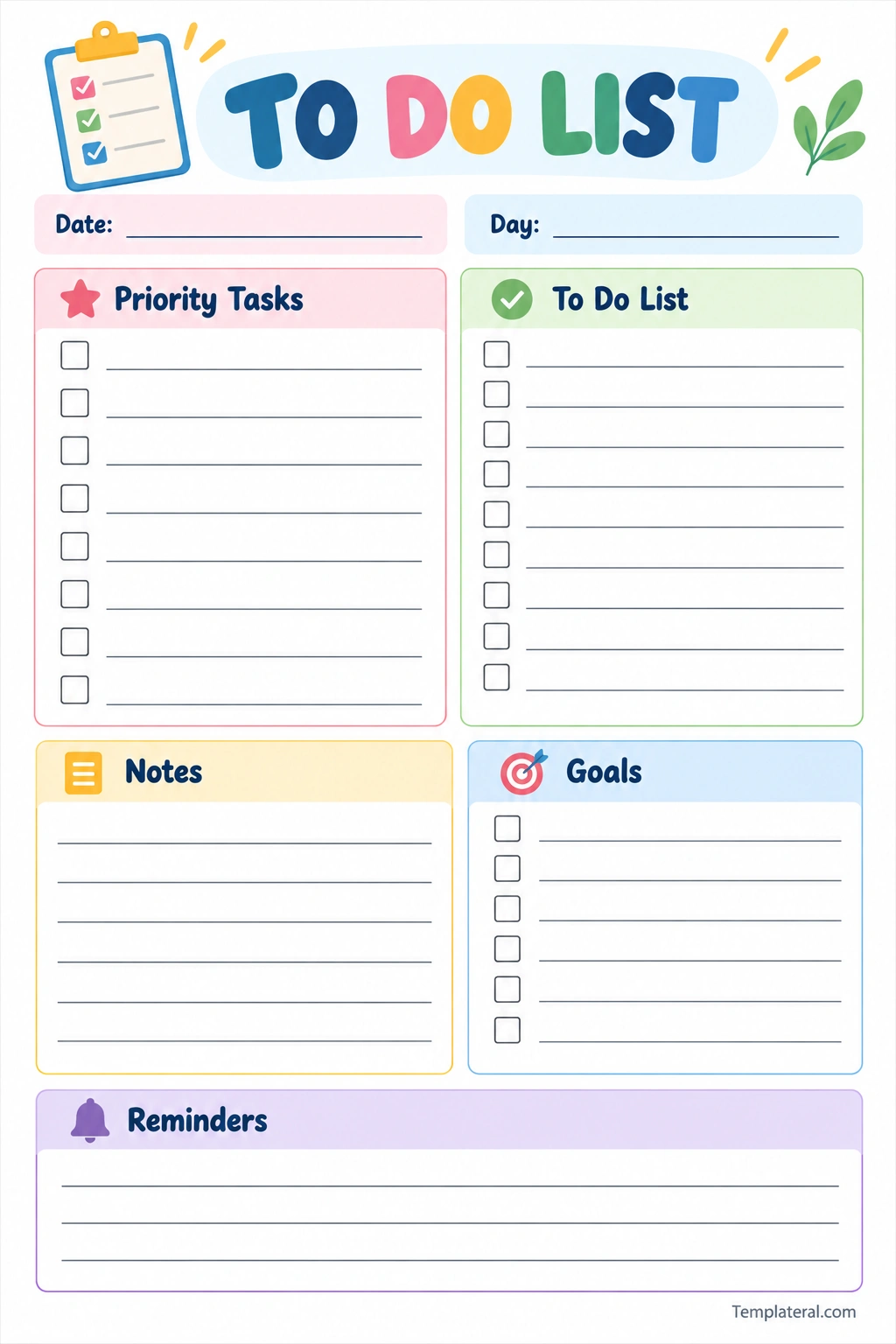
What Is a To Do List Form?
A to do list form is a structured worksheet for recording tasks that need to be completed. Unlike a simple blank piece of paper, a form can organize tasks into sections such as priorities, general to-do items, goals, notes, and reminders.
The format can be customized for different purposes. A daily to do list may include a date and a short list of tasks, while a weekly task planner may provide more space for organizing responsibilities across several days.
A basic to do list form may include:
- Date or day
- Priority tasks
- General tasks
- Goals
- Notes
- Reminders
- Check boxes for completed items
The goal is not to create a complicated planning system. A good form should make it easier to identify what matters and take action.
Why Use a To Do List Form?
A structured task list can provide a simple visual overview of the day. Instead of keeping a collection of tasks in your memory, you have a physical reference that can be reviewed and updated as your day changes.
Organize Tasks in One Place
Important tasks can easily become scattered across notes, messages, emails, and reminders. A to do list form gives you one place to collect the tasks that require your attention.
Identify Priorities
Not every task has the same level of importance. A dedicated priority section can help separate urgent or important tasks from smaller items that can be completed later.
Make Progress Visible
Checking off a completed task provides a clear visual indication of progress. As the list becomes shorter, it becomes easier to see how much work has already been completed.
Reduce Mental Clutter
Writing tasks down can help you create a clear external record of what needs to be done. This can make planning feel more manageable, especially when several responsibilities compete for attention.
What Should Be Included in a To Do List Form?
The ideal layout depends on how you plan to use the worksheet. A daily task list does not need the same amount of information as a project planning sheet.
Date and Day
Adding a date makes it easier to identify which tasks belong to a particular day. A day field can also be useful when creating a separate worksheet for each weekday.
Priority Tasks
The priority section is useful for the tasks that should receive attention first. Keep this section relatively short so that your most important responsibilities remain easy to identify.
Main To Do List
This is where you can record routine tasks, errands, assignments, calls, appointments, or other responsibilities that need to be completed.
Goals
A goals section can be used for larger objectives that may not be completed immediately. For example, you might write “finish project outline” or “organize office files” rather than a series of smaller actions.
Notes and Reminders
These sections provide space for information that does not fit neatly into the task list. You can use them for ideas, important details, follow-up information, or reminders about upcoming activities.
How to Use a To Do List Form Effectively
A to do list is most useful when it supports action rather than becoming another task to manage. A simple routine can help you get more value from your printable worksheet.
1. Write Down Everything You Need to Remember
Start by collecting the tasks that are currently on your mind. Do not worry about perfect organization at first. The initial goal is to create a complete list.
2. Separate Important Tasks
Review the list and identify the tasks that matter most. Move those items into the priority section if your form includes one.
3. Break Large Tasks Into Smaller Steps
Large tasks can feel overwhelming when they are written as one vague item. Breaking them into smaller actions can make the next step clearer.
For example, instead of writing “Prepare presentation,” you could list:
- Choose presentation topic
- Outline main points
- Gather supporting information
- Create slides
- Review presentation
4. Estimate What Can Actually Be Completed
A long list is not necessarily a productive list. Consider how much time and energy you actually have available. Choosing a realistic number of tasks can make the worksheet more useful.
5. Check Off Completed Tasks
Mark each completed item immediately or at the end of the work session. This creates a simple record of progress and makes unfinished tasks easier to identify.
Daily To Do List Form Ideas
A daily to do list form is useful when you have several tasks that need to be completed during a specific day. It works well for work, school, household management, and personal planning.
A daily worksheet might contain:
- Today’s date
- Top three priorities
- General tasks
- Appointments or scheduled activities
- Notes
- End-of-day reminders
Keeping the daily list focused can prevent the page from becoming overloaded with tasks that are unlikely to be completed that day.
Weekly To Do List Form Ideas
A weekly to do list provides a broader view of upcoming responsibilities. Instead of focusing only on today’s tasks, you can record deadlines, errands, projects, and recurring responsibilities for the entire week.
A weekly task list can be organized by day or by category. For example, categories might include work, school, home, errands, and personal tasks.
To Do List Forms for Work
At work, a to do list form can help organize meetings, follow-ups, projects, emails, administrative responsibilities, and deadlines.
For a professional task list, consider including:
- Task description
- Priority level
- Due date
- Project or category
- Status
- Notes
For larger projects, individual tasks can be grouped under a common project name so that the list remains organized.
To Do List Forms for Students
Students can use a printable task list to organize homework, assignments, study sessions, projects, and school activities.
A student-friendly form might include separate areas for:
- Homework
- Upcoming assignments
- Study tasks
- School reminders
- Personal goals
Breaking schoolwork into smaller tasks can also make larger assignments easier to approach.
To Do List Forms for Home
Household responsibilities can quickly accumulate. A simple task worksheet can help organize cleaning, errands, shopping, maintenance, and family responsibilities.
You can create separate lists for daily chores, weekly cleaning, grocery errands, home projects, or upcoming appointments. This makes the form flexible enough for different household routines.
Tips for Creating a Better To Do List
Keep the List Manageable
A useful task list should help you focus rather than overwhelm you. If the list contains dozens of unrelated tasks, consider moving less urgent items to another page or a separate master list.
Use Clear Action Words
Write tasks as actions. “Email client,” “buy printer paper,” and “review report” are more actionable than vague phrases such as “client” or “report.”
Prioritize Before Starting
Take a moment to determine which tasks have the greatest importance. This can help you decide where to begin if you do not have enough time to complete everything.
Leave Room for Changes
Plans can change throughout the day. A good printable form should include enough flexible space for new tasks, notes, or schedule changes.
Review Unfinished Tasks
At the end of the day, review anything that remains incomplete. Decide whether it should be moved to the next day, scheduled for later, delegated, or removed because it is no longer necessary.
Common To Do List Mistakes to Avoid
A task list can become less useful when it is treated as a collection of everything you might possibly do rather than a practical action plan.
- Writing too many tasks for one day
- Failing to distinguish priorities
- Using vague task descriptions
- Ignoring deadlines
- Making every task equally important
- Never reviewing unfinished items
- Spending more time designing the list than completing the tasks
The purpose of a to do list form is to simplify planning. Choose a format that is easy to complete and review rather than one that requires unnecessary maintenance.
Printable To Do List Form vs. Digital Task List
Both paper and digital task lists can be useful. The right option depends on personal preference and the type of work being organized.
A printable to do list can be helpful when you prefer handwriting, want a visible page on your desk, or want a simple planning worksheet without opening another device.
Digital task lists can be useful when you need automatic reminders, recurring tasks, synchronization across devices, or collaboration with other people.
Some people use both approaches: a digital system for long-term reminders and a printable worksheet for the tasks they want to focus on today.
Frequently Asked Questions About To Do List Forms
What is a to do list form?
A to do list form is a structured worksheet used to record tasks, priorities, goals, notes, and reminders. It can be used for daily, weekly, school, work, or household planning.
What should I put on a to do list?
Include specific tasks that you need or want to complete. Start with the most important items, then add smaller responsibilities, reminders, and optional tasks.
How many tasks should be on a daily to do list?
There is no universal number. A practical approach is to choose a manageable number of important tasks based on the time and resources available that day.
Can I use a printable to do list for work?
Yes. A printable task list can be used for work projects, meetings, administrative tasks, follow-ups, deadlines, and daily priorities.
Can a to do list help with time management?
A to do list can support time management by making tasks visible and helping you prioritize what needs attention. For more detailed scheduling, it can be combined with a calendar or time-blocking system.
Conclusion
A to do list form is a simple tool for turning a collection of responsibilities into a clear, organized action plan. By separating priorities from general tasks and leaving space for goals, notes, and reminders, a printable worksheet can make everyday planning easier.
The most effective approach is to keep your list realistic, use specific action-oriented tasks, identify priorities, and review unfinished items regularly. Whether you are organizing work, school assignments, household chores, or personal goals, a simple printable to do list can provide a practical structure for getting things done.
Download: To Do List Form
