A reading log is a simple way to record books, reading sessions, pages completed, and thoughts about what has been read. It can be useful for students, teachers, parents, homeschool families, and anyone who wants to build a consistent reading habit.
Instead of trying to remember which books were read or how much progress was made, a reading log provides one convenient place to keep track of reading activity. A printable reading log can be especially helpful because it can be filled out by hand and kept with school supplies, a planner, or a favorite book.
Whether you need a reading log for school, a monthly reading challenge, independent reading, or personal book tracking, the format can be adapted to fit your needs. The most effective reading logs are simple enough to use regularly while providing enough space to record useful information.
What Is a Reading Log?
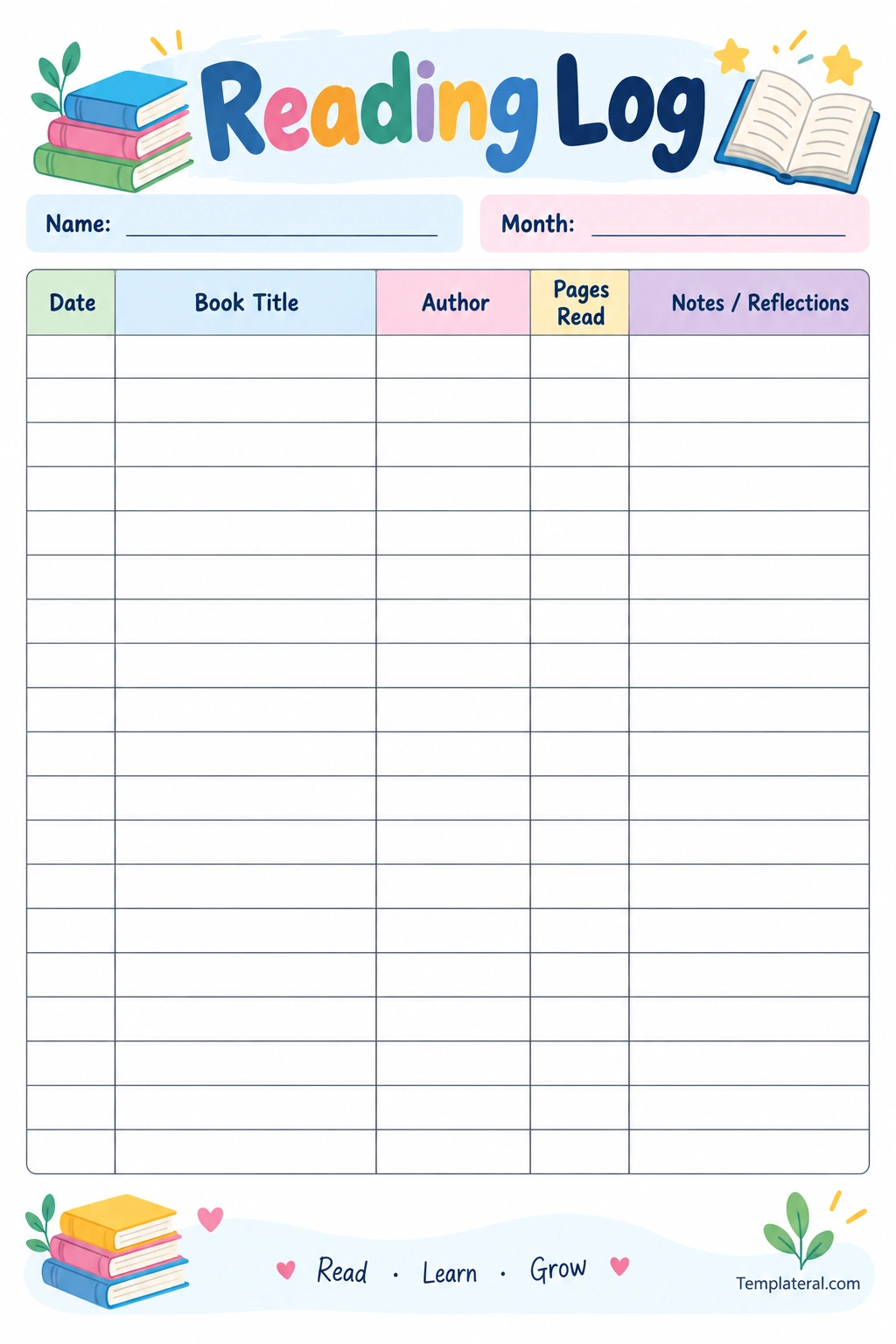
A reading log is a record of reading activity. Depending on its purpose, it may include the title of a book, author’s name, date, number of pages read, reading time, and personal notes or reflections.
Reading logs are commonly used in classrooms and at home to encourage regular reading. They can also help students develop organizational skills by teaching them how to record and review information about their reading.
A basic reading log might include:
- Date of the reading session
- Book title
- Author
- Pages read
- Reading time
- Notes or reflections
- Rating or recommendation
You do not need to include every category. The best format depends on who will use the log and what information needs to be tracked.
Why Use a Reading Log?
A reading log can turn reading into a more organized and measurable activity. It provides a simple record that can be reviewed later without requiring complicated software or apps.
Track Reading Progress
One of the main purposes of a reading log is to show how much reading has been completed. Recording pages or chapters can make progress easier to see, particularly when working through a longer book.
Encourage a Regular Reading Habit
Writing down each reading session creates a small routine around reading. Over time, seeing a growing list of completed sessions or books can provide motivation to continue.
Keep a Record of Books
A reading log can also become a personal record of books that have been read. Students and readers can look back at the list when choosing their next book or recommending books to others.
Support Reading Reflection
Adding a short notes section encourages readers to think about what they have read. They can write about a favorite character, an important idea, a surprising event, or something they learned.
What Should You Include in a Reading Log?
There is no single correct reading log format. You can create a very simple chart or a more detailed reading tracker depending on your goals.
Book Title and Author
Recording the title and author makes it easy to identify each book. This is particularly useful when a reader is tracking multiple books during a month or school term.
Date
The date shows when the reading took place. For daily reading, one row can represent each reading session. For a book tracker, one row can instead represent each completed book.
Pages Read
Recording pages can be helpful for readers who have a specific reading target. For example, a student might track how many pages were completed during each session.
Notes and Reflections
A notes section gives the reader space to record thoughts about the book. Younger readers can write a few words, while older students can provide a short written response.
Reading Log Ideas for Students
A student reading log can be adapted for different grade levels and reading assignments. The important thing is to keep the format appropriate for the student’s age and reading goals.
Elementary Reading Log
For younger students, keep the chart visual and easy to complete. Useful fields might include the date, book title, pages read, and a simple rating.
Teachers or parents can also include prompts such as:
- My favorite part was…
- My favorite character was…
- I learned…
- I would recommend this book because…
Middle School Reading Log
Older students can use a more detailed reading tracker. In addition to basic book information, they can record themes, important events, vocabulary, questions, or personal reactions.
High School Reading Log
High school students may benefit from a reading log that encourages deeper analysis. A notes section can be used for observations about themes, character development, arguments, writing style, or important passages.
How to Use a Reading Log at Home
Parents can use a printable reading log to make independent reading easier to organize. Start by deciding what information should be recorded and how often the log will be completed.
For example, a family might establish a simple routine where a child reads for 20 minutes each evening and records the book title and pages read afterward.
Keep the reading log somewhere visible and convenient. A dedicated folder, binder, reading corner, or schoolwork area can make it easier to remember to update the sheet.
How Teachers Can Use a Reading Log
Teachers can use reading logs to help students document independent reading and reflect on their books. A classroom reading log can be customized to match a particular assignment or reading program.
Depending on the classroom, students might record:
- Daily reading time
- Pages or chapters completed
- Book titles
- Authors
- Vocabulary words
- Reading responses
- Questions about the text
A reading log can also provide a starting point for classroom discussions. Students can use their notes to remember important details and share observations about their books.
Reading Log vs. Book Tracker
The terms reading log and book tracker are sometimes used interchangeably, but they can serve slightly different purposes.
A reading log usually focuses on the activity of reading. It may track individual sessions, dates, pages, and reading time.
A book tracker is often focused on the books themselves. It may contain a list of completed books, authors, genres, ratings, and completion dates.
For example, someone completing a reading challenge might use a book tracker to record 20 completed books, while a student might use a reading log to document daily reading sessions.
Tips for Keeping a Reading Log Consistently
Keep It Simple
A complicated worksheet can become difficult to maintain. Include only the fields that are genuinely useful for the reader.
Choose a Regular Time
Updating the log immediately after reading can make the habit easier to maintain. For younger children, completing the log can become part of the bedtime or homework routine.
Set Realistic Reading Goals
Reading goals should be achievable. A goal that is too ambitious can make the process frustrating, while a realistic goal provides an opportunity to build consistency.
Use the Notes Section
Encourage readers to write short observations rather than simply recording numbers. Even one sentence about the reading experience can make the log more meaningful.
Review Progress Regularly
At the end of each week or month, review the completed reading log. Look at the books that were read, the amount of reading completed, and any patterns or preferences that emerged.
Creative Reading Log Ideas
A traditional grid is not the only way to organize reading information. You can adapt a printable reading tracker to make it more engaging.
- Monthly reading tracker: Record books and reading sessions throughout the month.
- Reading challenge log: Track progress toward a specific number of books.
- Summer reading log: Record books read during a summer break.
- Daily reading log: Track reading time or pages each day.
- Book review log: Combine reading information with ratings and short reviews.
- Genre reading tracker: Organize books by genres such as mystery, fantasy, biography, or science fiction.
Benefits of a Printable Reading Log
A printable reading log is convenient because it does not require an account, app, or special software. Once printed, it can be completed with a pencil or pen and stored wherever it is needed.
Printable worksheets are also easy to customize. You can choose whether to use one sheet per week, month, book, or school assignment.
For classrooms and families, a printable format can also make reading progress visible without introducing another digital task into the routine.
Frequently Asked Questions About Reading Logs
What is the purpose of a reading log?
The purpose of a reading log is to record and organize reading activity. It can help readers track books, pages, reading time, progress, and personal reflections.
What should a student write in a reading log?
A student can record the date, book title, author, pages read, and a short reflection. The exact requirements can be adjusted based on the student’s age and assignment.
How often should a reading log be completed?
It can be completed daily, after each reading session, weekly, or whenever a book is finished. A consistent schedule is generally easier to maintain than an irregular one.
Can I use a reading log for a reading challenge?
Yes. A reading log can be an effective way to track books completed during a monthly, seasonal, or annual reading challenge.
Can a reading log be used for homeschooling?
Yes. Homeschool families can adapt a reading log to document independent reading, assigned books, literature studies, or daily reading practice.
Conclusion
A reading log is a straightforward tool for organizing reading and making progress easier to see. Whether it is used by a student, teacher, parent, homeschool family, or independent reader, a simple log can help create consistency and encourage reflection.
The best reading log is one that fits naturally into the reader’s routine. Start with a few useful fields such as the date, book title, author, pages read, and notes. As reading habits develop, the format can be adjusted to include goals, ratings, genres, or more detailed reflections.
With a simple printable template, tracking reading progress can become an easy part of a daily or weekly reading routine.
Download: Reading Log Template
