A weekly agenda is a simple planning tool that helps you organize appointments, tasks, priorities, and activities across an entire week. Instead of keeping everything in your head or using scattered notes, a weekly agenda gives you one clear place to see what needs to be done and when.
Whether you are managing work responsibilities, school assignments, household tasks, personal goals, or appointments, a weekly agenda can make your schedule easier to understand. A well-organized weekly schedule also helps you identify busy days, protect time for important tasks, and avoid forgetting deadlines.
Using a printable weekly agenda can be especially helpful if you prefer writing things down. You can print a fresh copy each week, fill it in by hand, and keep completed agendas for reference. The key is to create a planning system that is simple enough to use consistently.
What Is a Weekly Agenda?
A weekly agenda is a planning sheet designed to organize activities over seven days, usually from Monday through Sunday. Depending on the design, it may include time slots, task lists, priorities, notes, appointments, goals, and other planning sections.
Unlike a daily planner, which focuses on one day, a weekly agenda gives you a broader view of your entire week. This makes it easier to balance different responsibilities and see how individual tasks fit into your overall schedule.
A typical weekly agenda may include:
- Monday through Sunday planning sections
- Hourly or time-based schedule blocks
- Weekly goals
- Priority tasks
- To-do lists
- Appointment and meeting spaces
- Notes and reminders
- Habit or routine tracking
Why Use a Weekly Agenda?
Planning your week in advance can make your schedule more manageable. Instead of reacting to tasks as they appear, you can decide ahead of time where important activities belong.
See Your Entire Week at a Glance
One of the biggest advantages of a weekly agenda is visibility. You can quickly see which days are busy and which days have available space. This helps you schedule new commitments without accidentally creating an overloaded day.
Organize Important Priorities
A weekly schedule can separate important tasks from smaller activities. Writing down your top priorities at the beginning of the week gives you a clear starting point and helps you focus on work that matters most.
Reduce Forgotten Tasks
Writing down deadlines, appointments, errands, and reminders provides a simple reference throughout the week. Instead of relying entirely on memory, you can check your agenda whenever you need to know what comes next.
Create a More Consistent Routine
Repeated activities such as exercise, studying, meal preparation, cleaning, or administrative work can be added to the same weekly planning system. Over time, this can make routines easier to maintain.
Weekly Agenda Template
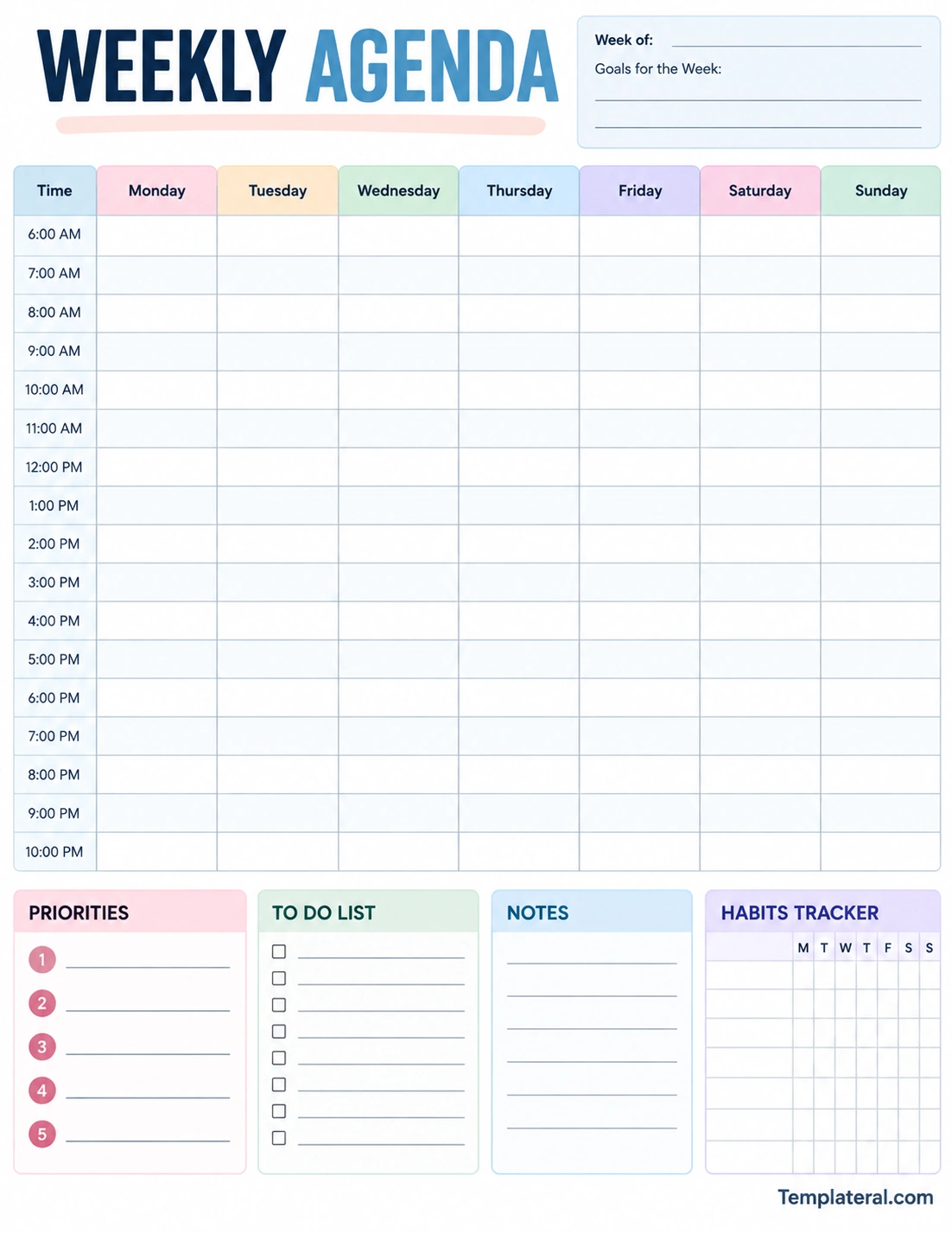
A printable template can make weekly planning faster because the basic structure is already prepared. You only need to add your own appointments, tasks, goals, and notes.
A useful template should provide enough space for planning without making the page unnecessarily complicated. The goal is to make information easy to write, read, and update throughout the week.
What Should a Weekly Agenda Include?
The best layout depends on how you plan to use your agenda. However, several sections are useful for most people.
Weekly Dates
Start by identifying the week you are planning. A simple “Week of” field makes it easy to recognize the correct planning period when you keep old agendas for reference.
Daily Schedule
A daily schedule section provides space for appointments, meetings, classes, errands, and other activities. An hourly layout is useful when your days contain many time-specific commitments.
Weekly Priorities
Choose a small number of important priorities for the week. Keeping this list focused makes it easier to distinguish major goals from routine tasks.
To-Do List
A weekly to-do list provides space for tasks that need to be completed but do not necessarily belong at a specific time. You can check off each task as you finish it.
Notes
A notes section is useful for information that does not fit neatly into a particular day. You might use it for ideas, reminders, shopping items, follow-up notes, or information to carry into the following week.
Goals and Habits
Some weekly agenda layouts include space for weekly goals or habit tracking. These sections can help you connect everyday activities with broader personal or professional objectives.
How to Plan Your Week With a Weekly Agenda
Creating a weekly plan does not need to take a long time. A simple planning routine can help you prepare for the week without becoming another complicated task.
1. Review the Previous Week
Before starting a new weekly agenda, quickly review unfinished tasks, upcoming deadlines, and commitments. Move anything that is still relevant into the new week.
2. Add Fixed Commitments
Start with activities that already have a specific date or time. Add meetings, appointments, classes, events, travel plans, and other fixed commitments first.
3. Choose Your Main Priorities
Identify the most important things you want to accomplish during the week. These could include completing a project, preparing for an exam, finishing a report, or handling an important personal responsibility.
4. Add Flexible Tasks
Once your fixed commitments are recorded, add flexible tasks around them. Avoid filling every available space because unexpected activities can appear during the week.
5. Check the Balance
Look at the entire week before you finish planning. If one day contains too many tasks, move some flexible activities to a less busy day.
6. Review the Agenda Daily
Spend a few minutes checking your agenda at the beginning or end of each day. Mark completed tasks, add new information, and adjust your schedule when necessary.
Weekly Agenda Ideas for Different Needs
A weekly agenda can be adapted for many different situations. The same basic layout can support different planning styles.
For Work
Use the agenda to organize meetings, deadlines, project tasks, calls, follow-ups, and important work priorities. A time-blocked layout can be particularly useful when your workday contains multiple appointments.
For Students
Students can use a weekly agenda to organize classes, homework, study sessions, exams, projects, and extracurricular activities. Adding deadlines early in the week can make larger assignments easier to manage.
For Families
A family weekly agenda can keep appointments, school activities, errands, household responsibilities, and important events in one place. A shared printed schedule can make weekly coordination easier.
For Personal Planning
Personal planning may include exercise, meal preparation, hobbies, household chores, appointments, shopping, and personal goals. A weekly planner provides enough flexibility to combine different areas of life on one page.
Tips for Using a Weekly Agenda Effectively
A planning template only becomes useful when it is easy to maintain. Keep your system practical and avoid adding unnecessary details.
- Keep priorities limited: Focus on the tasks that genuinely matter most.
- Use short descriptions: Write concise task names so the schedule remains easy to scan.
- Leave open space: Avoid scheduling every minute of the week.
- Review regularly: Check the agenda each day and update it when plans change.
- Group similar tasks: Completing similar activities together can make planning more efficient.
- Record deadlines early: Add important due dates before the week becomes busy.
- Keep the template accessible: Place your printed agenda somewhere you will naturally see it.
Printable Weekly Agenda vs. Digital Planner
Both printable and digital planning systems can be useful. The better choice depends on how you prefer to organize information.
A digital planner can be convenient for people who frequently work from computers or smartphones. It may also provide reminders, recurring events, and synchronization across devices.
A printable weekly agenda, on the other hand, provides a physical overview of the week. Writing tasks by hand can make the planning process more deliberate, while the printed page can remain visible on a desk, wall, or planner.
You can also combine both methods. For example, important appointments can remain in a digital calendar while a printable weekly agenda is used for daily tasks, priorities, and personal notes.
How to Make Your Weekly Agenda More Useful
The most effective weekly planning system is one that you will actually use. Start with the information you need most rather than trying to record everything.
For a busy schedule, an hourly weekly agenda may be helpful. For a simpler routine, a layout with larger task and notes sections may work better. If you are focused on personal development, adding goals and habit tracking can make the template more useful.
It is also helpful to keep your planning language consistent. For example, use short action-oriented phrases such as “Finish report,” “Call client,” or “Study chapter 4.” This makes the agenda easier to scan than writing long descriptions.
Common Weekly Planning Mistakes
Even a well-designed weekly planner can become ineffective when it is overloaded. One common mistake is scheduling more tasks than can realistically be completed.
Another mistake is failing to leave time between commitments. Unexpected calls, delays, additional work, and personal responsibilities can quickly affect a tightly packed schedule.
It is also easy to create a detailed agenda and then stop reviewing it. A simple weekly plan that you update consistently is usually more practical than a complicated system that becomes difficult to maintain.
Final Thoughts
A weekly agenda provides a simple way to see your schedule, organize priorities, track tasks, and prepare for the days ahead. By combining fixed appointments with flexible tasks, goals, notes, and priorities, you can create a clear overview of your week.
Whether you use a printable weekly agenda for work, school, family responsibilities, or personal planning, the most important factor is consistency. Choose a layout that matches your routine, keep your priorities realistic, and review your plan regularly.
A clean weekly agenda template can give you the structure you need while leaving enough flexibility to adapt when plans change. With a simple planning habit, one page can become a practical tool for keeping your entire week organized.
Download: Weekly Agenda Template
