A chore chart is a simple organizational tool that helps households keep track of daily and weekly responsibilities. By listing chores in one place and assigning them to specific days or people, a chore chart makes it easier to understand what needs to be done and when.
Chore charts can be useful for families, children, roommates, classrooms, and even shared living spaces. A well-designed chart turns a collection of household tasks into a clear routine that is easy to follow and update.
Instead of relying on memory or repeatedly reminding someone about a task, a chore chart provides a visible reference. Participants can check off completed chores, track progress throughout the week, and see which responsibilities still need attention.
What Is a Chore Chart?
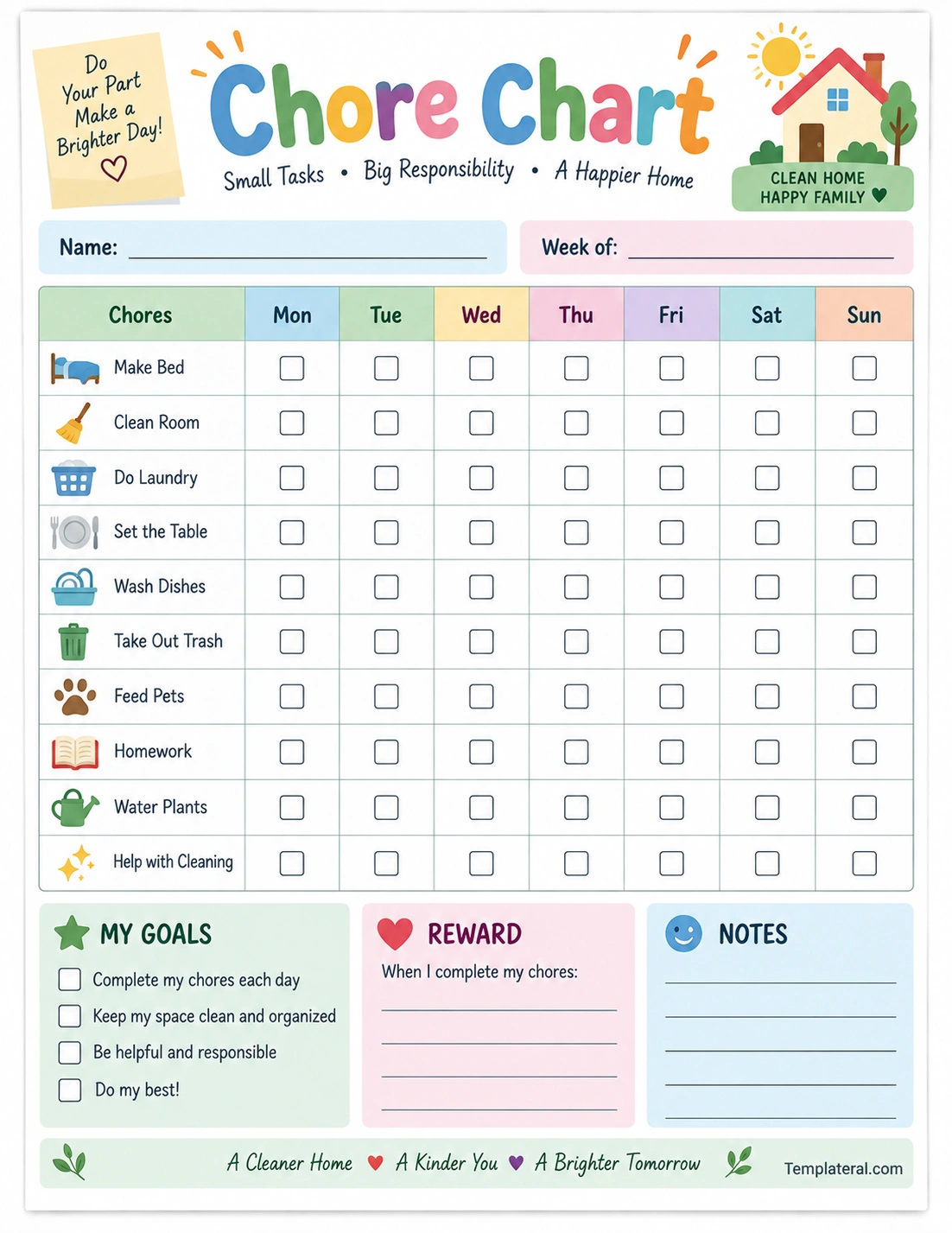
A chore chart is a worksheet, table, or schedule used to organize household tasks. It can list chores such as making the bed, cleaning rooms, washing dishes, doing laundry, taking out the trash, feeding pets, or watering plants.
The chart can be customized according to the household. Some charts track chores by day, while others assign specific tasks to different people. A simple chart may only contain a list of chores and checkboxes, while a more detailed version can include goals, rewards, notes, and completion tracking.
Why Use a Chore Chart?
A chore chart can make household responsibilities more visible and organized. It provides a consistent system that everyone can understand.
- Creates structure: Household responsibilities are clearly organized.
- Encourages consistency: Regular chores can become part of a routine.
- Clarifies responsibilities: Everyone can see what needs to be completed.
- Tracks progress: Checkboxes make completed tasks easy to identify.
- Reduces reminders: A visible schedule can reduce the need for repeated verbal reminders.
- Supports independence: Children and other household members can refer to the chart themselves.
What Should a Chore Chart Include?
The best chore chart is simple enough to use consistently. The exact sections can vary depending on who will use it and how many responsibilities need to be tracked.
Chore List
Start with a list of the tasks that need to be completed. Use specific descriptions rather than vague instructions. For example, “Put clean clothes away” is more useful than simply writing “Clothes.”
Days of the Week
A weekly chore chart can include columns for Monday through Sunday. A checkbox under each day allows users to mark a task when it has been completed.
Name or Assignment
If several people share household responsibilities, include a space for the name of the person responsible for each task. This can make assignments clearer.
Notes
A notes area can be useful for special instructions, reminders, unfinished chores, or changes to the normal schedule.
Goals or Rewards
For children, an optional goals or rewards section can make the chart more engaging. Rewards do not have to involve money or physical gifts. Extra reading time, choosing a family activity, or another agreed-upon privilege can work as alternatives.
Common Household Chores
The chores included on a chart should reflect the needs of the household. Common examples include:
- Make the bed
- Clean the bedroom
- Tidy common areas
- Put toys away
- Wash dishes
- Load or unload the dishwasher
- Wipe kitchen surfaces
- Take out the trash
- Do laundry
- Fold and put away clothes
- Vacuum floors
- Sweep floors
- Water plants
- Feed pets
- Clean the bathroom
- Set or clear the table
Not every household needs all of these tasks. Choose responsibilities that are appropriate for the people using the chart.
How to Create a Chore Chart
1. Make a List of Responsibilities
Start by writing down the recurring tasks that need to be completed. Consider both daily chores and tasks that only need to be done once or twice a week.
2. Decide How Often Each Chore Is Needed
Some tasks may need daily attention, while others can be scheduled weekly. For example, making the bed may be a daily responsibility, while cleaning a particular area may only need to happen once a week.
3. Assign Responsibilities
If the chart is shared, decide who will handle each task. Assign responsibilities according to age, ability, availability, and the needs of the household.
4. Choose a Tracking Method
Decide whether completed chores will be marked with checkmarks, stickers, initials, colored symbols, or another simple system.
5. Display the Chart
Place the chart somewhere convenient and visible. A kitchen, family command center, study area, or another shared space can work well.
6. Review It Regularly
Review the chart at the end of the week. Determine which tasks worked well, which assignments need adjustment, and whether any chores should be added or removed.
Chore Chart for Kids
A chore chart can help children understand household responsibilities in a visual and age-appropriate way. Young children may benefit from simple tasks and clear visual cues, while older children can handle more complex responsibilities.
Examples of age-appropriate tasks can include putting toys away, making the bed, feeding a pet, putting clothes in the laundry basket, setting the table, or helping tidy shared areas.
The goal should be to create a manageable routine rather than an overwhelming list. Start with a small number of responsibilities and increase them gradually as appropriate.
Chore Chart for Families
A family chore chart can distribute responsibilities across multiple household members. Instead of assigning every task permanently to one person, some families may prefer to rotate certain chores each week.
For example, one person might handle dishes during one week while another handles trash and another handles vacuuming. Rotating responsibilities can provide variety and distribute different types of work over time.
Chore Chart for Roommates
Roommates can also use a chore chart to coordinate shared responsibilities. A chart can make expectations more explicit and help prevent uncertainty about who is responsible for common areas.
Tasks might include cleaning the kitchen, bathroom, living room, shared appliances, floors, or trash and recycling areas. Roommates can agree on how frequently each task should be completed and then record the schedule on the chart.
Daily vs. Weekly Chore Charts
Both daily and weekly formats can be useful depending on the household routine.
Daily Chore Chart
A daily chart focuses on tasks that should be completed every day. It can be particularly useful for simple routines such as making the bed, tidying a room, feeding pets, and putting items away.
Weekly Chore Chart
A weekly chore chart provides a broader view of responsibilities from Monday through Sunday. It is useful when different tasks occur on different days.
A weekly format also makes it easy to see overall progress without creating a new worksheet every day.
Tips for Making a Chore Chart Work
Keep It Simple
A complicated system is harder to maintain. Use clear task names and a straightforward way to mark completion.
Be Specific
Tasks should describe exactly what needs to be done. “Clean bedroom” may be acceptable, but a more detailed system could specify making the bed, putting clothes away, and clearing the floor.
Set Realistic Expectations
A chore chart should reflect what people can reasonably complete. Too many tasks can make the system discouraging rather than helpful.
Use Consistent Timing
When possible, connect chores to existing routines. A task might be completed before school, after dinner, or before bedtime.
Celebrate Progress
Positive recognition can help reinforce a routine. A simple acknowledgment of completed responsibilities can be enough to encourage continued participation.
Printable Chore Chart Template
A printable chore chart template provides a ready-made structure for organizing household tasks. Instead of drawing a weekly grid manually, you can print the template and fill in the names, chores, and schedule.
A printable format can be particularly useful for families who prefer a physical reminder. It can be placed on a refrigerator, bulletin board, family planning area, or another visible location.
You can also customize a blank chore chart by adding tasks that are specific to your household. A reusable template makes it easier to establish a consistent weekly routine.
Chore Chart Ideas
There are many ways to customize a chore chart depending on the people using it and the purpose of the schedule.
- Weekly family chore chart: Track everyone’s responsibilities from Monday through Sunday.
- Kids chore chart: Use simple tasks and visual checkboxes.
- Daily routine chart: Focus on everyday responsibilities.
- Rotating chore chart: Change assignments each week.
- Roommate chore chart: Organize shared household tasks.
- Monthly chore chart: Track less frequent cleaning responsibilities.
- Reward chore chart: Add a goals or rewards section for motivation.
Chore Chart Checklist
Before using a chore chart, check that it contains everything needed for a practical routine.
- Are all important household chores listed?
- Is each task clearly described?
- Is every responsibility assigned appropriately?
- Does the chart show the relevant days?
- Is there enough space to mark completed tasks?
- Are the expectations realistic?
- Is the chart placed somewhere easy to see?
- Will the chart be reviewed and updated regularly?
Final Thoughts
A chore chart is a simple way to turn household responsibilities into a clear and manageable routine. By listing chores, assigning responsibilities, and tracking completed tasks, a chart can make everyday organization easier for families, children, roommates, and shared households.
The most effective chore chart does not need to be complicated. Choose realistic tasks, make assignments clear, use an easy tracking method, and review the schedule regularly. A printable chore chart template can provide a convenient starting point and make it easier to establish a routine that works for your household.
Download: Chore Chart Template
